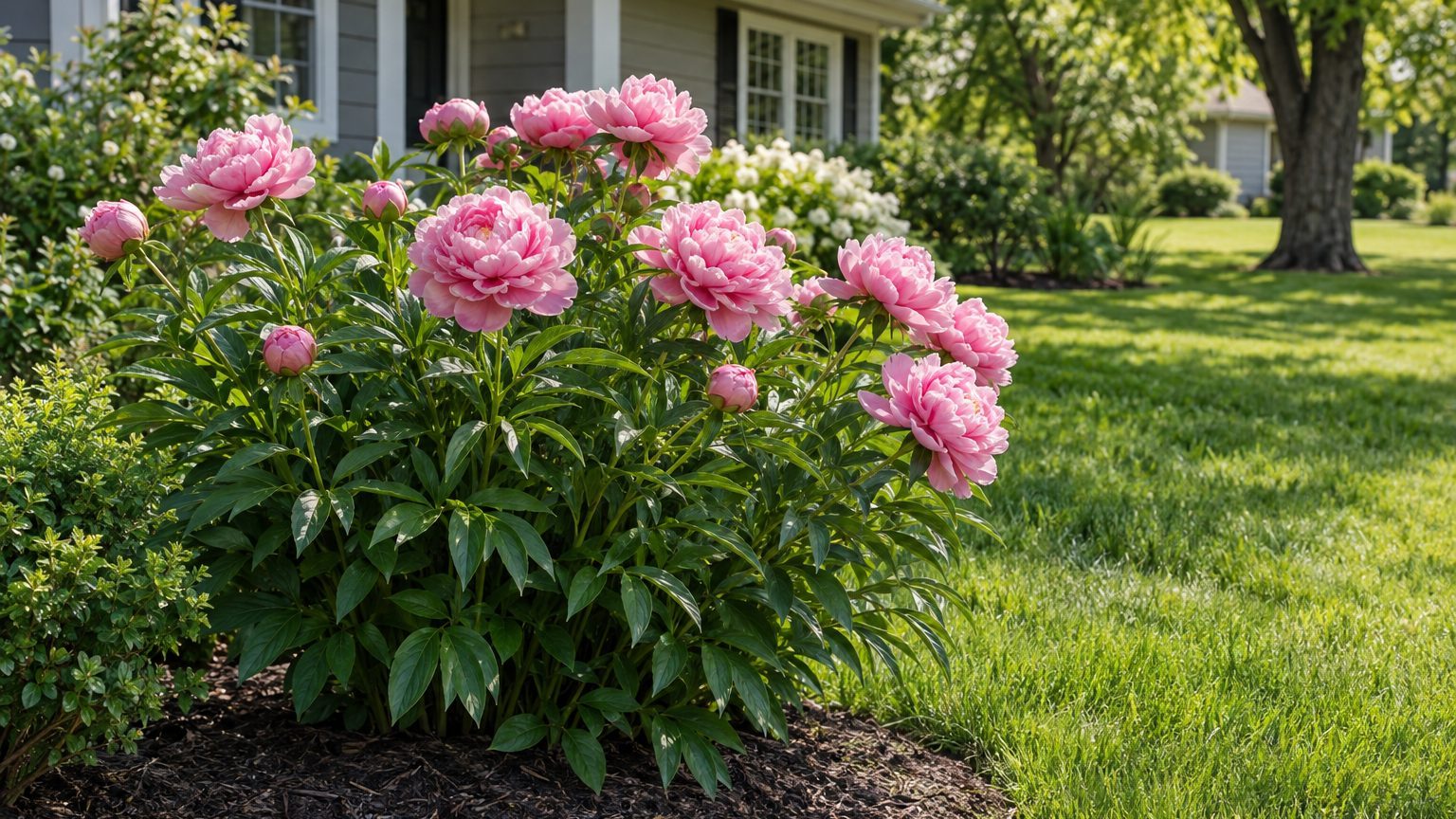
Michigan gardeners can give peonies a sound start by planting in early fall, while the soil can still welcome new roots. Peonies in Michigan go in the ground in early fall, and the care that follows builds on that timing.
When to Plant Peonies in Michigan

Plant or divide peonies in September, or in October at the latest, so the roots have several weeks to settle in before the ground locks up. The rest of the year follows a steady rhythm.
- In early spring, new red shoots push up through the soil, and any stems left standing over winter can still be cut back in March or April.
- From May into June, the buds open, and the bloom runs into early summer depending on the variety.
- Through summer, the plant stores food in its roots.
- In September, the roots have stored enough food to be lifted, divided or planted fresh, and October is the last good month for it.
- After frost in October and November, herbaceous stems collapse and can be cut down to within a couple of inches of the ground.
Frost shapes the edges of that calendar. Around Detroit the last spring frost lands near April 30, and across most of the Lower Peninsula it arrives in early to mid May. In USDA zone 6a, the first fall frost falls between October 6 and October 21; other parts of Michigan differ. Michigan spans USDA zones 4a to 6b, so check which zone your own yard sits in.
Michigan — the year and the numbers
- State
- Michigan
- USDA zones
- 4a-6b
- Last spring frost
- April 30 in the Detroit area; early to mid May across most of the Lower Peninsula
- First fall frost
- October 6 to October 21
- Annual rain
- 34 in
- Lawn zone
- cool-season
- Source
- MSU Extension — Frost-Free Dates · Detroit
Which Peonies Grow Best in Michigan?
Peonies suit Michigan well. They need a cold winter rest to flower, and Michigan winters deliver it, so they do best here and are unlikely to sulk the way they can in mild-winter climates.
Garden peonies vary in habit, and understanding those habits makes their care easier. Herbaceous and intersectional peonies are the easiest to grow and share the same care: each fall they die back to the ground, and new growth emerges in spring.
| Peony type | How it does in Michigan | Why |
|---|---|---|
| Herbaceous (garden) peony | Reliable, long-lived | Dies back each fall and rests through the cold winter |
| Intersectional (Itoh) | Easy to grow | Shares the herbaceous routine of dying back and regrowing in spring |
| Tree peony | Grows as a woody shrub | Goes dormant over winter and renews growth on woody stems |
Tree peonies keep their woody stems and are never cut back, which sets them apart from herbaceous and intersectional peonies. Woodland peony (Paeonia japonica) also exists in home landscapes, though it is less common in yards.
When to Plant, Cut Back and Feed Peonies in Michigan
Planting depth matters as much as timing. A peony set too deep may bloom poorly or not come up at all, so keep the eyes near the soil surface.
A newly planted or transplanted peony may not bloom the first spring, so patience is part of the job. Cutting back depends on type: herbaceous peonies are cut back after frost, while tree peonies are left alone.
| Task | Best timing in Michigan | Why then |
|---|---|---|
| Planting or dividing | September, or October at the latest | Roots store food by then and have weeks to settle before winter |
| Cutting back herbaceous stems | October and November, after frost | The foliage has died and the plant is dormant |
| Cutting back, alternate window | March or April | Old stems can also come off before new shoots grow |
| Enjoying bloom | May into June | Flowering follows the spring warm-up |
This calendar does not provide a feeding month.
How Peony Planting Dates Change Across Michigan
Michigan stretches far enough that spring arrives at very different times in different corners, and the lakes steer much of it. Peony timing leans on the same pattern, even though the planting months stay the same.
- Detroit area: The last spring frost falls around April 30; this date marks frost risk, not the start of peony growth.
- Lower Peninsula interior: Across most of the Lower Peninsula, the last spring frost falls in early to mid May.
- Upper Peninsula and the far north: Follow the statewide planting window of September, or October at the latest.
In every part of the state, aim for September, with October as the final window, and let the local spring decide when your plants show their first growth.
Where to Get Peony Advice in Michigan
Peony problems are often about depth, light or soil, and local experts can sort them out quickly. MSU Extension and your county office offer plenty of help for home growers.
- Its garden guidance can help you investigate why a peony stays leafy without flowering.
- Ask your county extension office whether soil testing would help before you plant.
- Call ahead to ask what kind of plant samples or photos the office can review.
Common Questions
Can You Plant Peonies in Spring in Michigan?
Fall is the planting season for peonies, because roots need time to settle before winter. A plant bought in spring can go in the ground, though it may take extra time to flower.
Why Won’t My Peony Bloom in Michigan?
Check how deep the eyes sit, along with how recently the plant was moved. Deeply buried eyes or a recent transplant can explain a missed first spring bloom.
Do Tree Peonies Need to Be Cut Back in Michigan?
No. A tree peony keeps its woody stems through winter and renews growth on them each spring, so leave it standing.