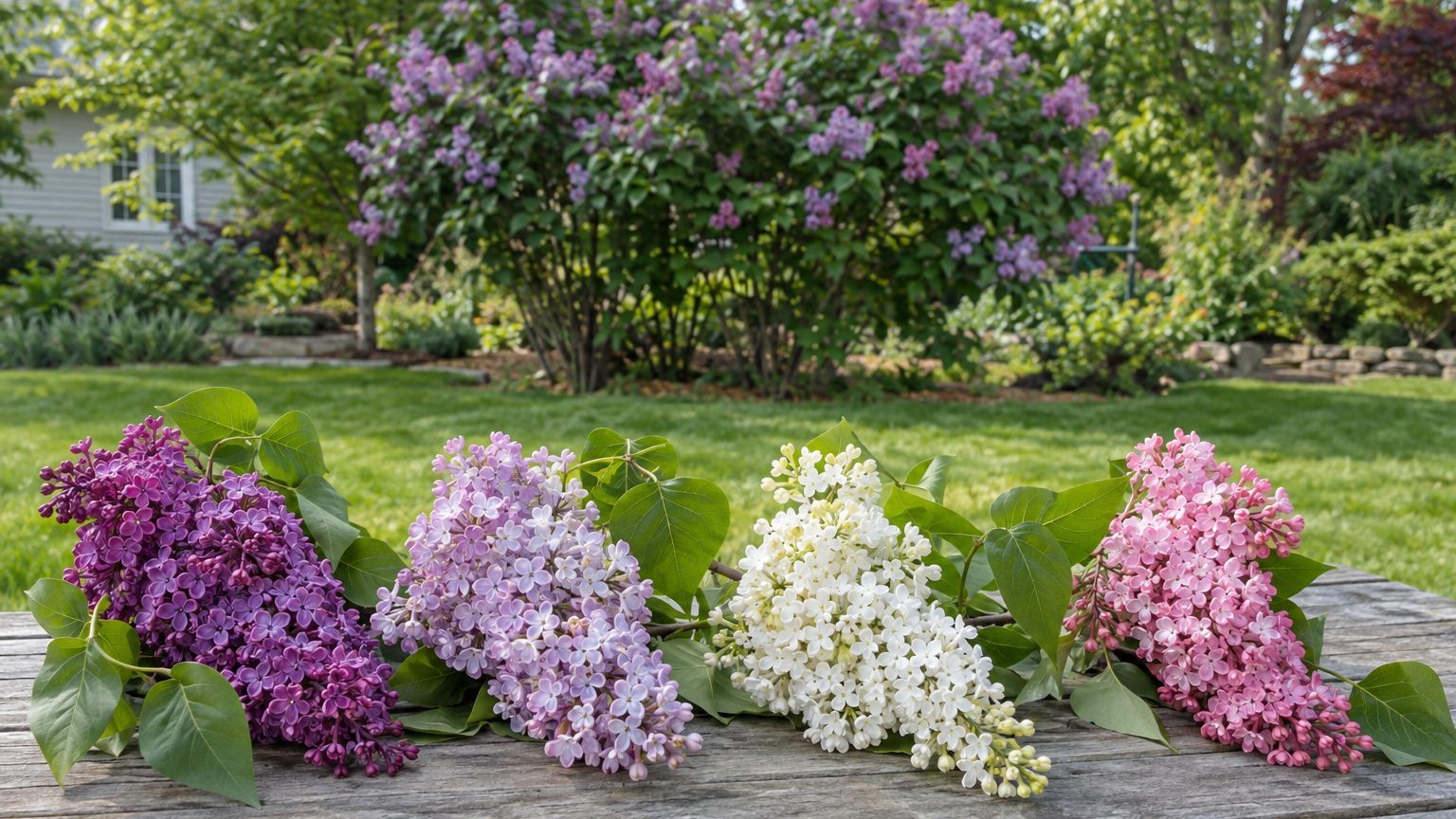
Lilacs bring the scent of May to Rhode Island yards, but the humid summers here ask for some care in the choice. Disease-resistant hybrids can stay healthier through humid weather than susceptible common lilacs. The right pick depends on mildew, late frosts and the room you have.
Best Lilacs to Grow in Rhode Island

Lilacs that hold up here are the common lilac, the Bloomerang series, dwarf hybrids, early Hyacinthiflora types and less susceptible species. Rhode Island sits in USDA hardiness zones 6a to 7b, milder than the cold-winter climates lilacs favor, and humid summers make mildew a frequent concern. Resistant plants in a sunny, breezy spot do well.
Common Lilac

Syringa vulgaris is the lilac most people picture, with fragrant masses of purple, lavender and white flowers in May. It grows well in New England, but it is prone to powdery mildew, bacterial blight, scale and borers.
Plant it in full sun with room around it so air moves through the branches. Good airflow helps defend against mildew.
Bloomerang Series

This series is resistant to powdery mildew and reblooms, which helps in a state where humid summers leave plain lilacs looking tired. It is also more disease-resistant than typical common lilac.
It stays shorter at maturity, so it fits foundation beds and mixed borders where a large shrub would crowd the walkway.
Dwarf Hybrid Lilacs
Like many dwarf hybrids, these stay lower than common lilac and shrug off disease better. That makes them a sensible choice if you want fewer disease problems in a small space.
Give them the same sunny, open site. Their smaller size also makes pruning right after flowering a quick job.
Hyacinthiflora Lilacs
These vigorous hybrids look like French hybrids but bloom earlier. The shrubs are very hardy, yet the early flowers can be caught by a late frost.
Plant them where late spring frosts are less frequent, such as a spot with air drainage rather than a low pocket where cold settles.
Less Susceptible Species and Hybrids
More than 20 species of lilac exist, and some resistant cultivars and less susceptible hybrids have been reported. Ask a local nursery which ones carry that resistance.
Over the years it saves you leaf spotting and a lot of worry.
Rhode Island — the year and the numbers
- State
- Rhode Island
- USDA zones
- 6a-7b
- Last spring frost
- April 7 to April 17
- First fall frost
- October 24 to November 3
- Annual rain
- 48 in
- Lawn zone
- cool-season
- Source
- NOAA NCEI U.S. Climate Normals 1991-2020, 32F freeze probabilities · Providence
How to Choose a Lilac for a Rhode Island Garden
Start with the problem you want to avoid. For most Rhode Island yards, that is mildew in humid summers, so disease resistance counts for more than flower color.
Then think about size and site. Lilacs do best in sun with good air circulation, and they need a cold winter rest to mature their flower buds.
| Your situation | What suits it in Rhode Island | Why |
|---|---|---|
| Hot, humid summers | Bloomerang series or another dwarf hybrid | More disease-resistant than typical common lilac, and Bloomerang resists powdery mildew |
| Little time for care | Bloomerang series | Resistance means fewer problems to manage |
| Small space | Dwarf hybrid lilacs | They mature shorter than common lilac |
| Late spring frosts | Common lilac, not Hyacinthiflora | Early bloomers need spots where late spring frosts are less frequent |
| Classic fragrance | Common lilac | Known for fragrant flowers in May, but watch for mildew and borers |
| Worry about too little winter chill | A locally proven lilac in a sunny, open site | Winter chill matures the flower buds, and airy sites keep the plant healthier |
A very cold winter is rarely the issue in this state, since lilacs are happy in far colder climates. The cold-side concern is the late frost, which is why the early bloomers deserve a sheltered but airy site.
Which Lilacs Suit Different Parts of Rhode Island
Rhode Island is small, but the shore and the interior differ enough to nudge your choice.
- Northwestern Rhode Island, around Foster and Burrillville: Higher ground is colder, which suits lilacs that want a real winter rest. Frost can linger later in spring, so skip early bloomers unless you have a protected spot.
- South County and the shore of Narragansett Bay: Winters are milder and the air stays humid. Choose mildew-resistant hybrids and plant them in a sunny, breezy place.
- Providence and the Blackstone Valley: Lots of fences, buildings and tight lots make air circulation the issue. Dwarf hybrids fit and leave room for air to move.
Wherever you live, check how late frost lingers in your own yard before planting an early bloomer.
Lilac Buying Mistakes to Avoid in Rhode Island
Buying Without Checking Resistance
A common lilac with no disease information may bring powdery mildew, bacterial blight, scale and borers.
Look for a Bloomerang or other resistant hybrid, or ask the nursery about less susceptible cultivars.
Planting an Early Bloomer in a Frost Pocket
Hyacinthiflora lilacs open earlier than French hybrids. A late frost can brown the buds and leave you with a leafy shrub and no flowers.
Plant them on a slope or in an open spot, or choose a later-blooming common lilac for low ground.
Ignoring Adult Size
A small pot hides a large shrub. Common lilac grows taller than dwarf hybrids, and crowding it against a house cuts airflow and invites mildew.
Read the tag for mature height before buying. If a lilac ends up too big, prune right after the flowers fade, usually May to June, because next year’s buds form in summer and later cuts remove them. A hard cut-back of an overgrown plant can be done in March or April, but it will not flower for a few years afterward.
Where to Get Lilac Advice in Rhode Island
University of Rhode Island Cooperative Extension can answer questions about local cultivars, pests and pruning for your town.
- Extension staff and Master Gardener volunteers can identify mildew, borers and scale if you bring a leaf or twig sample.
- Spring, when lilacs bloom in April and May, is a good time to look at plants in public gardens before you choose one.
- A local nursery can tell you which resistant cultivars it stocks.
Common Questions
When Do Lilacs Bloom in Rhode Island?
Most lilacs flower in April and May, and later species can carry into June. Early Hyacinthiflora types open ahead of the others.
What Colors Do Lilacs Come In?
Lilacs come in purple, lavender, white, pink and a reddish hue. Some are blue, mauve or yellow.
Do Lilacs Need Full Sun?
Yes. Lilacs thrive in sunny sites with good air circulation, and shade makes mildew and weak flowering more likely.