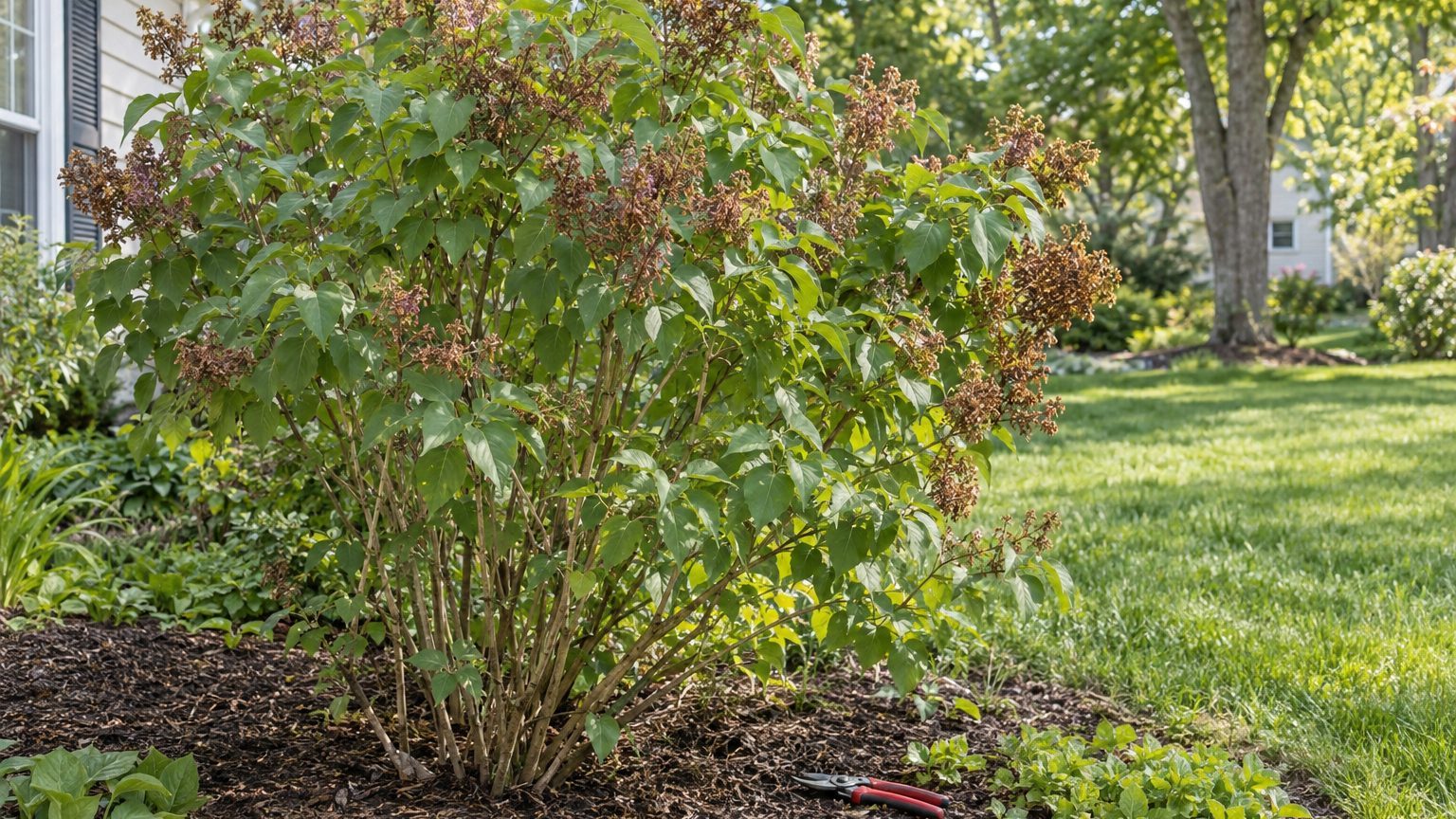
A lilac that blooms heavily in May will soon start setting the flower buds for next spring. That timing decides everything about pruning these shrubs in Rhode Island: the cut belongs right after the last purple or white clusters turn brown, not later in the season.
When to Prune Lilacs in Rhode Island

Prune lilacs in May and June, right after the flowers fade. Bloom runs from April into May, with later species reaching into June. Because next year’s buds form in summer on this year’s growth, a cut made soon after flowering protects next spring’s flowers.
| Type of pruning | When in Rhode Island | Why |
|---|---|---|
| Routine pruning after bloom | May, June, right after the flowers fade | Next spring’s buds form in summer, so early cuts keep them |
| Hard cut of an overgrown lilac | March, April, in late winter | The plant is dormant, but it costs the next flowers |
A hard cut can leave a lilac without flowers for a few years afterward, so save it for shrubs that have grown tall, bare at the base and stingy with bloom. Prune reblooming lilacs right after the flowers fade.
Rhode Island sits in USDA hardiness zones 6a to 7b, which is on the mild side for lilacs. The winter chill is what matures their flower buds, and hot, humid summers make them struggle, so a sunny spot with good air circulation matters more here than in colder states. Good airflow also helps the leaves dry after summer rain.
For the routine cut, remove spent flower clusters and any dead or crossing stems. Thin some of the oldest, thickest stems at the base if the shrub feels crowded, which opens the center to light and air without touching the young wood that will carry next year’s flowers.
Rhode Island — the year and the numbers
- State
- Rhode Island
- USDA zones
- 6a-7b
- Last spring frost
- April 7 to April 17
- First fall frost
- October 24 to November 3
- Annual rain
- 48 in
- Lawn zone
- cool-season
- Source
- NOAA NCEI U.S. Climate Normals 1991-2020, 32F freeze probabilities · Providence
How to Tell When Your Lilacs Are Ready to Prune
The shrub gives clear signals, and they matter more than the date on the calendar, since bloom can shift a little from one spring to the next.
- Flower clusters turning brown and papery mean the show is over and the pruning window has opened.
- Petals dropping and the cluster stalks starting to look tired tell you to cut soon, before the plant puts energy into seed.
- Fresh green shoots pushing out below the old flower heads are the growth that will carry next year’s buds, so cut above them and leave them alone.
- Flowers that are still fresh on part of the shrub mean you should wait there, since later species bloom into June.
- Leaves fully open and a full summer canopy are a sign you are cutting late, and delaying further can remove more of the coming flowers.
If the flowers are brown and new growth is showing, go ahead and pick up the pruners.
Should You Prune Lilacs in Fall or Winter in Rhode Island?
No. Cutting in late summer, fall or winter removes the buds that would open next spring, and the shrub then skips most of its bloom for the year. A lilac tidied in winter is often flowerless when bloom season arrives.
The winter exception is the hard renovation cut of an overgrown shrub, done in March or April while the plant is still dormant. It trades the next flowers for fresh, vigorous stems, and the lilac will not flower for a few years afterward. Choose it only when the shrub is truly overgrown, not simply a bit untidy.
A dead branch can come out whenever you spot it, since it carries no buds worth saving. Everything else waits until after the flowers fade.
How Lilac Pruning Time Shifts Across Rhode Island
The calendar months stay the same statewide, but the shrub’s own bloom sets the real moment, and it shifts a little from place to place.
- Narragansett Bay and the coast: Water moderates temperature swings, so let the flowers on your shrub, rather than an inland schedule, set pruning time.
- Northwest Rhode Island, around Burrillville and Foster: Higher, colder ground tends to flower a little later, so wait for the blooms to fade before you cut, even if neighbors near the shore have finished.
Follow the flowers on your own shrub and the timing will be right wherever you garden.
Where to Get Lilac Advice in Rhode Island
For questions about a lilac that will not bloom or has grown out of bounds, turn to local extension staff. Their Cooperative Extension pages and local staff know Rhode Island conditions.
- Cooperative Extension offers plant and garden guidance, and spring, as the lilacs begin to bloom, is a good time to ask about a particular shrub.
- Your county or town extension contact can look at photos of a shrub and talk through an overgrown one before you make a hard cut in March or April.
Common Questions
Why Is My Lilac Not Blooming in Rhode Island?
Pruning at the wrong time is a frequent cause, since cuts in late summer, fall or winter remove the buds. Look at where the shrub sits too: a lilac in shade, or one crowded with little air movement, often leafs out well and flowers poorly.
Can You Cut a Lilac All the Way Down?
Yes, an overgrown lilac can be cut back hard in late winter, in March or April. Expect no flowers for a few years while the new stems grow.
Do Lilacs Like Rhode Island Summers?
They put up with them, though hot, humid summers are not their favorite. Sun and good airflow around the branches help the shrub stay healthy through the muggy stretch.