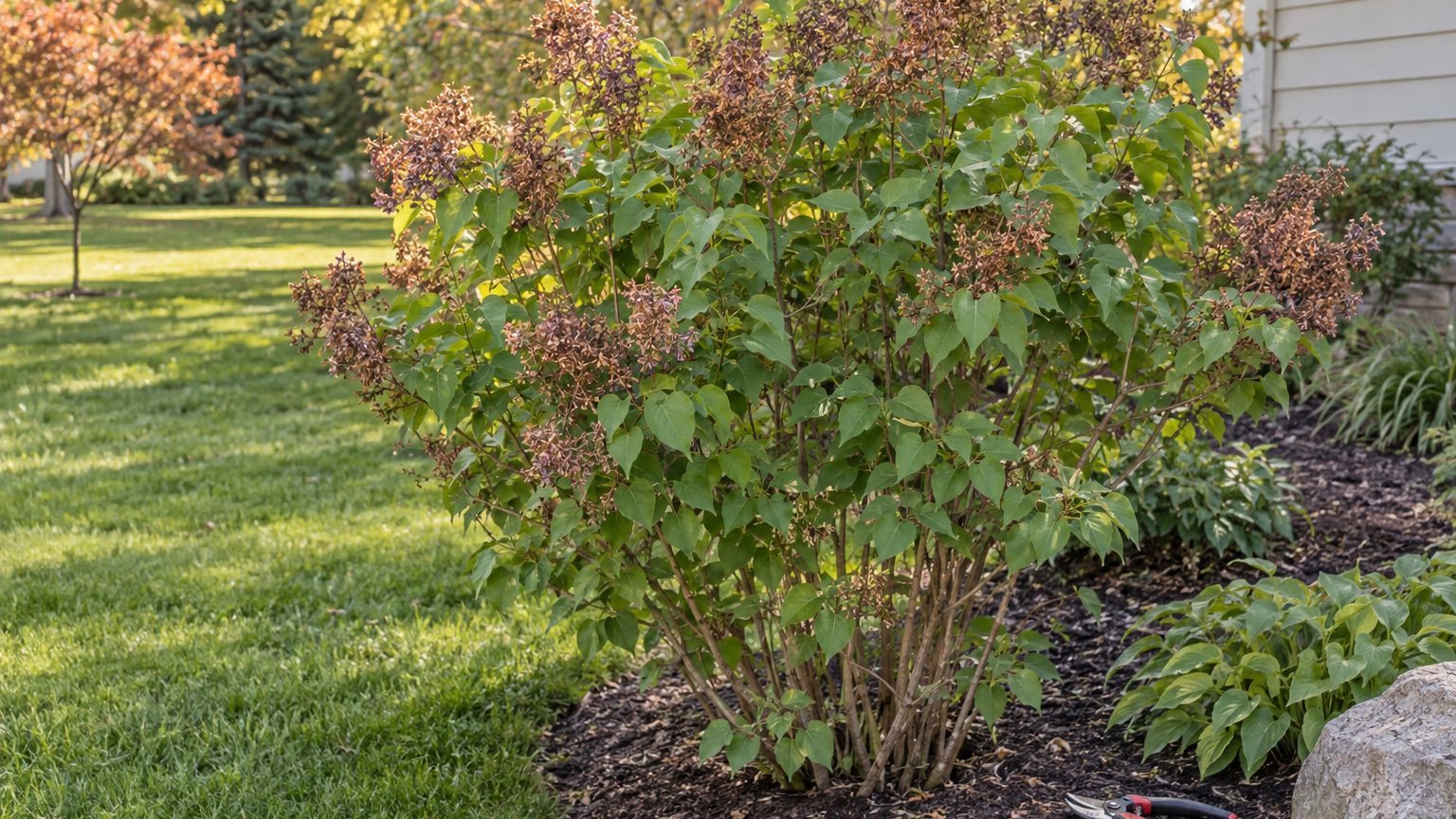
A lilac that looks tired in June, with brown flower clusters hanging on, is telling you the pruning window has opened. In North Dakota, lilacs handle cold well, and pruning timing decides whether next May brings fragrance or bare green stems.
When to Prune Lilacs in North Dakota

Prune lilacs in June, right after the flowers fade. Lilacs set next year’s flower buds in summer, soon after they bloom, so prompt pruning avoids cutting off buds later. Bloom runs through May and into June.
| Type of pruning | When in North Dakota | Why |
|---|---|---|
| Routine upkeep after flowering | June, right after the blooms fade | Next year’s buds form on new growth soon after bloom, so you cut before they exist |
| Late-winter shaping while dormant | March or April | The shrub is asleep and easy to read, but you remove that spring’s flowers |
| Hard renovation of an overgrown lilac | March or April | A drastic cut is easiest on a dormant plant, at the price of the next flowers |
A lilac cut back hard will not flower for a few years afterward, which is why that job suits only a shrub that has become a tangle.
North Dakota — the year and the numbers
- State
- North Dakota
- USDA zones
- 3a-4b
- Last spring frost
- May 4 to May 15
- First fall frost
- September 25 to October 5
- Annual rain
- 24 in
- Lawn zone
- cool-season
- Source
- NOAA NCEI U.S. Climate Normals 1991-2020, 32F freeze probabilities · Fargo
How to Tell When Your Lilacs Are Ready to Prune
The shrub gives clearer signals than a calendar page, and they matter most in a cold spring when bloom runs late.
- Petals turning brown and drooping on the clusters tell you the flowers are finished and the pruning window is open.
- Faded clusters still holding on to the stems can be snipped off as part of the post-bloom cleanup.
- Late and tree lilacs bloom in June, so wait for their flowers to fade before you touch them, even if the common lilac next to them is done.
- Fresh green shoots pushing out below the spent blooms show the shrub moving into the stretch when it forms next year’s buds, so do not wait long.
- A shrub with healthy leaves but no flowers last spring may have been cut too late in a past year, so leave it unpruned until after it blooms again.
Start with the cluster-by-cluster cleanup, then step back and decide whether any thick, crowded stems need to come out at the base.
Should You Prune Lilacs in Fall or Winter in North Dakota?
No, not if you want flowers. Cutting in late summer, fall or winter removes the buds the lilac has already set for the following spring, and a shrub pruned then will often look healthy and bloom very little in May.
Late winter is the cold-season window that works, and it comes with a cost. March or April, while the shrub is still dormant, suits a reshaping cut or the hard renovation of an overgrown lilac. You give up that spring’s flowers in exchange for a cleaner, younger framework.
For a lilac that is blooming well, skip the winter cut entirely. Lilacs also need a cold winter rest to mature their flower buds, which is part of why they do so well in the state’s winters. Save your pruning saw for June.
How Lilac Pruning Time Shifts Across North Dakota
Hardiness zones in the state run from 3a to 4b on the USDA system, and the last spring frost at the Fargo area reference city falls between May 4 and May 15. Gardens outside town tend to see frost later, so bloom and pruning follow the season where you live.
- Red River Valley: Let the local bloom, rather than a statewide assumption, determine when post-bloom pruning begins.
- Northern and western North Dakota: Let the flowers fade before you prune, since local conditions determine the timing.
- Missouri River country near Bismarck: Follow the same local signal and prune only after flowering.
Watch the flowers, not the date. Check your own county’s frost pattern, because a protected yard in town warms earlier than an open farmstead.
Where to Get Lilac Advice in North Dakota
The state’s land-grant extension system offers local lilac advice, and its county offices can help with questions about your soil and wind. NDSU Extension publishes plant guidance for the state’s gardeners.
- Its website carries yard and garden guides, useful in winter when you plan which shrubs to renovate.
- Your county extension office can answer questions about a specific shrub, and a good time to bring a sample or photo is while the flowers are still on the plant.
Common Questions
Can You Prune Lilacs Right After They Stop Blooming?
Yes, and that is the intended moment. Take off the faded clusters and any dead or crossing stems while the buds for next year have not yet formed.
What Happens If You Cut a Lilac Back to the Ground?
The shrub usually regrows from the base, but it will not flower for a few years. This method works for a lilac that has grown too tall and woody to manage.
Do Lilacs Grow Well in North Dakota Winters?
They do. Lilacs are suited to zones 3 and 4, which cover much of the state, and they thrive in sunny spots with good air circulation. The cold winter rest actually helps them mature their flower buds.