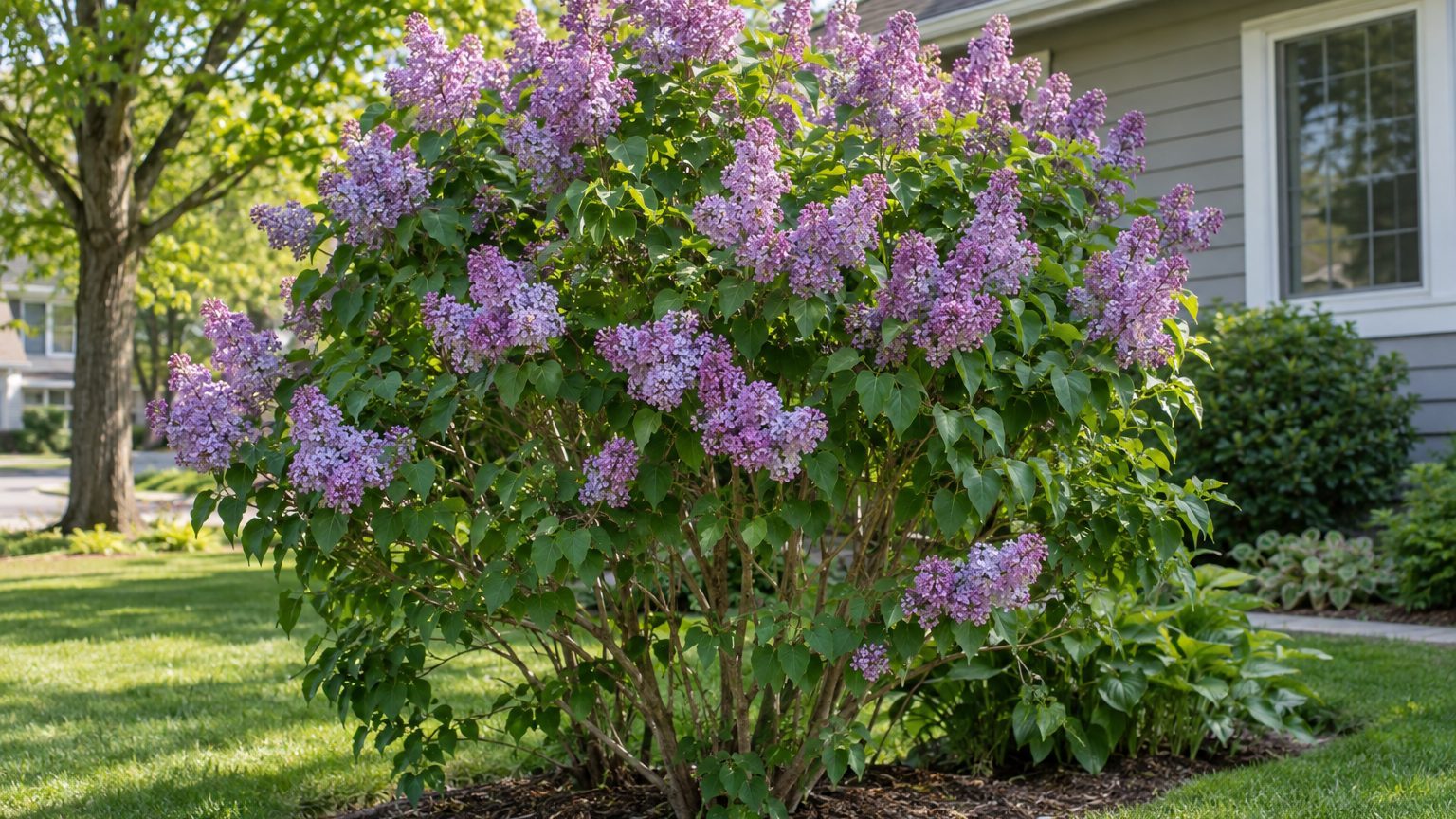
Fat purple clusters open on lilac bushes across Washington yards every spring, and their scent carries across the fence. May is the heart of that season, with the very first flowers sometimes showing in April and late bloomers running into June. Timing, care and local differences all shape how good the show looks.
When Do Lilacs Bloom in Washington?

Lilacs in Washington bloom mainly in May, opening in April in the mildest spots and as late as June in cooler ones, all within late spring. The rest of the year builds toward that moment.
- The last spring frost falls between February 27 and March 18 in the Seattle area, so buds that swell early can still meet a cold snap.
- In May, the flower clusters open and peak. A cool spell stretches the show, and a warm stretch shortens it.
- In June, right after the flowers fade, is the time to prune and shape. Cutting soon after bloom leaves the shrub the rest of the season to grow the wood that will carry next year’s flowers.
- In summer, the buds for next spring form on the new growth, which is why a July haircut removes the following year’s flowers.
- In autumn, the first frost arrives between November 13 and November 30 in the Seattle area, the leaves drop, and the shrub settles into dormancy.
- In winter, the cold rest matures the flower buds, so pruning now cuts off the spring show before it starts.
Those frost dates describe the mild, maritime west side, and the east side beyond the Cascades is high desert with a shorter season. The state spans USDA zones 4a-9a, so check the zone for your own address.
Washington — the year and the numbers
- State
- Washington
- USDA zones
- 4a-9a
- Last spring frost
- February 27 to March 18
- First fall frost
- November 13 to November 30
- Annual rain
- 39 in
- Lawn zone
- transition-season
- Source
- NOAA NCEI 1991-2020 Climate Normals, 32F freeze probabilities · Seattle
Which Lilacs Grow Best in Washington?
Lilacs do well in Washington wherever winters give them a real cold rest, because that chill is what matures the flower buds. Cold-winter yards suit them best. Hot, humid summers make lilacs struggle, and Washington’s summer conditions vary sharply across the state.
The wide zone range matters here. Yards at the cold end of the range give lilacs the rest they want, while the mildest yards give them a gentler winter, so expect bloom to vary with the site.
| Lilac type | How it does in Washington | Why |
|---|---|---|
| Common lilac (Syringa vulgaris) | Grows well across much of the state | Needs a cold winter rest to set flower buds |
| Lilacs in cold-winter yards | Flower reliably | Winter chill matures the buds fully |
| Lilacs in the mildest yards | Bloom varies from year to year | A gentler winter gives less rest to the buds |
Placement counts as much as the lilac itself. A sunny, open spot with air moving through the branches can help the shrub bloom.
When to Plant, Prune and Feed Lilacs in Washington
Lilac care follows the bloom, not the frost dates. A mild frost date does not mean early planting is safe, since cold, wet soil on the west side holds plants back well past the last freeze.
Pruning matters most because it decides whether next year’s flowers exist. The detail lives on the state’s page about when to prune lilacs, so this is the short version.
| Task | Best timing in Washington | Why then |
|---|---|---|
| Enjoy the bloom | May, with April or June in early or late seasons | Flowers open in late spring |
| Prune and shape | June, right after the flowers fade, or in May if the flowers fade early | Next year’s buds have not formed yet |
| Ask whether feeding is needed | Before applying fertilizer | Local soil conditions determine what the shrub needs |
| Hold the shears | Winter and July | Pruning then removes the coming flower buds |
Planting has no fixed month here. Choose a day when the soil is workable and not sodden, and set the shrub where it will get sun.
How Lilac Bloom Time Changes Across Washington
Washington’s geography splits the state into very different lilac climates, and bloom shifts earlier or later with them.
- Puget Sound: Marine air keeps late winter and spring mild, so lilacs here open on the early side, sometimes in April, though the gentler winter gives them less chill.
- Cascade foothills: Higher ground stays cooler for longer, so bloom comes later, often reaching into June.
- Yakima Valley and the east side: Winters are colder and springs warm up quickly, so lilacs get a solid cold rest and flower in May.
Within any one yard, a south-facing wall opens flowers sooner than a shaded north side.
Where to Get Lilac Advice in Washington
Washington State University Extension is the state’s source for tested, local plant advice, and it keeps an office in each county.
- The extension website carries plant guides on lilacs and other shrubs. Read them before pruning season, when you are deciding what to do.
- Your county extension office can help diagnose a sick or flowerless lilac. Ask the office what photos or samples it needs before you visit.
- The same office can explain whether a soil test is useful before you feed. Once the flowers fade, that is the moment to prune.
Common Questions
Why Isn’t Your Lilac Flowering?
Look at pruning history and light separately. If the shrub was pruned in late summer, fall or winter, the flower buds may have been cut off. If the shrub sits in heavy shade and the growth is leafy with few buds, it needs more sun.
Do Lilacs Need Full Sun in Washington?
A sunny spot generally supports flowering. Shaded lilacs often grow leaves and little else, and poor air movement leaves the shrub more prone to problems.
Can You Cut Lilacs for a Vase Without Hurting Next Year’s Blooms?
Cutting a few stems while the flowers are open works as a light early pruning. Take them from stems that carry flowers and keep the shrub’s shape, then finish any shaping soon after the bloom fades.