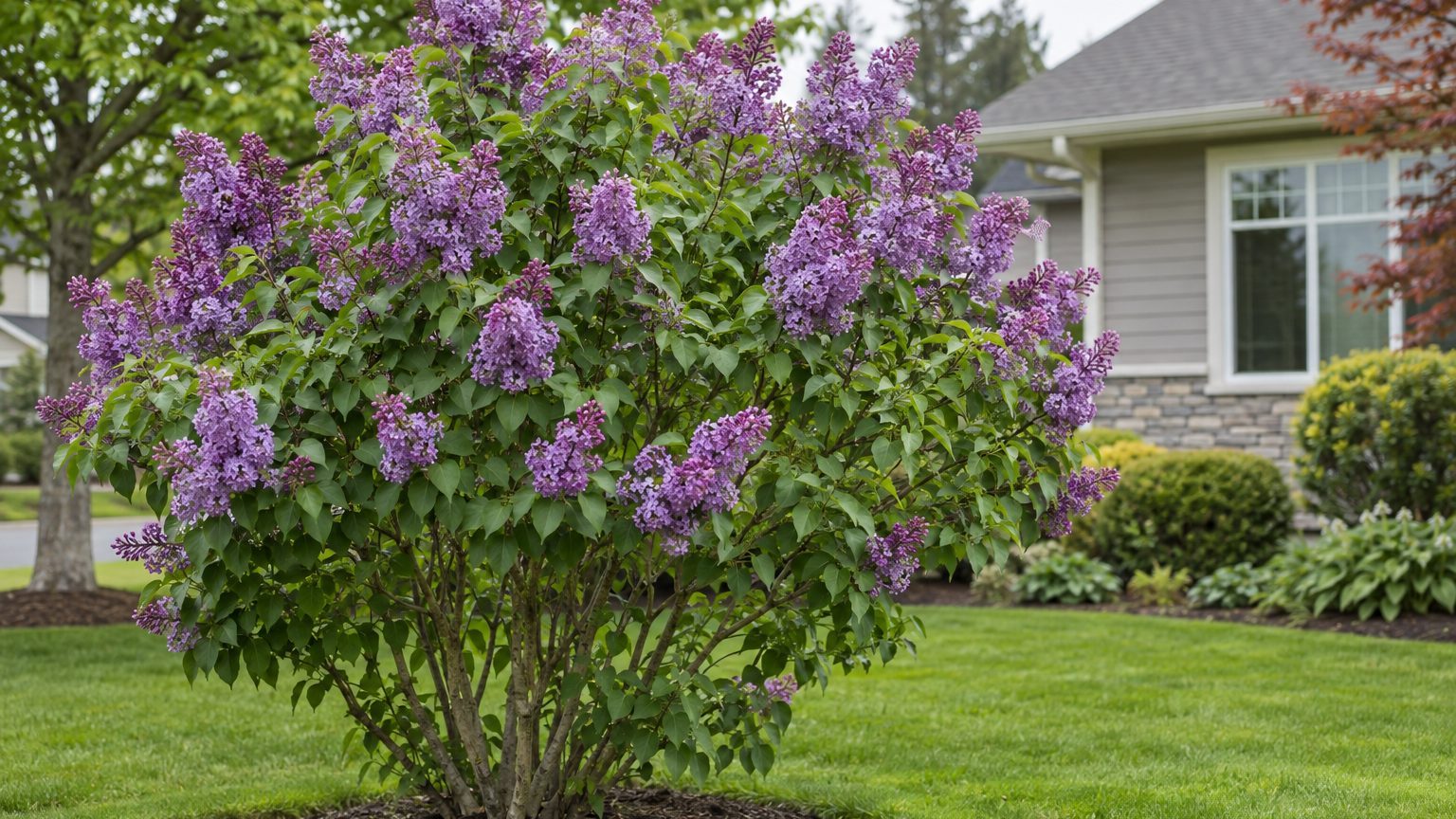
A lilac in full bloom announces itself from the sidewalk, long before you see the flowers, and the same shrub sets the calendar for the work that follows. Lilacs in Oregon flower in late spring, and the weeks right after the petals drop decide whether the shrub blooms again the next year.
When Do Lilacs Bloom in Oregon?

Lilacs in Oregon bloom mostly in May, with some yards opening in April and cooler ones holding their flowers into June. The year of a lilac runs like this.
- In early spring, new leaves push out while frost can still return, and the last freeze on the Portland side of the Cascades usually falls between March 6 and March 21.
- In May, the flower clusters open and the scent carries across the yard, which is the stretch most gardeners wait for.
- In June, soon after the blooms fade, comes the pruning visit, and it can also be done in May if the flowers finish early.
- Through summer, the shrub quietly forms the buds that will open next spring, so it needs little from you except water in dry spells.
- In fall, the leaves drop as the first freeze arrives, and in Portland that usually happens between November 11 and November 27.
- In winter, the bare branches rest in the cold, and the plant asks for nothing.
Those frost dates describe Portland, which sits west of the Cascades. Central and eastern Oregon are high desert with a much shorter season, and the USDA hardiness zone system runs from 4a to 9b across the state, so a yard east of the mountains follows a different rhythm.
Oregon — the year and the numbers
- State
- Oregon
- USDA zones
- 4a-9b
- Last spring frost
- March 6 to March 21
- First fall frost
- November 11 to November 27
- Annual rain
- 37 in
- Lawn zone
- transition-season
- Source
- NOAA NCEI U.S. Climate Normals 1991-2020, 32F freeze probabilities · Portland
Which Lilacs Grow Best in Oregon?
Lilacs do grow in Oregon, and they suit the cold-winter parts of the state well. A lilac needs a cold winter rest to mature its flower buds, so cold winters help it bloom.
The weak point is summer. Hot, humid weather stresses the shrub, which is why a spot with air movement and cooler nights treats it better than a stuffy corner.
| Lilac type | How it does in Oregon | Why |
|---|---|---|
| Lilac in a cold-winter yard, such as the high desert | Blooms reliably | A hard winter rest matures the flower buds |
| Lilac in a mild-winter yard on the west side | Blooms, with less cold rest behind the buds | Milder winters give the plant less chill |
| Lilac in a hot, humid summer spot | Struggles | Lilacs do poorly in sticky summer heat |
Specific cultivars are worth a conversation with a local nursery or your county extension office, since a named variety matters less than matching the shrub to your winter and summer conditions.
When to Plant, Prune and Feed Lilacs in Oregon
Lilacs bloom on last year’s wood and set next spring’s flower buds in summer, soon after they flower. That single habit dictates the timing of almost everything you do to the shrub.
Pruning in late summer, fall or winter cuts off the next spring’s flowers, so the cutting window is narrow and comes right after the blooms.
| Task | Best timing in Oregon | Why then |
|---|---|---|
| Prune and shape | June, or May if the flowers fade early | New buds have not formed yet |
| Fertilize | Soon after the flowers fade | The shrub is putting out fresh growth |
| Leave the pruners in the shed | July through winter | Next year’s buds are already on the stems |
Oregon extension advice is to prune, fertilize and shape lilacs almost every year, soon after they finish blooming in late spring. Planting follows ordinary shrub sense: set a lilac in the ground when the soil is workable, in full sun, with enough time for the roots to settle before the ground freezes. The page on when to prune lilacs in Oregon goes deeper on the cuts themselves.
How Lilac Bloom Time Changes Across Oregon
Oregon holds mild valleys, a cool coast and a cold high desert, and lilacs open on different schedules in each.
- Willamette Valley: mild winters and early spring warmth start growth sooner here, so flowering tends to come earlier than in the rest of the state.
- Oregon Coast: cool ocean air slows spring warming, so buds open later than in warm inland valleys.
- Central Oregon around Bend: cold nights and frost that lingers into spring push bloom later, though the cold winters suit the shrub.
- Blue Mountains and eastern Oregon: higher elevation and a short season delay flowering compared with the valleys on the west side of the Cascades.
Within a single town, a south-facing wall or a spot on a low slope can pull bloom ahead of a shaded corner.
Where to Get Lilac Advice in Oregon
Local help turns a guess into a diagnosis. Oregon State University Extension publishes lilac care advice, and the county office can answer questions about a particular shrub.
- The extension website has pruning and care guidance, which is worth reading before the flowers fade.
- Your county extension office can look at a sample leaf or stem if a shrub looks sick, and it is the place to ask about a soil test before you feed.
- When the flowers begin to brown, pick up the pruners and cut back the stems that have finished blooming.
Common Questions
Why Does a Lilac Grow Plenty of Leaves but Few Flowers?
Consider these factors together. A shrub that gets shade for much of the day and also puts out soft, lush growth after heavy feeding is trading flowers for foliage. Moving the feeding back and giving the plant more sun usually restores the blooms.
Why Do Lilac Leaves Turn Gray or Powdery in Summer?
A white, dusty coating on the leaf surface, especially on shrubs crowded together or in still air, points to powdery mildew. It looks worse than it is and rarely harms the plant. Thinning crowded stems for better air flow helps.
Should You Remove Faded Lilac Flowers?
Snipping off the spent clusters keeps the shrub tidy and sends energy to new growth. Make the cut just below the faded cluster, soon after the petals drop, so you do not take off the buds forming behind it.