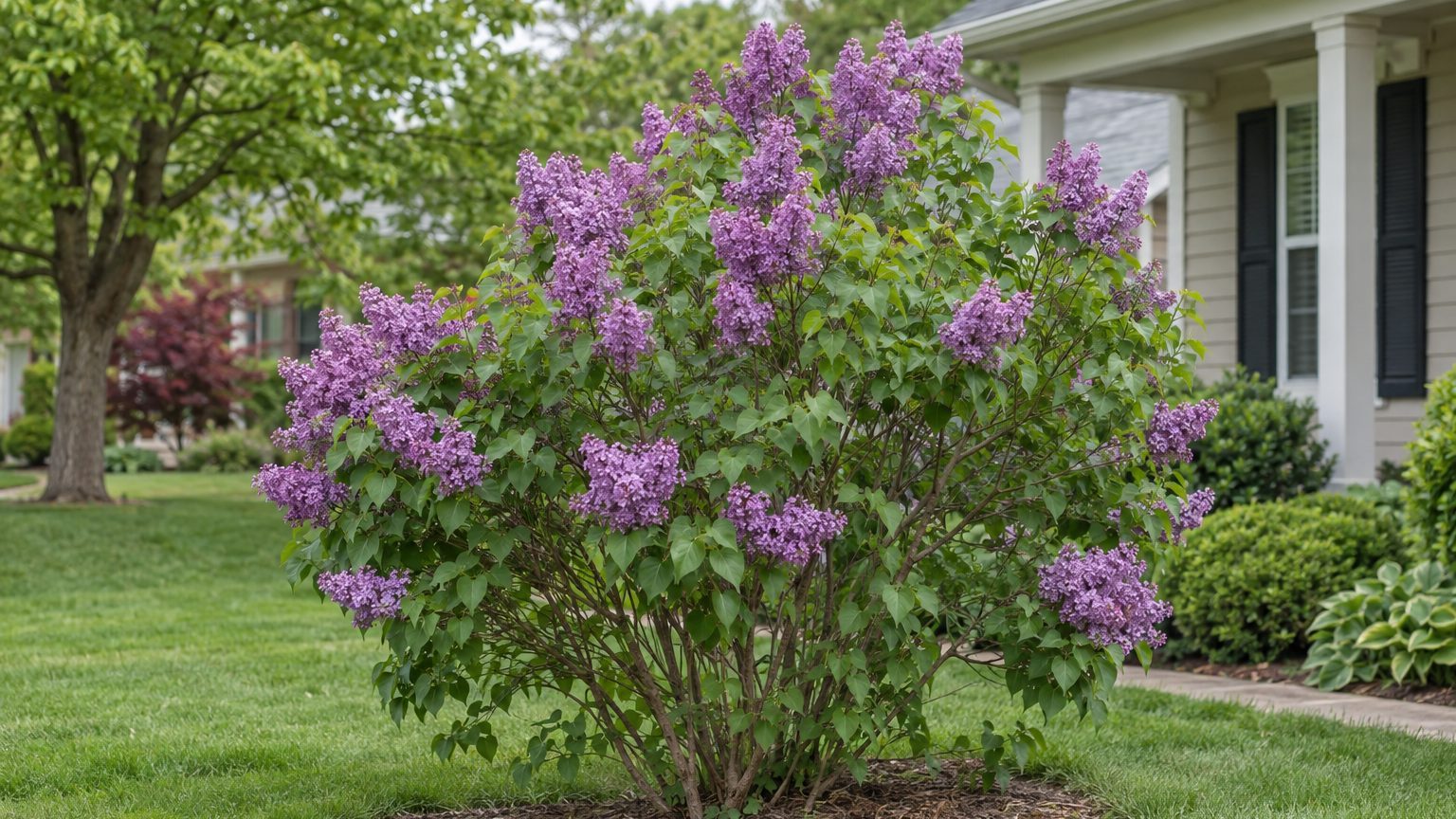
A lilac in a Mississippi yard has to get through hot, humid summers and winters that rarely turn truly cold, and that shapes everything about growing it here. Lilacs in Mississippi bloom with the local spring, and the shrub you choose matters as much as the calendar.
When Do Lilacs Bloom in Mississippi?

Lilacs here flower when your own spring arrives, and no fixed month applies across the state, because the show depends on how much winter chill the buds received. A lilac’s year runs in a steady loop, and each stage sets up the next.
- In spring, the flowers open as the weather settles, and in a mild-winter year the display can come thin or sparse.
- Right after the last flowers fade, prune the shrub, because the buds for next year begin forming soon afterward.
- Through summer, the plant sets its flower buds on the new growth, and long hot, humid stretches are when leaf problems such as powdery mildew show up.
- In fall, leave the pruners in the shed, since cutting now removes the buds that are already formed.
- In winter, the shrub rests, and the cold it receives during this rest is what ripens those buds for spring.
Frost dates tell you about risk to tender growth, not when the lilac wakes up. At the state’s reference station, the last spring freeze falls between March 6 and March 22. The first fall freeze there arrives between November 7 and November 22. Suburban and rural yards usually freeze later in spring and earlier in fall than that station, so check your own county. Mississippi sits in USDA hardiness zones 7b to 9a, which tells you only how cold the winter minimums get, not how well a lilac copes with the summer.
Mississippi — the year and the numbers
- State
- Mississippi
- USDA zones
- 7b-9a
- Last spring frost
- March 6 to March 22
- First fall frost
- November 7 to November 22
- Annual rain
- 57 in
- Lawn zone
- warm-season
- Source
- NOAA NCEI 1991-2020 Climate Normals, 32F freeze probabilities · Jackson
Which Lilacs Grow Best in Mississippi?
Lilacs can grow in Mississippi, but they are working against the climate. They do best where winters are cold and struggle in hot, humid summers, which is exactly what the state delivers. Plan on the lower-chill and Southern types rather than the classic fragrant shrub.
Common lilac (Syringa vulgaris) often struggles in high heat and humidity, even when a selection is sold as heat tolerant.
| Lilac type | How it does in Mississippi | Why |
|---|---|---|
| Common lilac (Syringa vulgaris) | Struggles, even in heat-tolerant selections | Heat and humidity invite powdery mildew |
| Southern lilacs, sold as early-blooming types | Usually grow and bloom | Labeled for the South, though less fragrant |
| Descanso hybrids | Worth trying | Developed in a mild-winter region |
| Low-chill cultivars | Bloom with little chilling | Still do best with a long, cold winter rest |
Look for lilacs that bring white, blue and pink flowers to Mississippi gardens, such as the white Angel White and the blue Blue Boy. Labels reading Southern lilacs or lilacs for the South point you toward the early-blooming group. Expect a lighter scent than the old-fashioned lilacs you may remember from cooler places.
When to Plant, Prune and Feed Lilacs in Mississippi
Pruning has a firm rule tied to the flowers, not the date. A lilac flowers on last year’s wood and sets next year’s buds in summer, so the window for cutting is short.
| Task | Best timing in Mississippi | Why then |
|---|---|---|
| Prune | Right after the flowers fade | The shrub has not yet set next spring’s buds |
| Avoid pruning | Late summer, fall and winter | Cuts then remove the coming spring’s flowers |
For planting and feeding, your local conditions matter more than a set date, so a county Extension office can give advice that fits your soil and your yard. The page When to Prune Lilacs in Mississippi goes further into cuts, tools and renewal pruning.
How Lilac Bloom Time Changes Across Mississippi
Mississippi is long from north to south, so spring does not arrive everywhere at once. The differences follow a predictable direction.
- Gulf Coast: Spring warms up early near the water, so lilacs there tend to flower sooner than inland, though the mild winter gives the buds less chilling.
- Mississippi Delta: Flat, open farmland heats quickly in spring and stays humid through summer, which is hard on common lilacs and favors the Southern types.
- North Mississippi hills: Winters run colder in the northern counties, so buds get more chilling and bloom tends to come a little later than farther south.
Whichever part of the state you garden in, the local spring sets the schedule, so watch your own shrub rather than a neighbor’s.
Where to Get Lilac Advice in Mississippi
Mississippi State University Extension can help with yard and garden questions. Staff there know local soils and the pests that move through your area.
- The Mississippi State University Extension site has plant guides and fact sheets, which are useful before you buy a shrub.
- Your county Extension office can take a soil sample for testing and can help diagnose a sick plant, so bring a cut stem with leaves.
- After the flowers fade, ask what your shrub needs before you prune.
Common Questions
Do Southern Lilacs Smell as Strong as Old-Fashioned Lilacs?
Not usually. The early-blooming Southern types grow and flower in warmer places, but they are less fragrant than the classic shrubs you may remember.
How Do You Tell Powdery Mildew on a Lilac?
Look for a whitish, dusty film on the leaves, especially during a warm, humid stretch in summer. That combination points to mildew, which common lilacs are prone to in humid heat.
Why Does a Lilac Look Healthy but Skip Its Flowers?
A green, leafy shrub with few or no blooms in spring often points to timing. Check when it was last pruned, and whether the past winter was mild enough that the buds never ripened.