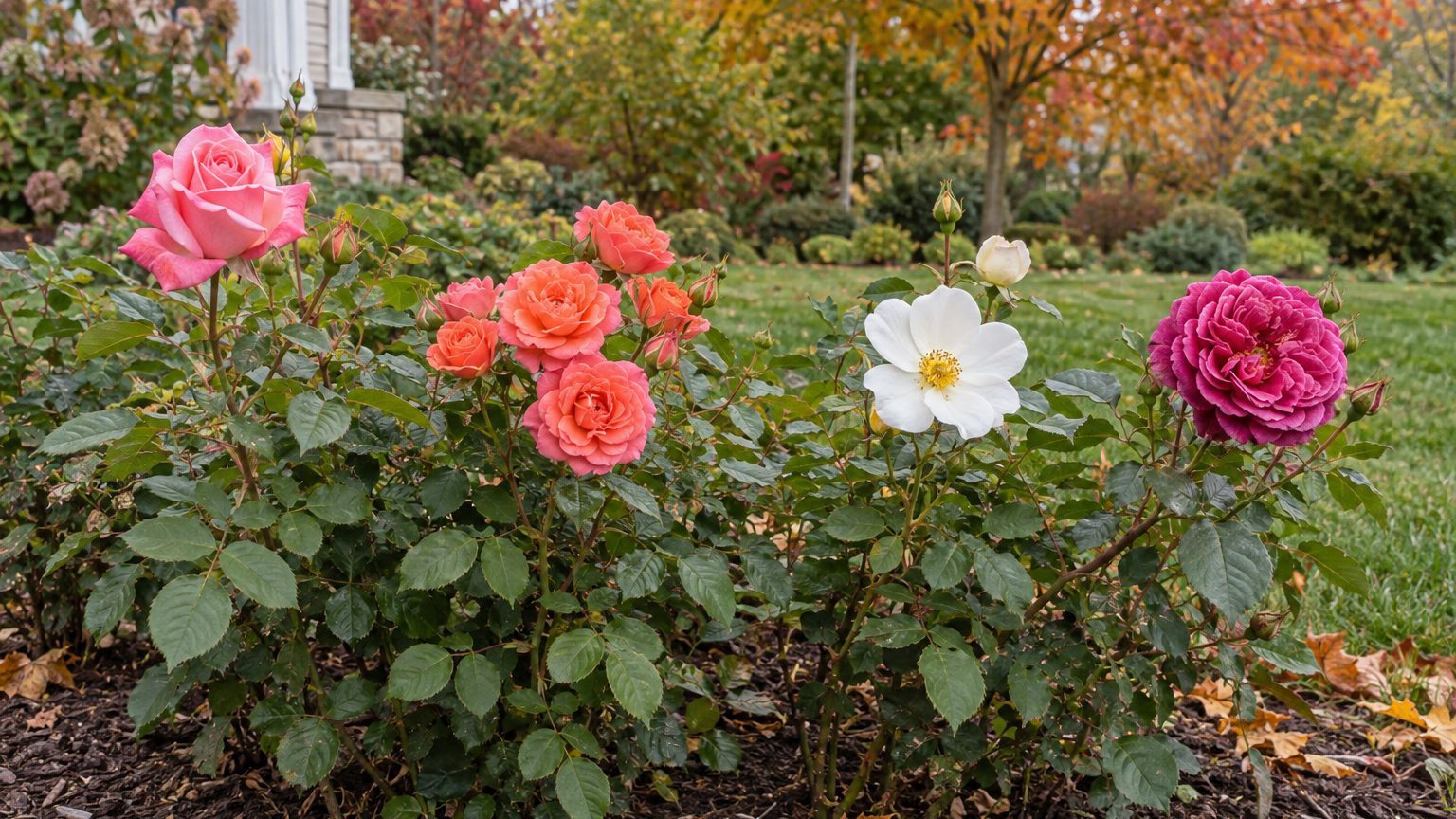
Roses tested in Texas have already faced heavy clay or loose sand, summer heat and dry spells. Tested roses save you money and spring disappointment.
Best Roses to Grow in Texas

Earth-Kind roses hold up across Texas, while antique roses have been tried around Austin; the Earth-Kind group adds pest tolerance plus heat and drought tolerance once established.
Earth-Kind Roses
Earth-Kind is a designation a Texas extension program gives to select cultivars. It goes only to roses that showed superior pest tolerance and outstanding landscape performance in research and field trials. The list now holds 21 types.
Once established, these roses handle heat and drought well, and many bloom in successive flushes over multiple seasons.
Antique Roses
In the Austin area, antique roses are recommended alongside Earth-Kind ones simply because they have been tried and tested for local soil and climate. They suit a yard where you want a rose that has already proven itself.
Some antique types, like ramblers and many climbers, flower once a year on last year’s wood. Prune those right after they bloom, never in early spring.
Double Knock Out
This shrub rose is known for a robust nature, cherry-red double flowers and a sweet, fruity fragrance.
It provides continuous blooms throughout the growing season, so it earns its keep in a front bed that should look good for months.
Pink and Yellow Earth-Kind Picks
An Earth-Kind rose has bubble-gum pink double blooms, reliable color and disease resistance, making it a favorite among home gardeners and landscapers.
Another produces soft yellow clusters of fragrant flowers and is called versatile. Ask a local nursery whether either is stocked before you plan a color scheme around it.
Texas — the year and the numbers
- State
- Texas
- USDA zones
- 6a-10a
- Last spring frost
- February 4 to March 1
- First fall frost
- December 1 to December 19
- Annual rain
- 52 in
- Lawn zone
- warm-season
- Source
- NOAA NCEI 1991-2020 Climate Normals, 32F freeze probabilities · Houston
How to Choose a Rose for a Texas Garden
Start with an Earth-Kind rose or another variety that is easy to grow. Starting there narrows the search before you match a rose to your soil and summer conditions.
After that, match the rose to what your yard actually deals with.
| Your situation | What suits it in Texas | Why |
|---|---|---|
| Humid summer and disease worries | Earth-Kind roses, or the bubble-gum pink double-flowered rose | Earth-Kind status requires superior pest tolerance, and the pink rose is noted for disease resistance |
| Heat and dry spells | Earth-Kind roses | Once established, they have excellent heat and drought tolerance |
| Little time to spend | Earth-Kind roses or Double Knock Out | They are easy to grow, and Double Knock Out blooms continuously through the season |
| Clay or sandy soil | Earth-Kind roses | They do well from well-drained acid sands to poorly aerated, highly alkaline clays |
Timing matters as much as variety. Bare-root roses go in best in January or February, before the buds break, which is usually on or before February 14. It can also be done in March, and potted roses can go in later. Where winters run harder than the Gulf end of the state, ask your county office which hardy types do well locally.
Which Roses Suit Different Parts of Texas
Texas stretches from the Gulf to the high plains, so the same rose behaves differently depending on where it sits, and the winter you plan for changes with the map.
- The Gulf Coast: Houston sits at the mild end of the state, so winter is the least worry here. Put the weight on heat and humidity tolerance, which is where Earth-Kind pest tolerance earns its place.
- Austin and the Hill Country: Earth-Kind and antique roses are the proven choices around Austin, and the Hill Country can run colder, so check local advice before buying anything tender.
- The Panhandle: Freezes arrive earlier and linger longer than on the coast. Choose roses with extra care, favor tough, proven types, and prune before the buds break.
North Texas differs again from each of these, so your county extension office can advise you on what survives its winters.
Rose Buying Mistakes to Avoid in Texas
Roses Nobody Tested Here
A rose that thrived in a catalog photo may not have faced Texas clay, heat or drought. It can sulk, drop leaves or fail, wasting the plant and the planting effort.
Look for the Earth-Kind designation, which is awarded only after field trials in Texas, or choose an antique rose with a local track record.
Ignoring Your Hardiness Zone
Texas covers USDA hardiness zones 6a to 10a, a range built on the average annual extreme minimum temperature. A rose that sails through a Gulf Coast winter may suffer in the Panhandle.
Find your own zone before you buy, and ask the nursery whether the rose has grown well in your part of the state.
Pruning at the Wrong Time
Repeat-blooming roses such as hybrid teas, floribundas and modern shrub roses are best pruned before they begin growing but after winter dormancy. That usually means February, though January or March can work depending on location, and mid-February is typical in Austin.
Cutting at the wrong moment trims away new growth or leaves old canes untidy. Watch the buds and the weather rather than the calendar alone.
Where to Get Rose Advice in Texas
Local advice beats general advice for roses, because soil, winters and disease pressure change from one county to the next. Reliable help is close at hand.
- Texas A&M AgriLife Extension publishes rose pruning guidance and the Earth-Kind rose list, so check it before you shop for plants.
- Your county extension office can tell you which roses grow well locally and when to prune in your area. Call before you buy in winter, ahead of bare-root planting time.
Common Questions
What Does Earth-Kind Mean on a Rose?
It marks a rose that earned a designation from a Texas extension program, awarded after extensive research and field trials showed superior pest tolerance and outstanding landscape performance.
Will Earth-Kind Roses Grow in Clay or Sandy Soil?
They do well across a wide range of soils, from well-drained acid sands to poorly aerated, highly alkaline clays.
Do Earth-Kind Roses Bloom More than Once?
Many have successive blooms over multiple seasons, so they keep flowering rather than putting on a single show.