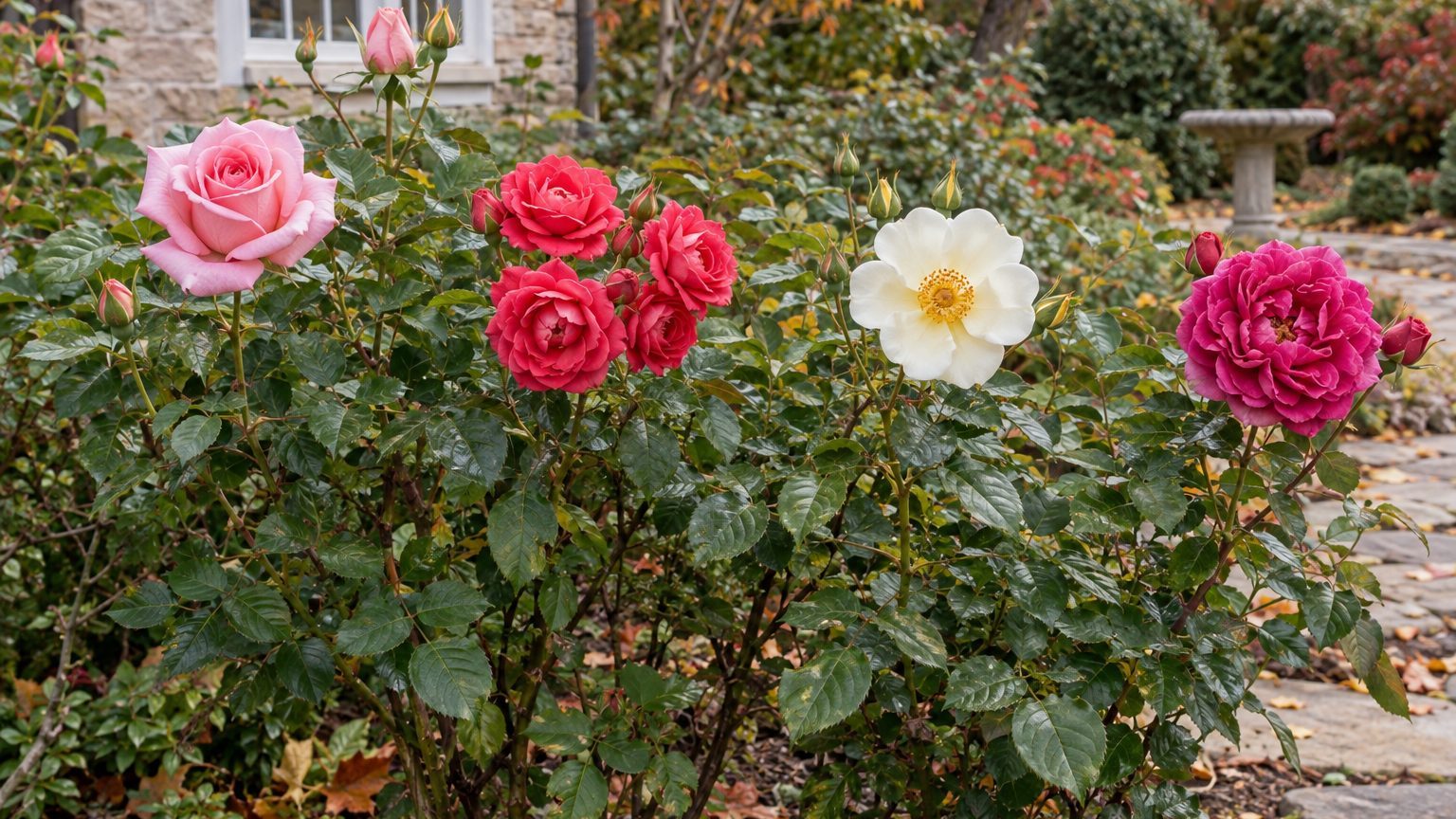
A shrub rose leafs out full of buds in spring while the hybrid tea beside it sends up bare, brown canes. That sight repeats in South Dakota yards after hard winters.
Best Roses to Grow in South Dakota

Hardy shrub roses are the types that hold up here. Winters fall in USDA hardiness zones 3b-5b, and many familiar garden roses were bred for milder climates. Humid summers also bring fungal trouble such as rust and black spot, so disease resistance matters alongside cold hardiness.
Hardy Shrub Roses
Hardy shrub roses are the low-effort route, because they do not require winter protection. You skip the November mounding and the spring unmounding, and you spend that time pruning and enjoying the blooms.
Look for tags that mention cold hardiness and disease resistance, and ask the nursery whether the rose reliably gets through a northern winter without covering.
Knock Out and Explorer Series
Knock Out roses and the Explorer series are shrub roses that perform well without extra protection. That makes them dependable picks for a front-yard bed you want to look good without a fall project.
Repeat-blooming shrub roses flower on new wood and take their pruning in spring, once the chance of a hard freeze has passed.
Canadian Artist Series
The Canadian Artist Series was bred to be winter hardy and disease-resistant, which helps with cold winters and fungal leaf problems in humid summers.
Choose from this series when you want a rose that behaves like a shrub but still gives you a garden-rose look in the border.
Hybrid Teas, Floribundas, and Grandifloras
Hybrid teas, floribundas and grandifloras were bred for warmer climates and cannot survive northern winters without protection. Grow them only if you accept the extra work.
That work means mounding the canes in November, after several hard freezes, once the rose is fully dormant.
South Dakota — the year and the numbers
- State
- South Dakota
- USDA zones
- 3b-5b
- Last spring frost
- April 29 to May 9
- First fall frost
- September 24 to October 4
- Annual rain
- 28 in
- Lawn zone
- cool-season
- Source
- NOAA NCEI 1991-2020 Climate Normals, 32F freeze probabilities · Sioux Falls
How to Choose a Rose for a South Dakota Garden
Start with how much effort you want to give a rose in winter. That answer sorts the choices faster than color or bloom shape, since the tender types and the hardy types ask for very different care.
Then think about summer leaf disease. Rust is not a serious rose disease, but picking varieties that resist black spot and other fungal problems lessens its effects.
| Your situation | What suits it in South Dakota | Why |
|---|---|---|
| Very cold winters | Hardy shrub roses, the Canadian Artist Series, Explorer roses | Bred to be winter hardy, and they do not require winter protection |
| Humid summers | Disease-resistant varieties, including the Canadian Artist Series | Resistance to black spot and other fungal diseases lessens the effects of rust |
| Little time | Knock Out roses or other hardy shrub roses | No mounding in fall and no unmounding in spring |
| You want hybrid teas | Hybrid teas, floribundas or grandifloras, with winter protection | They were bred for warmer climates and cannot survive northern winters unprotected |
For heat, drought and small spaces, ask your county office what has worked nearby. Once-blooming old garden roses, ramblers and many climbers need different pruning. It flowers on last year’s wood, so prune it right after it blooms and never in early spring.
Which Roses Suit Different Parts of South Dakota
The state spans a wide climate range, and the real difference for choosing roses is how hard the winter hits and how long spring stays unsettled.
- Black Hills: Gardens at higher elevation see a later last spring frost and a harsher winter than the plains. Lean toward hardy shrub roses here, and treat a hybrid tea as a project that needs protection.
- Sioux Falls and the eastern part of the state: At Sioux Falls the last spring frost falls April 29 to May 9. Suburban and rural yards usually see it later, so check your own county before planting, and keep your hybrid teas protected over winter.
Wherever you live, a shrub rose is the safer bet, and county extension staff can tell you how far your yard departs from the town figures.
Rose Buying Mistakes to Avoid in South Dakota
Buying Tender Roses Without a Plan
A hybrid tea, floribunda or grandiflora left uncovered may not survive a northern winter. Put the mound on in November after several hard freezes, or choose a hardy shrub rose instead.
Choosing Disease-Prone Varieties
Humid summers favor rust and black spot. A rose with poor resistance can lose its leaves and look ragged by midsummer. Inspect new plants for rust symptoms before you buy, and favor varieties sold as disease resistant.
Pruning Once-Blooming Roses in Spring
Old garden roses, ramblers and many climbers flower on last year’s wood. A spring pruning removes the buds, and the rose gives no bloom that year. Wait until just after flowering, and save spring pruning for the repeat-blooming types.
Where to Get Rose Advice in South Dakota
South Dakota State University Extension publishes rose guidance written for the state’s climate, and your county extension office knows your local conditions.
- The state extension site has articles on rose care and rose diseases such as rust, worth reading before you shop.
- Your county extension office can tell you how your yard compares with the nearest town, which helps when you time planting and pruning.
- Take a photo of any leaf spotting to the county office in summer, and ask which varieties have held up locally.
Common Questions
When Should You Feed Roses in South Dakota?
Feed in April and May, again in June at peak bloom, and stop after July. Feeding late pushes soft new growth that does not harden before winter.
When Should You Take the Winter Mound Off?
April is the usual month, and May works if spring stays cold. Remove the mound in stages rather than all at once, so new growth is not exposed suddenly.
Can You Plant Potted Roses Later than Bare-Root Roses?
Yes. Bare-root roses go in during April or May, while potted roses can wait until severe frost has passed and can even go in during June.