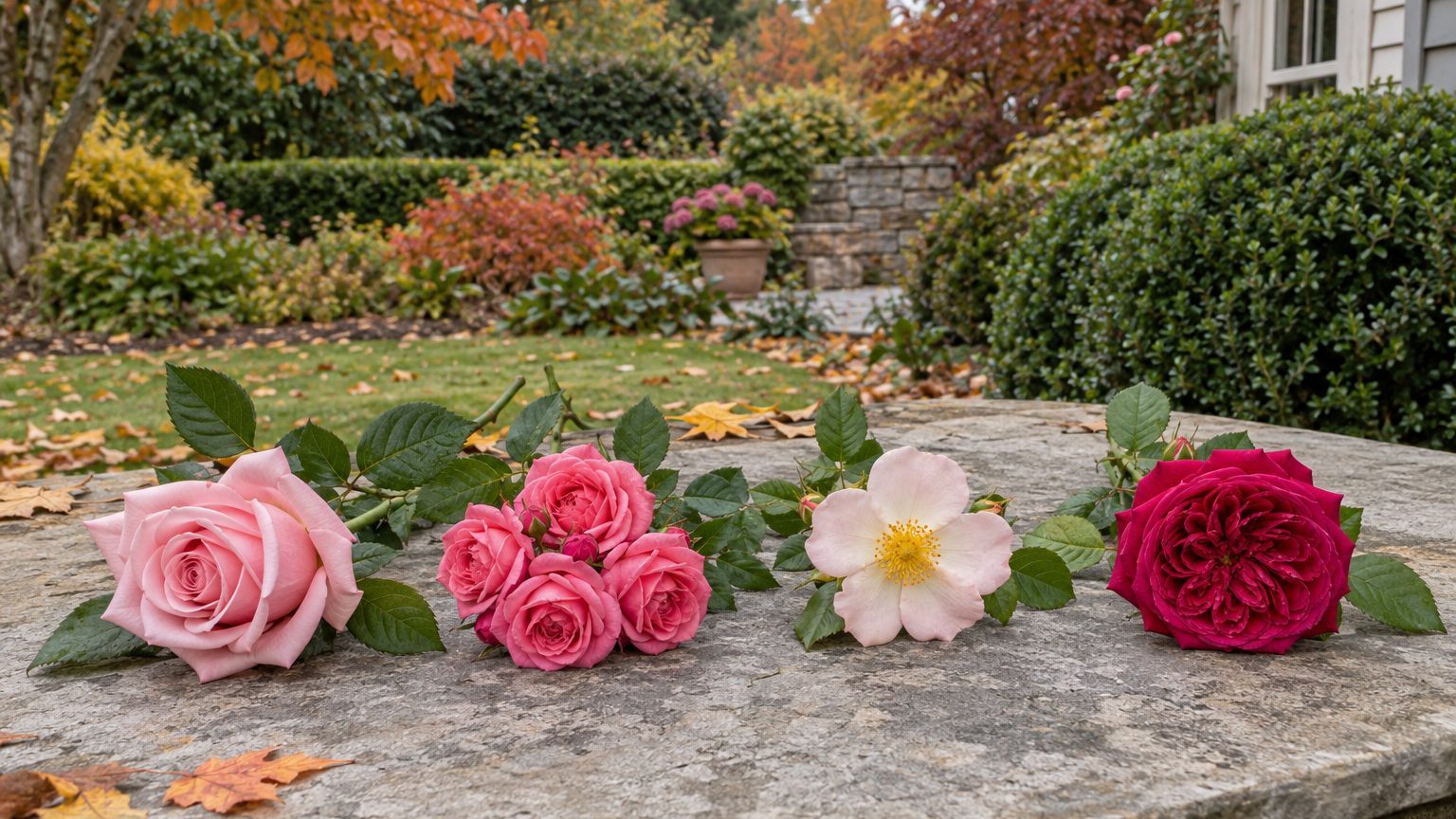
A rose that stays clean and keeps flowering through a muggy Carolina summer is chosen for its leaves as much as its blooms. In North Carolina, tough shrub roses such as Explorer roses and rugosas carry the load with little fuss, while hybrid teas ask for more work. The mountains, the Piedmont and the coast each tilt the choice a little.
Best Roses to Grow in North Carolina

Hardy, disease-resistant shrub roses do well here because they shrug off mountain cold, resist black spot in humid summers and need less prep than fussier types. Hardiness runs from USDA zone 5b to 8b across the state, so a rose that tolerates cold and damp leaves has room to work almost anywhere you garden.
Explorer Roses
Bred to be hardy, disease-resistant and repeat blooming, Explorer roses suit cold winters and sticky summers. They are hardy to zone 3A, so winter cold is rarely the worry. The flowers are semi-double to double, lightly scented, and keep coming through the season.
Most are shrubs, but ‘Louis Jolliet’ is a climber, ‘Captain Samuel Holland’ is a pillar shrub with trailing stems, and ‘Charles Albanel’ works as a groundcover.
Rugosa Roses
Rugosa rose is a hardy, multi-stemmed, disease-resistant shrub that spreads by suckers. It is also drought and salt tolerant, which makes it a natural for hot, dry spots and for beach plantings.
It prefers moist, acidic to neutral, well-drained soil in full sun, though it tolerates poor soil. Many cultivars offer single, semi-double or double flowers in various colors, with fewer prickles than the species.
Hybrid Teas
Hybrid teas are grown for large, fragrant, solitary blooms, and plenty of gardeners think the flowers are worth the effort. The effort is real, though. They need a rigorous spray program to keep black spot at bay, so they suit a gardener who enjoys regular rose chores.
They repeat bloom, so the heavy pruning comes in February to March, mid-February to early March as dormancy breaks.
Floribundas and Miniatures
Floribundas bear clusters of small flowers, and miniature roses bear small flowers on dwarf plants. Floribundas repeat bloom and follow the same pruning window as hybrid teas.
Miniatures fit a small bed or a large pot, and floribundas give a bed of color without the single stiff stems of a hybrid tea.
Climbers and Ramblers
Ramblers flower from old wood, while repeat-blooming climbers can flower from new wood. Once-blooming roses, which include old garden roses, ramblers and many climbers, flower once a year on last year’s wood. Prune them right after they bloom, never in early spring, or you cut off the flower buds.
North Carolina — the year and the numbers
- State
- North Carolina
- USDA zones
- 5b-8b
- Last spring frost
- March 23 to April 5
- First fall frost
- October 30 to November 8
- Annual rain
- 44 in
- Lawn zone
- transition-season
- Source
- NOAA NCEI U.S. Climate Normals 1991-2020, 32F freeze probabilities · Charlotte
How to Choose a Rose for a North Carolina Garden
Start with the problem your yard actually has. A wet, leafy summer calls for different roses than a dry slope or a bed you rarely visit.
Disease resistance and hardiness matter more here than flower size, and the table sorts the common situations.
| Your situation | What suits it in North Carolina | Why |
|---|---|---|
| Very cold winters | Explorer roses or rugosas | Explorer roses and rugosas are hardy, and Explorer roses reach zone 3A |
| Humid summers | Rugosas or compact shrub roses | They resist black spot, which hybrid teas fight with a rigorous spray program |
| Heat and drought | Rugosa roses | They tolerate drought and poor soil in full sun |
| Little time | Hardy garden roses and shrub roses | They need less prep and no yearly rigorous pruning |
| Small space | Miniature roses | The plants stay dwarf and carry small flowers |
Climbing types fill the opposite need, a fence or trellis. Among Explorer roses, ‘Louis Jolliet’ climbs and ‘Charles Albanel’ covers ground, so the Explorer family can handle a range of garden jobs.
Which Roses Suit Different Parts of North Carolina
Elevation and distance from the Atlantic change what a rose has to put up with, so the same shopping list needs small adjustments across the state.
- Blue Ridge mountains: Spring arrives several weeks later than in the Piedmont, so lean on Explorer roses and rugosas, which tolerate real cold. Hybrid teas need more winter care up here.
- Piedmont and Charlotte: In Charlotte, the last spring frost falls between March 23 and April 5, while other Piedmont gardens differ. Disease resistance still matters through the humid summer.
- Coastal plain and beaches: Spring comes earlier than inland, and salt wind is a factor. Rugosas stand out because they tolerate salt and drought.
Frost dates mark the risk of a late freeze on new growth, so pruning repeat-blooming roses follows the swelling buds within the recommended window.
Rose Buying Mistakes to Avoid in North Carolina
Fragile Types for Cold Sites
A hybrid tea planted on a cold mountain site asks for more winter prep than a hardy garden rose, and that work repeats every year. If you would rather skip it, choose an Explorer rose or a rugosa, which need less prep.
Disease-Prone Varieties
A variety prone to black spot leaves you spraying on a program to keep leaves on the plant through humid weather. A compact shrub rose that resists black spot sidesteps that routine, and it can be shaped and pruned as needed without the yearly hard pruning hybrid teas demand.
Roses in the Wrong Spot
Explorer roses prefer full sun and fertile, moist, well-drained soil, and a shady or soggy bed shortchanges them. Check the light and drainage before you buy. Where the soil is poor, a rugosa in full sun is the more forgiving choice.
Where to Get Rose Advice in North Carolina
Variety lists work best when someone local checks them against your soil and elevation. North Carolina’s own extension network is the place to start.
- North Carolina Cooperative Extension offers rose and plant information written for the state, and it is worth a read before you buy.
- Your county extension office can tell you which varieties suit your elevation and soil, so call in late winter before pruning and planting season.
Common Questions
When Should You Plant Bare-Root Roses in North Carolina?
February to March is the best window. Late fall, winter and early spring also work, so you can plant in January, April, November or December. Potted roses can go in later.
When Should You Feed Roses in North Carolina?
Feed from March through August, starting when the first leaves open and repeating after each bloom flush. September can still work, but stop feeding about six weeks before the first frost.
Can Roses Be Used as a Hedge or Groundcover?
Yes, depending on the cultivar. Explorer roses can serve as a groundcover, on a trellis, as a hedge, as a specimen or in groups.