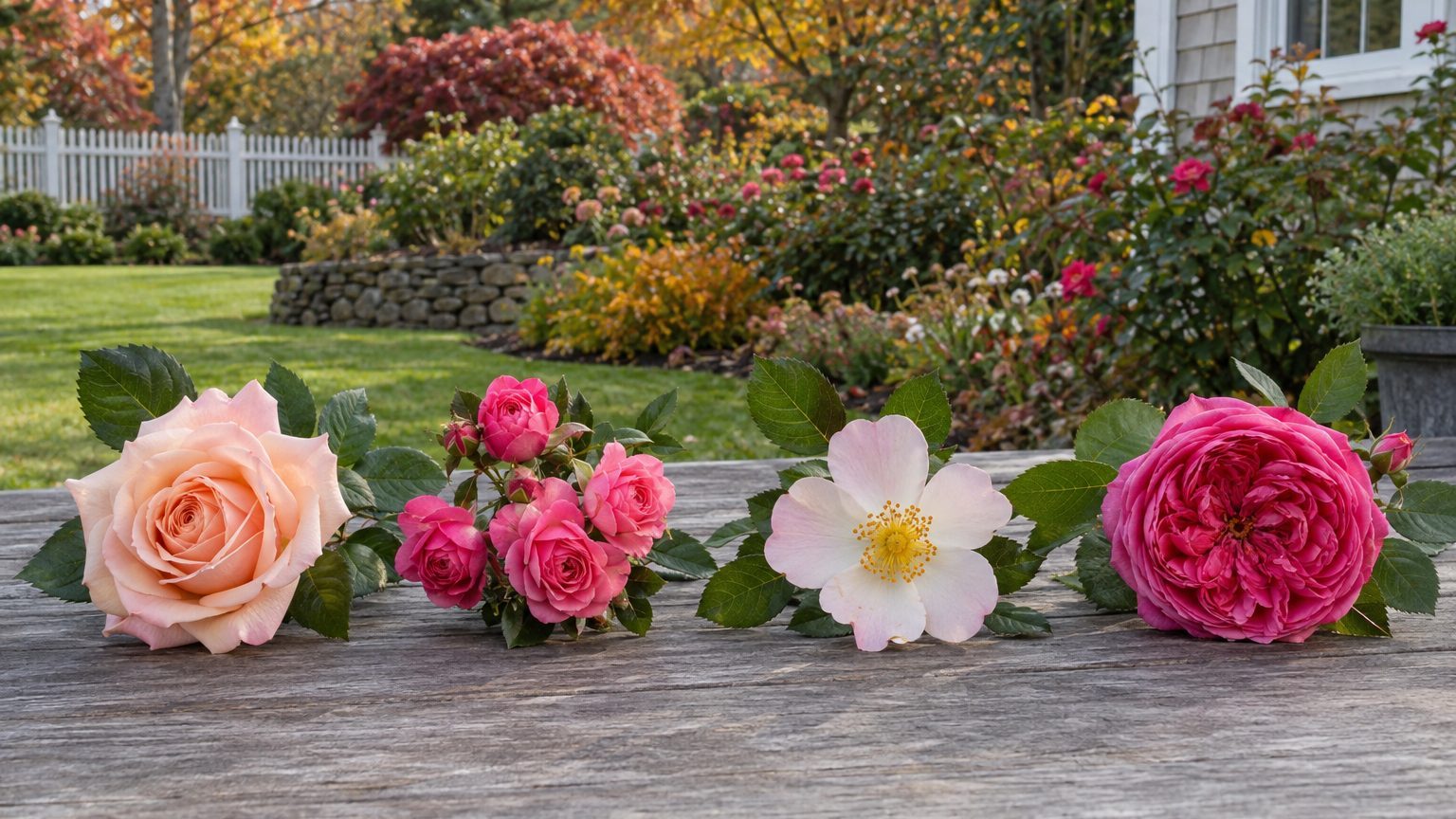
A rose that comes through a Newfoundland and Labrador winter with living canes in spring is usually a tough shrub rose, not a florist’s hybrid tea. Choosing the type before the color decides whether the bush keeps flowering for years.
Best Roses to Grow in Newfoundland and Labrador

Hardy shrub roses, polyanthas, hybrid perpetuals and old-fashioned roses are strong candidates, while floribundas need winter protection in cold winters. St. John’s sits in Canadian hardiness zone 6a. That Canadian rating is built from climate variables that differ from those behind USDA zones and does not convert to a USDA zone, so treat it as a rough guide only.
Explorer Roses
The Canadian Explorer series carries the names of explorers such as Champlain, Cabot and Kelsey. Some are shrubs and some are climbers, and hardy shrub roses of this kind perform well without extra protection. A climbing Explorer is a sensible choice for a fence or a trellis.
Meidiland Roses
The Meidiland series has proved hardy in cold-climate trials, though some varieties are marginal in colder conditions. In a sheltered yard near the coast it is a reasonable bet. In an exposed or colder garden, ask the seller about the specific variety before buying.
Knock Out and Other Shrub Roses
Shrub roses as a group are more winter hardy than hybrid teas. Knock Out performs well without extra protection, which makes it a good choice for a new rose grower who would rather not spend a November afternoon wrapping canes.
Polyanthas and Floribundas
Polyanthas and floribundas prove more winter hardy than hybrid teas and grandifloras. They suit a front border where you want steady color, but floribundas still need winter protection in cold winters.
Hybrid Perpetuals and Old-Fashioned Roses
Hybrid perpetuals and many old-fashioned roses are also tougher in winter than hybrid teas. They bring fragrance and a classic shape to the garden. Note that many old garden roses bloom in a single big flush rather than putting on a long show.
Hybrid Teas and Grandifloras
These are the least hardy types on this list. They can be grown here, but only if you accept the work of covering them for winter. If that sounds like too much, put the space toward a shrub rose.
Newfoundland and Labrador — the year and the numbers
- State
- Newfoundland and Labrador
- Hardiness zones
- 6a
- Last spring frost
- May 30
- First fall frost
- October 17
- Annual rain
- 60 in
- Lawn zone
- cool-season
- Source
- Environment and Climate Change Canada — Canadian Climate Normals 1981-2010, station ST JOHN'S A · St. John's
How to Choose a Rose for a Newfoundland and Labrador Garden
Start with how much winter effort you are willing to give. Hardy roses need less winter work, while tender roses need covering and care each fall.
Then think about what you want the rose to do: climb, fill a border, or flower all summer.
| Your situation | What suits it in Newfoundland and Labrador | Why |
|---|---|---|
| Very cold winters | Explorer series shrub roses | Hardy shrub roses of this kind perform well without extra protection |
| Little time for winter chores | Knock Out or another hardy shrub rose | They need no extra covering, unlike hybrid teas |
| A fence or trellis to cover | Climbing Explorer roses | The series includes shrub and climbing forms |
| Flowers through the summer | Floribundas and modern shrub roses | They bloom repeatedly and are hardier than hybrid teas |
| A colder or exposed yard | Explorer series shrub roses | They are a safer choice than varieties known to be marginal in colder conditions. |
| An old-fashioned look | Hybrid perpetuals and old-fashioned roses | More winter hardy than hybrid teas and grandifloras |
Repeat-blooming roses such as floribundas and modern shrub roses are pruned in April or May, once shoots have started to grow, and March is a fallback in a mild spring. Feed monthly from April and stop in August, so late growth can harden before winter.
There is no local extension page on rose timing, so these months follow the nearest comparable climate. Confirm them with a garden centre, a rose society or a provincial gardening group.
Which Roses Suit Different Parts of Newfoundland and Labrador
The province is not one climate, and the gap between the Avalon coast and the far north changes how bold you can be.
- St. John’s: The last spring frost falls on average around May 30, which means in one year out of two it comes later. Planting bare-root roses in April or May works here, and hardier types still get the best odds.
- Labrador and other northern or upland districts: Spring frost arrives weeks behind St. John’s, so wait longer before uncovering or planting. Stay with the hardiest shrub and Explorer roses and skip hybrid teas.
Whatever your district, a frost date is a midpoint, never a safe date to plant by.
Rose Buying Mistakes to Avoid in Newfoundland and Labrador
Hybrid Teas Without Protection
Hybrid teas, floribundas and grandifloras need winter protection in cold winters. Skipping it costs you canes, and sometimes the whole plant. Cover them in late November, after hard frosts have killed the leaves, because covering earlier traps mild, damp air around green growth.
Pruning Once-Bloomers in Spring
Old garden roses, ramblers and many climbers flower on last year’s wood. Pruning them in early spring removes the buds, and you lose the year’s flowers. Prune them right after they bloom instead.
Buying Without Checking Hardiness
A pretty catalog photo says nothing about winter. Choose only types hardy enough to survive the coldest winters in your area, and treat a Canadian zone rating as a rough guide, not a promise. If a seller cannot say how a variety copes with cold, pick another.
Where to Get Rose Advice in Newfoundland and Labrador
Local advice comes from provincial growing guidance and from people who grow roses nearby. Start with growers in your own district.
- The provincial agriculture department is the place to start for general plant and growing guidance.
- A local garden centre can tell you which varieties came through recent winters, so visit in early spring before you buy.
- A rose society or provincial gardening group can confirm timing for your district, and a call before planting saves guesswork.
Common Questions
When Should You Take Winter Protection Off Roses?
May is the usual month, and early May works before new growth begins. In a mild spring, April is also fine. Remove the mulch mound a little at a time if frost is still in the forecast.
Can You Plant a Potted Rose Later than a Bare-Root One?
Yes. Bare-root roses go in during April or May, while potted roses can be planted later. Water a late planting regularly while the roots settle.
When Should You Feed Roses in Newfoundland and Labrador?
Feed monthly from April through July, with August as the last feeding if you want one. Stop after that, so soft new growth does not form just as cold weather approaches.