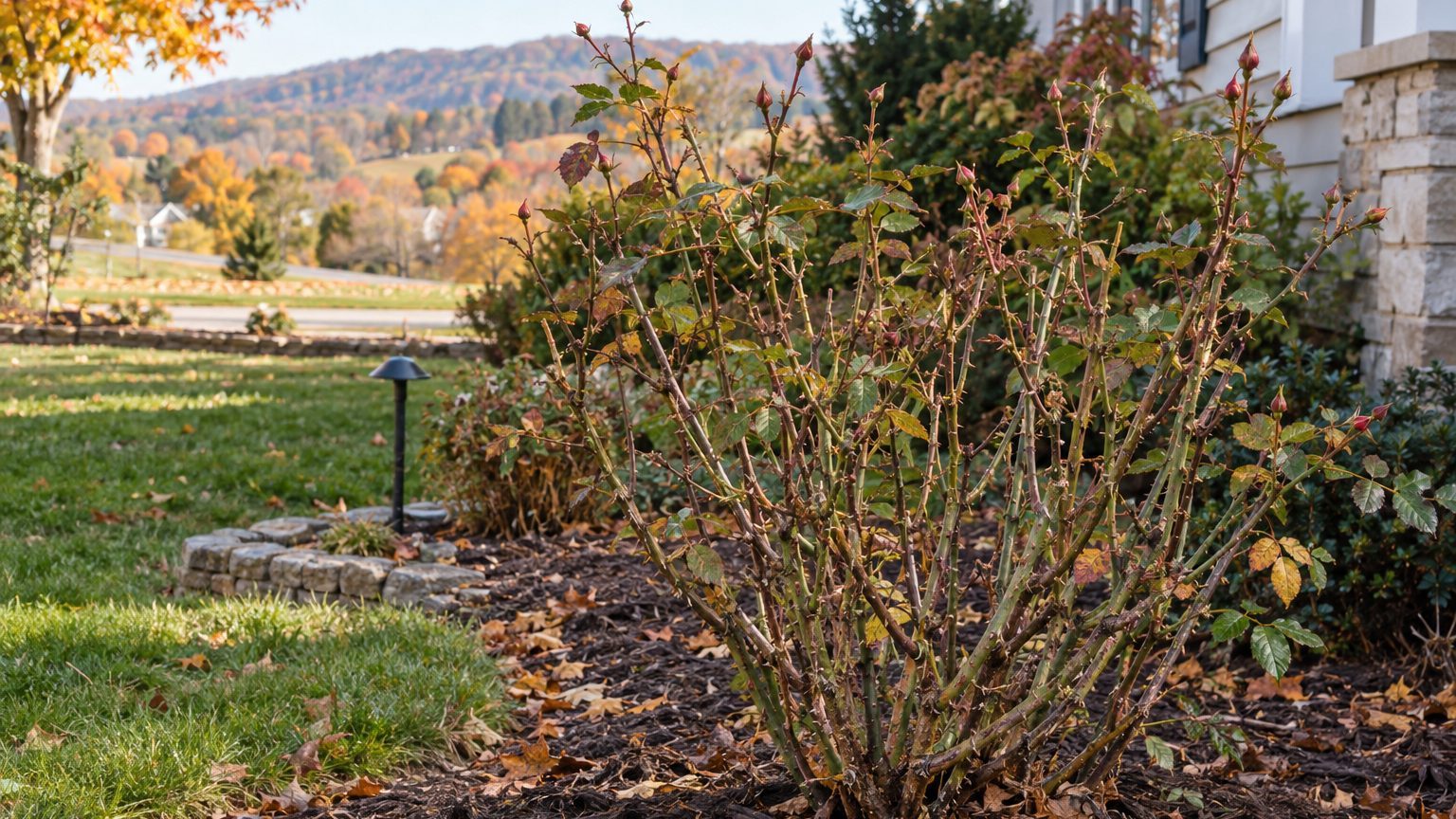
A rose cane that sits dormant and bare through winter starts swelling at the buds as spring warms, and that swelling is the cue to bring out the pruners. In West Virginia, that work belongs mostly to March, with a little room on either side depending on the yard and the rose.
When to Prune Roses in West Virginia

Repeat-blooming roses are best pruned in March in West Virginia. The job can also be done in February or April, depending on how the season runs and how high your yard sits.
Once-blooming roses follow a different rule. They flower on last year’s wood, so a spring cut removes the coming season’s blooms.
| Type of rose | When to prune in West Virginia | Why |
|---|---|---|
| Hybrid teas, floribundas and modern shrub roses | March, or February to April | They bloom on new growth, so a heavy spring pruning just as the buds break dormancy sets up the season’s flowers. |
| Old garden roses and once-blooming climbers | Right after they bloom, never in spring | They flower once a year on last year’s wood, and spring pruning removes the buds. |
| Repeat-blooming climbers | March, or February to April | They flower on current season’s growth, so they are pruned in spring once winter protection comes off. |
Old garden roses deserve a lighter hand than modern roses. Hard pruning can ruin their graceful shape and sharply reduce flowering. Ramblers also bloom once, so they get the same after-bloom trim.
West Virginia — the year and the numbers
- State
- West Virginia
- USDA zones
- 5a-7a
- Last spring frost
- April 9 to April 23
- First fall frost
- October 18 to November 1
- Annual rain
- 46 in
- Lawn zone
- cool-season
- Source
- NOAA NCEI 1991-2020 Climate Normals, 32F freeze probabilities · Charleston
How to Tell When Your Roses Are Ready to Prune
Months give you a window, and the plant itself tells you the day. These signs are worth watching as late winter turns to spring.
- Buds along the canes begin to swell, which tells you the rose is breaking dormancy and the pruners can come out.
- Forsythia comes into bloom, a long-standing signal growers use to start the pruning season on repeat-blooming roses.
- The hardest freezes have passed, so new growth stimulated by your cuts is less likely to be caught by a late cold snap.
- Any winter mound of soil or mulch has been pulled back from the base, since pruning follows the removal of winter protection.
- Canes show green under the bark when scratched lightly, while brown and shriveled wood is dead and should be cut back until you reach healthy tissue.
A mild stretch in February can tempt you to start early, but swelling buds are a better guide than a warm afternoon.
Should You Prune Roses in Fall or Winter in West Virginia?
Fall and winter are for very little cutting. Long canes can be shortened a bit so winter wind does not whip them around and loosen the roots, but leave shaping cuts for spring.
Severe pruning waits for spring. A heavy cut in fall invites tender new growth that may not harden off before cold arrives, and the canes you leave also help shelter the crown through winter.
Feeding follows the same logic. Stop fertilizing late in the season so new growth can harden before winter. Feeding is best from April through August here, with March possible once the first leaves appear.
How Rose Pruning Dates Shift Across West Virginia
The state ranges from USDA hardiness zone 5a to 7a, and elevation shifts the pruning window across West Virginia.
- Charleston and the Kanawha Valley: The river valley warms earlier, so buds swell sooner and March pruning fits comfortably. Charleston’s last spring freeze falls between April 9 and April 23.
- The Allegheny Highlands: Higher ground stays cold longer in spring and freezes earlier in fall, so lean toward the later part of the window and let the buds decide.
- The Eastern Panhandle: Treat this area as in between, and watch forsythia in your own neighborhood as your cue.
Roses in colder pockets also gain from hardy varieties, since a rose bred for a colder zone needs little added protection in a milder one.
Where to Get Rose Advice in West Virginia
For advice tuned to your own yard, West Virginia University Extension is the place to start, and its county offices know the local conditions.
- The county extension office can answer questions about your rose varieties and local timing, and a visit in late winter lets you plan before the buds swell.
- Master Gardener volunteers connected to the county office can help you assess cane damage or disease.
Common Questions
Can You Prune Roses in February in West Virginia?
February works in some years, mainly for repeat-blooming roses in milder yards. Wait for swelling buds and keep an eye on the weather, since a hard freeze after cutting can nip new growth.
Should You Cut Dead Canes Before the Buds Swell?
Dead wood can come out whenever you spot it, since brown, shriveled canes are no use to the plant. Save the shaping cuts on repeat bloomers for spring, when you can see where living wood begins.
What If You Missed Pruning a Once-Blooming Rose?
Leave it alone until the flowers fade, then prune right after bloom. Cutting in spring would remove the buds that carry this year’s flowers, so a late pruning is better than an early one.