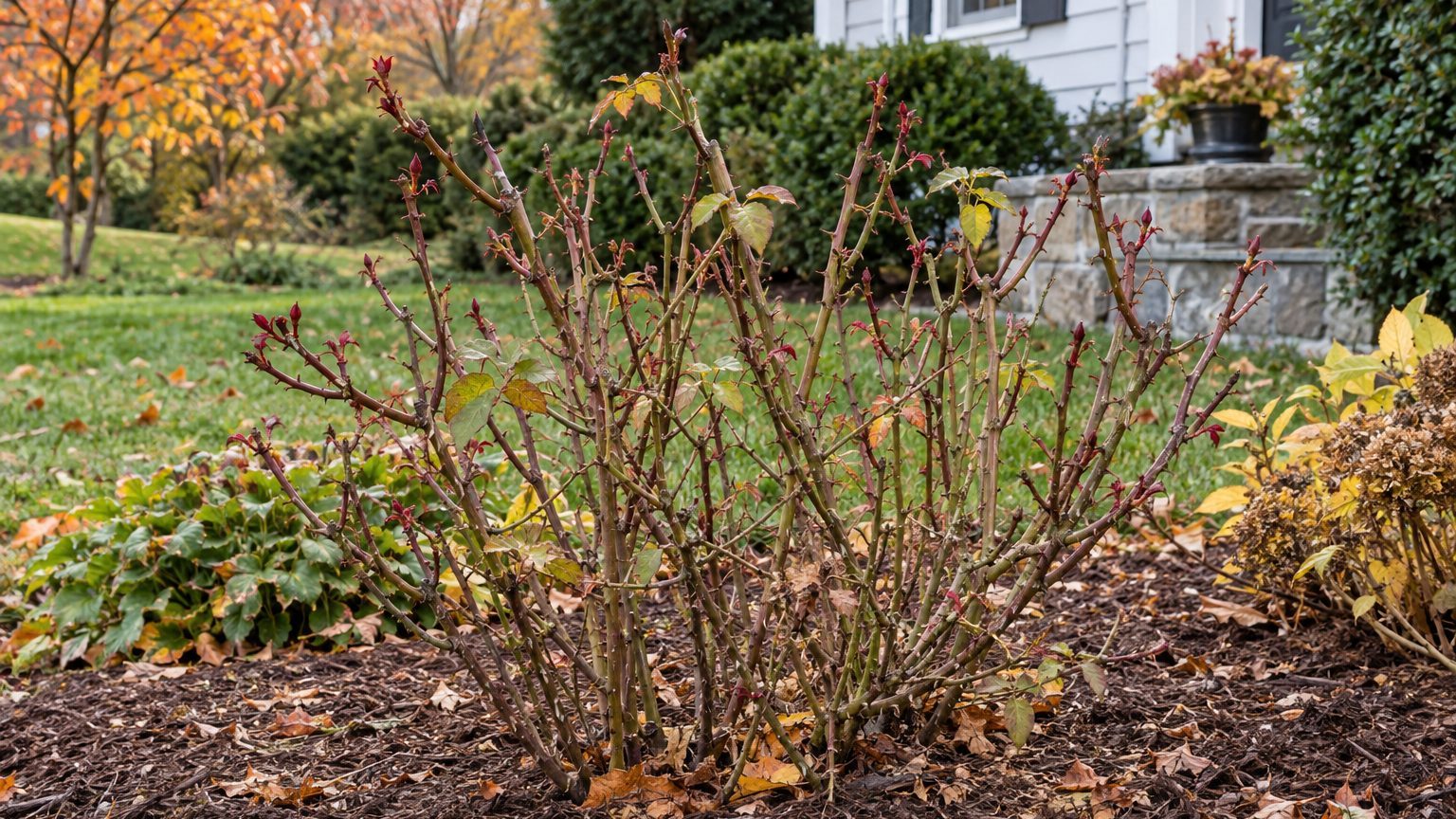
A rose bed in Connecticut starts to look different once the mound of mulch comes off and the buds on the canes begin to swell. That is the moment most roses are ready for the pruners, and a few types are not. Timing depends on whether the rose blooms on new wood or on last year’s wood.
When to Prune Roses in Connecticut

Prune repeat-blooming roses in March and April. If a mild stretch arrives early and the forsythia is already in bloom with the winter protection off, the job can also be done in February.
Roses that bloom only in a single flush follow a different rule. They flower on last year’s wood, so a spring haircut removes the very stems that carry the flowers.
| Type of rose | When to prune in Connecticut | Why |
|---|---|---|
| Hybrid teas, floribundas and modern shrub roses (repeat-blooming) | March to April, with February possible when the forsythia is in bloom | They flower on new growth, so spring cuts shape the stems that will bloom, and the winter protection is off by then. |
| Old garden roses and once-blooming climbers | Right after they finish blooming, never in spring | They bloom in one flush on last year’s wood, and spring pruning would cut off the flower buds. |
Repeat-blooming climbers sit between the two. They flower on new growth like other repeaters, so they are pruned in spring once the winter protection comes off. Hybrid teas, floribundas and grandifloras are the roses most likely to need that protection in the first place, which is why their pruning waits until it is removed.
Connecticut — the year and the numbers
- State
- Connecticut
- USDA zones
- 6a-7b
- Last spring frost
- April 2 to April 12
- First fall frost
- October 28 to November 10
- Annual rain
- 44 in
- Lawn zone
- cool-season
- Source
- NOAA NCEI 1991-2020 Climate Normals, 32F freeze probabilities · Bridgeport
How to Tell When Your Roses Are Ready to Prune
Connecticut springs swing between mild spells and cold snaps, so the plant itself is a more dependable guide than a date on the wall.
- Buds along the canes are swelling and turning plump, which tells you the rose is waking up and you can see which stems survived the winter.
- Forsythia is in bloom, a long-trusted signal among rose growers that the pruning season has begun.
- The winter mound or collar has been pulled back from the base of the plant, since pruning comes after protection is removed and not before.
- The ground has thawed enough to work, so the roots are active and the canes will not be left exposed to a deep freeze right after cutting.
- The hardest freezes are behind you, which means new growth that follows your cuts is unlikely to be burned back.
Buds that swell during a warm week in late winter are a reason to get ready, not to cut, so wait until the cold has truly loosened its hold.
Should You Prune Roses in Fall or Winter in Connecticut?
No. The calendar favors March and April, though February can work when the forsythia blooms and winter protection is off. The only fall cut worth making is shortening very long canes a little so wind does not whip them around, and nothing more than that.
What belongs to the cold months is protection. Mound or cover the plants in November, after several killing freezes have put them into dormancy, and December works too. Hybrid teas, floribundas and grandifloras need that cover in cold winters.
Hardy shrub roses such as Knock Out or the Explorer series perform well without extra protection, so they can go into winter with only a light tidy.
How Rose Pruning Dates Shift Across Connecticut
USDA hardiness zones run from 6a to 7b across the state, and spring arrives at different times along that gradient.
- Bridgeport and the Long Island Sound shoreline: this is a milder part of the state, with the last spring freezes coming earlier than inland. Roses here lean toward the March end of the pruning window, and February is more realistic here than anywhere else.
- Litchfield Hills and the northwest corner: freezes linger later in spring, so buds swell later. Aim for April, and let the forsythia and the swelling buds decide.
In between, follow the same signs and keep your own garden’s pace in mind, since a rose by a sheltered south wall can wake up before one in an exposed bed.
Where to Get Rose Advice in Connecticut
UConn Extension is the state’s land-grant extension service, and it answers questions about local roses, winter protection and pruning for the conditions here.
- The extension website is a good first stop in late winter, before the buds swell, for rose care guidance written for Connecticut growers.
- The extension center nearest you can help with a particular plant, such as a rose that looks winter-damaged, and the best time to ask is when the buds start to swell.
- Before the first cut, look at the canes and the buds, then take a clear photo of anything that puzzles you to show the extension staff.
Common Questions
When Can You Plant Bare-Root Roses in Connecticut?
March and April are the months for bare-root roses, planted before growth starts. If the roses arrive later, May through July still works, and roses already growing in containers can go in from April through midsummer.
When Should You Feed Roses in Connecticut?
Feed from April through July, starting just after pruning, again at first bloom and once more in mid-July. Stop after July so the plant does not push soft growth that would not harden off before winter.
When Should You Take Winter Protection Off Roses in Connecticut?
March and April are the months, once the ground thaws, from mid-March to mid-April. Remove the cover first and prune afterward, so you can see what the winter did to the canes.