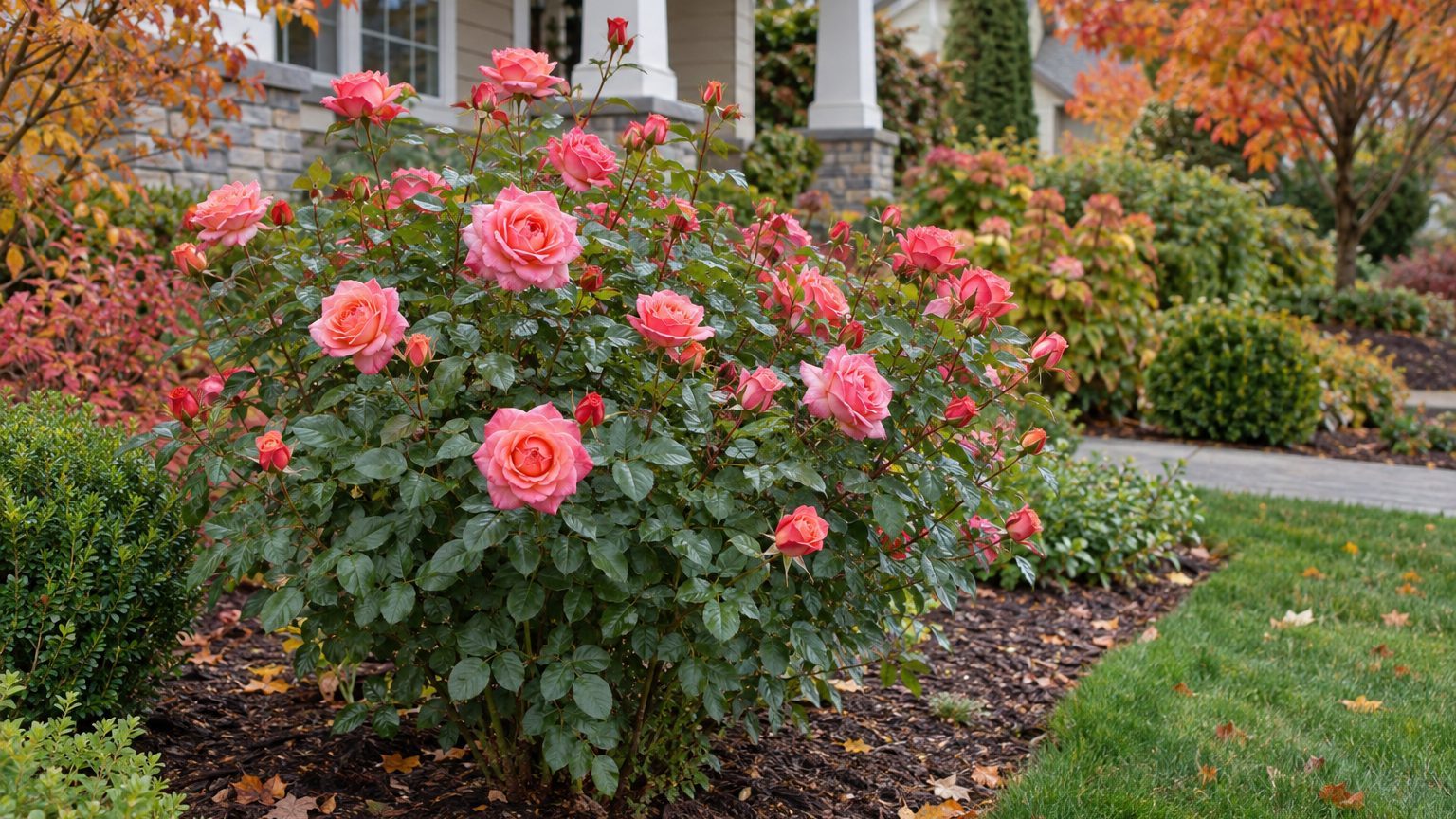
Bare-root roses show up in late winter as bundles of bare, thorny canes, and they go into the ground long before anything else in the garden looks alive. Planning roses for a Washington yard means knowing when to plant, which types hold up, and the dates for pruning, feeding and winter cover.
When to Plant Roses in Washington

In western Washington, bare-root roses go in dormant during February and March, and potted roses follow later, into early summer. In Seattle, the last spring frost falls between February 27 and March 18, and a young rose with soft new shoots is what suffers from it. Washington spans USDA hardiness zones 4a to 9a, so eastern gardens run on a different clock.
- In February, bare-root roses can go in as soon as the soil can be worked, because a dormant plant has no tender growth for frost to damage and starts building roots before the buds move.
- In March, bare-root planting is still in full swing, and the buds begin to swell, which is also the moment for the first feeding.
- From April through June, potted roses are the ones to plant, since a rose growing in a container tolerates being set out after its leaves have opened.
- In early summer, the planting season closes, because a rose that settles in before midsummer heat roots in more gently.
- In November and December, once the plants are dormant, cold areas get a mound of mulch over the base of each rose.
In Seattle, the first fall frost arrives between November 13 and November 30, which is the signal that dormancy is near. A mild frost date does not mean an early planting date here, because cold wet soil and low light hold spring growth back well past the last freeze.
Washington — the year and the numbers
- State
- Washington
- USDA zones
- 4a-9a
- Last spring frost
- February 27 to March 18
- First fall frost
- November 13 to November 30
- Annual rain
- 39 in
- Lawn zone
- transition-season
- Source
- NOAA NCEI 1991-2020 Climate Normals, 32F freeze probabilities · Seattle
Which Roses Grow Best in Washington?
Cold-hardy, low-care roses suit a state with such a wide range of winters. Hardy shrub roses, rugosas, species roses and many old garden roses live through hard winters unharmed. Hybrid teas and other repeat-blooming roses can grow well too, but they ask for more care.
| Rose type | How it does in Washington | Why |
|---|---|---|
| Shrub and rugosa roses | Reliable in cold gardens, often look like wild roses | Hardy, and they need less care than other roses |
| Species roses | Come through hard winters unharmed | Naturally hardy plants |
| Old garden roses | Hardy and long-lived | Tough in winter, but many bloom once a year |
| Hybrid teas and floribundas | Grow well but need more care | Repeat-bloom on new growth, so they want regular feeding |
Climbers and ramblers are less certain. Many of them bloom once a year, so their care follows the old garden roses rather than the hybrid teas. Whatever the type, look for disease-resistant varieties, since cool wet seasons are common on the west side.
When to Prune, Feed and Protect Roses in Washington
A rose year here runs on buds and on the first hard freeze. Pruning happens as the buds wake up, feeding begins with bud break, and mulch goes on after the plant has gone dormant. The page on when to prune roses in Washington covers pruning in more depth.
| Task | Best months in Washington | Why then |
|---|---|---|
| Pruning repeat-blooming roses | February and March, running into April if spring is late | Forsythia in bloom is the cue, and pruning too early invites frost damage to new growth |
| Planting bare-root roses | February and March | Dormant plants build roots before spring growth starts |
| Feeding | March through July | The first feeding comes at bud break, and later feedings keep growth going |
| Winter protection | November and December | Mulch goes on after dormancy and before a hard freeze, in cold areas only |
Once-blooming roses flower once a year on last year’s wood, so they are pruned right after they bloom and never in early spring. Cutting them in February or March removes the buds that would have flowered.
How Rose Care Dates Change Across Washington
The dates above fit the mild, maritime west side, and the season shifts as you move toward the Cascades and beyond them.
- Puget Sound lowlands: Winters are mild and the season starts early, though cold wet soil still holds spring growth back. Bare-root planting and pruning fit the earlier months, and winter mulch matters less.
- Eastern Washington beyond the Cascades: This is high desert with a far shorter season, so planting and pruning move later into spring. The colder zones here are where mounding mulch over the base of the plant earns its keep.
Wherever you garden in Washington, the buds are the better guide. Forsythia in bloom, swelling buds and a hard freeze that has passed matter more than a date on the calendar.
Where to Get Rose Advice in Washington
Washington State University Extension publishes rose care guidance written for the state’s gardens, and each county has an office that can look at problems on the plant itself.
- Its rose care calendar for home gardens is useful before spring work begins.
- Your county extension office can take a look at a sick plant, with a sample or a clear photo of the leaves and canes.
- A soil test through the county office is worth doing before the bare-root roses go in.
Common Questions
How Do You Choose a Rose for a Washington Yard?
Start with the USDA hardiness zone where the yard sits, since the state covers a wide range. A rose rated for the local zone survives winter, and a disease-resistant variety copes better with damp spells.
When Should You Stop Feeding Roses in Washington?
Feeding can run into August, but it should stop in late summer. By then roses are starting to go dormant, and fresh feeding would push soft growth that winter cold can damage.
What Can You Mound Over Roses for Winter?
Loose mulch works, such as shredded leaves, compost, pine needles or sawdust, piled over the base of the plant. Apply it after the rose is dormant and before a hard frost is expected.