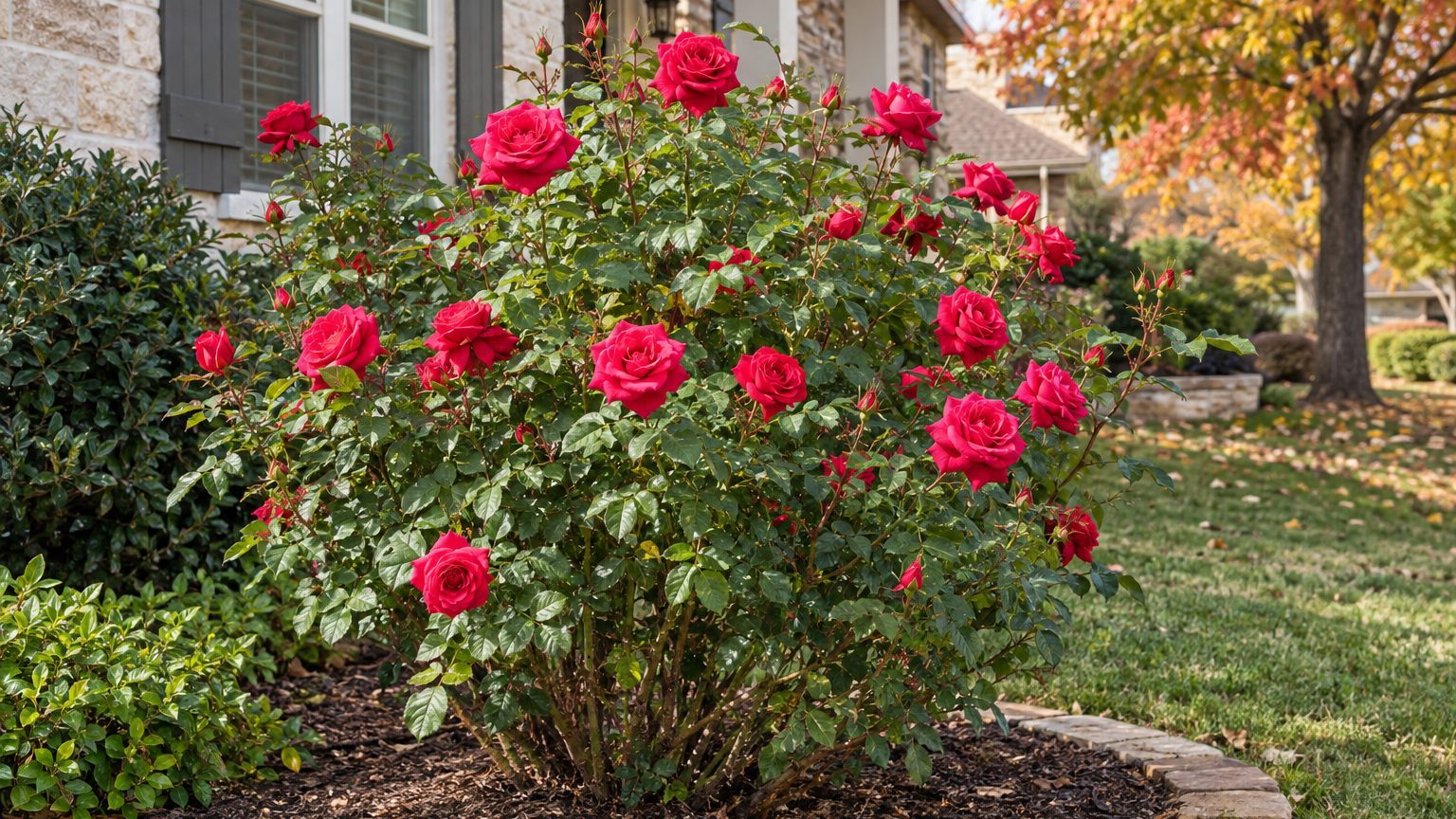
A bare-root rose shows up in winter as a bundle of brown canes and dry roots, and in Texas it goes into the ground while still asleep. Potted roses are more forgiving about timing. The dates for roses in Texas run from a midwinter planting window to a February pruning, and they shift a good deal between the Gulf Coast and the Panhandle.
When to Plant Roses in Texas

Bare-root roses go in first, from January to February, and container roses can wait until later in the year.
- In January, bare-root roses can go in, and in an especially mild winter the planting can start in early January.
- By mid-February, the bare-root job should be done, because the plants need to be in the ground on or before February 14, before the buds break.
- In March, a bare-root rose can still be planted if the winter got away from you, though the buds are close to breaking and the sooner it goes in the better. In Houston, the last spring freeze falls between February 4 and March 1, so a freeze can still burn the soft first shoots of a young rose.
- After the bare-root window closes, container roses can go in later, and the early fall through early spring stretch is the one Austin-area gardeners favor for them.
- From October through December, bare-root planting opens again. In Houston, the first fall freeze arrives between December 1 and December 19.
Houston sits at the mild Gulf end of a state whose USDA hardiness zones run from 6a to 10a, so the Panhandle, North Texas and the Hill Country all shift these dates.
Texas — the year and the numbers
- State
- Texas
- USDA zones
- 6a-10a
- Last spring frost
- February 4 to March 1
- First fall frost
- December 1 to December 19
- Annual rain
- 52 in
- Lawn zone
- warm-season
- Source
- NOAA NCEI 1991-2020 Climate Normals, 32F freeze probabilities · Houston
Which Roses Grow Best in Texas?
Texas stretches from cold Panhandle winters to the mild Gulf, so choose roses proven in local soil and climate rather than relying on catalog looks alone. Extension guidance points to locally proven groups.
The Earth-Kind rose list is a reliable starting point if you want a rose that has already proved itself in the state.
| Rose type | How it does in Texas | Why |
|---|---|---|
| Earth-Kind roses | Proved to do well in Texas | They have proved themselves in Texas gardens. |
| Antique roses | Recommended for the Austin area | Tried and tested for local soil and climate |
Hybrid teas, floribundas and modern shrub roses are repeat bloomers and are widely planted here, but the extension advice does not single them out as local standouts in the same way. Treat them as a choice to make with a local nursery, and check that a variety suits your part of the state before you buy.
When to Prune, Feed and Protect Roses in Texas
Pruning repeat-blooming roses and planting bare-root ones have clear months in Texas, while feeding and winter protection depend on the rose and local conditions. These jobs belong to the quiet end of winter, when the canes are dormant and the weather is mild enough to work outside.
Pick a mild day for pruning, and dress for thorns: a long-sleeved shirt, a hat, glasses, heavy gloves and closed-toe shoes.
| Task | Best months in Texas | Why then |
|---|---|---|
| Pruning repeat-blooming roses | February, or January to March depending on location | Roses rest in winter, and new growth has not yet started |
| Planting bare-root roses | January and February, with March and October to December as fallbacks | The plant goes in dormant, before the buds break |
Hybrid teas, floribundas and modern shrub roses bloom on new wood, which is why they take a hard pruning in late winter. Once-blooming roses, including old garden roses, ramblers and many climbers, flower once a year on last year’s wood. Prune those right after they bloom, never in early spring, or you cut off the year’s flowers. The full routine for these roses is on the separate page about when to prune roses in Texas.
How Rose Care Dates Change Across Texas
Texas covers enough ground that a single calendar cannot fit it, and the usual swing runs from the Gulf toward the Panhandle.
- Gulf Coast: Winters are mildest here, so bare-root planting can start early in a mild winter and frost risk to new shoots ends sooner than inland.
- Austin and Central Texas: Pruning tends to land around mid-February, which sits in the middle of the state’s January to March range.
- Panhandle: Freezes arrive earlier in fall and linger later in spring, so planting and pruning sit later in their windows, and it pays to watch the buds rather than the calendar.
- North Texas and the Hill Country: These regions differ from the Gulf and from the Panhandle, so use the range of months as a guide and let the swelling buds make the final call.
When in doubt, use local conditions and swelling buds to choose within the recommended window.
Where to Get Rose Advice in Texas
Texas has a large network of local help, and it is built around your county. Texas A&M AgriLife Extension and your county extension office can answer questions that depend on your soil and your corner of the state.
- The state extension website lists Earth-Kind roses and local planting advice, and it is worth a visit before you order bare-root plants in winter.
- Your county extension office can diagnose a sick plant from a cane or leaf sample, so go as soon as a problem shows up.
- The same office can run a soil test, and a sample taken before the bare-root roses arrive tells you what the bed needs before planting.
Common Questions
What Should You Wear to Prune Roses in Texas?
Wear a long-sleeved shirt, a hat, glasses, heavy gloves and closed-toe shoes. Pruning cuts leave thorny canes lying around, and a mild day in mid-February makes the work comfortable.
Can You Prune Roses in January in Texas?
In some places, yes. The pruning window runs from January to March depending on location, so warmer parts of the state can start sooner. Wait until winter dormancy is well along and before the roses begin growing, and let the local weather decide.
What Does the Hardiness Zone Tell You About Roses?
The USDA hardiness zone rests on one number, the average annual extreme minimum temperature. It tells you how cold a winter your rose may face, but it says nothing about frost dates or summer conditions, so use it alongside local frost timing and advice from your county office.