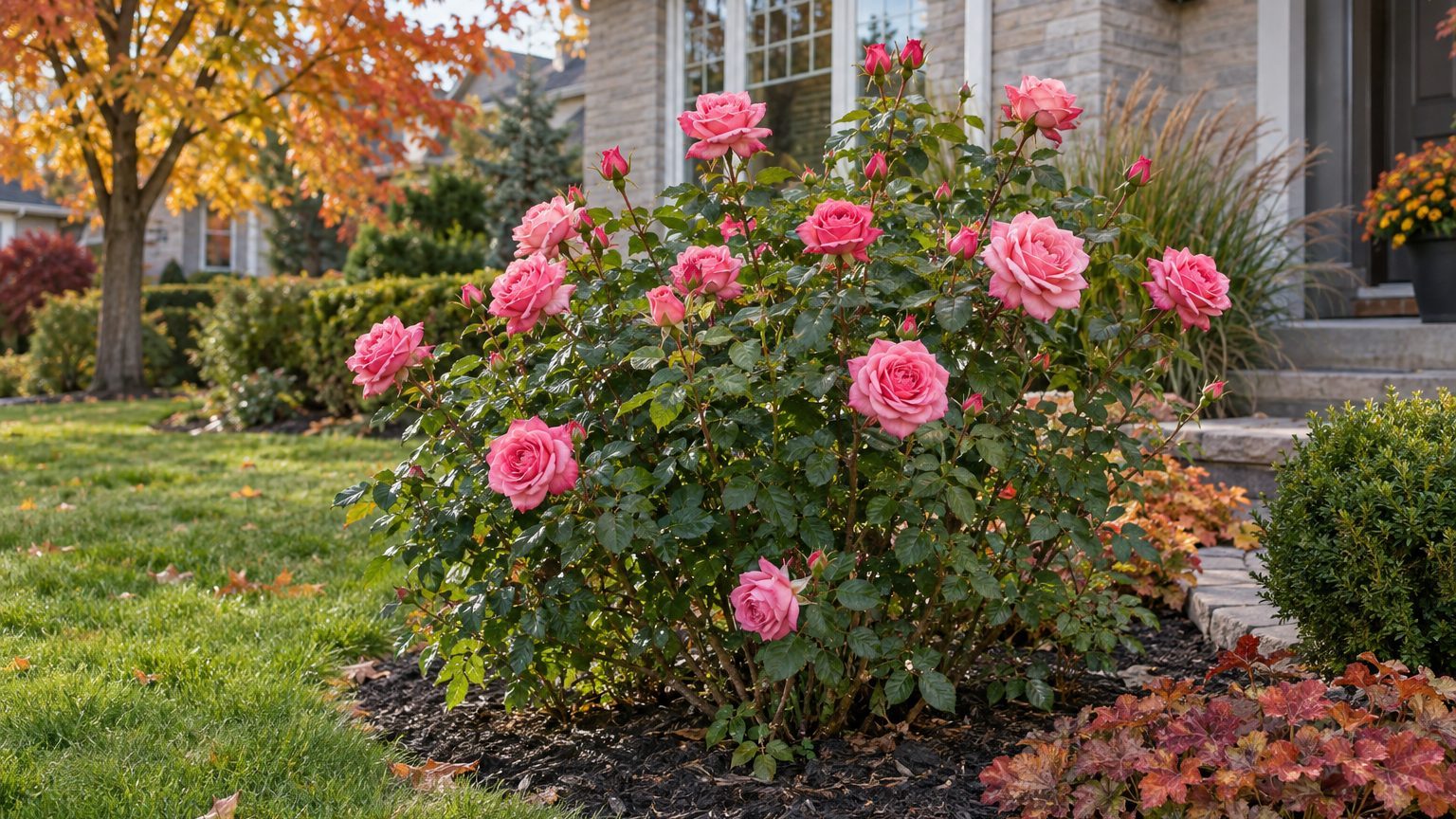
Bare-root roses show up in garden centres as bundles of dormant canes, and potted ones follow when the weather turns mild. In Ontario, the bare-root bundles go into the ground in early spring, while potted roses have a much longer window that runs well into summer. Varieties and the yearly rhythm of care matter just as much as the planting date.
When to Plant Roses in Ontario

Planting dates hang on frost. In Toronto, the last spring frost falls on average April 30, which is only the midpoint, so in about half of all years a frost still arrives later and can blacken the soft new shoots of a young rose. Canadian zone 7a describes the cold the plant has to survive; it is a Canadian rating, not a USDA zone.
- In early spring, March and April, bare-root roses go in while they are still dormant and before any growth starts, which lets the roots settle in before leaves ask for water.
- Once April arrives, potted roses can be planted, and that window stays open through midsummer because a rose with its root ball intact is not shocked by a bit of warmth.
- Through May, June and July, a bare-root rose can still be planted if the spring got away from you, though it will need regular watering while it leafs out.
- From April through July, roses are fed, starting after the spring pruning and carrying through the first flush of bloom.
- In November, once several killing freezes have passed, winter protection goes on tender roses, and December still works if the weather held mild.
On the other end of the year, the first fall frost arrives on average October 16 in Toronto, so a rose planted in midsummer has the autumn months to root before the ground freezes.
Ontario — the year and the numbers
- State
- Ontario
- Hardiness zones
- 7a
- Last spring frost
- April 30
- First fall frost
- October 16
- Annual rain
- 31 in
- Lawn zone
- cool-season
- Source
- Environment and Climate Change Canada — Canadian Climate Normals 1981-2010, station TORONTO LESTER B. PEARSON INT'L A · Toronto
Which Roses Grow Best in Ontario?
Winter decides which roses thrive here. Hardy shrub roses, old garden roses and species roses come through with little fuss, while hybrid teas, grandifloras and floribundas can take real damage in a cold winter and need cover.
That split shapes what you buy. A rose that stays hardy without help asks for less work in November, which counts for a lot when the front bed is full.
| Rose type | How it does in Ontario | Why |
|---|---|---|
| Hybrid teas, grandifloras, floribundas | Not reliably hardy, need winter protection | Cold winters damage the canes without cover |
| Shrub and landscape roses | Perform well with no extra protection | Hardy types such as Knock Out or the Explorer series handle winter on their own |
| Old garden roses | Very tolerant of cold | Many are extremely tough in low temperatures |
| Species roses | Reliably hardy | They need no extensive winter preparation |
| Climbing roses | Some are not reliably hardy | Tender climbers need the same cover as hybrid teas |
Miniature and polyantha roses vary, with some tough and others needing protection, so check the tag before you plant. Climbers are the same: ask the nursery how hardy a particular one is before it goes against a sunny wall.
When to Prune, Feed and Protect Roses in Ontario
A rose year has only a few firm dates, and most of them cluster at the beginning and the close of the season. Pruning follows the buds and the spring thaw, while winter cover waits for the cold to settle in.
Dates here are for repeat-blooming roses, such as hybrid teas, floribundas and modern shrub roses.
| Task | Best months in Ontario | Why then |
|---|---|---|
| Pruning repeat-blooming roses | March and April (February also works) | Buds are swelling, forsythia is blooming and winter protection is off |
| Feeding | April through July | After pruning, at first bloom and again in mid-July |
| Putting on winter protection | November (December also works) | Roses are dormant after several killing freezes |
| Taking winter protection off | March and April | The ground has thawed |
Feeding has a hard stop: none after mid-August. Winter cover rewards patience, because putting it on too soon can trap warmth around canes that have not gone dormant yet.
How Rose Care Dates Change Across Ontario
The dates above follow the Toronto area. Ontario is a big province, and rose seasons start and end at different times depending on where you garden.
- Greater Toronto: spring frost and fall frost land close to the dates above, so the calendar fits as written.
- Northern Ontario: spring comes later and winter arrives sooner, so planting, uncovering and pruning slide later while winter cover goes on earlier.
- The Oak Ridges Moraine and other upland districts north of Toronto: higher ground runs behind the Toronto area, so plan on planting and uncovering a little later in spring.
Watch the buds on your own canes. Once they swell and forsythia opens nearby, your yard is telling you it is ready, whatever the calendar says.
Where to Get Rose Advice in Ontario
Ontario has no local extension page on rose timing, so the dates here follow the nearest comparable climate. Confirm local timing with a garden centre, a rose society or one of the provincial gardening groups.
- The Ontario government’s agriculture and food pages point to provincial resources for diagnosing problems and testing soil.
- A local master gardener group or rose society can look at a sick leaf and tell you what is going on, and spring is a good time to ask about planting.
- In late autumn, a garden centre can tell you which cover material suits your roses before the first killing freezes arrive.
Common Questions
What Should You Do with a Once-Blooming Rose?
Once-blooming roses, which include old garden roses, ramblers and many climbers, flower once a year on last year’s wood. Prune them right after they bloom, never in early spring, or you cut off the flower buds.
Is Canadian Zone 7a the Same as a USDA Zone?
No. The Canadian system is built on seven climate variables, and the USDA system on one, so there is no simple conversion. Use the Canadian zone when you read a plant tag from a Canadian nursery.
Why Should You Stop Fertilizing Roses in Late Summer?
Late feeding pushes out soft, succulent growth that has no time to harden before winter, and it is easily damaged by the first hard freezes. Stopping after mid-August lets the canes toughen up.