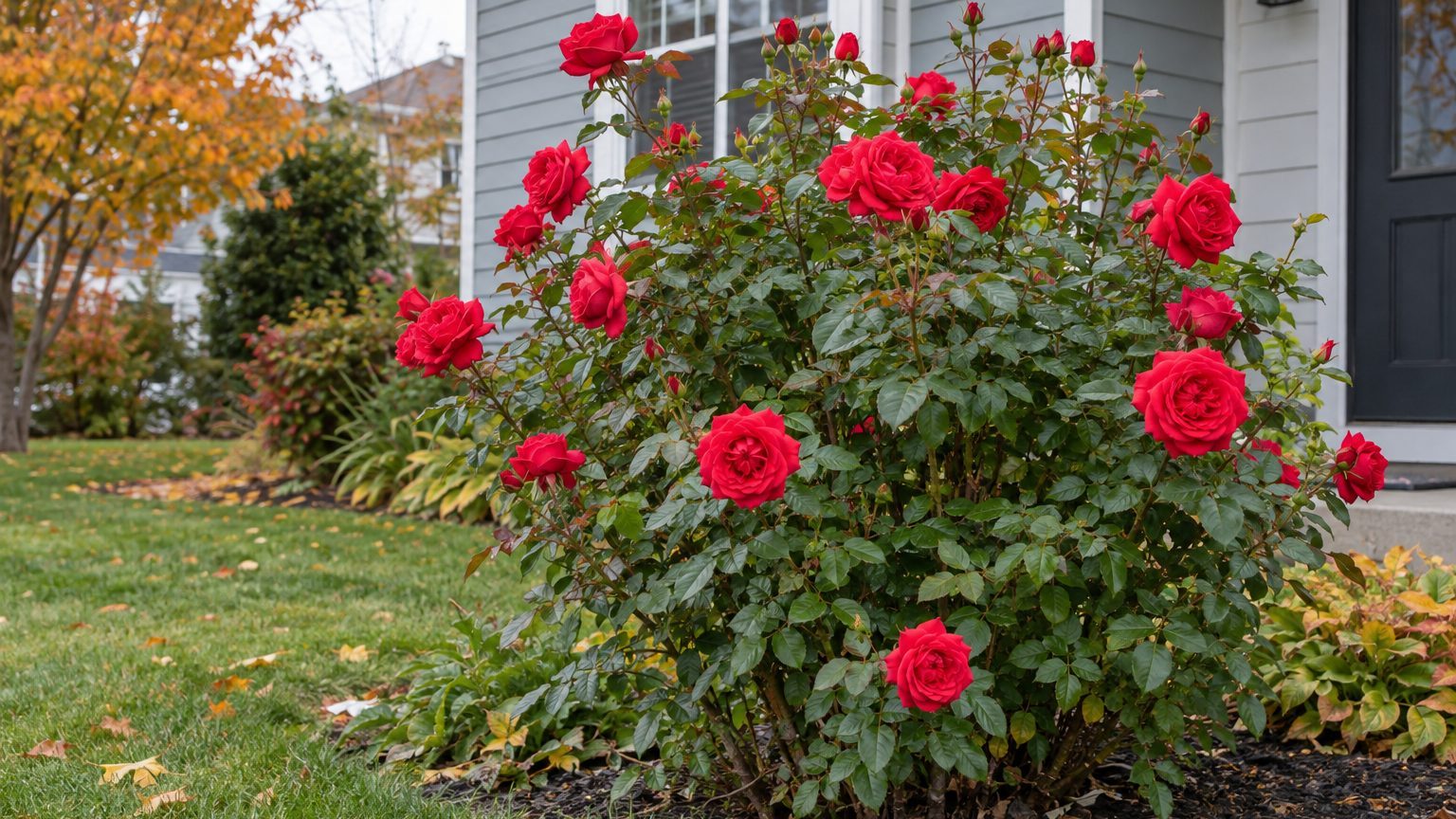
Bare-root roses arrive in the mail while the garden is still cold and brown, and an early job of the season is to get them into the ground before buds push. In Newfoundland and Labrador, that window opens in spring and stays fairly narrow, so timing matters as much as the rose you choose.
When to Plant Roses in Newfoundland and Labrador

Bare-root roses go in first, in April and May, while they are still dormant, and potted roses can follow once the weather settles. In St. John’s, the last spring frost falls on average around May 30, which means frost can still arrive after that date in roughly half of all years.
- In April and May, plant bare-root roses while the canes are dormant, before the buds open.
- After the middle of spring, set out potted roses once the danger of frost has eased, since they already carry leaves.
- From April through July, feed monthly to carry the plant through its early growth, and keep a cloth or bucket handy for a surprise frost near the end of May.
- In late summer, ease off the fertilizer so new shoots can harden before cold arrives. In St. John’s, the first fall frost averages October 17, and soft growth does poorly against it.
- In November, after hard frosts have killed the leaves, mound protection around the base of tender roses.
St. John’s sits in Canadian hardiness zone 6a, a Canadian rating that does not convert to a USDA zone. In the St. John’s area, the May 30 and October 17 figures are midpoints, not safe dates. Dates for northern or upland districts run weeks behind the reference city.
Newfoundland and Labrador — the year and the numbers
- State
- Newfoundland and Labrador
- Hardiness zones
- 6a
- Last spring frost
- May 30
- First fall frost
- October 17
- Annual rain
- 60 in
- Lawn zone
- cool-season
- Source
- Environment and Climate Change Canada — Canadian Climate Normals 1981-2010, station ST JOHN'S A · St. John's
Which Roses Grow Best in Newfoundland and Labrador?
Choose hardy, tough types for this climate. Shrub roses, floribundas, polyanthas, hybrid perpetuals and many old-fashioned roses stand up to winter better than hybrid teas and grandifloras, which want protection in cold winters. That is the pattern described for a comparable cold climate.
The Canadian Explorer series, named for explorers such as Champlain, Cabot and Kelsey, includes shrub and climbing roses bred for cold winters.
| Rose type | How it does in Newfoundland and Labrador | Why |
|---|---|---|
| Explorer series shrubs and climbers | Reliable, and they need no extra protection | Bred for cold winters |
| Shrub roses such as Knock Out | Perform well without extra protection | Tough canes that handle cold winters |
| Floribundas and polyanthas | Hold up better than hybrid teas | More winter hardy |
| Old garden roses | Good hardiness, one flush a year | More winter hardy, bloom on last year’s wood |
| Hybrid teas and grandifloras | Need winter protection | Less hardy in cold winters |
Once-blooming roses, which include old garden roses, ramblers and many climbers, flower on last year’s wood, so prune them right after they bloom and never in early spring.
When to Prune, Feed and Protect Roses in Newfoundland and Labrador
The year’s main rose-care jobs follow the growing season. These dates follow the nearest comparable climate, northern New England, because no local rose-timing guide exists for this province. Confirm local timing with a garden centre, a rose society or a provincial gardening group.
| Task | Best months in Newfoundland and Labrador | Why then |
|---|---|---|
| Prune repeat-blooming roses | April and May, or March | Wait until active growth, when shoots are several inches long |
| Plant bare-root roses | April and May | Planted dormant, before buds open |
| Feed roses | April through July, or August | Monthly feeding starting in spring and stopping in August |
| Put on winter protection | November | Late November, after hard frosts have killed the leaves |
| Take off winter protection | May, or April | Early May, before new growth begins |
Stopping feed in August matters because late growth may not harden off before winter. Hybrid teas, floribundas and grandifloras need the November mound, while hardy shrub roses and Explorer types usually manage without it.
How Rose Care Dates Change Across Newfoundland and Labrador
The province is large, and the ocean shapes the season more than the calendar does. The frost figures are anchored to St. John’s, so use local conditions elsewhere in the province.
- St. John’s and the Avalon Peninsula: The frost figures in this article come from St. John’s, so use local conditions elsewhere on the peninsula.
- Western and central Newfoundland: Inland districts can swing warmer in summer and colder in winter, so wait a little longer in spring before the bare-root planting.
- Labrador: The season runs behind St. John’s, so use local soil and bud conditions within the planting and protection-removal windows, and choose roses hardy enough for local winters.
Whatever the district, watch the buds and the weather rather than the date alone.
Where to Get Rose Advice in Newfoundland and Labrador
For local help, turn to provincial resources and nearby gardeners. The provincial Department of Fisheries, Forestry and Agriculture is a starting point, along with garden centres and rose societies.
- The provincial department can point you to resources on soil and plant problems, so contact them in early spring before planting.
- Local garden centres know which hardy roses they stock and can offer planting advice.
- A rose society or gardening group can confirm local timing, which helps if you garden well away from St. John’s.
Common Questions
Can You Plant Potted Roses Later than Bare-Root Roses?
Yes. Potted roses can go in after the bare-root window, once frost danger has eased, because they already carry leaves and roots in soil.
Do Roses Need Winter Protection in Newfoundland and Labrador?
Tender types such as hybrid teas do, applied in November. Hardy shrub roses, including Knock Out and the Explorer series, generally do not.
Should You Prune Climbing Roses in Spring?
Only if they repeat bloom. Once-blooming climbers flower on last year’s wood, so prune them right after flowering.