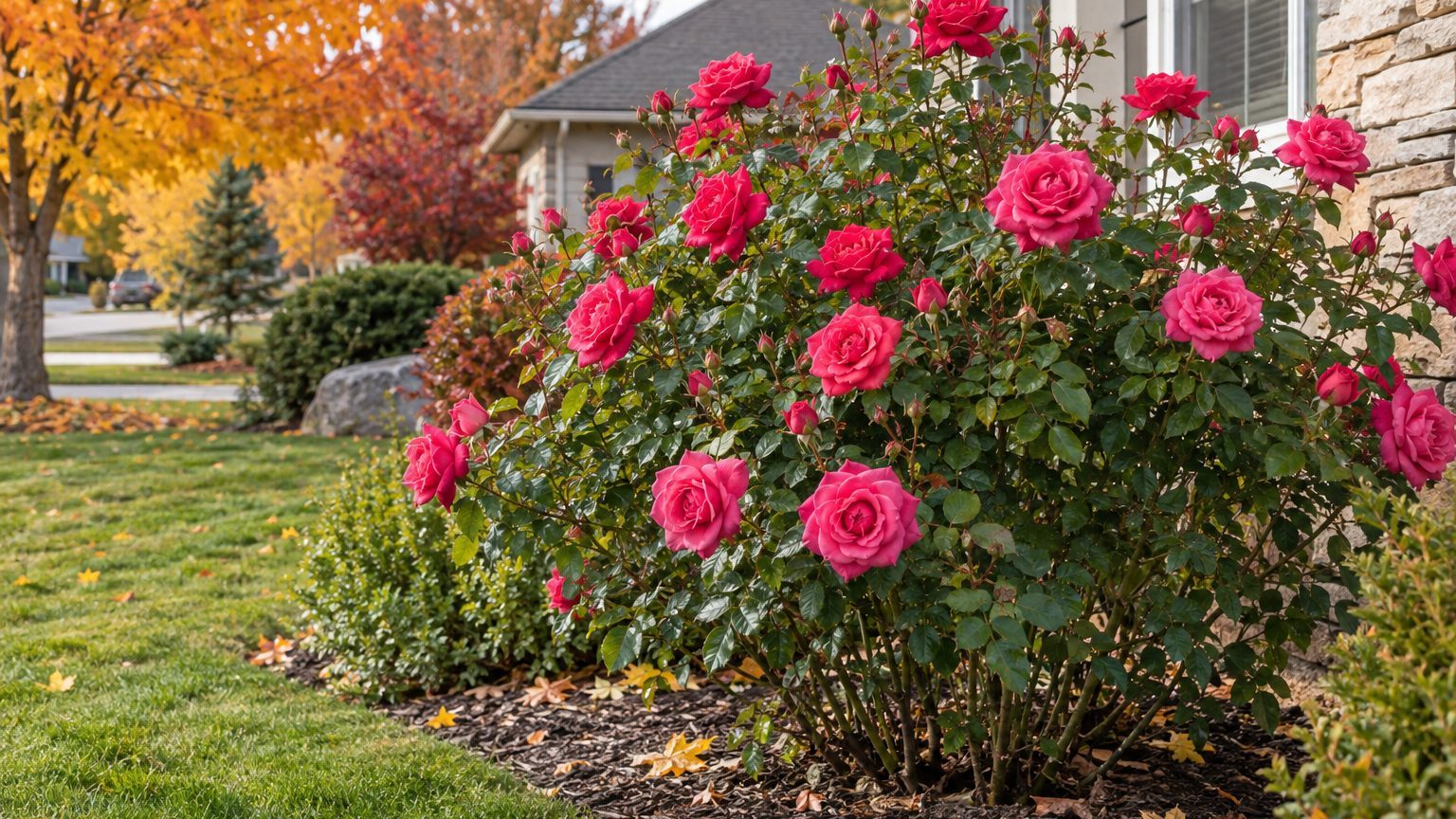
Bare-root roses show up in garden centers looking like bundles of thorny sticks, and Idaho gardeners plant them as soon as the ground thaws enough to dig. Roses in Idaho benefit when planting, pruning and winter cover follow spring’s slow warm-up and the first hard nights of late fall. Hardy shrub roses forgive mistakes, while tender types need more care.
When to Plant Roses in Idaho

Bare-root roses go in first, in April and May, while they are still dormant, and potted roses follow later in spring. In Boise’s low valley, the last spring frost falls between April 23 and May 7, which matters because young rose growth is tender.
- In early spring, usually April, plant bare-root roses as soon as the soil can be worked and the canes are still dormant.
- Through May, bare-root planting can continue, and potted roses can go in later once the soft new growth no longer faces frost.
- From May through July, roses are in active growth and take regular feeding, which is also when the first flush of bloom opens.
- By mid-August, feeding stops so the plant does not push tender growth right before fall, and in Boise the first fall frost arrives between October 7 and October 21.
- In November, once nights turn hard, tender roses get their winter protection.
Idaho’s USDA hardiness zones run from 3b to 7b, so these dates fit the low valley around Boise and gardens at higher elevations will differ.
Idaho — the year and the numbers
- State
- Idaho
- USDA zones
- 3b-7b
- Last spring frost
- April 23 to May 7
- First fall frost
- October 7 to October 21
- Annual rain
- 12 in
- Lawn zone
- transition-season
- Source
- NOAA NCEI 1991-2020 Climate Normals, 32F freeze probabilities · Boise
Which Roses Grow Best in Idaho?
Winter decides what lives here. Idaho’s cold varies a lot from place to place, so hardy shrub roses need less help through a hard freeze, while tender roses need a plan for winter.
Hardy shrub roses perform well without extra winter protection. Hybrid teas, floribundas and grandifloras need winter protection in cold winters.
| Rose type | How it does in Idaho | Why |
|---|---|---|
| Hardy shrub roses (Knock Out, Explorer series) | Perform well without extra winter protection | Bred for cold hardiness, so they come through freezes on their own |
| Hybrid teas and grandifloras | Need winter protection in cold winters | Their crowns are tender, so soil mounded over them carries them through |
| Old garden roses, ramblers, many climbers | Flower once a year | Blooms come on last year’s wood, so timing of pruning matters |
Alpine and Nootka roses do better in warmer, protected planting sites.
When to Prune, Feed and Protect Roses in Idaho
Each rose job has its own stretch of the calendar, and most of them cluster in April and May. Pruning follows the buds and the spring weather, not a fixed day.
The exception is the once-blooming group, which includes old garden roses, ramblers and many climbers. Prune them right after they flower, never in early spring, or the year’s blooms go with the cut canes.
| Task | Best months in Idaho | Why then |
|---|---|---|
| Prune repeat-blooming roses (hybrid teas, floribundas, modern shrub roses) | April (May also works) | Cutting too early exposes new growth to killing frost |
| Plant bare-root roses | April, May | The plants are dormant and the ground can be worked |
| Feed roses | May, June, July (April and August also work) | Regular feeding fits the growing season, and nothing goes on after mid-August |
| Put on winter protection | November (October or December also work) | Soil goes over the crown once hard nights settle in, around Thanksgiving |
| Take winter protection off | April (May also works) | Remove it gradually once the danger of hard frost has passed |
Full pruning methods, cut heights and tool care live on the page about when to prune roses in Idaho.
How Rose Care Dates Change Across Idaho
Idaho climbs from low river valleys to mountain basins, and a rose’s season shifts with elevation and cold air more than with the calendar.
- Treasure Valley: Boise sits in a low valley, so spring planting and pruning come here before they do in most of the state, and winter protection waits until late fall.
- Wood River Valley: Higher and colder, so the ground thaws later, spring frost lingers, and planting and pruning slide toward the later end of the monthly ranges. Winter cover goes on sooner.
- Eastern Idaho: Cold air settles on the high plains, so seasons run shorter. Gardeners here lean on hardy shrub roses and watch the buds rather than the calendar.
Wherever the garden sits, a slow spring and an early fall mean shorter seasons than the Boise-based dates suggest.
Where to Get Rose Advice in Idaho
Local conditions vary so much that a nearby source is worth a call. The state’s land-grant university and your county office can both help with the questions that dates cannot answer.
- University of Idaho Extension publishes gardening guidance for the state, so check it before choosing varieties for a cold site.
- Your county extension office can look at a sick cane or leaf and talk through a diagnosis, so bring a fresh sample when symptoms appear.
- The same office can explain how to take a soil test, and doing it before planting bare-root roses in spring lets you correct the bed while the ground is still bare.
Common Questions
Can You Plant a Potted Rose After Bare-Root Season?
Yes. Potted roses can go in later than bare-root ones, once the soft new growth no longer faces frost. Water the planting hole well and keep the soil evenly moist as the roots settle.
Why Mound Soil Over a Rose Crown?
The crown is the part of the plant that regrows in spring. Soil piled over it shields it from the coldest nights, which is why tender roses get this treatment and hardy shrub roses mostly do not.
What Should You Use to Feed Roses?
An all-purpose fertilizer applied regularly through the growing season is the usual choice. Follow the label on the package and water it in so the roots take it up evenly.