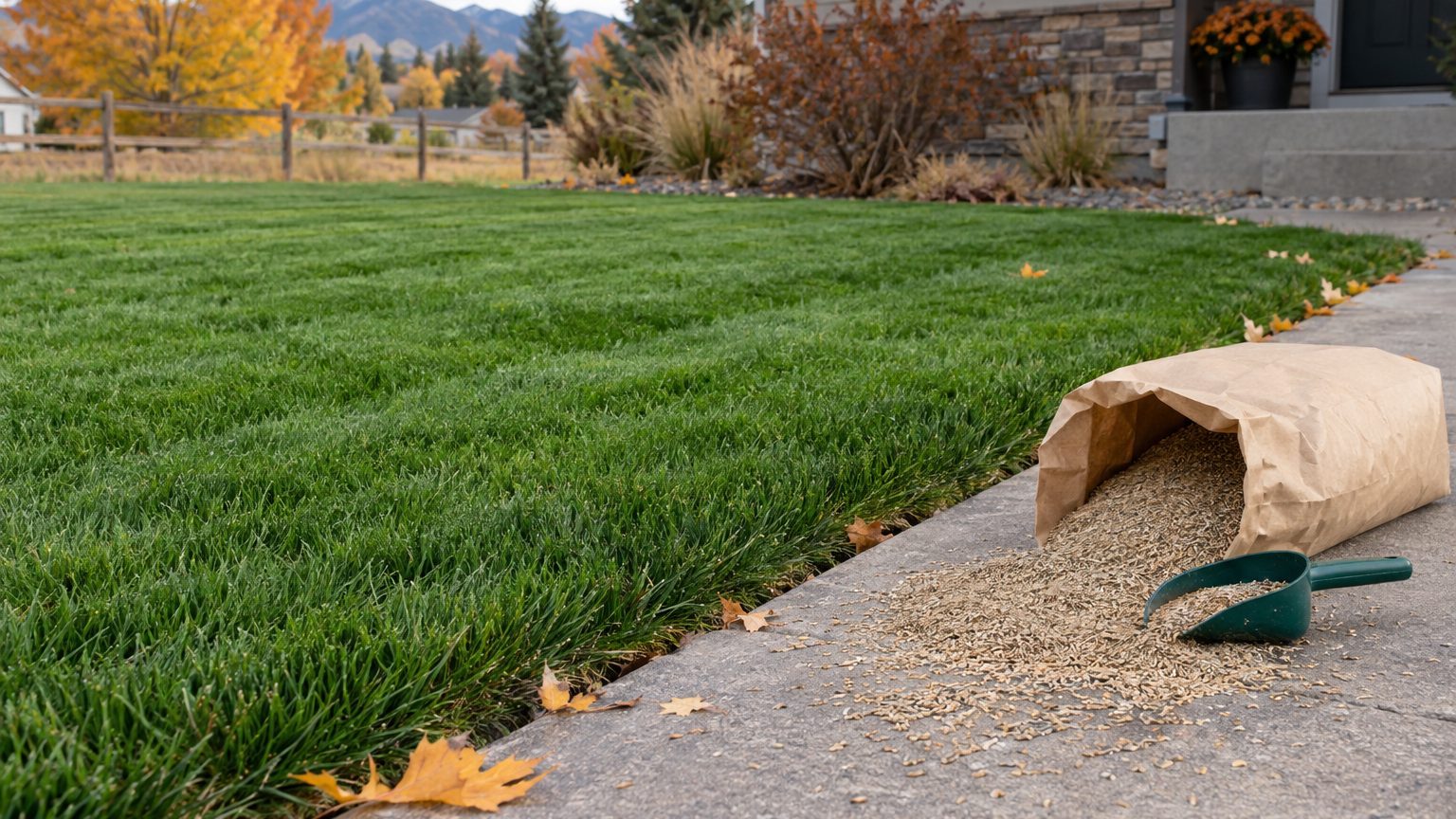
Frost-nipped tips on the lawn in a late spring cold snap are a familiar Wyoming sight, and they hint at which grasses belong here. Cool-season types do well in Wyoming’s short, cold-winter climate, and Kentucky bluegrass, fine fescues, tall fescue and perennial ryegrass are the four that suit the state. The right pick depends on shade, traffic and how much you want to water.
Which Grass Grows Best in Wyoming?
Cool-season grasses grow best in Wyoming. They grow hardest in spring and fall, stay alive through long, hard winters, and go dormant instead of dying when the ground freezes. Warm-season grasses need long, hot summers that most of the state never gets. With roughly 130 frost-free days at 6,000 feet, and frost possible in any month at higher elevations, a grass has to be built for cold.
Kentucky Bluegrass
Kentucky bluegrass is a dependable lawn grass for Wyoming yards. It handles hard winters, spreads by underground stems to fill thin spots, and gives the dense, deep green look many homeowners want.
It is slow to germinate and wants regular water through summer, so plan on patience during establishment and a sprinkler schedule after that.
Fine Fescues
Creeping red, chewings and hard fescue are the fine fescues, and they suit the lighter, lower-effort lawn. They cope with shade and poorer soil better than bluegrass, and they need less water and fertilizer once settled in.
They suit a relaxed mowing routine. Foot traffic wears them down faster than bluegrass, so they fit the quieter parts of a yard.
Tall Fescue
Tall fescue forms a coarser, tougher lawn with deep roots that help it ride out dry spells. It takes kids, dogs and summer heat well, and it stays green on less watering than bluegrass.
It grows in clumps instead of spreading, so thin patches need reseeding. In the coldest parts of the state, winter damage is a real possibility, so a hardier blend may be safer.
Perennial Ryegrass
Perennial ryegrass sprouts fast, which makes it useful for quick cover on bare ground. Long cold spells can thin perennial ryegrass over a Wyoming winter.
Treat it as a partner in a seed blend, not the whole lawn. Its quick start shelters slower grasses while they get established.
Wyoming — the year and the numbers
- State
- Wyoming
- USDA zones
- 3a-6a
- Last spring frost
- May 7 to May 18
- First fall frost
- September 24 to October 5
- Annual rain
- 15 in
- Lawn type
- cool-season
- Source
- NOAA NCEI 1991-2020 Climate Normals, 32F freeze probabilities · Cheyenne
How to Choose Grass Seed for a Wyoming Yard
Start with what your yard actually does. Notice where the sun lands, where the kids and dogs run, and whether a sprinkler line reaches the whole lawn. Those answers narrow the choice faster than any bag label.
A blend can balance the weak spots of its grasses. Match the blend to the dominant condition, then read the label for the species it lists.
| Grass | Season | Yard it suits | How it does here |
|---|---|---|---|
| Kentucky bluegrass | Cool | Sunny, watered, heavy use | Hardy through winter and repairs itself, but wants regular water |
| Fine fescues | Cool | Shade, dry spots, low mowing | Thrives on less water and fertilizer, wears down under heavy traffic |
| Tall fescue | Cool | Sun, play areas, limited watering | Deep roots handle dry spells, grows in clumps |
| Perennial ryegrass | Cool | Quick cover, mixed with others | Sprouts fast, less reliable through the coldest winters |
If you would rather mow less, lean toward fine fescues, which grow slowly and look fine a little shaggy. If you want a tight, carpet-like lawn and don’t mind mowing and watering, bluegrass is the pick.
Which Grasses Grow Where in Wyoming
Wyoming spans high plains, mountain basins and valleys, so the same bag of seed does not behave the same everywhere.
- Cheyenne and the southeast plains: Wind and dry air make water use the big question, so tall fescue and bluegrass blends with a fescue partner hold up well.
- Laramie and the high country: Cold arrives early and stays late, which favors bluegrass and fine fescues over ryegrass, and shortens the growing season for any new seed.
- Casper and the central basins: Dry conditions and wide temperature swings reward deep-rooted tall fescue and fine fescues that sip water.
- Jackson Hole and the northwest valleys: Cold winters and cool summers suit bluegrass and fine fescues, and shade from tall timber makes fine fescues especially useful.
When local conditions are mixed, ask the county extension office which blend fits your site.
Grass Seed Mistakes to Avoid in Wyoming
Buying a Warm-Season Seed
Seed made for southern lawns can sprout in summer and then fail when the first hard cold arrives. Check the label for Kentucky bluegrass, fine fescue, tall fescue or perennial ryegrass.
A bag built around a fast-sprouting grass is a gamble in cold country. Pick a blend that includes a hardy species.
Seeding at the Wrong Time
August and September give new grass warm soil and cooler air, so the seedlings root well before winter. If you miss that window, April and May still work. Spring seedlings must dodge a late freeze, though, and cold nights can set them back.
In Cheyenne, the last spring freeze usually falls between May 7 and May 18. The first fall freeze usually arrives between September 24 and October 5. Seed in late fall and it may not have time to root.
Too Deep, Too Thick, or Too Thin
Cover seed with no more than 0.25 inch of soil and press it down so it touches the ground firmly. Seed buried deeper has trouble reaching the surface.
Follow the rate on the bag. Overspreading crowds seedlings and invites disease, and a thin scatter leaves room for weeds.
Where to Get Lawn Advice in Wyoming
Wyoming’s elevation and climate vary so much that local help is worth having. Soil, water and wind change from one county to the next, and people who work with them daily can tell you what holds up in your area.
- University of Wyoming Extension offers lawn guidance for the state’s conditions, useful before you buy seed.
- Your county extension office can answer questions about local soil and water, and it is a good call before any seeding.
Common Questions
Can You Overseed an Existing Lawn in Wyoming?
Yes. Core aeration in September opens the soil so new seed can reach it, and overseeding afterward fills thin spots. April and May also work if fall slips by.
When Is Mowing Season in Wyoming?
Mowing runs from April through November. Cool-season grasses keep growing in the cooler months, so mowing continues well into fall.
When Should You Fertilize a Wyoming Lawn?
September and November are the best times, since cool-season grass stores energy for winter and spring. May is a fallback if you miss fall.