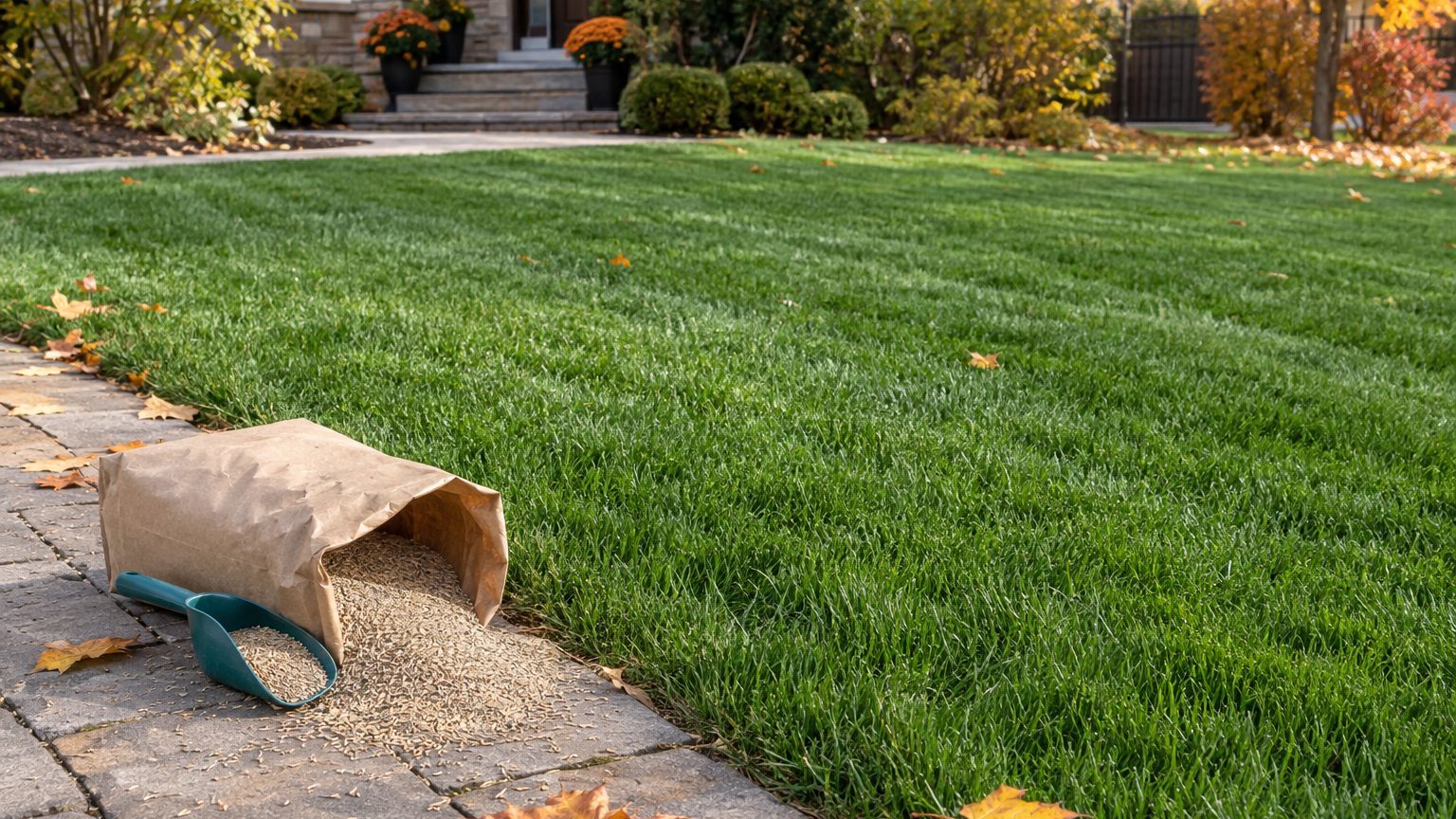
Cool-season grasses carry an Ontario lawn: Kentucky bluegrass, fine fescues, perennial ryegrass and tall fescue. Cold winters suit them, though summer heat and humidity can be stressful, and they grow most vigorously in spring and early fall. A blend of these grasses often suits an Ontario lawn better than a pure stand.
Which Grass Grows Best in Ontario?
Cool-season grasses win in Ontario, because winters are cold enough to stop warm-season turf and summers stay mild enough for cool-season types to hold on. Toronto sits in Canadian hardiness zone 7a, which is a Canadian rating and not a USDA zone. Here is how these lawn grasses differ.
Kentucky Bluegrass
Bluegrass is the classic Ontario lawn grass. It handles cold winters easily and spreads by underground stems, so it fills thin spots and recovers from wear. It is slow to sprout, so give it patience after seeding.
Fine Fescues
Creeping red, Chewings and hard fescues are good options for shade, dry soil and low-care lawns. They stay fine-bladed and need less fertilizer and water than bluegrass. Consider adding them to a seed blend if trees shade part of your yard.
Perennial Ryegrass

Ryegrass sprouts fast, which makes it handy for quick cover and for blending into mixes. It tolerates foot traffic well. Its weak spot is hard winters, so in colder districts it works best as a minor partner in a blend rather than the main grass.
Tall Fescue
Tall fescue is deep rooted and stands up to summer drought better than bluegrass. It grows in clumps rather than spreading, so it can look patchy if you seed it thinly. Tall fescue is less reliable in the coldest districts, where winter can thin it out, so it generally fits the milder south better.
Ontario — the year and the numbers
- State
- Ontario
- Hardiness zones
- 7a
- Last spring frost
- April 30
- First fall frost
- October 16
- Annual rain
- 31 in
- Lawn type
- cool-season
- Source
- Environment and Climate Change Canada — Canadian Climate Normals 1981-2010, station TORONTO LESTER B. PEARSON INT'L A · Toronto
How to Choose Grass Seed for an Ontario Yard
Start with the light your yard gets, then think about traffic, watering and how often you want to mow. Sun, shade and wear each point to a different grass, and a blend lets you cover varied conditions.
Read the seed label for the species names rather than a catchy product title. A good blend lists the grasses and their share of the mix, so you can see what you are buying.
| Your yard | Grass to favor | Why |
|---|---|---|
| Full sun, regular watering | Kentucky bluegrass | Dense, self-repairing turf |
| Shade under trees | Fine fescues | Tolerate low light and dry roots |
| Heavy foot traffic | Perennial ryegrass with bluegrass | Ryegrass sprouts fast, bluegrass repairs |
| Little watering | Tall fescue or fine fescues | Deep roots or low water needs |
| Less mowing | Fine fescues | Slow, fine growth |
Most yards are a mix of these situations, which is why blends make sense. A sunny front lawn and a shaded back corner can share a bluegrass and fine fescue mix, and each grass settles where it grows best.
Which Grasses Grow Where in Ontario
Ontario stretches across very different climates, and the lakes shape much of it. Frost timing and winter severity shift the mix you should favor.
- Greater Toronto and the Niagara Peninsula: Lake Ontario softens winters, so tall fescue and ryegrass blends can work here alongside bluegrass.
- Southwestern Ontario, around Windsor and London: summers run hot and humid, which makes deeper rooted tall fescue a useful part of the mix.
- Ottawa and Eastern Ontario: winters are colder and snow lies longer, so lean on bluegrass and fine fescues and keep ryegrass a small share.
- Northern Ontario, around Sudbury and Thunder Bay: the season is short and winters are harsh, so hardy bluegrass and fine fescues are reliable options.
Frost dates run weeks later in spring and earlier in fall as you move north, so the seeding window shortens there.
Grass Seed Mistakes to Avoid in Ontario
Seeding at the Wrong Time
Late summer is the strongest time to seed in Ontario, with August and September the best months and May a fallback. Warm soil sprouts seed quickly, and the young grass roots before winter. In Toronto, the first fall frost arrives on average October 16, but that is only the midpoint, and frost can come earlier. If you miss the window, dormant seeding in November also works, with the seed sprouting in spring.
Burying the Seed Too Deep
Grass seed is tiny and should stay close to the soil surface. Cover it with no more than a quarter inch (6 mm) of soil, or just rake it in lightly. Deeper seed often never reaches the surface, and you end up with bare patches and wasted money.
Choosing the Wrong Grass for the Spot
Bluegrass in deep shade or tall fescue in the far north will struggle however well you tend them. Match the species to the light and your district first. Mixed blends help, but check that the label lists the grasses your yard actually needs.
Where to Get Lawn Advice in Ontario
Canada has no county extension offices, so advice comes from provincial and local sources. These are good places to start before you buy seed.
- The Ontario Ministry of Agriculture, Food and Agribusiness offers provincial guidance on plants and soils, handy when you plan a big renovation.
- Local master gardener groups answer district questions, and spring or late summer is a good time to ask about seeding.
- A neighborhood garden center can tell you which blends sell well locally, so visit before you pick a bag.
Common Questions
Can You Mix Grass Seed Types in Ontario?
Yes, and it usually helps. A blend of bluegrass, fine fescue and a little ryegrass can cover sun, shade and wear across a yard, so the mix can balance their different weaknesses.
Is Spring a Good Time to Seed an Ontario Lawn?
May works as a fallback, but young grass then has to survive summer heat and weeds. Late summer gives it cooler nights and more time to root.
When Should You Fertilize New Grass in Ontario?
September is the best month, with May and October as fallbacks. A fall feeding helps roots build up before the cold sets in.