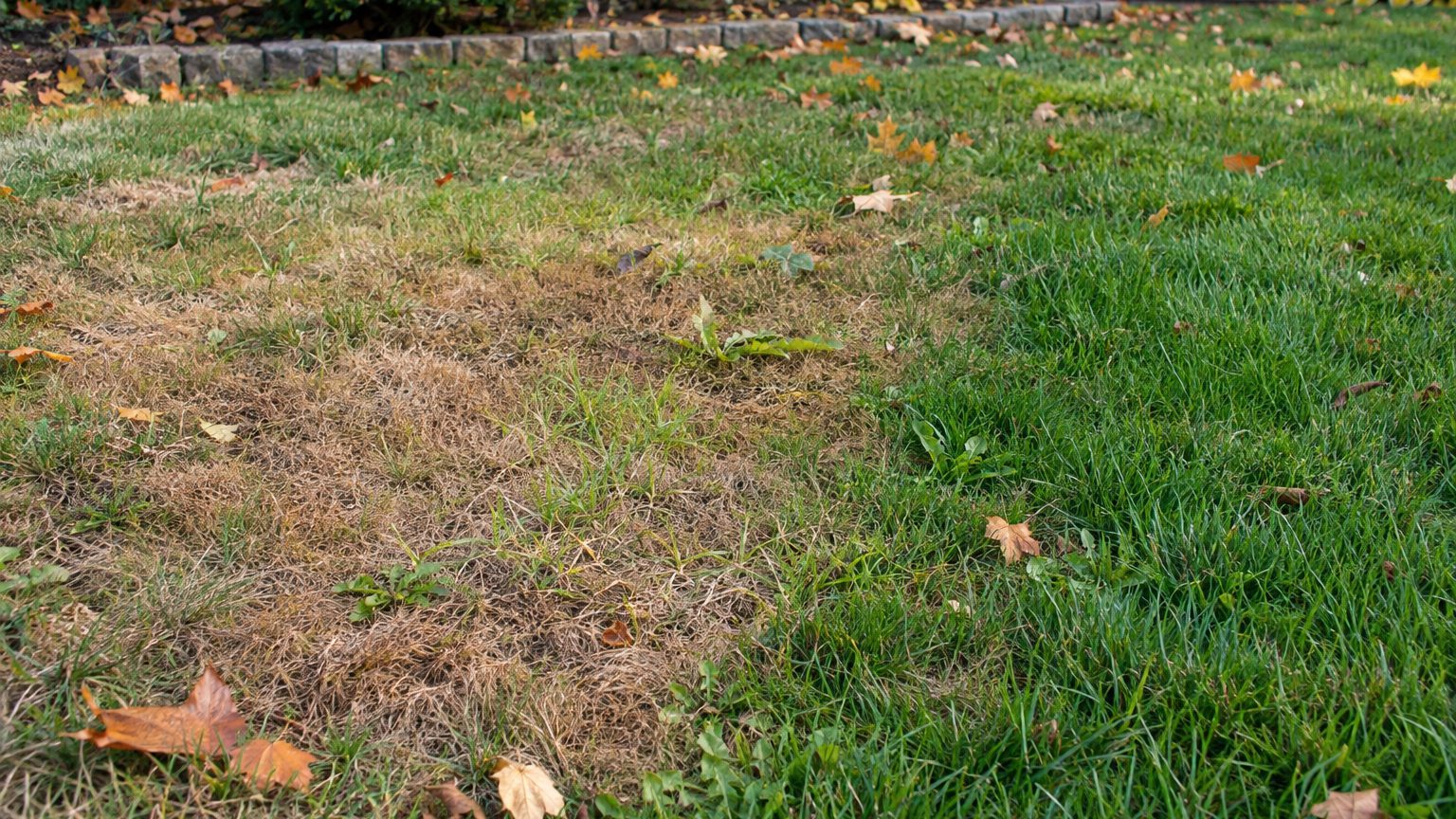
A lawn in New York usually tells you something is wrong with a patch of straw-colored grass in midsummer, a spongy feel underfoot, or weeds filling in where the turf thinned. Most of these trace back to a short list of causes, and each has a season when the fix works.
Lawn Pests and Diseases in New York
Crabgrass

Crabgrass shows up as light green, coarse clumps that sprawl flat across thin spots once the weather warms. It sprouts from seed in bare or weak turf, so a thick lawn is an important part of the defense.
A preventer goes down in April, though March and May still work in a pinch. Pulling young plants by hand works on small patches.
Dollar Spot
Dollar spot leaves small, bleached, straw-colored spots about the size of a silver dollar, and they can merge into larger patches. It favors warm, humid nights, long dew periods and lawns that are short on nitrogen.
Water deeply in the morning so the blades dry quickly. A fertilizer application in May keeps the grass strong enough to outgrow the damage.
Grubs
Grubs are fat, white, C-shaped larvae that chew grass roots in late summer. The telltale sign is turf that lifts like a loose carpet, often with skunks, raccoons or birds tearing at it overnight.
Peel back a corner of damaged sod and look at the soil. Replace the lost turf with seed in August or September, when new grass roots quickly.
Thick Thatch
Thatch is the tan, spongy layer of stems and roots between the green blades and the soil. A layer up to 1/2 inch is healthy, but above that, water and fertilizer struggle to reach the roots and disease gets a foothold.
Dethatch or core aerate in August or September. April and May also work if you missed the window.
Moss in Shade
Moss forms a green, velvety mat where grass has thinned under trees or on soggy, compacted ground. It is a symptom rather than the cause, because the grass was already failing from too little light or drainage.
Aerate in late summer, open up the canopy where you can, and overseed with a shade-tolerant mix in August or September.
New York — the year and the numbers
- State
- New York
- USDA zones
- 3b-7b
- Last spring frost
- March 23 to April 3
- First fall frost
- November 14 to November 27
- Annual rain
- 50 in
- Lawn type
- cool-season
- Source
- NOAA NCEI U.S. Climate Normals 1991-2020, 32F freeze probabilities · New York City
How to Tell Which Lawn Problem You Have
Start with the shape of the damage, then check how the grass behaves when you tug it. Roots that give way easily point to something eating them from below. Roots that hold firm point to disease, drought or the wrong conditions.
Timing and light matter as much. A patch that appears every year in the same shady corner is a different story from one that shows up suddenly in the sun.
| What you see | Where and when | Points to |
|---|---|---|
| Coarse, light green clumps spreading flat | Thin or bare sun, summer | Crabgrass |
| Small bleached spots that merge | Humid stretches, early to midsummer | Dollar spot |
| Turf peels back like carpet | Sunny areas, late summer | Grubs |
| Spongy, bouncy feel underfoot | Anywhere, any season | Thick thatch |
| Green mat over thin grass | Shade or wet soil, any season | Moss |
Matted gray or white patches that appear as snow melts in spring suggest snow mold, which is common where snow lingers. Rake the matted grass lightly so the blades dry and stand up, and the lawn usually recovers on its own.
Where Lawn Problems Are Worst in New York
New York spans USDA hardiness zones 3b to 7b, so the same lawn problem arrives at different times and in different forms depending on where you live.
- Long Island and New York City: Heat, compacted soil and humid summer nights bring dollar spot and heavy crabgrass pressure. Small, shaded city lots also struggle with moss.
- Hudson Valley: Mixed sun and shade under mature trees means thin turf and moss in some yards, grubs in others. Spring comes earlier here than farther north.
- Finger Lakes and the Lake Erie and Lake Ontario shores: Heavy lake-effect snow lingers on lawns and makes snow mold a regular spring visitor.
- Adirondacks: Short seasons and cold, slow-warming soil leave less time for grass to recover from damage, so fall seeding matters more.
Whatever your corner of the state, the problem usually follows drainage and shade before it follows latitude.
Lawn Care Mistakes That Invite Problems in New York
Mowing Too Short
Scalped grass has shallow roots and leaves bare soil open to crabgrass and other weeds. Short blades also dry out fast in July and August heat.
Set the mower high and keep the blade sharp. Mowing runs from April through November, so the habit matters for most of the year.
Watering Shallow and Late
Light, frequent sprinkling keeps the surface damp and the roots lazy, which is exactly what dollar spot and other fungi prefer. Evening watering leaves blades wet overnight.
Water deeply in the morning, then wait until the soil surface dries before watering again. June, July and August are when the lawn needs the most help.
Fertilizing at the Wrong Time
Heavy feeding in midsummer pushes soft growth that disease attacks and that burns in the heat. Feeding while the grass is dormant or the soil is frozen wastes product.
Fertilize in May and again in September. April and November are fallbacks if you miss those windows.
Where to Get Lawn Advice in New York
Soil, shade and microclimate vary from one New York yard to the next, so local advice beats general rules. Local help is close by.
- Cornell Cooperative Extension offers research-based turf guidance for the whole state, and it is the place to start for questions about diseases and grass choices.
- Your county extension office can look at photos or samples of the damage and often runs soil testing, so visit before you buy anything for a patch you cannot name.
Common Questions
When Does Frost End in Spring in New York City?
In New York City, the last spring frost typically falls between March 23 and April 3. Upstate and in the Adirondacks it comes later, and grass growth follows soil warmth rather than the frost date.
Can You Seed a Lawn in New York in Spring?
Yes, April and May both work for seeding. August and September give new grass more time to root before winter and less competition from weeds, so fall is the stronger choice if you can wait.
When Should You Lay Sod in New York?
August and September suit sod best, with April, May and October as fallbacks. Water it regularly until the roots knit into the soil underneath.