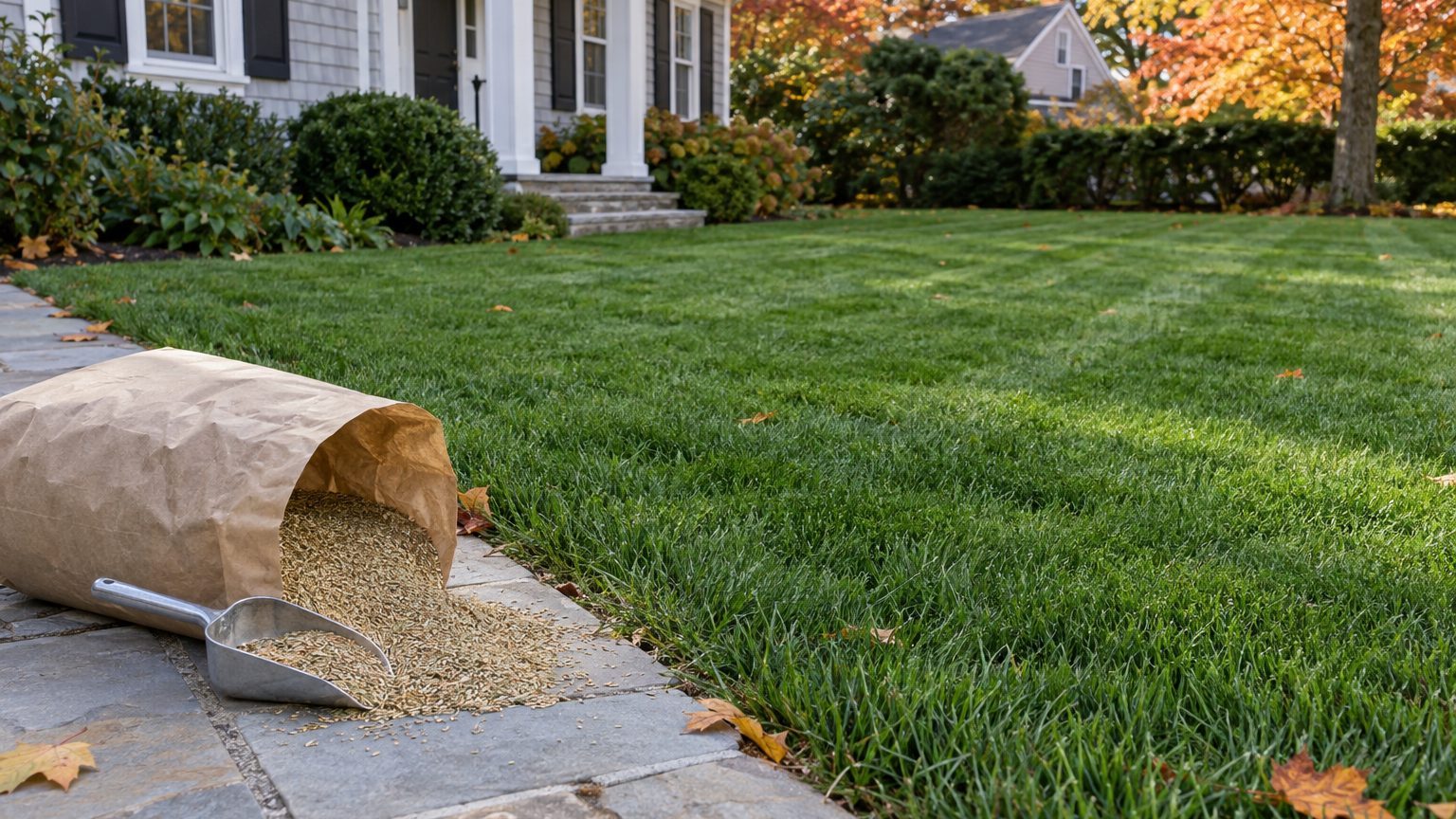
Thin patches along a driveway edge and bare spots where the snow plow piled the winter’s last drifts usually show up each April. Rebuilding that turf in Massachusetts comes down to picking a cool-season grass that suits your light, your traffic and your soil. Four species do nearly all the work in lawns across the state.
Which Grass Grows Best in Massachusetts?
Cool-season grasses grow best here. They put on their strongest growth in spring and fall, slow down in the heat of July and August, and are the standard lawn choices across Massachusetts. Cool-season grasses are the standard choice for Massachusetts winters. Here are the grasses that fit a range of Massachusetts lawns.
Kentucky Bluegrass
Kentucky bluegrass is the classic New England lawn grass. It spreads by underground stems, so it fills thin spots on its own and gives that thick, dark green look. It is slow to sprout, so plan on patience after seeding.
It wants full sun and some regular water in summer. In a dry July it may go dormant and turn straw-colored, but it usually greens up again when cooler weather returns.
Fine Fescues
Creeping red, chewings and hard fescue make up this group. They handle shade, poor soil and dry ground better than bluegrass does, and they get by on less fertilizer and less water.
That makes them a good fit for sandy ground near the coast and for shady lots under maples and oaks. They look finer and softer than most lawn grasses, but they don’t love heavy foot traffic.
Perennial Ryegrass
Perennial ryegrass sprouts quickly, which makes it useful for getting green on bare soil before the cold arrives. It stands up to kids and dogs reasonably well.
Its weak point is winter. In the colder parts of Massachusetts it can thin out after a hard season, so it is often paired with bluegrass or fescue rather than used alone.
Tall Fescue
Tall fescue has deep roots and copes with heat and dry spells better than the others, which is why people consider it for sunny, hard-used yards. The blades are wider and coarser.
It grows in clumps and doesn’t spread to fill gaps, so a damaged patch needs reseeding. In colder hill towns, winter can be rough on it.
Massachusetts — the year and the numbers
- State
- Massachusetts
- USDA zones
- 5a-7b
- Last spring frost
- April 1 to April 8
- First fall frost
- November 3 to November 14
- Annual rain
- 44 in
- Lawn type
- cool-season
- Source
- NOAA NCEI 1991-2020 Climate Normals, 32F freeze probabilities · Boston
How to Choose Grass Seed for a Massachusetts Yard
Start with the light, because it quickly narrows the field. Then think about who uses the lawn, whether you can run a sprinkler through a dry summer, and how much mowing you want to do.
Blended seed combines these species so their strengths can complement one another. Read the species list on the tag before you look at anything else on the bag.
| Your yard | Grass that fits | Why |
|---|---|---|
| Full sun, regular watering | Kentucky bluegrass | Dense, self-repairing turf that spreads into thin spots |
| Shade under trees | Fine fescues | Tolerate low light and root competition |
| Kids, dogs, heavy traffic | Perennial ryegrass with bluegrass | Quick to sprout, then bluegrass fills in |
| Dry, sandy or little water | Tall fescue or fine fescues | Deep roots or low water needs |
| Low mowing and low feeding | Fine fescues | Grow slowly and ask for less fertilizer |
If your yard mixes sun and shade, as many do, a blend of bluegrass and fine fescues covers both. Watering matters most from June through August, so a lawn you can’t irrigate in those months leans toward the fescues.
Which Grasses Grow Where in Massachusetts
Massachusetts is small, but winter cold and soil type change quite a bit from the Berkshires to the Cape. The same grasses are used across the state, but the mix shifts.
- The Berkshires: Colder winters and a shorter growing season favor hardy Kentucky bluegrass and fine fescues. Perennial ryegrass and tall fescue are riskier here, so use them sparingly or skip them.
- Greater Boston and the coast: Milder winters give every species a better chance, including ryegrass blends. Sea air, salt spray and tree cover push many yards toward fine fescues.
- Cape Cod and the South Coast: Sandy soil drains fast and dries out in summer. Fine fescues and tall fescue handle those conditions with less watering than bluegrass.
- Pioneer Valley and Worcester County: Inland suburbs sit between the extremes, so a bluegrass and fescue blend with a little ryegrass works well, with frost arriving earlier in fall than at the coast.
In colder towns, sow toward the beginning of the late-summer window so new grass has more time to root before winter.
Grass Seed Mistakes to Avoid in Massachusetts
Choosing the Wrong Grass for the Spot
A sun-loving bluegrass seeded under a maple is likely to thin out over time. The fix is to match the species to the light before you buy, and to read the label for what is actually in the bag.
Seed labeled “sun and shade” may lean heavily on only part of the blend, so check the ingredient list instead of the front of the bag.
Seeding at the Wrong Time
Cool-season grasses sprout best when the soil is warm and the air is cooling, which in Massachusetts means August and September. Seed put down then has time to root before the cold. If you miss that window, May still works, though summer heat and weeds give spring seedlings a harder start.
Most crabgrass preventers interfere with grass-seed establishment, so do not combine them with seeding on the same patch unless the label says they are compatible.
Too Much or Too Little Seed
Thick seed piles crowd each other into weak, disease-prone seedlings, and a sparse scatter lets weeds win. Follow the rate printed on the bag for your species and spread it evenly with overlapping passes.
Cover the seed with no more than 0.25 inch of soil and press it down firmly so it touches the ground. Seed buried deeper than that often never makes it to the surface.
Where to Get Lawn Advice in Massachusetts
Local turf experts can look at your soil, your shade and your problem spots in a way a seed bag can’t. Public extension services cover many common questions and are worth contacting before you buy seed.
- UMass Extension publishes turf guidance for the state, and its pages are worth reading before late summer, when seeding season begins.
- Your county or local extension office can point you to soil testing, which is best done before you seed or fertilize.
Collect a representative soil sample and send it in before you buy seed.
Common Questions
When Should You Aerate Before Seeding in Massachusetts?
September is the best time, and it pairs well with seeding because the holes give seed good contact with the soil. If you miss it, May also works.
When Should You Fertilize a Massachusetts Lawn?
May and September are the main months for feeding. Fertilizing in October or November also works if you fell behind.
Should You Put Down Crabgrass Preventer If You Plan to Seed?
Not on the same ground. Most crabgrass preventers used in April can also interfere with grass-seed establishment. If you plan to overseed, wait for the August and September seeding window and handle crabgrass the following spring.