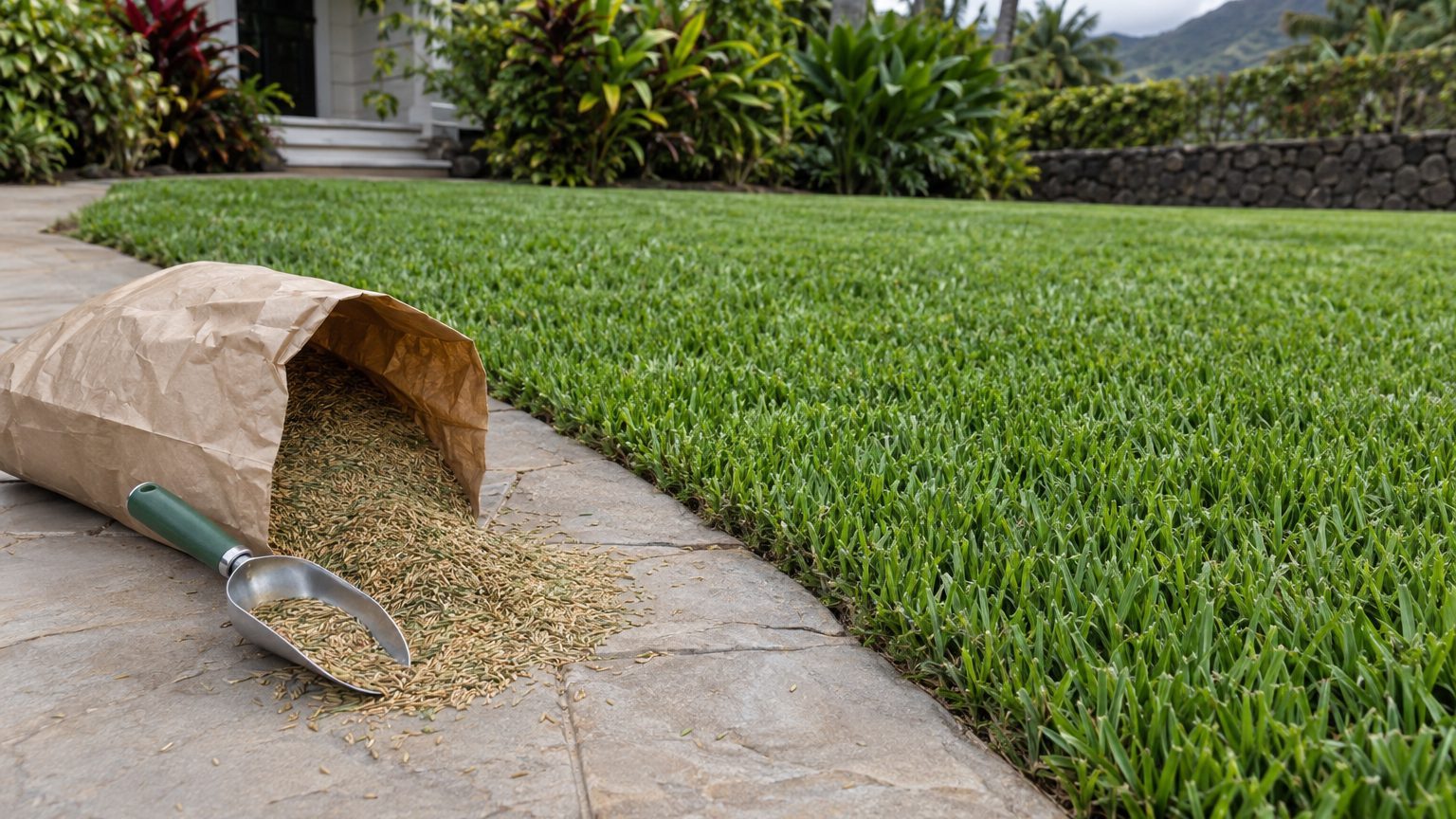
Walk a Hawaii lawn in any month and the grass may still be green and growing, because frost does not stop it. Frost never reaches the places where people live, so the real question is which warm-season grass suits your rain, sun and salt. Only one of them comes as seed.
Which Grass Grows Best in Hawaii?

Warm-season grasses win here, because the islands have no frost season in the lowlands and the grass never goes dormant from cold. Five warm-season grasses are used in Hawaii, and each suits a different mix of light, moisture and maintenance. Only one is sold as seed, so seed shopping is a short list.
Common Bermudagrass
This is the one lawn grass sold as seed in Hawaii, so it is the answer for anyone who wants to sow rather than plant. It loves full sun, spreads fast and recovers quickly from foot traffic.
You can sow common bermudagrass seed in any month in Hawaii if you can keep it moist while it establishes. Cover it with no more than 0.25 inch of soil and press it firmly so every seed touches the ground.
Seashore Paspalum
Seashore paspalum tolerates salt spray and salty water better than most turf, which makes it a natural fit for oceanfront yards. It is planted from sprigs, plugs or sod, not seed.
Zoysiagrass
Zoysia forms a dense, fine-textured carpet that crowds out weeds once established. The types grown in Hawaii include Manila and Mascarene. Both are planted vegetatively, so you will buy sod or plugs, not a bag of seed.
Centipedegrass
Centipedegrass suits homeowners who want a lawn that asks little. It grows slowly, so it needs less mowing than bermudagrass, and it is also started from plugs, sprigs or sod.
St. Augustinegrass
St. Augustine is a common choice for shadier, moister yards because it tolerates partial shade better than bermudagrass. It is never sold as seed. Expect to lay sod or plant plugs, which can go in any month as long as you keep them watered.
Hawaii — the year and the numbers
- State
- Hawaii
- USDA zones
- 9a-13a
- Frost
- none in an average year
- Annual rain
- 16 in
- Lawn type
- warm-season
- Source
- NOAA NCEI 1991-2020 Climate Normals: not-computable flag for every freeze percentile at 32F and 36F, zero days per year at or below 32F, station USW00022521 — https://www.ncei.noaa.gov/access/services/data/v1?dataset=normals-annualseasonal&stations=USW00022521 · Honolulu
How to Choose Grass Seed for a Hawaii Yard
Start with the light your yard gets and how much work you want to do. Then decide whether seed is realistic at all. If you want to sow from a bag, common bermudagrass is the answer. Every other species means sod, plugs or sprigs.
Mowing runs all twelve months here, so a slower-growing grass can save real effort over a year.
| Situation | Grass | Why it fits |
|---|---|---|
| Full sun, want to sow seed | Common bermudagrass | The only one sold as seed |
| Oceanfront or salty water | Seashore paspalum | Handles salt well |
| Dense lawn, fewer weeds | Zoysiagrass | Thick turf, planted as sod or plugs |
| Partial shade | St. Augustinegrass | Tolerates shade, planted vegetatively |
| Less mowing | Centipedegrass | Slow growth, planted as plugs or sod |
Heavy foot traffic from kids and pets favors bermudagrass, which repairs itself quickly. Whatever you choose, plan on regular watering through the establishment period, since that is how new turf roots in any month of the year.
Which Grasses Grow Where in Hawaii
With no frost at lowland elevations, the differences inside the state come from rainfall, elevation and whether a spot faces the wind or sits in its shelter.
- Windward sides of the islands: Rain is frequent and the soil stays moist, which suits St. Augustine and zoysia. Fertilizer is best reduced or skipped in the winter months there.
- Leeward coasts: Sunnier and drier, they favor bermudagrass and seashore paspalum, and the lawn depends more on your irrigation.
- Higher elevations: Cooler air slows growth, so mowing and feeding need less of your time than at sea level.
Frost matters only near the high volcanic summits of Mauna Kea, Mauna Loa and Haleakala, far from any yard.
Grass Seed Mistakes to Avoid in Hawaii
Buying Seed for the Wrong Grass
Bags labeled for zoysia or St. Augustine do not make sense here, because St. Augustine is never sold as seed and zoysia is planted vegetatively. Check the species on the label. If it is not common bermudagrass, switch to sod, plugs or sprigs.
Waiting for the Right Season
Mainland advice about spring and fall windows does not apply. With no frost, seeding and sod work in any month, so do not postpone a project for a calendar that was written for colder places. Pick a time when you can keep the soil moist.
Burying or Scattering Seed Carelessly
Thick covering smothers the tiny seed, while seed left on bare hard ground washes away in a heavy rain or dries out in the sun. Rake lightly, then press firmly, and keep the surface damp until the grass is up.
Where to Get Lawn Advice in Hawaii
Soil, rainfall and salt can change from one neighborhood to the next, so local advice is worth a quick call or visit before you buy.
- The University of Hawaii CTAHR extension offers lawn grass publications you can read before choosing a species.
- Your county extension office can help with local soil and rainfall questions, so contact it before planting.
Common Questions
Can You Grow Kentucky Bluegrass or Fescue in Hawaii?
Those cool-season grasses are not among the lawn grasses used in the state. The warm-season species above are the ones that suit the climate.
Is Sod or Seed Better in Hawaii?
Seed works only for common bermudagrass. For zoysia, St. Augustine, centipede or paspalum, sod, plugs or sprigs are the way to go, and they can be planted in any month with water.
How Often Should You Fertilize a Hawaii Lawn?
Feed monthly from March through October. November through February also works, and on windward sides you can cut back on it or skip it in the winter months.