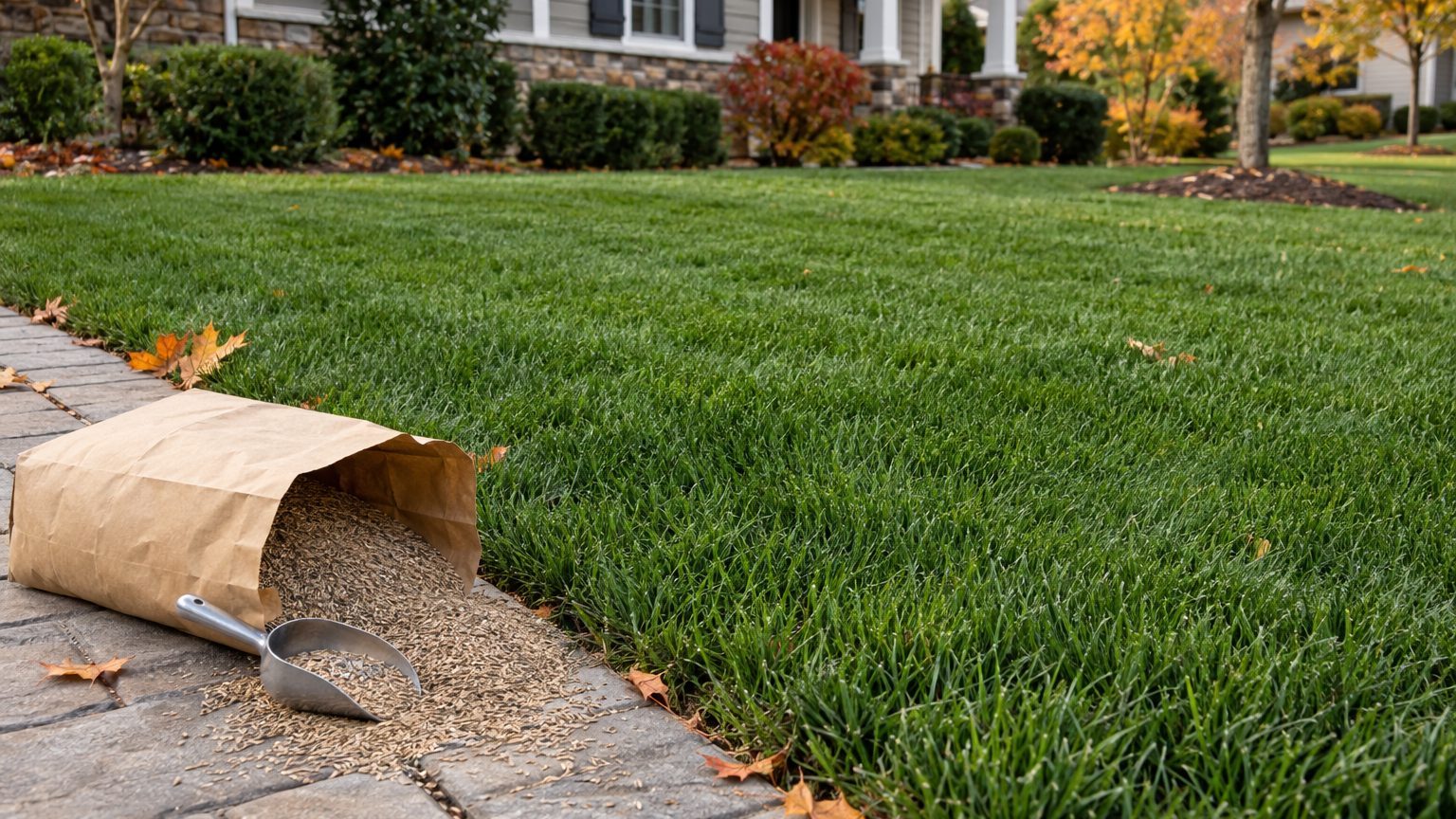
Warm-season grass turns thick and green through a Georgia summer, then fades to tan after the first hard frost. That rhythm is the clue to choosing seed here. Five lawn grasses suit the state, and only some of them come in a seed bag, so the choice depends on sun, soil and how you want to plant.
Which Grass Grows Best in Georgia?
Warm-season grasses grow best in Georgia, because long, hot summers and mild winters suit grasses that peak in heat and rest when it cools. Cool-season grasses struggle through the humid summers, and the lawn thins out just when the weather is hardest on it.
USDA hardiness zones run from 6a to 9b across the state, so a lawn in the mountains faces a different winter than one on the coast. The grasses below include statewide standbys as well as choices that need a closer look at your location.
Bermudagrass
Bermudagrass is sold as seed, sod and plugs, and it spreads by runners and underground stems to fill gaps on its own. It thrives in full sun, shrugs off foot traffic and recovers quickly from damage.
It sulks in shade. If a spot stays shady, another grass will serve you better there.
Zoysiagrass
Zoysiagrass is mostly planted as sod or plugs rather than seed. It forms a dense, soft carpet that crowds out weeds, and it handles light shade better than bermudagrass.
It establishes slowly, so expect to be patient. Many Georgia homeowners find the wait worthwhile for the look underfoot.
Centipedegrass
Centipedegrass can be seeded and suits a lawn you would rather not fuss over. It grows slowly, needs little mowing and prefers the acidic, sandy soils common in south Georgia.
It dislikes heavy feeding and hard foot traffic. A light hand with fertilizer keeps it healthy.
Bahiagrass
Bahiagrass grows from seed and sends roots deep, which helps it ride out dry spells on sandy ground. The texture is coarser and more open than the others, and it throws up seed stalks in summer.
It makes a practical lawn for large, low-input yards, though not a manicured one.
St. Augustinegrass
St. Augustinegrass is never sold as seed, only as sod or plugs. It tolerates some shade and thrives in the warmth and humidity of the coast and the southern part of the state.
Cold is its weak point. In north Georgia, a hard winter can set it back, so it carries more risk the farther north you plant.
Georgia — the year and the numbers
- State
- Georgia
- USDA zones
- 6a-9b
- Last spring frost
- March 11 to March 29
- First fall frost
- November 13 to December 1
- Annual rain
- 50 in
- Lawn type
- warm-season
- Source
- NOAA NCEI 1991-2020 Climate Normals, 32F freeze probabilities · Atlanta
How to Choose Grass Seed for a Georgia Yard
Start with the light, because sun is the first thing that sorts these grasses. Then think about traffic, how much water you can give, and how often you want to mow.
If you plan to plant seed, your options narrow to bermudagrass, centipedegrass and bahiagrass. Zoysiagrass and St. Augustinegrass are mostly a sod or plug decision, so they belong to a different shopping trip.
| Grass | Planted as | Fits your yard if |
|---|---|---|
| Bermudagrass | Seed, sod or plugs | You have full sun, heavy traffic and don’t mind frequent mowing |
| Centipedegrass | Seed or sod | You want a slow-growing lawn with little mowing and light feeding |
| Bahiagrass | Seed | Your soil is sandy, watering is limited and a coarse look is fine |
| Zoysiagrass | Mostly sod or plugs | You want a dense lawn with some tolerance for partial shade |
| St. Augustinegrass | Sod or plugs only | You have shade and live in a milder part of the state |
Deep shade is a tough call for any of these. Thin turf under tall trees often does better with mulch or a groundcover than with another round of seed.
Which Grasses Grow Where in Georgia
Georgia stretches from mountain ridges to salt marsh, and the winter you plan around changes along the way.
- Blue Ridge Mountains: Winters are the coldest here, and fall freezes arrive earlier than elsewhere. St. Augustinegrass is a gamble there, so check local guidance before choosing a warm-season grass.
- Atlanta and the Piedmont: The city’s warmth gives a gentler winter than the hills around it. Bermudagrass, zoysiagrass and centipedegrass all do well, with St. Augustinegrass working in sheltered spots.
- Coastal Plain and the Savannah coast: Mild winters and sandy soil favor St. Augustinegrass, centipedegrass and bahiagrass. Freezes come later and ease off sooner.
If you live near the boundary between these areas, lean toward the hardier grass.
Grass Seed Mistakes to Avoid in Georgia
Buying Cool-Season Seed
Bags of cool-season mixes line garden center shelves, and they look appealing in fall. In Georgia’s summer heat they fade and thin, leaving bare patches that weeds fill.
Check the label for a warm-season grass, and skip any product promising St. Augustinegrass seed. That grass is only planted as sod or plugs.
Sowing at the Wrong Time
Warm-season seed needs warm soil to sprout and spread. In Georgia, May is the time to sow, and June still works if you miss it.
Seed planted in autumn has little time to root before cold slows it, and the young grass often does not survive winter.
Too Much Seed or Too Deep
Heavy seeding crowds seedlings into weak, disease-prone stands, while sparse seeding leaves room for weeds. Follow the rate printed on the bag for your grass.
Rake lightly and cover seed with no more than 0.25 inch of soil. Press it down for good soil contact, because seed buried too deeply may not come up.
Where to Get Lawn Advice in Georgia
Local soil and microclimates vary enough that a quick conversation can save a season. Local sources serve Georgia homeowners directly.
- University of Georgia Extension publishes lawn guides for each grass, so check it before you buy seed or sod.
- Your county extension office can test your soil and tell you which grass does well on your street, so call before you plan spring work.
Common Questions
When Should You Aerate a Georgia Lawn?
May is the right month for core aeration, and June also works. Warm-season grass recovers fastest when it is growing strongly.
Should You Dethatch Before Seeding?
If thatch is thick, yes. May and June are the months to do it, and April still works. Clearing it first lets seed reach the soil.
How Long Does the Mowing Season Run in Georgia?
Warm-season lawns here need mowing from March through November. Watering matters most from May through September, when heat dries the soil fastest.