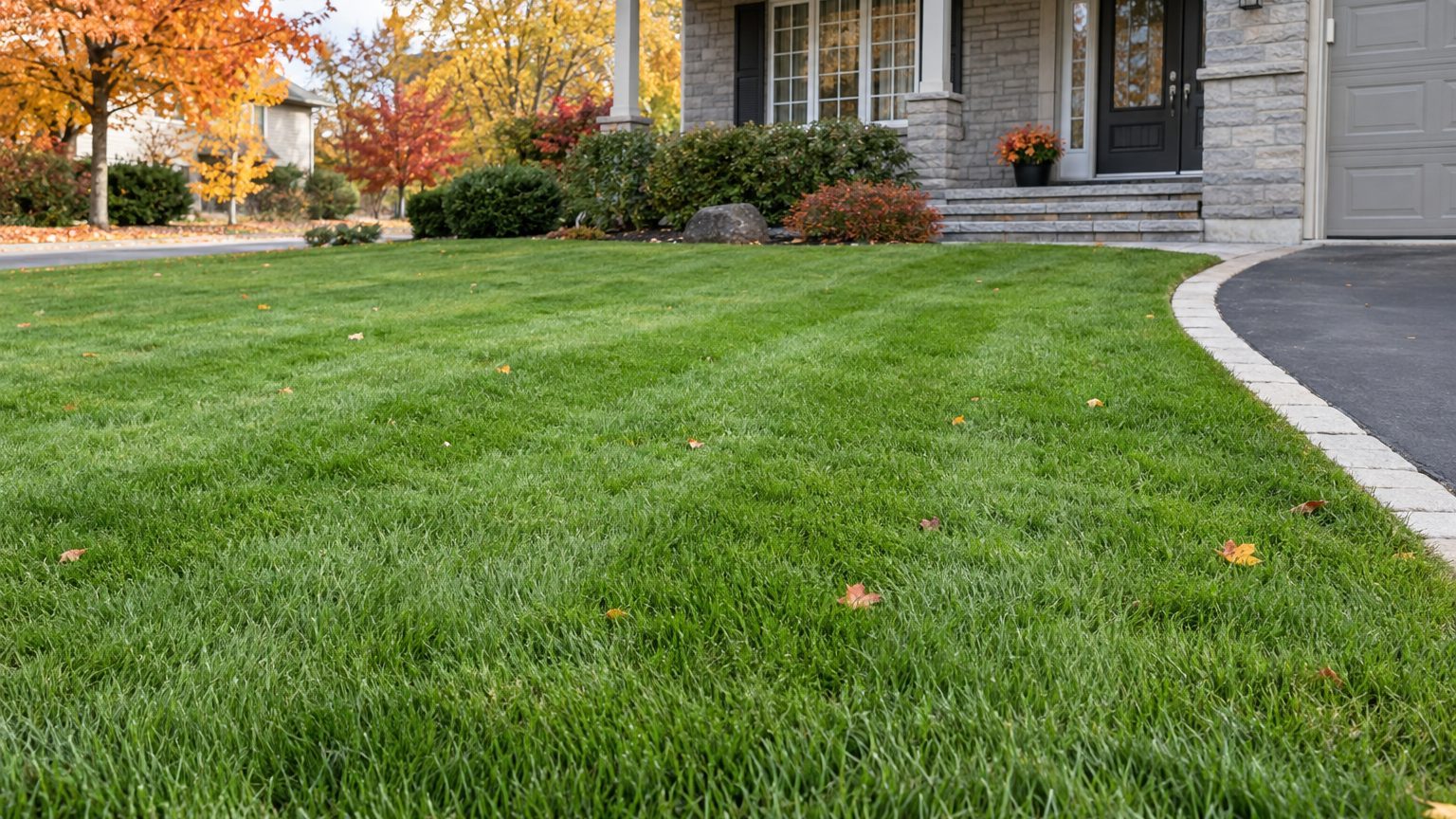
When the last snow melts off a Quebec lawn, the grass underneath is flattened, pale and a little matted, and the work of the year starts with a gentle rake. Lawns in Quebec have a short growing season, with cold winters and warm summers, and suitable cool-season grasses grow actively in spring and early autumn. Knowing when to seed, feed and mow keeps the effort small.
Frost Dates and Growing Season in Quebec
In the Montreal area, the last spring frost falls on average May 6, so in roughly half of years frost still arrives later and a young seedling is never safe on that date. The area sits in Canadian hardiness zone 5b, a rating that does not convert to a USDA zone. Northern and higher districts run later.
- In early spring, once the snow is gone and the soil has dried, rake lightly to lift matted blades and let air in. Mowing can begin in April as soon as the grass has greened and started to grow.
- In May, the soil warms enough for crabgrass preventer, and seeding or core aeration also work if you missed the autumn. New seedlings this early can still be nipped by a frosty night.
- From June through August, the lawn is in full growth and mowing is regular. Watering matters most in these months when rain thins out.
- In August and September, warm soil and cooling nights favor seeding, dethatching and aeration; fertilize in September. Roots form quickly and the grass has time to settle in before winter.
- In October, mowing continues as long as the grass grows, and a final feeding is still possible. Growth slows with each cold night.
- In November, the lawn goes dormant. Seed can still go down on cold soil, where it waits and sprouts in spring.
On average, the first fall frost in the Montreal area arrives October 5, which is why seeding belongs in late summer and not later. Frost only marks risk. The grass itself grows when the soil is warm and slows as it cools.
Quebec — the year and the numbers
- State
- Quebec
- Hardiness zones
- 5b
- Last spring frost
- May 6
- First fall frost
- October 5
- Annual rain
- 39 in
- Lawn type
- cool-season
- Source
- Environment and Climate Change Canada — Canadian Climate Normals 1981-2010, station MONTREAL/ST-HUBERT A · Montreal
Cool-Season or Warm-Season Grass in Quebec?
Cool-season grass is the one that lasts here. Winters are long and cold enough to kill most warm-season species, and those that survive spend much of the year brown. Cool-season grasses stay green in spring and fall, then rest through winter.
Summer heat and dry spells are their weak point, so the choice among them comes down to shade, traffic and how much you water.
| Grass | How it does in Quebec | Why |
|---|---|---|
| Kentucky bluegrass | Dense, dark green lawn that handles winter well | Spreads by underground stems and fills small bare spots |
| Fine fescues (creeping red, chewings, hard) | Reliable in shade and on poorer soil | Fine leaves need little feeding and tolerate low light |
| Perennial ryegrass | Quick to sprout, good for repairs | Germinates fast but is less hardy in the coldest winters |
| Tall fescue | Stands up to summer dryness | Deep roots reach moisture when the surface dries |
Seed mixes often combine these grasses, so a lawn with sun, shade and a play area can use each where it fits.
When to Seed, Fertilize and Aerate a Lawn in Quebec
September is the busiest month for lawn work here. Warm soil, cool air and steadier rain give seed and fertilizer the best return, and spring offers a fallback for most tasks.
Mowing runs for most of the season, and the other jobs cluster at either end of it.
| Task | Timing in Quebec | Why then |
|---|---|---|
| Seeding | August, September (May also works) | Seed germinates quickly in warm soil and roots form before winter |
| Dormant seeding | November | Seed on cold soil stays put and sprouts in spring |
| Fertilizing | September (May and October also work) | Feeds roots as the grass recovers from summer |
| Core aeration | September (May also works) | Opens compacted soil while grass is growing strongly |
| Dethatching | August, September | The lawn recovers fast in warm soil |
| Crabgrass preventer | May | Goes down before crabgrass seed germinates |
| Watering | June, July, August | Summer heat and dry spells stress cool-season grass |
| Mowing | May through October (April and November also work) | Follows active growth, with the edges of the season for the first and last cuts |
If you miss September for fertilizing, October still works. Aeration and seeding pair well on the same day, since seed falls into the holes and meets bare soil.
Lawn Problems to Watch for in Quebec
Matted Patches After Snowmelt

Gray or straw-colored circles that look pressed flat, and that show up where snow lay longest, are the usual sign of snow mold. Long snow cover over unfrozen ground gives it a damp, dark place to grow.
Rake the patches gently once the soil is firm, so the blades stand up and dry. Most lawns recover on their own, and reseeding in spring covers any thin spot that stays bare.
Brown Grass in Summer Dry Spells
Grass that turns tan across a sunny slope, and springs back when the weather cools, is probably dormant from heat and dryness rather than dead. Cool-season grasses slow down in midsummer to protect themselves.
Watering regularly and deeply through June, July and August keeps the roots alive. Letting the grass grow a little taller shades the soil and holds in moisture.
Salt Burn Along Pavement
A brown, thin strip along a driveway, sidewalk or street edge in spring points to road salt. Winter plowing and de-icing push salt into the lawn beside the pavement, where it dries the roots.
Flush the area with plenty of water as the soil thaws, then rake out dead grass and reseed bare ground in late summer when conditions favor sprouting.
How Lawn Care Dates Change Across Quebec
The calendar above follows the Montreal area, and the season shifts as you move away from it.
- Montreal and the St. Lawrence lowlands: an earlier spring and a longer season than much of the province, with seeding in late summer and mowing into autumn.
- Quebec City and the Eastern Townships: spring arrives a little later and autumn comes sooner, so seeding is best done at the early end of the late-summer window.
- The Laurentians and other higher ground: snow lingers and autumn frost returns earlier, so spring work starts later and dormancy begins sooner.
- Saguenay and Lac-Saint-Jean: a shorter season still, with a late thaw and an early autumn chill. Plan to seed early and keep spring tasks light.
Watch the soil and the grass itself and treat the dates as a guide. If the lawn is slow to green, your calendar slides later too.
Where to Get Lawn Advice in Quebec
Quebec has no county extension office. Local advice comes from the provincial agriculture ministry, horticultural and master gardener groups, and garden centers that know the soil and the seed mixes sold nearby.
- The provincial agriculture ministry, MAPAQ, publishes guidance and points to regional services for soil and plant questions.
- A local master gardener or horticultural society can look at a photo or a sample and help you tell disease from drought.
- A garden center can direct you to a lab for a soil test, which is worth doing before the September feeding.
Common Questions
Does a Canadian Hardiness Zone Match a USDA Zone?
No. The Canadian system draws on seven climate variables and the USDA system on one, so the numbers do not convert. A single Canadian zone can overlap nine different USDA zones, which is why Quebec lawns are better judged by frost dates and the grass types above.
Can You Dethatch a Lawn in Spring in Quebec?
Spring is a poor time. The soil is soft and the grass is just waking up, so raking hard pulls out live blades. Wait for August or September, when growth is strong and the lawn fills in quickly.
How Soon Can You Walk on a Lawn After Snowmelt?
Wait until the soil is firm and no longer squishy. Walking or raking on saturated ground compacts it and tears the crowns of the grass, which slows the spring green-up.