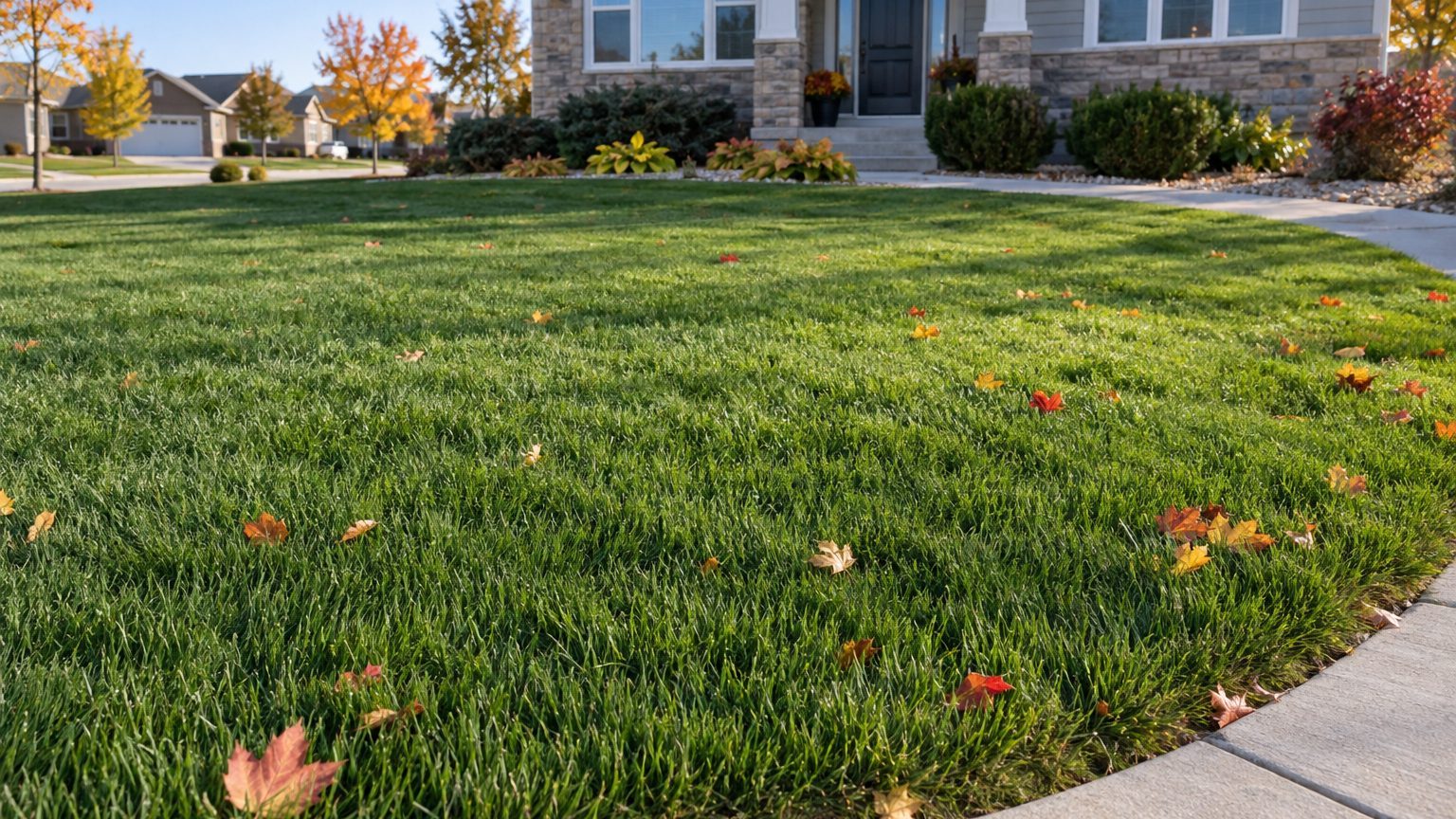
A North Dakota lawn spends most of its year either frozen or racing to recover, and the grass that thrives is the one built for long, hard winters. Cool-season turf rules here, and its best work happens in late summer and early fall. Lawns in North Dakota reward timing more than effort.
Frost Dates and Growing Season in North Dakota
For the reference city, the last spring freeze usually falls between May 4 and May 15, and the first fall freeze arrives between September 25 and October 5. Suburban and rural yards often freeze later in spring and earlier in fall, by a week or two, so check your own county before planting. The state sits in USDA hardiness zones 3a to 4b, which tells you how cold winters get. Frost marks risk to young seedlings, while growth itself follows soil warmth.
- In early spring, the ground thaws and the lawn stays mostly dormant, so stay off soggy turf that can rut and compact under foot traffic.
- In May, soil warms enough for steady growth, which makes it the month for crabgrass preventer, a first feeding, and the first regular mowing and watering.
- From June through August, mowing and watering carry the lawn through summer heat, even when cool-season grass slows down.
- In August and September, the cooling air and still-warm soil suit seeding, core aeration and dethatching, and September is the second round of feeding.
- In October, mowing continues as long as the grass grows, and dormant seeding can begin once the soil is cold.
- In November, seed laid on cold soil can wait through winter and sprout when spring warms the ground.
A frost in late September does not stop the grass overnight, but it does end the safe window for new seedlings that have not had time to root.
North Dakota — the year and the numbers
- State
- North Dakota
- USDA zones
- 3a-4b
- Last spring frost
- May 4 to May 15
- First fall frost
- September 25 to October 5
- Annual rain
- 24 in
- Lawn type
- cool-season
- Source
- NOAA NCEI U.S. Climate Normals 1991-2020, 32F freeze probabilities · Fargo
Cool-Season or Warm-Season Grass in North Dakota?
Cool-season grass is the answer here. Warm-season species stall in zone 3 and 4 winters and spend too much of the year brown. Cool-season turf handles the cold, slows in summer heat, and picks up again as nights cool.
| Grass | How it does in North Dakota | Why |
|---|---|---|
| Kentucky bluegrass | The standard lawn grass | Handles harsh winters and spreads to fill thin spots |
| Creeping red fescue | Reliable fine fescue | Pairs well with bluegrass in mixes and tolerates lean conditions |
| Chewings fescue | Dependable fine fescue | Cold-hardy and fine-textured |
| Hard fescue | Dependable fine fescue | Cold-hardy and suited to lower-maintenance lawns |
| Perennial ryegrass | Short-lived in the coldest winters | Sprouts fast but can thin out after severe cold |
Most North Dakota lawns lean on Kentucky bluegrass, often blended with fine fescues. Perennial ryegrass can help with quick cover, though expect to patch it after hard winters.
When to Seed, Fertilize and Aerate a Lawn in North Dakota
August and September carry most of the heavy lifting. Seed sown then meets warm soil and cooling air, so it roots before winter arrives.
If September slips past, October still works for dormant seeding, and November is the best month for it. Spring seeding in May works as a fallback.
| Task | Best months in North Dakota | Why then |
|---|---|---|
| Seeding | August, September (May also works) | Warm soil helps seed sprout and root before winter |
| Dormant seeding | November (October also works) | Seed rests on cold soil and sprouts in spring |
| Fertilizing | May, September | Feeds spring growth and helps the lawn recover from summer |
| Core aeration | August, September | Opens compacted soil while grass can recover quickly |
| Dethatching | August, September | Clears thatch while the grass is growing strongly |
| Crabgrass preventer | May | Goes down before crabgrass seed sprouts |
Pairing aeration with seeding makes sense, since the holes give seed good contact with soil. Mowing runs from May through October, and watering matters most from May through September.
Lawn Problems to Watch for in North Dakota
Winter Kill and Bare Patches

Patches that stay brown or thin after spring greens up often come from harsh winter conditions, especially in perennial ryegrass, which is short-lived in the coldest winters. Rake the dead grass out lightly and reseed in late summer rather than rushing in spring.
Compacted, Thinning Turf
Grass that looks thin and water that runs off instead of soaking in point to compacted soil, and heavy clay makes it more likely. Core aeration in August or September opens the soil and gives seed a place to settle.
Brown Grass in Summer Dry Spells
Bluegrass slows and browns when summer turns dry. Regular watering from May through September keeps it growing, and a dormant lawn usually greens up again once cooler weather returns.
How Lawn Care Dates Change Across North Dakota
The calendar above holds statewide, though location nudges the dates earlier or later.
- Red River Valley: Use the thaw in your own yard and your county’s frost dates to set the start of spring work and the end of fall seeding.
- Northern and northwestern North Dakota: Colder winters and an earlier fall freeze shorten the season, so aim for the early end of the seeding window.
- Missouri Slope: Bismarck and the surrounding area mark a middle ground, with a slightly longer season than the far north but drier summers that call for steady watering.
If your yard sits higher or more exposed than nearby towns, expect a later spring and an earlier fall freeze.
Where to Get Lawn Advice in North Dakota
NDSU Extension publishes lawn guidance for the state, and your county office can help with local conditions.
- County extension offices can help diagnose a problem from a sample or photo, so call when patches appear.
- A soil test through your county office tells you what the lawn needs before you buy fertilizer, and it fits well ahead of the September feeding.
Common Questions
Can You Seed a Lawn in Spring in North Dakota?
Yes, May works as a fallback, though late summer gives seedlings better conditions.
What Is Dormant Seeding?
You spread seed in November, or October if needed, on cold soil. It stays put through winter and sprouts when the ground warms in spring.
Is a Zone 3 Lawn Different from a Zone 4 Lawn?
The grass choices are the same across the state. Zone 3 yards simply see colder winters and a shorter season, so winter hardiness matters even more there.