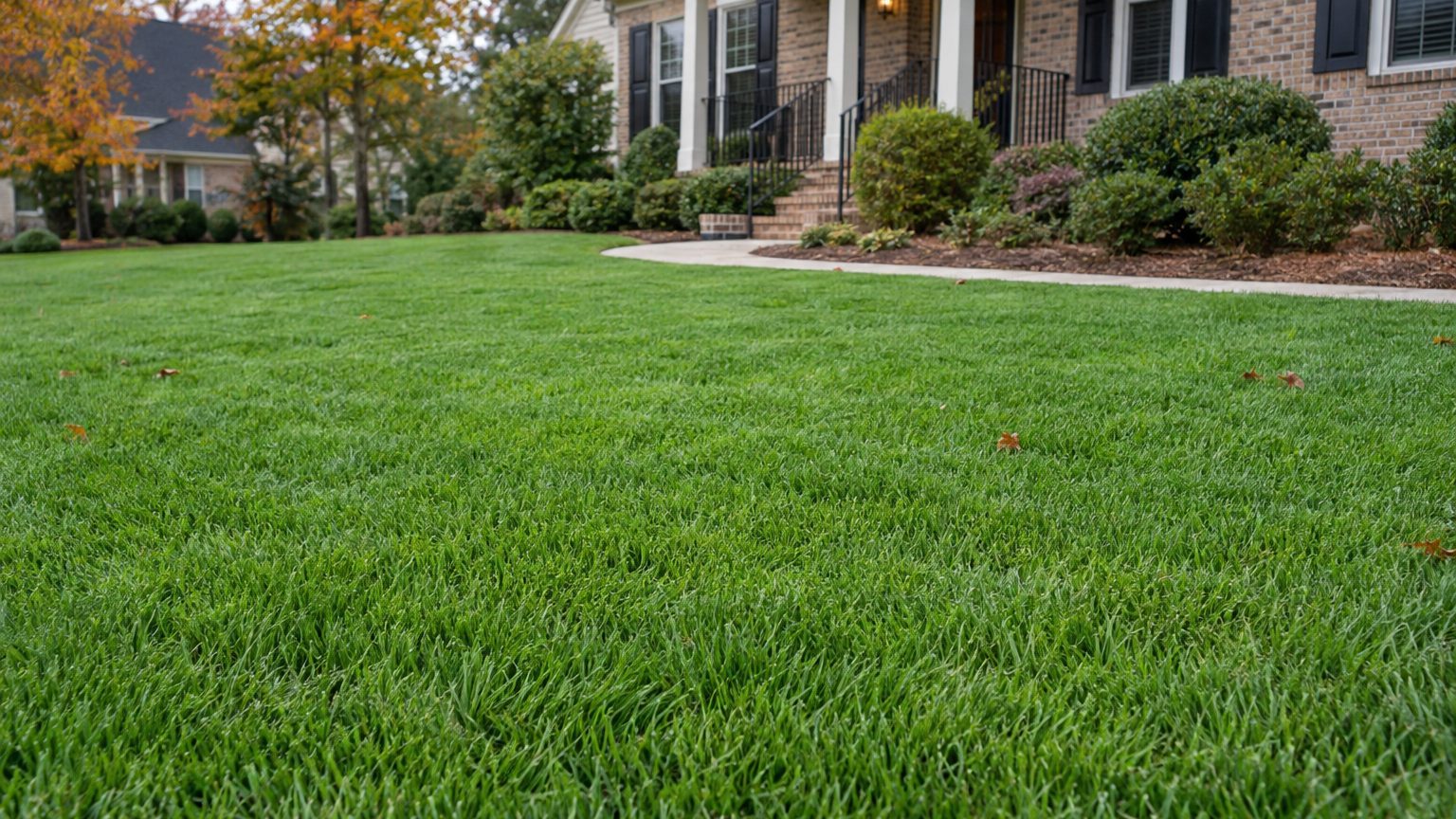
Georgia lawns spend the hot months growing hard and the cold months asleep, and most of your work lands in the stretch between late spring and the end of summer. The grasses that thrive here are mostly warm-season types that wake up once the soil warms.
Frost Dates and Growing Season in Georgia

Georgia runs from USDA zone 6a in the mountains to 9b on the coast. In Atlanta, the last spring freeze falls between March 11 and March 29, and the first fall freeze arrives between November 13 and December 1. The lawn year breaks into these key moments:
- In late winter, warm-season lawns are dormant and brown, so you can hold off on feeding and let the grass rest while freezes are still possible.
- Once the soil warms in spring, grass greens up on its own schedule, and in Atlanta a frost after the March 11 to March 29 window can still nip tender new growth or a young seeding.
- From May through August, growth peaks, which is when fertilizing, watering and the heavier jobs like aeration and dethatching belong.
- In September and October, growth slows but mowing continues, and watering stays useful through September.
- By November, mowing winds down and the lawn heads back into dormancy.
Keep in mind that Atlanta sits in an urban heat island. North Georgia and the mountains freeze several weeks earlier in fall, while the coastal plain stays milder, so adjust the edges of each moment for your own yard.
Georgia — the year and the numbers
- State
- Georgia
- USDA zones
- 6a-9b
- Last spring frost
- March 11 to March 29
- First fall frost
- November 13 to December 1
- Annual rain
- 50 in
- Lawn type
- warm-season
- Source
- NOAA NCEI 1991-2020 Climate Normals, 32F freeze probabilities · Atlanta
Cool-Season or Warm-Season Grass in Georgia?
Warm-season grass is the reliable choice across most of Georgia. Summer heat, humidity and dry spells would punish cool-season grasses, while warm-season types grow best in exactly those conditions and simply go brown and dormant in winter.
Five warm-season grasses cover most Georgia lawns, and they differ in how you plant them.
| Grass | How it does in Georgia | Why |
|---|---|---|
| St. Augustinegrass | Common lawn grass, planted from sod or plugs only | No seed is sold |
| Centipedegrass | Grows from seed, sod or plugs | A seeded warm-season option |
| Bermudagrass | Grows from seed or sod | A seeded warm-season option |
| Zoysiagrass | Usually installed as sod or plugs | Mostly planted from sod or plugs |
| Bahiagrass | Grows from seed | A seeded warm-season option |
If you want to plant by seed, your choices narrow to bermudagrass, centipedegrass and bahiagrass. St. Augustinegrass and most zoysiagrass need sod or plugs. Which one suits your yard depends on sun, soil and how much mowing you want to do.
When to Seed, Fertilize and Aerate a Lawn in Georgia
Most of the big lawn jobs in Georgia cluster in late spring and summer, when warm-season grass is growing fast enough to recover and fill in. Doing them in cool weather gives the grass little chance to respond.
Seeding applies only to seeded grasses such as bermuda, centipede and bahia, since St. Augustine has no seed. If you miss May for seeding or aeration, June still works.
| Task | Best months in Georgia | Why then |
|---|---|---|
| Seeding | May | Warm soil and active growth help seedlings root |
| Laying sod | May | Roots establish quickly in warm weather |
| Core aeration | May | The lawn recovers fast while growing |
| Dethatching | May, June | Grass fills back in quickly |
| Fertilizing | May, June, July, August | Feeding matches active growth |
| Watering | May, June, July, August, September | Heat and growth raise water needs |
Sod also works in April, June and July. Dethatching can slip to April if spring comes early. Mowing runs from March through November, following the growing season.
Lawn Problems to Watch for in Georgia
Winter Brown Grass
Warm-season lawns turn tan after the first freezes, and that is normal dormancy rather than death. Georgia winters, especially in the north, make this look alarming. Wait for spring warmth before judging, and avoid feeding or reseeding while the grass sleeps.
Summer Drought Stress
Grass that looks gray-blue and footprints that stay pressed into the blades point to thirst, especially in sandy or compacted soil. Georgia’s summers can turn dry between storms. Water deeply through the warm months, May through September, rather than sprinkling lightly.
Thin Grass Under Trees
Thinning turf in shady spots with damp, matted ground is a sign of low light and humid air that holds moisture. Most warm-season grasses want plenty of sun. Trim lower branches to let in light, or consider a groundcover where grass keeps failing.
How Lawn Care Dates Change Across Georgia
Georgia stretches from mountains to coast, so the same job can fall weeks apart depending on where you live.
- North Georgia and the mountains: Freezes arrive earlier in fall and spring warmth comes later, so green-up and seeding start later than in Atlanta.
- Atlanta: The dates above use the city as their reference point, though its heat island can run slightly warmer than nearby suburbs.
- The coastal plain: Milder winters mean an earlier start in spring and a longer growing season before dormancy.
Watch your own soil and the grass itself, and shift the dates earlier or later to match.
Where to Get Lawn Advice in Georgia
Local help fits Georgia’s range of conditions better than general advice. University of Georgia Extension and your county office can sort out soil and diagnosis questions.
- University of Georgia Extension publishes guidance on warm-season grasses and care that you can read before the growing season starts.
- Your county extension office can take a soil sample, which tells you what to apply before the May to August feeding window.
- Bring a sample of the affected grass to the county office when patches or thinning show up, so the problem can be identified.
Common Questions
Can You Plant St. Augustinegrass from Seed in Georgia?
No. St. Augustinegrass is sold only as sod or plugs, so seed is not an option. If you want to seed, look at bermudagrass, centipedegrass or bahiagrass.
Is a Brown Lawn in Winter Dead?
Not if it is a warm-season grass. Tan color across the whole lawn, with green-up once the soil warms, signals dormancy. Patchy brown spots that stay brown into the growing season are a different matter and are worth a closer look.
Does Mowing Stop in Winter in Georgia?
Mowing runs from March through November. After the first freezes, the lawn slows and goes dormant, so there is little to cut until spring growth returns.