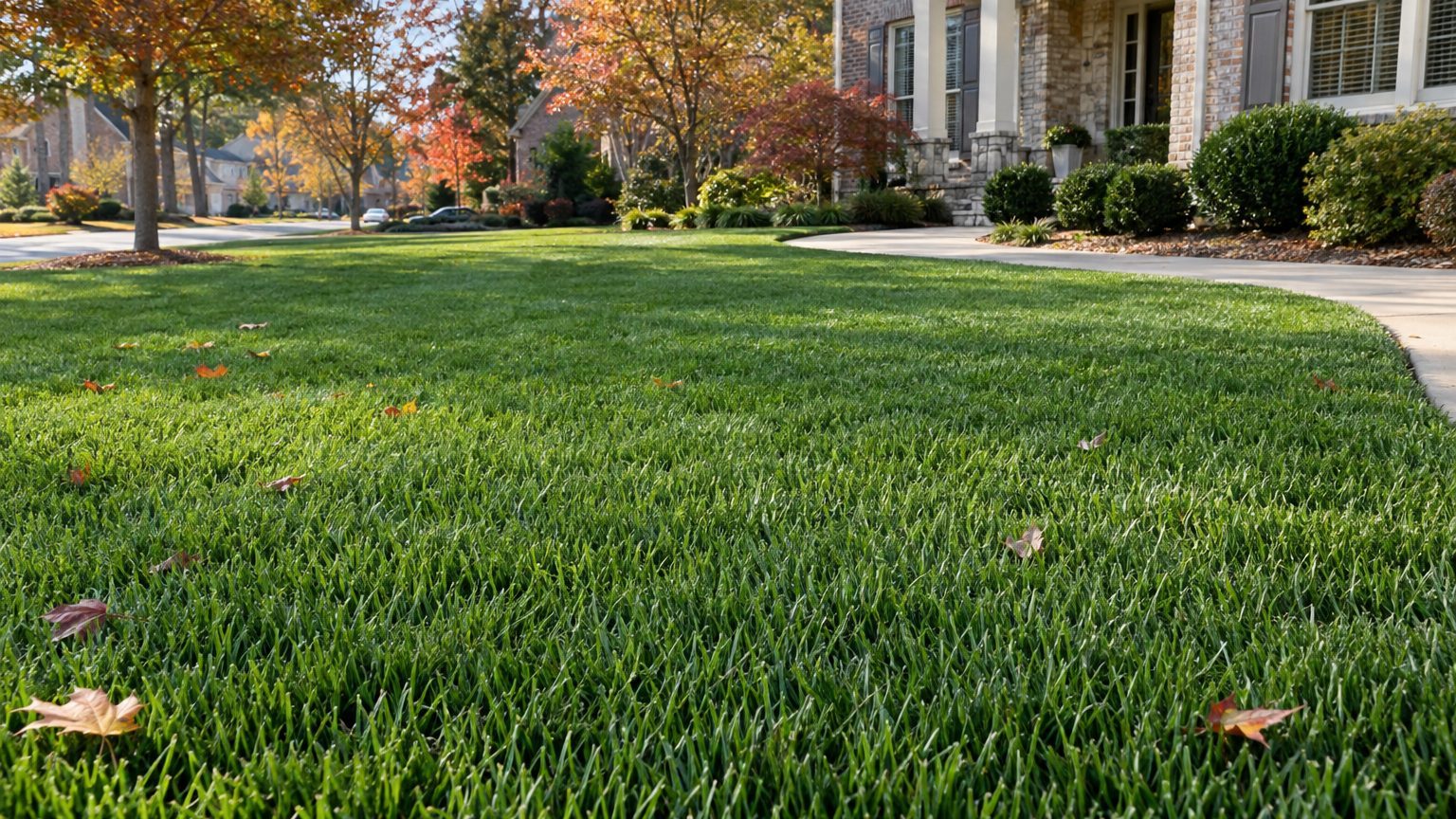
Warm-season turf in Alabama turns tan after the first hard frost, sleeps through winter, then greens up again once spring settles in. Lawns in Alabama run on soil warmth, not the calendar, so the work clusters in late spring and summer.
Frost Dates and Growing Season in Alabama

Around Huntsville, the last spring freeze usually lands between March 19 and April 3, and the first fall freeze between November 2 and November 16. Your own yard will differ, so check with your county, because suburban and rural lots often freeze later in spring and earlier in fall, and higher ground more so. Hardiness zones run from 7a to 9a (USDA system), and the lawn year runs roughly like this.
- In late winter and early spring, dormant grass is still brown, and a late freeze can nip any new green that jumps the gun. Mowing begins in March or April, once the first growth appears.
- Once the soil warms in April, lawns fill in and sod can go down, though May is the stronger month for it. By May, the planting window is more favorable, but local conditions still matter.
- From May into June, the lawn is in its busiest stretch. This is the window for aeration, dethatching, seeding where the grass allows it, and the start of regular feeding.
- Through July and August, the lawn stays active, and feeding and watering carry it through the heat. Mowing continues without a break.
- In September and October, growth slows, watering tapers off after September, and mowing keeps going through November as the grass fades toward dormancy.
Because a warm-season lawn grows with the soil and not with the last frost date, a seed put down too early simply sits there. Fall frost matters mainly because it ends the seeding season for good.
Alabama — the year and the numbers
- State
- Alabama
- USDA zones
- 7a-9a
- Last spring frost
- March 19 to April 3
- First fall frost
- November 2 to November 16
- Annual rain
- 54 in
- Lawn type
- warm-season
- Source
- NOAA NCEI 1991-2020 Climate Normals, 32F freeze probabilities · Huntsville
Cool-Season or Warm-Season Grass in Alabama?
Warm-season grass is the right call across Alabama. Summers are long, hot and humid, and winters are mild enough that these grasses go dormant rather than die. Cool-season types often struggle through the heat.
The common choices are all warm-season, but the planting method varies by grass.
| Grass | Season | How it does here |
|---|---|---|
| St. Augustinegrass | Warm | Planted as sod or plugs only, never seed |
| Centipedegrass | Warm | Can be seeded, plugged or sodded |
| Bermudagrass | Warm | Can be seeded or laid as sod |
| Zoysiagrass | Warm | Usually installed as sod or plugs |
| Bahiagrass | Warm | Can be seeded |
If you want to start from seed, your options narrow to bermudagrass, centipedegrass and bahiagrass. Zoysiagrass is mostly a sod or plug job, and St. Augustinegrass is strictly vegetative.
When to Seed, Fertilize and Aerate a Lawn in Alabama
Nearly every big lawn job here belongs to late spring and summer, when the grass is actively growing and can recover from the work. Doing them in fall or winter, while the lawn is dormant, gains you nothing.
Seeding applies only to the seeded grasses, since St. Augustinegrass has no seed. If you miss May, June still works for seeding and aeration.
| Task | Best months in Alabama | Why then |
|---|---|---|
| Seeding | May (June also works) | Warm soil gets seed up and rooted quickly |
| Laying sod | May (April, June and July also work) | Roots knit into warm ground |
| Core aeration | May (June also works) | Grass recovers fast while growing |
| Dethatching | May to June (April also works) | Turf fills the gaps quickly |
| Fertilizing | May to August | Feeds active growth through summer |
| Watering | May to September | Heat and dry spells stress the lawn |
| Mowing | March to November | Covers the whole growing season |
Mowing has the longest run of any task, so keep the blade sharp from the first spring growth to the last mow in fall.
Lawn Problems to Watch for in Alabama
Thin Grass in Summer Heat
Thinning turf with dry, curling blades points to heat and drought stress, especially if the soil beneath them is dry. Water deeply when the lawn needs it, since May through September is the watering season here. Once the grass is no longer drought-stressed, feeding during the recommended summer window can support recovery.
Thatch Buildup
A spongy lawn that feels bouncy underfoot, with water running off instead of soaking in, usually carries too much thatch. Warm, humid growing seasons build it quickly in grasses such as bermuda and zoysia. Dethatch in May or June, when the grass can regrow fast.
Winter Browning
Brown grass after the first freeze is normal dormancy, not death, as long as the stolons are still firm and green at the base. Leave it alone. Pulling or overseeding a dormant lawn wastes money, and green returns once spring warms the soil.
How Lawn Care Dates Change Across Alabama
Alabama stretches from the Tennessee Valley to the Gulf, and the season shifts accordingly. Use the dates above as a guide and adjust for where you live.
- Huntsville and the Tennessee Valley: Spring arrives later and fall frost comes sooner, so green-up and planting start later than in the south.
- Birmingham and the central hills: Higher ground runs a little cooler, so frost lingers longer in spring on ridges and in low pockets.
- Mobile and the Gulf Coast: Mild winters bring earlier green-up and a longer growing season, and the lawn stays active later into fall.
Wherever you live, let soil warmth tell you when to start, and treat your own county’s frost timing as the better guide.
Where to Get Lawn Advice in Alabama
The state’s land-grant extension system offers grass recommendations that fit local soils and climate. Alabama Cooperative Extension System is the place to start, and your county office handles the hands-on questions.
- Your county extension office can run a soil test, which tells you what the lawn needs before you buy fertilizer.
- Bring a sample of a struggling patch to the office for diagnosis, ideally while the problem is still visible.
If May is near, a soil test now means you can feed and plant with real numbers in hand.
Common Questions
Can You Plant Grass Seed in Alabama in Winter?
Warm-season seed will not sprout in cold soil, so winter planting mostly wastes seed. Wait for late spring, when the ground has warmed.
Why Is My Alabama Lawn Brown After a Freeze?
Brown blades paired with firm, green growth at the base mean the grass is dormant, not dead. Wait for spring warmth before judging it.
How Often Should You Mow Lawns in Alabama?
Mow regularly from March through November, more often in the peak growth of summer. Keep the blade sharp and avoid cutting too much at once.