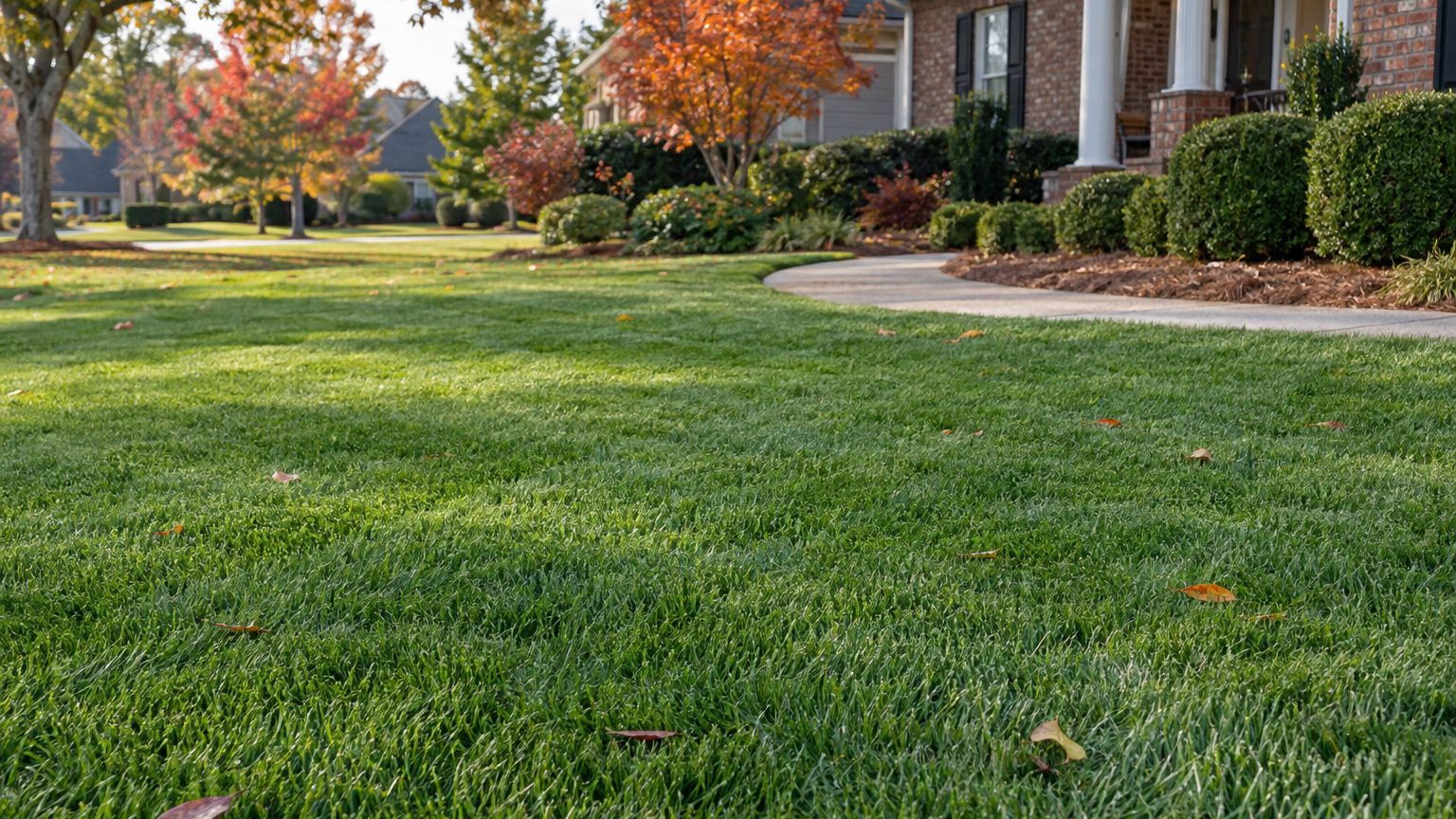
Bermudagrass greening up in a warm spell, a St. Augustine lawn stretching across a sunny yard, bahiagrass holding on through a dry July: lawns in Mississippi run on heat, not cold. Winter is mild, summer is long and humid, and nearly every task on the calendar lands between spring and early fall.
Frost Dates and Growing Season in Mississippi
For Jackson, the last spring freeze usually falls between March 6 and March 22, and the first fall freeze between November 7 and November 22. Your own yard will likely differ, since suburban and rural lots tend to freeze later in spring and earlier in fall, so check your county. Mississippi sits in USDA zones 7b to 9a, but grass growth follows soil warmth, not the frost date.
- In late winter and early spring, warm-season grasses are still dormant and straw-colored, so a late freeze does little harm to established turf but can nip any new sod you laid too early.
- Once the soil warms in April and May, the lawn greens up, and this is the stretch for dethatching and, if you are putting in sod, for laying it.
- In May and June, seeding and core aeration have their window, while the heat helps new roots establish quickly.
- Through the summer, from June to August, feeding and regular watering keep the grass thick enough to crowd out weeds.
- In September and October, mowing continues as growth slows, and watering stays useful through September.
- By November, the first freezes begin sending the grass into dormancy, so seeding is long over and mowing tapers off as growth stops.
Because the growing season is so long, you can mow from March through November, and late-spring work has plenty of warm weather left to pay off.
Mississippi — the year and the numbers
- State
- Mississippi
- USDA zones
- 7b-9a
- Last spring frost
- March 6 to March 22
- First fall frost
- November 7 to November 22
- Annual rain
- 57 in
- Lawn type
- warm-season
- Source
- NOAA NCEI 1991-2020 Climate Normals, 32F freeze probabilities · Jackson
Cool-Season or Warm-Season Grass in Mississippi?
Warm-season grass is the right call here. Mississippi summers are hot and wet enough to stress cool-season grasses like tall fescue, while warm-season species thrive in the heat and handle dry spells well.
The tradeoff is winter color. These grasses go dormant and turn tan after the first freezes, then recover in spring.
| Grass | How it does in Mississippi | Why |
|---|---|---|
| Bermudagrass | Tough, fast-growing, good in full sun | Loves heat and recovers quickly from wear |
| Centipedegrass | Low-maintenance lawn grass | Grows slowly and needs little feeding |
| St. Augustinegrass | Thick, lush turf, planted as sod or plugs | Suits warm, humid yards and is never sold as seed |
| Zoysiagrass | Dense, carpet-like lawn, mostly sod or plugs | Handles heat and forms a tight turf |
| Bahiagrass | Hardy, grown from seed | Holds up through dry weather with little care |
Matching the grass to your sun, traffic and patience for upkeep matters more than any ranking. A bahiagrass lawn asks for far less than a zoysia one.
When to Seed, Fertilize and Aerate a Lawn in Mississippi
Most big jobs cluster in late spring, when the soil is warm and the grass is growing hard. Seeding applies only to seeded grasses such as bermuda, centipede and bahia, because St. Augustine has no seed.
If May slips by, a few tasks have a backup month, noted below.
| Task | Best months in Mississippi | Why then |
|---|---|---|
| Seeding | May | Warm soil gets seed sprouting fast, and June still works |
| Laying sod | May | Roots take hold in warm ground, and it also works in April, June and July |
| Core aeration | May | Grass is growing and fills the holes quickly, with June as a fallback |
| Dethatching | May to June | Active growth repairs the lawn, and it also works in April |
| Fertilizing | May to August | Feeding matches the months of active growth |
| Watering | May to September | Heat and growth raise the lawn’s thirst |
Mowing runs from March through November, so keep the blade sharp and cut often enough that you never remove too much at once.
Lawn Problems to Watch for in Mississippi
Straw-Colored Winter Grass

Tan turf after the first freezes is normal dormancy, not death. Check the crown or the base of a runner: if the tissue is firm and pale green, the grass is alive. Skip fertilizer until spring growth is steady, and resist overseeding with a cool-season grass unless you accept the extra upkeep.
Thin Grass in Summer Heat
Long, humid summers can expose drainage and disease problems, especially in spots that stay wet. Water deeply and regularly through September rather than a little each day, and keep feeding on schedule from May to August so the turf stays dense.
Shade and Wet Soil Decline
Grass fading under trees or where water lingers is common across the state. Sun-loving types like bermudagrass struggle in shade, and soggy ground invites weak, thin growth. Trim back low branches for more light, improve drainage where water pools, and consider a more shade-tolerant grass for those spots.
How Lawn Care Dates Change Across Mississippi
The state is long from north to south, so green-up and the last freeze arrive at different times depending on where you live.
- Northern Mississippi, near Tupelo and Corinth: Spring comes later and fall freezes arrive sooner, so shift planting and feeding a little later and expect a shorter active season.
- Jackson and the central part of the state: Timing runs close to the Jackson reference schedule above, but homeowners should still check local conditions.
- The Gulf Coast, including Gulfport and Biloxi: Warm water keeps winters milder, so grass wakes earlier in spring and stays green longer into fall.
Rural lots and higher ground can run colder than nearby towns, so watch your own soil and grass before starting a job.
Where to Get Lawn Advice in Mississippi
Local help fits Mississippi’s mix of soils and microclimates, and it is available through Mississippi State University Extension and your county office.
- County extension offices can guide you through a soil test, which tells you what your lawn actually needs before you buy fertilizer.
- Staff can help diagnose a problem if you bring a sample of the affected turf and describe where and when it appeared.
- Pulling a soil sample before the May feeding window gives you results in time to act.
Common Questions
Can You Plant St. Augustinegrass from Seed in Mississippi?
No. It is sold only as sod or plugs, so plan to lay it in spring or early summer when the ground is warm.
Why Is My Mississippi Lawn Brown in Winter?
Warm-season grasses go dormant after freezes. Check that the crown or runners are firm and pale green, and that browning is even across the yard rather than in sudden patches.
Is It Too Late to Lay Sod in July?
Not necessarily. Sod also works in July, though May is the better time, and new sod needs close attention to watering in the heat.