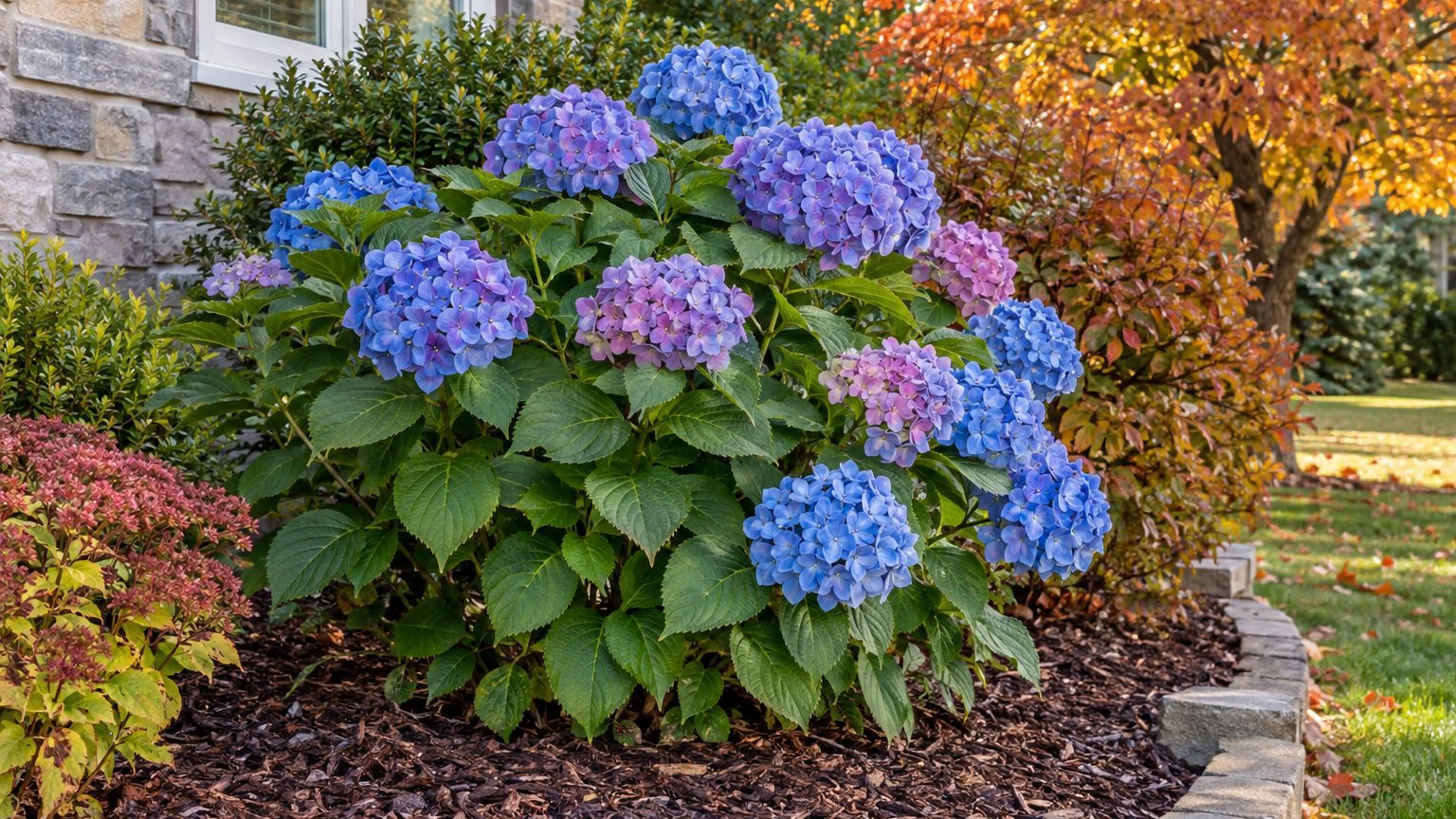
Plant hydrangeas in South Dakota in April, May, July, or August, timed around the Sioux Falls area’s frost-free window. With hardiness zone 3b to 5b covering the state, the safest planting sits in May, after the average last frost, and again in early August, well ahead of the first fall freeze.
When to prune hydrangeas in South Dakota: The Short Answer
NOAA NCEI 1991-2020 Climate Normals for the Sioux Falls airport station put the last spring frost at April 29 to May 9 and the first fall frost at September 24 to October 4, and every date below counts back or forward from that window.
- January: The ground stays frozen and hydrangeas sit fully dormant. Use these weeks to read up on varieties rated for zone 3b to 5b instead of touching the yard.
- February: Nurseries start taking orders for spring stock. Reserve container-grown plants now so they arrive after the frost risk drops in May.
- March: The first fertilize window opens for shrubs already in the ground. Frost is still likely this early, so hold off on any new planting.
- April: Planting can begin, but frost still lingers into early May most years. Keep new transplants ready to cover on cold nights.
- May: This is the safest planting month, since the last frost typically clears by May 9. It is also the second fertilize window of the season.
- June: Pruning bigleaf hydrangeas starts now, once new growth shows which stems survived winter. Skip pruning on panicle or smooth types this month.
- July: This is both a planting window and the last scheduled fertilize pass. Pruning on bigleaf types also wraps up by month’s end, before next year’s buds set.
- August: The plant window stays open through this month, giving roots about six to eight weeks before the ground cools. Water deeply through any late-summer dry spell.
- September: The first fall frost can arrive as early as September 24 in the Sioux Falls area. Stop planting and let any August transplants focus on rooting in.
- October: Frost is typically in place statewide by October 4. Add a mulch layer at the base once the top growth blackens.
- November: Shrubs are fully dormant and mulch should already be down. Avoid pruning now, since winter dieback will show which wood to cut come spring.
- December: The yard needs nothing beyond checking that mulch hasn’t blown off. This is the slow month to plan next year’s spot for a new shrub.
These twelve windows come straight from the frost-date range and the fertilize-and-prune calendar for South Dakota. A yard outside Sioux Falls, especially at higher elevation or farther north, likely needs an extra week of margin on both ends.
South Dakota — the year and the numbers
- State
- South Dakota
- USDA zones
- 3b-5b
- Last spring frost
- April 29 to May 9
- First fall frost
- September 24 to October 4
- Annual rain
- 28 in
- Lawn zone
- cool-season
- Source
- NOAA NCEI 1991-2020 Climate Normals, 32F freeze probabilities · Sioux Falls
How to Work Out the Dates for Your Own Yard
Working out your own hydrangea calendar starts with your own frost window, not the airport’s.
- Check your own frost window: Compare your county’s typical last frost to the Sioux Falls range that NOAA NCEI 1991-2020 Climate Normals puts at April 29 to May 9, since a rural yard or a low spot often runs a week or two later.
- Confirm your hardiness zone: The USDA Plant Hardiness Zone Map places South Dakota between zone 3b and 5b, so look up your own zip code before betting on a variety rated only to zone 6.
- Count back two weeks for hardening: Move any greenhouse-grown hydrangea outdoors into shade a couple weeks before its final planting date so it isn’t shocked by direct sun and wind.
- Watch new growth before pruning: Wait until stems leaf out in June to see which wood survived winter, then confine bigleaf pruning to June and July only.
- Count forward from the fall frost: Stop planting roughly six weeks before your local first fall frost, using the September 24 to October 4 window as the Sioux Falls benchmark, so roots have time to grip before the ground cools.
None of this replaces a look at your own thermometer. A yard tucked against a south-facing wall in town often runs warmer than an open field ten miles out, and that gap can move every date by a week in either direction.
South Dakota North to South: How the Dates Shift
Frost and hardiness both shift across South Dakota’s distances, and none of the shift is small enough to ignore.
- The Black Hills and the far west (Rapid City, Spearfish, the higher Hills valleys): elevation cools nights, so the last frost tends to linger later into spring and the growing season runs shorter than the state average suggests.
- The James River Valley and north central (Aberdeen, Huron, the open plains): winters run colder and more exposed, pushing hardy panicle and smooth types to the front of any planting list.
- The Missouri River corridor and southeast (Sioux Falls, Yankton, Vermillion): the mildest corner of the state, closer to the upper end of the zone 3b to 5b range, with the widest planting and pruning margin.
- The northeast tier near the North Dakota line (Sisseton, Webster): among the coldest ground in the state, where extra mulch and a shortened planting window matter more than anywhere else covered here.
The state-level guide lays out the zone map and the full frost picture in one place, worth a look before locking in a spot for a new shrub.
Mistakes South Dakota Punishes
Planting before the last frost clears
A warm stretch in mid-April tempts a lot of South Dakota gardeners into planting early, but the Sioux Falls area’s last frost can hold on until May 9. Tender new growth blackens overnight in a late freeze. Wait for the May window, or cover new transplants on any night below freezing.
Pruning bigleaf hydrangeas in fall
Bigleaf hydrangeas set next year’s flower buds on the current season’s wood, so a fall cleanup cut removes the blooms before they even form. Keep pruning to the June and July window instead, once new leaves show which stems survived winter. A shrub with no flowers most summers usually points back to this mistake.
Skipping winter mulch in a 3b to 5b yard
Zone 3b to 5b winters can freeze bigleaf hydrangea stems back to the ground even when the plant itself survives fine. Skipping a mulch layer at the base before the ground freezes in October leaves the crown exposed to that swing. A few inches of shredded leaves or bark, added once top growth blackens, covers the gap.
South Dakota Extension Offices and County Contacts
The state-level frost dates and hardiness zone are a starting point, not a finish line. South Dakota State University Extension and your county office track the local soil, wind, and years of yard-specific results that no statewide figure can capture.
- Your state page: the full South Dakota hydrangea guide with the zone map and frost dates in one place.
- Which ones hold up here: variety picks ranked from safest to riskiest for this state’s winters.
- What goes wrong here: the pests and problems that show up on South Dakota hydrangeas through the season.
Common questions
Can I plant hydrangeas in South Dakota in the fall?
Fall planting is tighter here than in milder states. The calendar’s plant window closes in August, well before the Sioux Falls area’s first fall frost between September 24 and October 4, leaving too little time for roots to establish before the ground cools.
Which hydrangeas survive South Dakota winters best?
Panicle and smooth types generally shrug off zone 3b to 5b winters better than bigleaf varieties, since they flower on new wood and do not lose next year’s blooms to a hard freeze. The which-ones-hold-up-here guide ranks the full list for this state.
Do I need to prune hydrangeas every year in South Dakota?
Not every type needs annual pruning. Bigleaf hydrangeas benefit from the June and July window described above, but panicle and smooth types tolerate a light shaping in early spring instead and do not punish a skipped year the way bigleaf does.