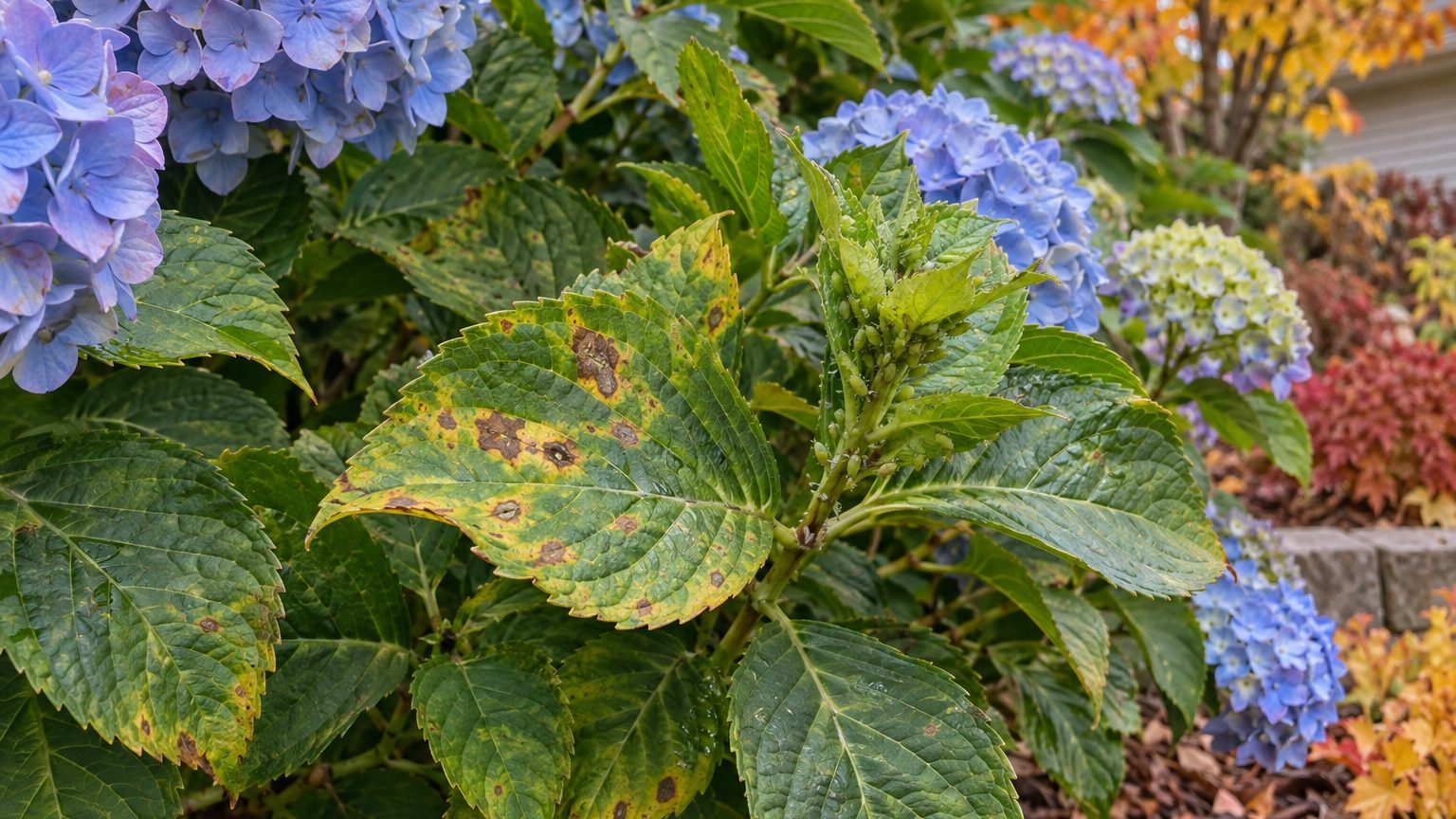
In Saskatoon and across Saskatchewan, the biggest threat to a hydrangea isn’t an insect at all, it’s the winter itself, which kills flower buds on old-wood varieties most years before they ever open. Powdery mildew, aphids, and botrytis blight do show up, but usually only after the plant has already passed, or failed, that first winter test.
Hydrangea pests and diseases Saskatchewan: The Short Answer
Around Saskatoon, the hydrangea problem that decides everything else is not a bug or a fungus. Natural Resources Canada’s Plant Hardiness Site puts Saskatoon at zone 3a, and that single number wipes out more flower buds here than any pest on this list.
No flower buds after winter
Bigleaf hydrangeas set next year’s blooms on stems grown the summer before, and zone 3a routinely kills that wood before spring. The shrub leafs out fine, it just never flowers. Plant a variety that blooms on new wood instead.
Leaf edges scorched brown
Late winter sun hitting frozen ground pulls moisture out of leaves and buds faster than frozen roots can replace it, leaving papery brown margins once growth starts. A wind-sheltered spot near a wall helps well before the last spring frost near May 18.
Stems dead to the ground

Whole canes turn black and soft from the tip down after an open winter with thin snow cover, sometimes reaching the crown. Cut back to live wood once new leaves show which buds survived, inside the June to July prune window.
Sticky curled new growth
Aphids cluster on tender spring shoots, leaving curled leaves and a sticky film that draws ants and sooty mold behind it. A strong morning water spray knocks the colony down before anything stronger is needed.
White powder on leaves
Humid, still air in midsummer turns lower leaves dusty white, a sign of powdery mildew rather than a soil problem. Space plants for airflow and water the ground, not the foliage, during the May and July fertilize windows.
Gray fuzzy spots on flowers
Cool, damp weather near the September 18 average fall frost brings botrytis blight to open blooms, turning petals to gray mush overnight. Deadhead spent flowers promptly and skip overhead watering as nights cool.
Saskatchewan — the year and the numbers
- State
- Saskatchewan
- Hardiness zones
- 3a
- Last spring frost
- May 18
- First fall frost
- September 18
- Annual rain
- 14 in
- Lawn zone
- cool-season
- Source
- Environment and Climate Change Canada — Canadian Climate Normals 1981-2010, station SASKATOON SRC · Saskatoon
How to Work Out the Dates for Your Own Yard
Working out whether you’re looking at winterkill, mildew, or an aphid problem takes a knife and a calendar, not a lab test, and the order below is the order I’d actually walk through it.
- Check the calendar first: before the average May 18 last frost from Environment and Climate Change Canada’s Canadian Climate Normals, dead-looking wood may just be a bud waking up late.
- Scratch a stem: green and moist under the bark means it’s alive, brown and dry means that cane is gone for good this year.
- Look at where the damage sits: browning that starts at the tips and works down reads as winter dieback, spots appearing mid-leaf in July point to a fungus instead.
- Check the underside of new leaves: curled growth with a sticky film and small soft-bodied insects means aphids, not disease, most of the time.
- Note the weather that week: humid, still days favor powdery mildew, while cool wet spells near the September 18 first fall frost favor botrytis.
- Match the season to the prune window: cut dead wood back only once new growth shows which buds survived, inside June and July for bigleaf types.
None of this replaces a look from someone local. A county office that has walked hundreds of these yards can often name the problem from one photo faster than any checklist manages.
Saskatchewan North to South: How the Dates Shift
Saskatchewan is one province but not one climate, and Natural Resources Canada’s zone 3a figure for Saskatoon shifts hard once you leave the city limits in either direction.
- The far north (boreal forest districts): a shorter frost-free stretch than Saskatoon’s pushes every planting and pruning date later and adds more winter dieback risk to any hydrangea grown there.
- River valleys and sheltered city yards (Saskatoon, Regina, and similar pockets): brick walls and valley slopes trap heat, often buying a slightly milder microclimate than open ground nearby offers.
- The open southern prairie (exposed grassland and farmland): wind with thin snow cover raises dieback risk even where average frost dates run close to Saskatoon’s own.
Whichever part of the province is home, the state guide gathers the frost windows and planting dates by zone in one place.
Mistakes Saskatchewan Punishes
Planting a bigleaf for the flowers
Bigleaf hydrangeas set buds on old wood, and Saskatoon’s zone 3a rating kills that wood most winters before it ever blooms. Choose a variety bred to flower on new wood instead, and check it against the which-ones-hold-up guide before buying.
Watering the leaves at dusk
Wet foliage overnight is exactly what powdery mildew and botrytis need to spread through a bed of plants. Water the soil in the morning instead, during the May and July fertilize windows, and let leaves dry before evening falls.
Leaving dead leaves under the shrub
Fallen leaves near the September 18 average frost carry fungal spores straight through winter and reinfect the same plant come spring. Rake and remove that litter each fall rather than leaving it to compost in place.
Saskatchewan Extension Offices and County Contacts
Zone 3a is a starting point, not a diagnosis. The Saskatchewan Ministry of Agriculture and a local county office can confirm what’s actually on the leaf in front of you.
- Saskatchewan Agriculture and Natural Resources: the provincial agribusiness and farmers page, a starting point for local growing questions.
- Your state page: the frost dates and pruning window for wherever in Saskatchewan you garden.
- Which ones hold up here: the varieties worth planting given zone 3a, bring a photo of the damaged stem when in doubt.
Common questions
Can any hydrangea survive winter in Saskatchewan without protection?
Some do better than others at zone 3a, but nearly all benefit from a thick mulch layer and a sheltered spot, since even hardy types face thin snow cover and open wind on the prairie.
Is powdery mildew dangerous to the plant, or just ugly?
It rarely kills a hydrangea outright, but a bad case weakens the shrub going into winter, which matters more here than in a milder climate where the plant has time to recover.
Should I prune off winter-damaged stems right away in spring?
Wait until new leaves appear so you can see exactly which buds survived, then cut back to that live growth inside the June to July prune window rather than guessing in April.