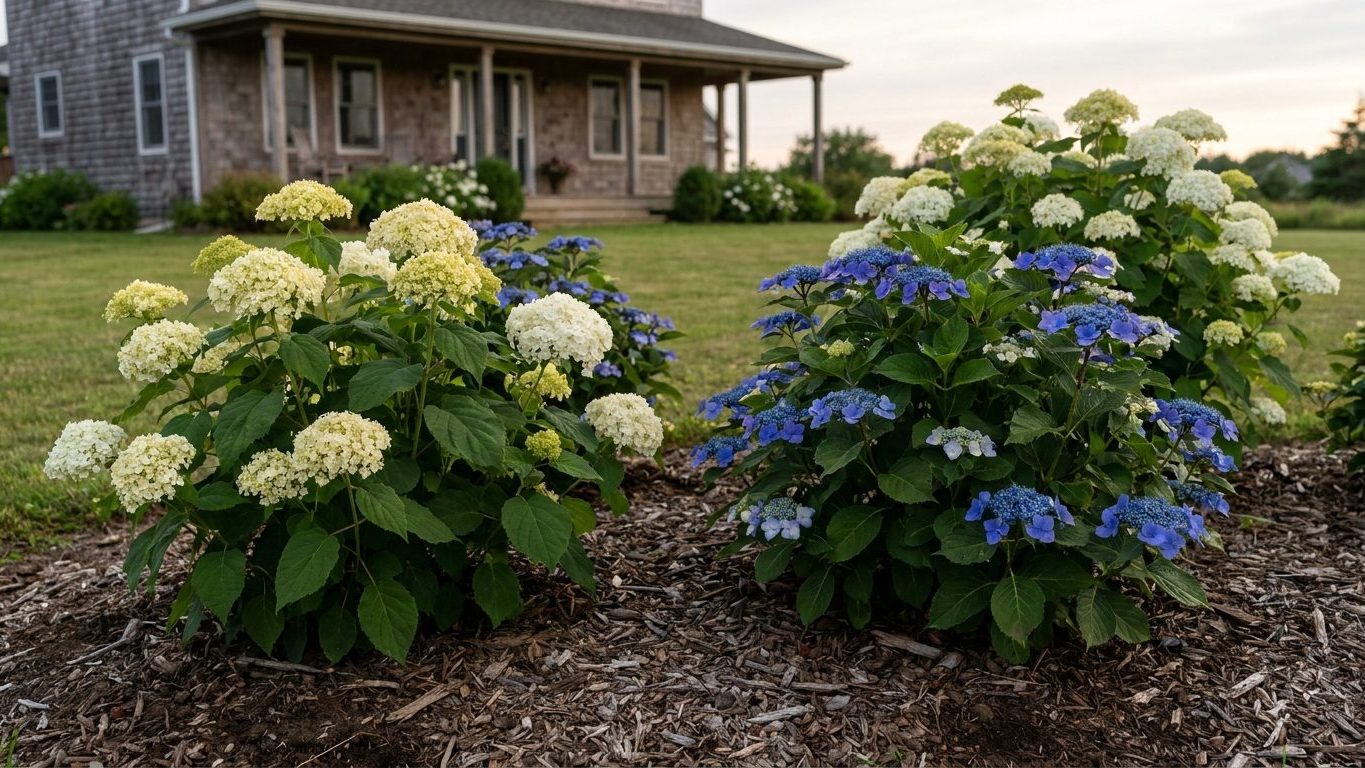
Plant hydrangeas in Prince Edward Island in May, June, August, or September, working around Charlottetown’s mean last frost of May 16 and first fall frost of October 17. Prune bigleaf varieties only in June or July, once new growth shows which stems made it through winter.
When to prune hydrangeas in Prince Edward Island: The Short Answer
Environment and Climate Change Canada’s Canadian Climate Normals put Charlottetown’s mean last spring frost at May 16 and the mean first fall frost at October 17, and the province’s planting and pruning windows run around those two dates as follows.
- January: The ground is frozen solid this far from either frost date, so there’s nothing to plant or prune, just check that fall mulch hasn’t blown off the base.
- February: Still deep winter, more than three months from the mean thaw, so hold off on any yard work beyond checking stems for ice damage.
- March: Frost is still the rule, not the exception, this many weeks before the mean May 16 date, so keep hydrangeas out of the ground.
- April: The soil is thawing but the mean last frost hasn’t arrived, so planting now risks a hard freeze on tender new roots.
- May: The planting and fertilize windows both open, but the mean is only an average, so a late frost can still catch an early planting.
- June: Planting continues and the prune-bigleaf window opens, once new leaves show which stems survived winter.
- July: The prune-bigleaf window continues alongside the second fertilize window, giving one more chance to feed before bloom set.
- August: The planting window reopens, giving roots close to ten weeks to settle before the mean October frost.
- September: This is the last month in the planting window, since anything set out later has little time to root before the first fall frost.
- October: The mean first frost lands October 17, so this is the month to stop planting and start protecting what’s already in the ground.
- November: Frost is well established by now, so the only gesture left is mounding mulch over the base before the ground locks up.
- December: The shrub is fully dormant, and there’s no planting, pruning, or fertilizing gesture left on the calendar until spring.
Those four planting months and two pruning months are the only active windows in the year. Everything else on the ribbon above is dormancy or protection, not action.
Prince Edward Island — the year and the numbers
- State
- Prince Edward Island
- Hardiness zones
- 5b
- Last spring frost
- May 16
- First fall frost
- October 17
- Annual rain
- 46 in
- Lawn zone
- cool-season
- Source
- Environment and Climate Change Canada — Canadian Climate Normals 1981-2010, station CHARLOTTETOWN A · Charlottetown
How to Work Out the Dates for Your Own Yard
Charlottetown’s averages are a starting point, not a rule for your particular yard, so working out your own dates means adjusting from that reference.
- Start from the mean last frost: Environment and Climate Change Canada’s Canadian Climate Normals set Charlottetown’s average at May 16, and treat that as a midpoint, since frost lands later in half of all years, not a deadline you can bank on.
- Add a buffer before planting tender growth: since the average is a coin flip, wait until the soil has visibly warmed rather than counting days off a printed date.
- Check your yard’s microclimate: low spots, shaded corners, and ground near open water hold frost longer than the Charlottetown station suggests.
- Match to the site’s planting window: keep new hydrangeas to May, June, August, or September, the four months the province’s calendar allows.
- Hold pruning until new growth confirms live wood: bigleaf types only get cut in June or July, once winter-killed stems are obvious against green shoots.
- Count forward to the fall frost: the mean October 17 date marks the outer edge for September planting, so aim for the earlier half of that month if you can.
None of these steps replace watching your own thermometer. The Charlottetown averages tell you what usually happens, not what will happen this particular year.
Prince Edward Island North to South: How the Dates Shift
Prince Edward Island is small, but coastline, elevation, and distance from the Charlottetown station still nudge these dates in one direction or another.
- North Shore (Cavendish, Brackley, Savage Harbour): the open Gulf of St. Lawrence moderates spring’s arrival but also slows the ground’s warm-up, so plantings here often trail the provincial average by a few days.
- Central PEI around Charlottetown (Hunter River, Cornwall, Stratford): sitting closest to the reference station, yards here can use the mean dates about as they’re published.
- Western Prince County (Tignish, Alberton, O’Leary): wind off the Northumberland Strait and greater distance from the capital’s moderating harbor can push both frost dates a little further apart.
- Eastern Kings County (Souris, Montague, Georgetown): coastal exposure on the eastern tip works similarly to the north shore, tempering extremes but delaying the soil’s spring wake-up.
Wherever you garden on the Island, the province-wide guide above is the safest starting point, adjusted a few days in either direction for your own shoreline or shelter.
Mistakes Prince Edward Island Punishes
Planting before the soil has caught up
Setting out potted hydrangeas in April, weeks before the mean May 16 last frost, invites a hard freeze on roots that haven’t settled in. Wait for the May planting window covered above, and give tender growth another week if your yard sits low or shaded.
Skipping the fall mulch layer
Leaving bigleaf stems bare into a Charlottetown winter that settles in after the mean October 17 frost lets buds die back to the ground, meaning no blooms the following summer. Mound mulch over the base once top growth goes dormant, before the ground locks hard.
Pruning bigleaf hydrangeas outside June or July
Cutting stems back in fall or early spring removes old wood carrying next year’s flower buds, since bigleaf types bloom on growth from the previous season. Wait for the June or July window described above, once new leaves make it clear which stems survived winter.
Prince Edward Island Extension Offices and County Contacts
Charlottetown’s frost dates are a province-wide starting point, but Prince Edward Island’s Agriculture and Land page carries the specifics for local soil, disease alerts, and county-level advice a single weather station can’t cover.
- Agriculture and Land: princeedwardisland.ca/en/topic/agriculture covers province-wide growing advice and where to direct local questions.
- Your provincial guide: the frost dates and planting windows for the rest of Prince Edward Island in one place.
- Which ones hold up here: the hydrangea species and varieties suited to a Canadian zone 5b winter.
Call before you dig if your yard sits on heavier clay than the Island average, since amendments change the timing too.
Common questions
Can I plant hydrangeas in Prince Edward Island in October?
No, October falls outside the province’s planting window. The mean first fall frost lands October 17, and anything planted that late has little time to root before dormancy sets in.
What Canadian hardiness zone is Prince Edward Island?
Natural Resources Canada lists Charlottetown at zone 5b under the Canadian system, which is built on seven climate variables and doesn’t convert directly to the USDA zones used elsewhere on this site.
When should I stop fertilizing hydrangeas in PEI?
The province’s calendar allows fertilizing in May and July only. Feeding outside those months pushes soft new growth right before a frost window instead of during active growth.