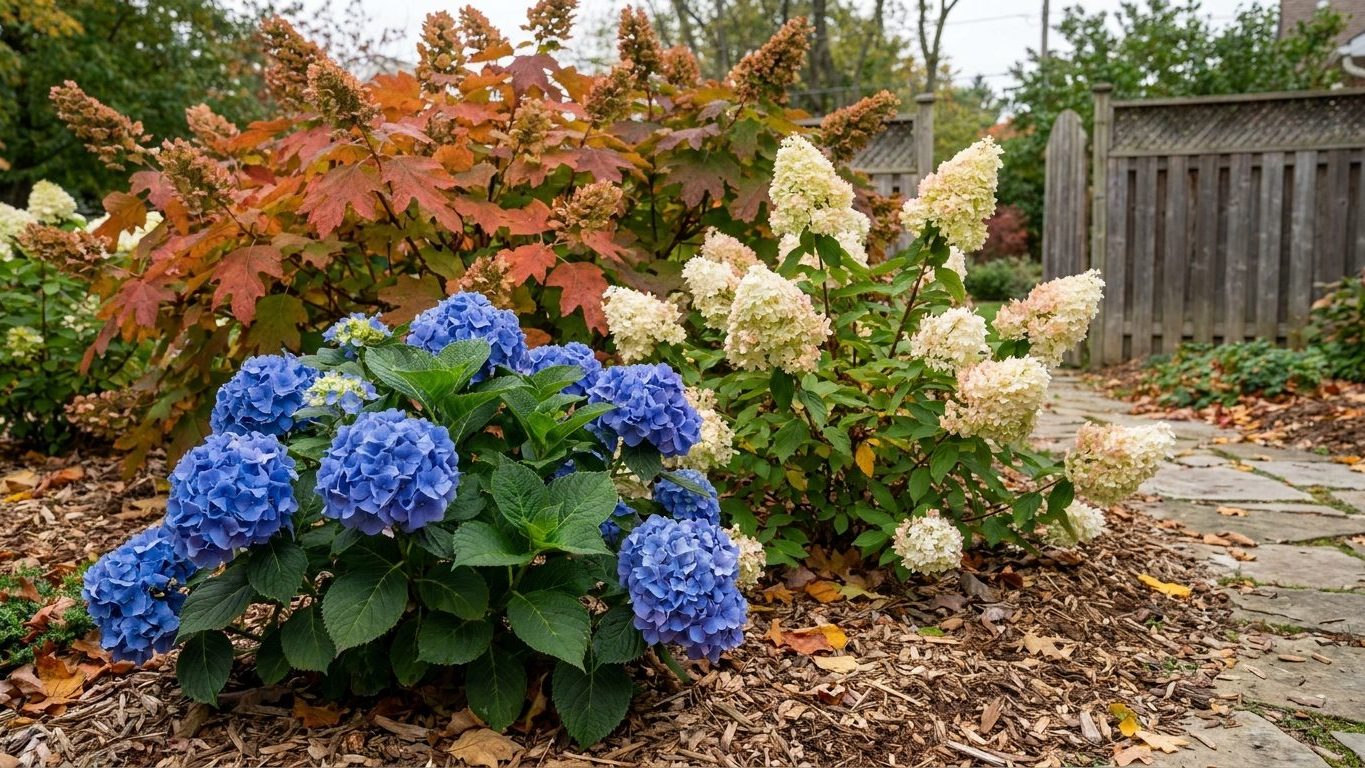
Panicle and smooth hydrangeas hold up best across Nevada. Las Vegas marks the warm end of the state’s USDA range, but its numbers are a desert extreme, not a statewide guide. Bigleaf mopheads, the kind most gardeners picture, struggle here with alkaline soil, low humidity, and old-wood buds that a late frost or a hard Reno winter can wipe out before they ever open.
Hydrangeas that grow well in Nevada: The Short Answer
Panicle and smooth hydrangeas handle Nevada’s swings best, from the high desert around Reno to the low desert around Las Vegas. The USDA Plant Hardiness Zone Map puts the state at a wide 4a to 10a, with Las Vegas anchoring the warm end and the mountains dragging the cold end down, so the right hydrangea depends on which end of that range you actually garden in.
Panicle Hydrangea

Hydrangea paniculata blooms on new wood, so a late frost or a hard prune never costs it a season. It shrugs off Nevada’s dry heat and alkaline soil better than any other type, which makes it the safest planting for both Reno and Las Vegas yards.
Smooth Hydrangea

Hydrangea arborescens, the type behind old-fashioned round-headed blooms, also flowers on new wood and tolerates cold winters at elevation. It wilts hard under afternoon sun in the low desert, so it wants some shade once summer temperatures climb.
Oakleaf Hydrangea

Hydrangea quercifolia brings drought tolerance and fall color once it’s established, and it handles cold stretches around Carson City without much fuss. Low desert heat around Las Vegas pushes it harder, so it needs steady water and afternoon shade there.
Mountain Hydrangea

Hydrangea serrata is a smaller-scale cousin of the classic mophead, with slightly better cold tolerance. It still wants humidity Nevada rarely offers, so its blooms tend to be smaller and less reliable than panicle or smooth types.
Bigleaf Hydrangea

Hydrangea macrophylla, the mophead most people picture, sets its buds on old wood, so a freeze anywhere in the state’s frost window can erase a season of blooms. Nevada’s alkaline soil also pushes its flowers toward pink and lavender no matter what the tag promises.
Climbing Hydrangea

Hydrangea anomala subsp. petiolaris needs years of shade and steady moisture to establish, both in short supply across most Nevada yards. It’s the riskiest pick on this list, and it rarely rewards the wait in the low desert.
Nevada — the year and the numbers
- State
- Nevada
- USDA zones
- 4a-10a
- Last spring frost
- January 7 to February 1
- First fall frost
- December 8 to December 23
- Annual rain
- 4 in
- Lawn zone
- warm-season
- Source
- NOAA NCEI U.S. Climate Normals 1991-2020, 32F freeze probabilities · Las Vegas
How to Work Out the Dates for Your Own Yard
Figuring out whether your yard can support a panicle hydrangea or a bigleaf hydrangea comes down to six checks, not the single zone number stamped on a nursery tag.
- Look up your zone, not the state’s: the USDA Plant Hardiness Zone Map spreads Nevada across a wide 4a to 10a, and a yard in Carson City sits nowhere near a yard in Las Vegas on that same scale.
- Ask your county office for your true frost date: Las Vegas’s last spring frost falls between January 7 and February 1, but that’s a desert extreme, not a statewide guide.
- Check when the variety actually sets its flower buds: panicle hydrangea builds fresh buds every spring on new wood, so a hard freeze the winter before never costs it a single bloom.
- Weigh old-wood bloomers against your frost risk: bigleaf hydrangea sets buds the fall before, so a freeze between the first fall frost, December 8 to December 23, and a late spring cold snap can wipe out the whole show.
- Test your soil pH before you commit: alkaline soil across most of Nevada shifts bigleaf blooms toward pink even when the plant tag promises blue.
- Plant inside the state’s cool windows: January, February, October, and November give roots time to settle before summer heat or a hard freeze arrives.
Run through those six checks and the pattern holds up: panicle hydrangea passes the winter and summer test almost anywhere in Nevada, while bigleaf hydrangea only clears the bar in a handful of sheltered, well-amended yards.
Nevada North to South: How the Dates Shift
Elevation, latitude, and a desert climate pull Nevada’s planting and frost dates in different directions, sometimes within the same county.
- The high desert and mountains (Reno, Carson City, Elko): frost lingers weeks longer than the state’s warm-end numbers suggest, so plant later in spring and expect an earlier fall freeze.
- The Lake Tahoe basin (Incline Village, the South Shore): elevation keeps nights cold well into the planting season, which favors panicle and smooth hydrangeas over anything blooming on old wood.
- The low desert south (Las Vegas, Henderson, Laughlin): the mildest winters in the state, but also the harshest summer sun, so afternoon shade matters more here than the frost date does.
- The rural Great Basin (Eureka, Ely, Battle Mountain): some of the widest temperature swings in the state, with hot afternoons and cold nights even in mid-summer, so hydrangeas need afternoon shade and wind protection regardless of the calendar.
None of these regional shifts show up in a single statewide hardiness number, so the Nevada growing guide and your county extension office fill in the rest.
Mistakes Nevada Punishes
Planting bigleaf for blue blooms
Most Nevada soil runs alkaline, and alkaline soil pushes bigleaf hydrangea blooms toward pink and lavender no matter what the plant tag promises. Test your soil before you buy, and plant panicle or smooth hydrangea instead if you want a color you can actually count on.
Digging in during peak summer heat
A new hydrangea planted in July fights transplant shock and Nevada’s dry heat at the same time, and most don’t recover. Stick to the state’s cool planting windows, January, February, October, and November, so roots can settle before summer sun or a hard freeze tests them.
Trusting a single statewide frost date
NOAA NCEI U.S. Climate Normals 1991-2020 puts Las Vegas’s last spring frost between January 7 and February 1, but that number comes from an extreme desert heat island and says nothing about Reno or the mountains, where frost arrives weeks or months differently. Call your county extension office for the date that actually applies to your yard.
Nevada Extension Offices and County Contacts
The state’s 4a to 10a range only gets you started. University of Nevada, Reno Extension and your county office turn that into a real planting date, a soil test, and a pruning window that fits your yard.
- University of Nevada, Reno Extension: extension.unr.edu lists county offices, soil testing, and hydrangea guidance suited to the high desert.
- Your county extension office: the contact for your actual frost date, since Las Vegas airport numbers don’t apply statewide.
- A local soil test: worth running before you plant bigleaf hydrangea, since alkaline soil decides bloom color more than the tag on the pot.
Call before you dig this fall.
Common questions
Can bigleaf hydrangeas turn blue in Nevada soil?
Rarely without heavy amending. Most Nevada soil runs alkaline, which pushes bigleaf hydrangea blooms toward pink and lavender no matter what color the plant promised at the nursery. A soil test tells you how far off you are before you buy.
When should I prune hydrangeas in Nevada?
For bigleaf hydrangea, the window falls in June and July, right after the old-wood blooms fade and before next year’s buds start forming. Panicle and smooth types are more forgiving, since they bloom on new wood and can be cut back earlier without losing next season’s flowers.
Do hydrangeas need afternoon shade in Nevada?
In the low desert around Las Vegas, yes. Direct afternoon sun scorches leaves on almost every hydrangea type, so an eastern exposure or dappled shade under a taller tree keeps plants healthier through the summer than a full-sun bed ever will.