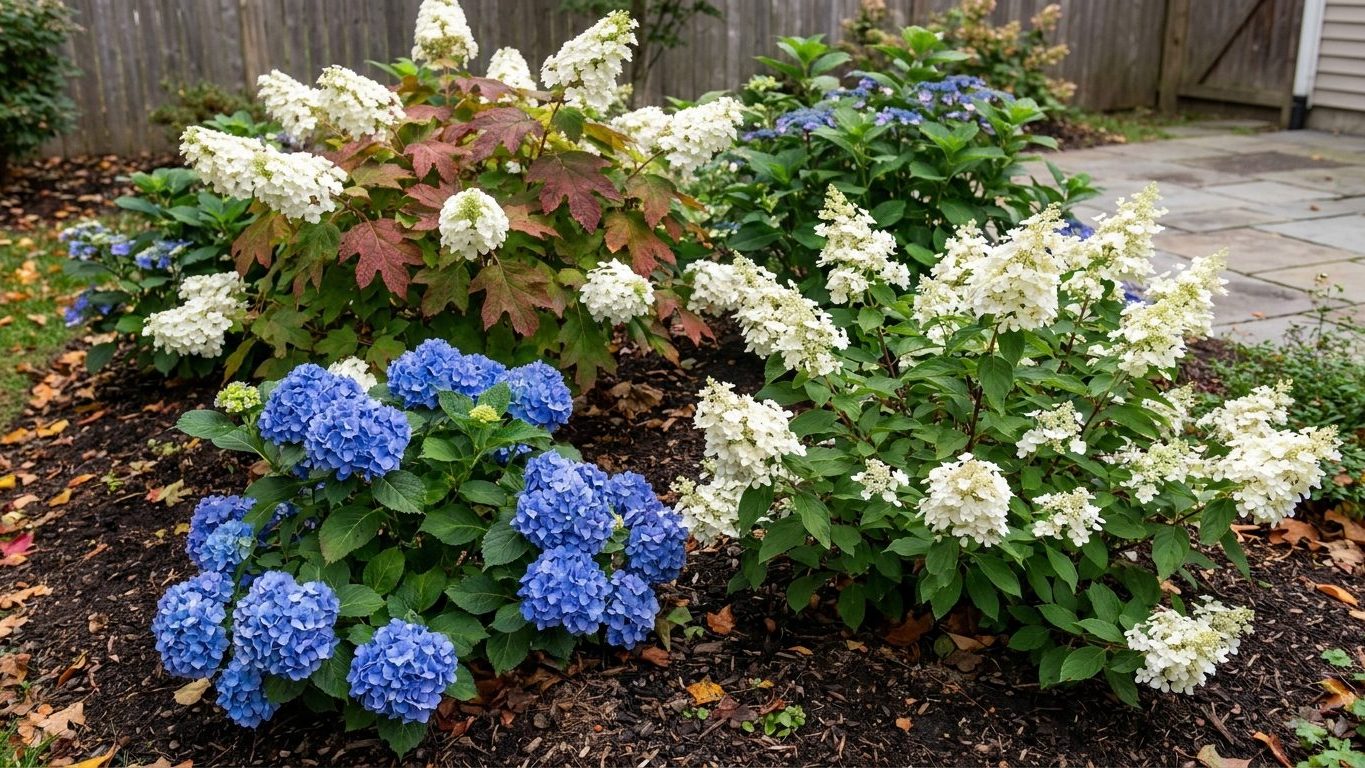
Panicle and smooth hydrangeas grow well nearly anywhere in Kentucky, oakleaf and climbing hydrangea follow close behind, and bigleaf hydrangea only blooms reliably in the state’s milder pockets. Kentucky’s split hardiness zone and its frost windows around Louisville decide which of the common hydrangea types flower on schedule and which lose their buds most winters.
Hydrangeas that grow well in Kentucky: The Short Answer
The USDA Plant Hardiness Zone Map puts Kentucky at 6a to 7a, with Louisville sitting solidly inside that range, and that split zone explains why panicle and smooth hydrangeas thrive statewide while bigleaf hydrangea struggles some winters. Six species show up regularly in Kentucky nurseries, and the order below runs from the one that almost never disappoints to the one that needs the most help.
Panicle hydrangea

Hydrangea paniculata blooms on new wood every summer, so a late freeze near Louisville’s spring frost window never touches next season’s flowers. It shrugs off both a hard 6a winter and Kentucky’s humid August heat, which makes it the safest bet for a first hydrangea.
Smooth hydrangea

Hydrangea arborescens, the native species behind ‘Annabelle’, also flowers on new wood and comes back strong even after dying to the ground. It tolerates heavier clay soil better than most hydrangeas, which matters across Kentucky’s Bluegrass Region.
Oakleaf hydrangea

Hydrangea quercifolia is native to the broader Southeast and handles Kentucky summers well, but its flower buds form the previous fall and can brown if a hard freeze arrives after dormancy breaks. Planting it against a house wall buys a few extra degrees of shelter.
Climbing hydrangea

Hydrangea anomala subsp. petiolaris survives Kentucky winters without complaint, but it spends its first two or three seasons doing almost nothing above ground while roots establish. Patience matters more than cold hardiness with this one.
Mountain hydrangea

Hydrangea serrata sets flower buds on old wood like its bigleaf cousin, but those buds tolerate a few more degrees of cold before dying. In a winter that wipes out bigleaf blooms entirely, mountain hydrangea sometimes still manages a partial show.
Bigleaf hydrangea

Hydrangea macrophylla blooms on old wood and sets those buds in late summer, so a hard enough Kentucky winter can erase the whole flower crop without harming the shrub itself. It survives here, it just does not reliably bloom, especially in the state’s colder pockets.
Kentucky — the year and the numbers
- State
- Kentucky
- USDA zones
- 6a-7a
- Last spring frost
- March 24 to April 4
- First fall frost
- November 2 to November 12
- Annual rain
- 48 in
- Lawn zone
- transition-season
- Source
- NOAA NCEI 1991-2020 Climate Normals, 32F freeze probabilities · Louisville
How to Work Out the Dates for Your Own Yard
Work backward from Louisville’s frost windows and you can set your own planting and pruning dates instead of borrowing someone else’s zip code.
- Start from the last spring frost: NOAA NCEI 1991-2020 Climate Normals puts Louisville’s window at March 24 to April 4, so anything planted before that closes risks a late freeze burning new growth.
- Push tender types back further: wait until mid to late April to set out bigleaf or mountain hydrangea, since their old-wood buds are already swelling and a freeze after that point does real damage.
- Plant hardy types on the early end: panicle and smooth hydrangea can go in as soon as the soil is workable in March, since they bloom on new wood and carry no buds through winter.
- Count forward to the first fall frost: Louisville’s fall window opens November 2 and closes November 12, so give a September or October planting at least six weeks to root beforehand.
- Watch your own microclimate: a low spot or a shaded valley can trail the reference dates by a week or more, so let your own soil guide the calendar.
Panicle hydrangea is the easy case here. It blooms on wood grown that same year, so it clears both the spring window and Kentucky’s humid summer without missing a season. Bigleaf hydrangea is the harder case, since it can survive the winter fine and still skip flowering if a freeze lands after its buds swell.
Kentucky North to South: How the Dates Shift
Kentucky spans a full hardiness zone, and elevation plus distance from the Ohio and Mississippi rivers push these dates in opposite directions.
- Northern Kentucky (near Cincinnati and the Ohio River): frosts arrive earlier in fall and linger later in spring than in Louisville, so treat bigleaf and mountain hydrangea as more fragile here.
- The Bluegrass Region (Lexington, Frankfort, and the Louisville corridor): dates track closest to the reference figures, making this the easiest zone for testing a new variety.
- The Appalachian East (Pikeville, Hazard, and the higher elevations): cooler nights and higher ground stretch both frost windows out further, favoring panicle and smooth hydrangea over anything blooming on old wood.
- The Western Purchase (Paducah and the Mississippi River lowlands): the mildest corner of the state, where bigleaf hydrangea has the best odds of a full bloom most years.
Check the Kentucky guide page for a county-level breakdown before committing a hydrangea to a ridge top or a river bottom.
Mistakes Kentucky Punishes
Pruning bigleaf hydrangea in fall
Bigleaf hydrangea sets its flower buds on old wood, so cutting it back after summer removes next year’s blooms before they even form. Prune only in June or July, right after the current flush fades, and leave the plant alone the rest of the year.
Planting tender types too early
Setting bigleaf or mountain hydrangea into the ground in early March, ahead of the frost window closing in early April, invites a late freeze to blacken new growth. Wait until the window passes, or hold containers in a sheltered spot until mid-April.
Fertilizing into late summer
A feeding in August pushes soft new growth that has no time to harden before the first fall frost lands in early to mid-November. Stick to the March, May, and July schedule and stop there for the season.
Kentucky Extension Offices and County Contacts
Louisville’s frost windows are a starting point, not a guarantee, and your county office adjusts for whatever your soil and elevation actually do. The University of Kentucky Cooperative Extension Service keeps the local numbers.
- Your state page: the frost dates and the pruning window for wherever you live in Kentucky.
- Which ones hold up here: the full rundown of hydrangea species tested against Kentucky’s 6a to 7a range.
- What’s going wrong here: the pests and problems specific to Kentucky hydrangea beds, season by season.
Call your county’s extension office before you plant, and let them confirm the microclimate on your own lot.
Common questions
Do hydrangeas need shade in Kentucky summers?
Most types do better with morning sun and afternoon shade once Kentucky’s July and August heat sets in, especially bigleaf and mountain hydrangea, which wilt fast in full afternoon sun on clay soil.
Can I grow bigleaf hydrangea anywhere in Kentucky?
It survives statewide but blooms unevenly outside the milder western counties, since its old-wood buds are exposed to whatever winter delivers between the fall and spring frost windows.
When should I plant a new hydrangea in Kentucky?
March, April, September, and October give roots time to settle before summer heat or winter cold arrives, which matches the planting windows extension offices recommend statewide.