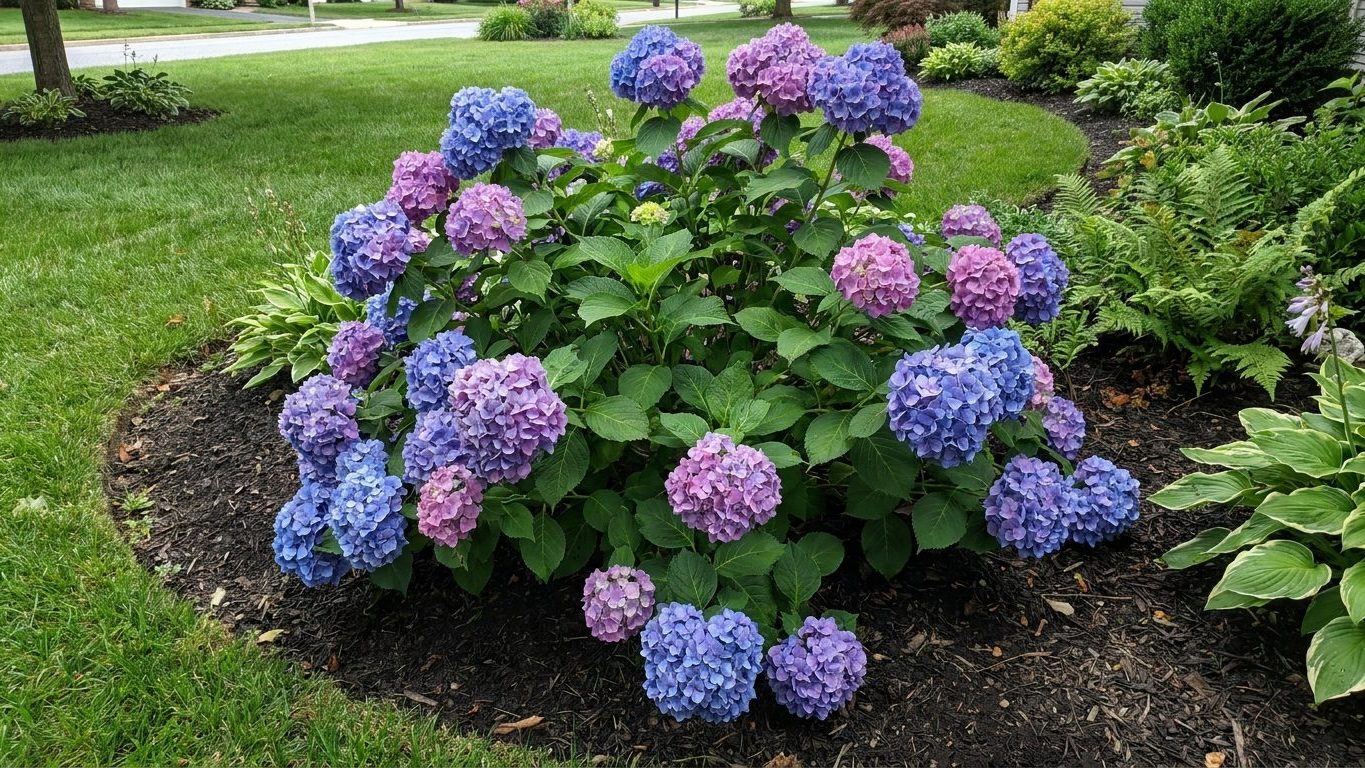
Plant hydrangeas in Maryland during April, May, August, or September, once the soil has warmed past the spring frost line or cooled below summer heat. Bigleaf types get their pruning done in June and July, right after the flowers fade. Baltimore’s frost calendar sets the outer edges of that window, and everything from soil prep to fertilizer timing follows from those two dates.
When to prune hydrangeas in Maryland: The Short Answer
Baltimore’s last spring frost falls between April 3 and April 16, and the first fall frost arrives between October 26 and November 5, according to NOAA NCEI 1991-2020 Climate Normals, and those two windows anchor every date below.
- January: The garden sits dormant well before any frost math matters. Leave last season’s stems standing for winter interest and don’t prune anything yet.
- February: Still weeks ahead of Baltimore’s last frost, this is order-and-plan season, not plant season. Check stems for winter dieback so you know what to prune away come summer.
- March: This opens the first of three fertilizer months. Feed established shrubs lightly, since a hard freeze can still hit through mid-April.
- April: The last frost window itself runs April 3 to April 16, so plant only after that date passes in your yard. Panicle and smooth hydrangeas tolerate a late cold snap better than bigleaf does.
- May: With frost risk gone, this is peak planting month for every hydrangea type sold locally. It’s also the second fertilizer month, feeding roots while they’re actively growing.
- June: Bigleaf hydrangeas finish their first flush now, and this opens the pruning window. Cut spent blooms back to the first healthy bud below the flower.
- July: The pruning window for bigleaf closes at the end of this month, and it’s also the final fertilizer month of the year. Anything cut later risks removing next year’s flower buds.
- August: A second planting window opens as summer heat starts to ease. Roots set now have roughly ten to twelve weeks before the first fall frost to establish.
- September: This is the last practical month to plant, since the first fall frost follows in October or early November. Water new plantings deeply through any dry stretches.
- October: The first fall frost lands somewhere between October 26 and November 5 depending on where you garden. Stop fertilizing now so new growth doesn’t get caught by the cold.
- November: Frost has typically arrived statewide by now, and leaves will blacken and drop on their own. Add two to three inches of mulch over the root zone before the ground freezes hard.
- December: The shrub is fully dormant and needs nothing but occasional water during a dry winter. Skip any pruning entirely until the June window reopens.
That twelve-month rhythm holds for most of the state, though Garrett and Allegany counties in the mountains run weeks behind, and the Eastern Shore runs a little ahead.
Maryland — the year and the numbers
- State
- Maryland
- USDA zones
- 5b-8a
- Last spring frost
- April 3 to April 16
- First fall frost
- October 26 to November 5
- Annual rain
- 45 in
- Lawn zone
- transition-season
- Source
- NOAA NCEI 1991-2020 Climate Normals, 32F freeze probabilities · Baltimore
How to Work Out the Dates for Your Own Yard
Your own yard rarely matches the reference station exactly, so the real question is how to translate Baltimore’s frost dates onto your specific patch of ground.
- Find your local frost dates: Baltimore’s last spring frost runs April 3 to April 16 and its first fall frost runs October 26 to November 5, per NOAA NCEI 1991-2020 Climate Normals, but a valley or low spot on your property can trail those dates by a week or more.
- Match your hardiness zone: the USDA Plant Hardiness Zone Map places Maryland between 5b and 8a, and a shrub rated for zone 6 struggles anywhere the state dips into 5b territory, mainly the western counties.
- Pick your planting month from the state list: April, May, August, and September are the four months proven to work here, so count backward from whichever frost date is closer and choose the nearest of those four.
- Hold bigleaf pruning to June and July: cut spent flowers within that window and the shrub sets next year’s buds on schedule, cut outside it and you risk removing the wood that would have flowered.
- Recheck after a hard winter: dieback from a colder than usual stretch pushes the safe planting date later, so wait for new leaf growth before trusting a bigleaf hydrangea to be alive.
None of this replaces watching your own yard for two or three seasons. A microclimate against a south-facing brick wall can run a full zone warmer than the open lawn ten feet away.
Maryland North to South: How the Dates Shift
Elevation, water, and simple latitude push these same dates in different directions across Maryland, without changing the state-wide figures already given above.
- Western Maryland (Garrett, Allegany): the mountains hold cold air longest, pushing both frost dates later and shortening the whole planting season.
- Central Maryland (Baltimore, Howard, Montgomery): this stretch tracks closest to the reference dates, since it’s the corridor the reference station itself sits in.
- Southern Maryland (Calvert, St. Mary’s, Charles): the Chesapeake’s open water moderates temperature swings, nudging the last frost a little earlier than the mountains.
- The Eastern Shore (Talbot, Dorchester, Wicomico): flat land and bay water on two sides give this region the mildest and longest growing season in the state.
Check the state guide for the county-by-county breakdown before locking in a date.
Mistakes Maryland Punishes
Pruning bigleaf at the wrong time
Cutting bigleaf hydrangeas back in fall or early spring feels tidy, but it removes the buds that were going to flower next summer. Prune only in June and July, right after the blooms fade, and the shrub sets new buds on schedule for next year.
Planting too early in a warm March
A mild stretch in March tempts gardeners to get bigleaf hydrangeas in the ground before the danger has passed. Baltimore’s last frost can land as late as April 16, so hold off until April at the earliest and let panicle types take the early risk instead.
Skipping winter cover in the mountains
A shrub that survives fine in Baltimore can die back to the ground in Garrett or Allegany County without extra mulch. Pile two to three inches over the root zone before November and wrap young bigleaf stems in burlap through the coldest stretch.
Maryland Extension Offices and County Contacts
Baltimore’s frost dates are a starting point, not the final word for your county. The University of Maryland Extension and your local county office track conditions closer to your own soil.
- Your state page: the frost dates and the pruning window for Maryland, laid out county by county.
- University of Maryland Extension: county-level advice, soil testing, and plant clinics through extension.umd.edu.
- Your county extension office: the closest source for microclimate quirks a state-wide figure can’t capture.
Common questions
Can I plant hydrangeas in Maryland in the fall?
Yes, August and September both work, since roots have roughly ten to twelve weeks to establish before the first fall frost arrives between October 26 and November 5.
Why didn’t my bigleaf hydrangea bloom this year?
The most common cause is pruning outside the June and July window, which removes the buds set for the following season. A late spring frost after bud break can do similar damage without any pruning at all.
Do hydrangeas survive winter in western Maryland?
Panicle and smooth varieties generally do, since they tolerate the colder end of Maryland’s 5b to 8a hardiness range. Bigleaf hydrangeas are the least reliable there and often need mulch and burlap to make it through a hard winter.