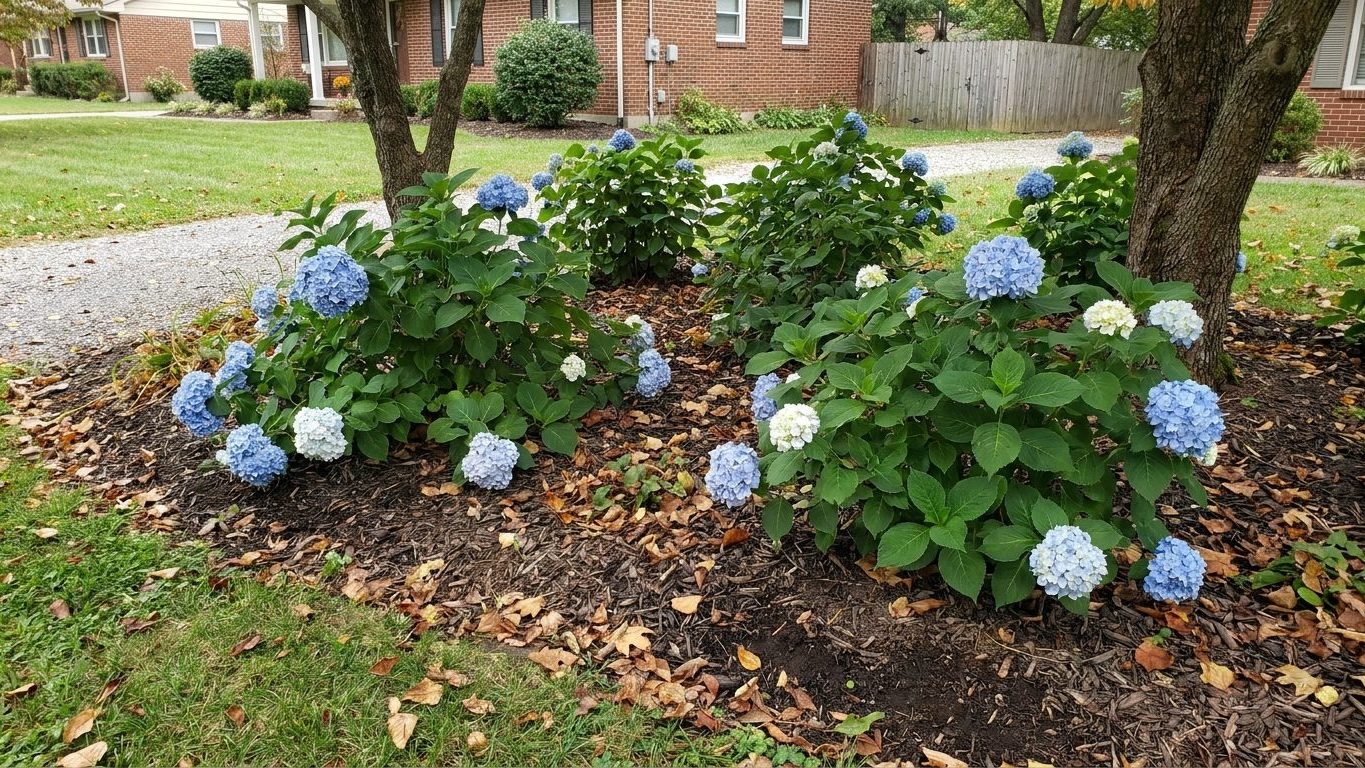
In Louisville, hydrangea trouble in Kentucky usually starts with the calendar, not the bugs. NOAA’s 1991-2020 Climate Normals put the last spring frost at March 24 to April 4 and the first fall freeze at November 2 to November 12, and that gap decides whether a shrub loses its buds to cold before aphids, leaf spot, or deer ever get a chance to do damage.
Hydrangea pests and diseases Kentucky: The Short Answer
No flowers on a healthy shrub

NOAA NCEI’s 1991-2020 Climate Normals put Louisville’s last spring frost between March 24 and April 4, and bigleaf sets next year’s buds the summer before, so a freeze in that window can blacken them and erase the season’s blooms. Hold pruning until new growth confirms surviving wood, then check the window on the calendar page.
Aphids on new growth
Aphids cluster on tender new shoots as soon as the soil warms, curling leaves and leaving a sticky residue that draws ants. A hard spray from the hose knocks most colonies loose, and insecticidal soap handles repeat visits without harming the bees working nearby blooms.
Cercospora leaf spot in humid summer

Purple-rimmed spots that spread across lower leaves through July and August point to Cercospora leaf spot, which thrives in Kentucky’s humid summers. Water at the base instead of overhead, clear fallen leaves each fall, and give plants the airflow that panicle types on the varieties page tolerate better than bigleaf.
Powdery mildew on late-season leaves

A gray-white film coating leaves in late summer is powdery mildew, worse where shrubs sit crowded against a wall with little air movement. Space new plants during the March, April, September, or October planting windows, and thin crowded stems so the foliage dries between rains.
Deer browsing on winter buds

Deer strip flower buds and bark through the winter months when other browse is gone, and a shrub can lose an entire season’s blooms overnight. Fencing or repellent applied ahead of the November 2 to November 12 freeze window protects the buds that open the following June or July.
Kentucky — the year and the numbers
- State
- Kentucky
- USDA zones
- 6a-7a
- Last spring frost
- March 24 to April 4
- First fall frost
- November 2 to November 12
- Annual rain
- 48 in
- Lawn zone
- transition-season
- Source
- NOAA NCEI 1991-2020 Climate Normals, 32F freeze probabilities · Louisville
How to Work Out the Dates for Your Own Yard
Work backward from your own frost windows instead of copying a neighbor’s calendar, and the timing starts to fit your slope, tree cover, and soil.
- Mark your last frost: NOAA NCEI 1991-2020 Climate Normals give Louisville a last spring frost of March 24 to April 4, so treat any date inside that window as still risky for open buds.
- Count back from bud set: bigleaf forms next year’s flower buds by late summer, so protect fall growth before the November 2 to November 12 freeze window shuts it down.
- Test your own microclimate: a slope, a brick wall, or low ground can push your actual frost a week or more earlier or later than the station average.
- Pick planting months from the calendar: March, April, September, and October give roots time to establish before summer heat or a hard freeze arrives.
- Fertilize on the three set passes: March, May, and July feed the shrub through bud set without pushing soft new growth into the fall freeze.
- Prune bigleaf only in June or July: cutting outside that window risks removing the buds already formed for next year’s bloom.
Match the timing to the symptom before treating anything. Bud damage with no insect signs points to frost, while spotting that spreads upward from the lower leaves points to a fungal problem that started with wet foliage back in July.
Kentucky North to South: How the Dates Shift
Elevation and the Ohio River move these dates around the state more than most gardeners expect.
- The Bluegrass region (around Lexington and Frankfort): rolling elevation keeps frost lingering longer into spring than the urban Louisville station shows, so buds here often stay at risk past the state average.
- The Ohio River Valley (Louisville and the river counties): pavement and the river’s moderating effect give this corridor the milder end of the state’s 6a to 7a range on the USDA Plant Hardiness Zone Map.
- Western Kentucky and the Purchase (toward Paducah): flatter, lower terrain softens both ends of the frost window compared with the hills to the east.
- Eastern Kentucky’s Appalachian foothills (toward Pikeville and Hazard): higher elevation and cold air pooling in the hollows push both frost dates toward the harsher edge of the state’s range.
The full spread for each part of the state lives on the Kentucky hydrangea guide.
Mistakes Kentucky Punishes
Pruning outside the June and July window
Kentucky’s bigleaf sets its flower buds by late summer, so cutting in fall or early spring removes the wood that would have bloomed. Keep cuts inside the June to July window and prune only what’s dead once new leaves confirm live growth.
Planting past the fall window
A shrub planted after October has little time to root before the November freeze window arrives, and a shallow root system struggles through winter. Stick to the March, April, September, and October planting months and water deeply through the first few weeks.
Watering the leaves instead of the soil
Overhead watering in Kentucky’s humid summer keeps foliage wet long enough for Cercospora leaf spot and powdery mildew to take hold. Aim the hose or drip line at the base of the plant, water in the morning, and let leaves dry before evening.
Kentucky Extension Offices and County Contacts
The statewide frost windows above start the conversation, but pests and soil vary by county, so the University of Kentucky Cooperative Extension Service, found through USDA NIFA’s Land-Grant Extension directory, is the next call for a confirmed diagnosis.
- Your state page: the Kentucky hydrangea guide for the frost dates and pruning window where you live.
- Which ones hold up here: the varieties page names the types bred for the 6a to 7a range.
- Your county extension office: University of Kentucky Cooperative Extension confirms a diagnosis with a local sample.
Common questions
What is the most common hydrangea disease in Kentucky?
Cercospora leaf spot tends to show up first, since it thrives in Kentucky’s humid summers, especially where irrigation or rain keeps foliage wet. Watch for purple-rimmed spots on lower leaves starting in July.
Do I need to spray hydrangeas for pests in Kentucky?
Most established shrubs get by without regular spraying, since aphids rarely reach damaging levels on their own. Hose off colonies as they appear and save any treatment for a dense, repeat infestation confirmed by your county extension office.
Why did my hydrangea not bloom this year in Kentucky?
The likeliest cause is a frost hitting swollen buds inside the March 24 to April 4 window, or pruning outside the June to July window and cutting off wood that already held next year’s buds.