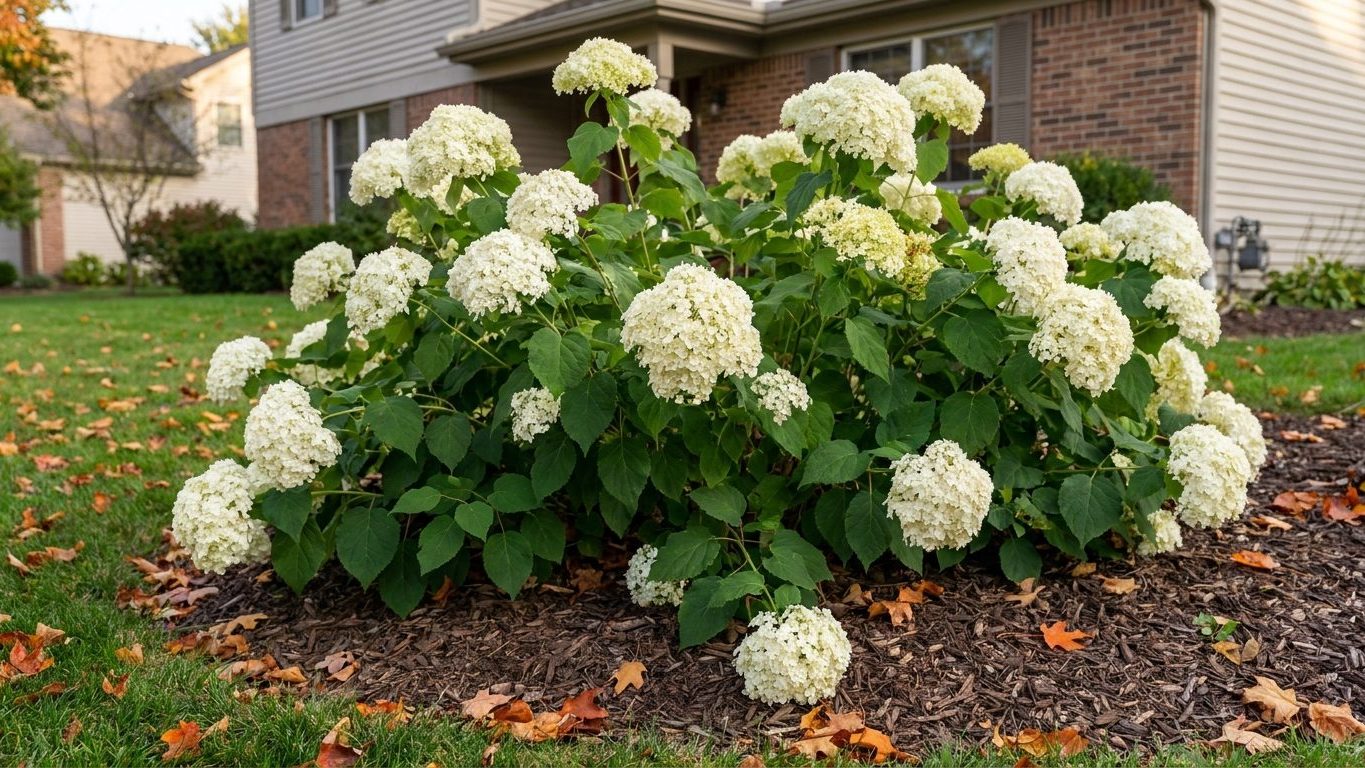
Indiana hydrangeas run into a short, predictable list of trouble: flower buds killed by a late spring freeze, a run of fungal leaf disease once summer humidity settles in, and aphids or Japanese beetles feeding on new growth. Indianapolis’s own frost dates and the state’s 5b to 7a hardiness range decide when each of these actually shows up in a yard, more than the plant variety does.
Hydrangea pests and diseases Indiana: The Short Answer
In Indianapolis, the two hydrangea problems gardeners report most reliably are flower bud loss from a late spring freeze and a cluster of humidity-driven leaf diseases that follow once summer settles in. NOAA NCEI’s 1991-2020 Climate Normals put Indianapolis’s last spring frost between April 9 and April 21, and that single window explains most of the bud damage reported before anything else does.
No flower buds after a cold snap

This is bud blast, cold air settling into the buds right after Indianapolis’s last frost window closes. It hits bigleaf hydrangea hardest since those varieties set buds on old wood. Skip fall pruning and check which varieties hold up here for options that rebloom on new growth instead.
Sticky, curled new growth
Aphids cluster on the soft tip growth that pushes out through the spring planting months. They leave a shiny residue that draws sooty mold beneath it. A strong water spray every few days usually clears a light infestation before it spreads to nearby buds.
Brown spots ringed in purple or tan

This is Cercospora leaf spot, a fungus that spreads through wet foliage once early summer humidity climbs. It rarely kills a shrub but does thin out the lower leaves over the season. Water the soil instead of the leaves and clear fallen leaves before winter mulch goes down.
White powder coating the leaves
Powdery mildew shows up on shaded, crowded plants during warm, sticky midsummer stretches. It coats leaves in a dusty film without doing much visible damage on its own. Thin out crowded stems for airflow and treat only if the coating spreads onto flower buds.
Grey fuzzy rot on flowers or stems

Botrytis blight favors the same cool, damp conditions that show up during Indiana’s spring planting window and again in a wet fall. It turns flower clusters brown and mushy from the outside in. Remove and discard affected blooms rather than composting them nearby.
Skeletonized leaves in midsummer

Japanese beetles feed in groups through midsummer, chewing leaf tissue down to a lace of veins while leaving the rest intact. They tend to target plants already stressed by drought or poor drainage. Handpicking into soapy water during cooler morning hours controls small populations well.
Scale insects along the stems
Small, waxy bumps that don’t move are scale, feeding on stem sap and weakening a shrub over several seasons rather than one. They show up more often on older, denser bigleaf plantings than on younger stock. A dormant oil treatment ahead of the bigleaf pruning window smothers most of them.
Indiana — the year and the numbers
- State
- Indiana
- USDA zones
- 5b-7a
- Last spring frost
- April 9 to April 21
- First fall frost
- October 21 to October 30
- Annual rain
- 44 in
- Lawn zone
- cool-season
- Source
- NOAA NCEI 1991-2020 Climate Normals, 32F freeze probabilities · Indianapolis
How to Work Out the Dates for Your Own Yard
Matching a fuzzy grey bloom or a chewed leaf to the right cause starts with the calendar, not the spray bottle. NOAA NCEI’s 1991-2020 Climate Normals put Indianapolis’s frost-free stretch at April 9 to April 21 in spring and October 21 to October 30 in fall, and that stretch decides when each problem is even possible.
- Check the date against the frost window first: bud blast only makes sense in the weeks right after April 9 to April 21, so a bare shrub in May points there, not to disease.
- Look at the leaf pattern before anything else: ringed tan spots mean leaf spot, a dusty white film means powdery mildew, and grey fuzz on the bloom itself means botrytis.
- Count the wet days behind the symptom: fungal problems in Indiana almost always follow a run of humid or rainy days rather than a single soaking.
- Check whether it lines up with the pruning window: fresh cuts left open during June and July are the easiest entry point for both botrytis and scale.
- Inspect new growth for insects during the planting months: aphids and early scale both concentrate on the soft tips that push out in April and May.
- Note where in the state the shrub is growing: southern Indiana runs ahead of Indianapolis, which shifts every one of these windows earlier.
None of this replaces a close look at the plant itself, but ruling out the calendar first saves a lot of unnecessary spraying. A shrub showing symptoms well outside its expected window is usually fighting something else, often poor drainage or a planting site that never suited it.
Indiana North to South: How the Dates Shift
A shrub in New Albany runs on a different clock than one in South Bend, even though both sit inside the same state line. USDA’s Plant Hardiness Zone Map places Indiana across 5b to 7a, and that spread alone shifts when frost risk, and the pests that follow it, actually show up.
- Northern Indiana (South Bend, Fort Wayne, the Michigan border counties): colder winters at the 5b end mean a later start to fungal pressure, and lake effect off Michigan can hold humidity longer into fall, favoring leaf spot late in the season.
- Central Indiana (Indianapolis and the surrounding counties): this is the reference point behind the frost dates and pest windows described above, and most of the state tracks close to it.
- Southern Indiana (Evansville, New Albany, the Ohio River counties): frost lets go earlier in spring and holds off later in fall by a fortnight or more, stretching the window when aphids, beetles, and leaf disease can all operate.
Whichever part of the state a yard sits in, the state guide’s own frost dates are a better starting point for pest and disease timing than any national average.
Mistakes Indiana Punishes
Pruning bigleaf outside the June, July window
Cutting back bigleaf hydrangea outside the pruning window removes buds already set for next year. That layers a second round of no-flower complaints on top of any frost damage. Prune right after bloom, inside that window, and check the calendar page for the exact months.
Pulling mulch too early in spring
Stripping winter mulch before Indianapolis’s frost window closes on April 21 exposes new buds to a freeze they were otherwise protected from. It is one of the most common causes of bud blast blamed on disease instead. Leave mulch in place until the risk window has fully passed.
Watering the leaves instead of the soil
Overhead watering late in the day keeps foliage wet overnight right through Indiana’s humid stretch, exactly what leaf spot and powdery mildew need to spread. Switch to soaker hoses or morning watering at the base of the plant instead, and foliar disease pressure drops fast.
Indiana Extension Offices and County Contacts
Indianapolis’s frost dates are a solid starting point, but each county’s Purdue Extension office tracks actual pest pressure and disease outbreaks as they happen, which a statewide average never can.
- Your state page: the frost dates and the pruning window for wherever you garden in Indiana.
- Which ones hold up here: the varieties that shrug off Indiana’s freeze-thaw pattern versus the ones that struggle.
- Purdue Extension: extension.purdue.edu, for a county-by-county contact list and current pest alerts.
Common questions
Do I need to spray hydrangeas preventively in Indiana?
Most yards don’t need a preventive spray schedule. Watching the frost window and the humid stretches that follow it, then treating only when a specific symptom shows up, handles the bulk of what Indiana throws at hydrangeas.
Why did my hydrangea have no blooms this year?
Check the timing first. A late freeze inside or just after Indianapolis’s April frost window, or pruning outside the June, July window, are the two most common reasons a healthy-looking bigleaf shrub skips a season of flowers.
Are Japanese beetles a serious threat to hydrangeas?
They chew leaves heavily during midsummer feeding but rarely kill an established shrub outright. A plant already stressed by drought or poor drainage tends to show worse damage than one that’s otherwise healthy.