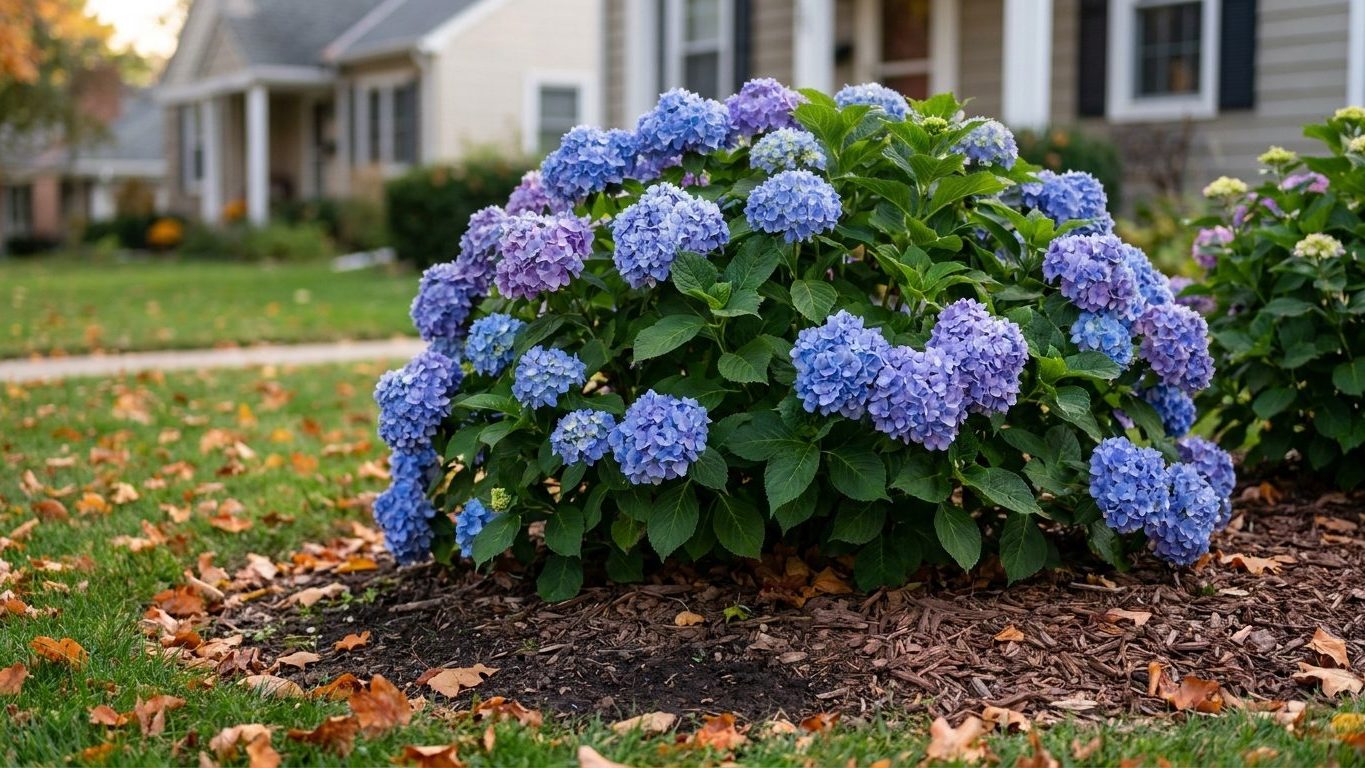
The safest windows to plant hydrangeas in Iowa fall in spring after the last frost clears and in late summer before the ground cools, giving roots weeks to settle before winter arrives. Prune bigleaf varieties only once new growth confirms which stems survived, never on a set calendar date. Get the exact months right and your shrub blooms for years. Get them wrong and you spend seasons chasing dead wood.
When to prune hydrangeas in Iowa: The Short Answer
In Des Moines, NOAA NCEI 1991-2020 Climate Normals put the last spring frost between April 12 and April 24 and the first fall frost between October 14 and October 25, and every planting or pruning task below lines up against those two windows.
- January: Hydrangeas sit fully dormant under whatever mulch you left in fall, so there’s nothing to plant or prune this early. Use the quiet weeks to sketch out bed locations for spring instead.
- February: Frost still grips most of the state, so keep shovels away from the root zone entirely. Order bareroot or container stock now so it arrives ready the moment the spring window opens.
- March: This is the first fertilizing month on the calendar, applied as soil warms but well before the last frost clears. Skip pruning here, since bigleaf wood is still sorting out which buds made it through winter.
- April: Planting opens this month, though the last frost can land as late as April 24, so newly set shrubs still need frost cloth on cold nights. Container plants handle that risk far better than bareroot stock.
- May: With frost behind most of the state, May carries both the second fertilizing pass and the safest planting stretch of spring. Roots set now go into soil that’s finally warm enough for fast establishment.
- June: The first bigleaf pruning window opens once spent blooms make it obvious which stems flowered. Cut just above a healthy bud rather than removing whole canes down to the base.
- July: July carries the last fertilizing round and the second bigleaf pruning window, so feed early and prune once new growth has hardened off. Wait past mid-month and you risk cutting off next year’s flower buds.
- August: A second planting window opens as summer heat eases, giving roots close to two months to settle before the first fall frost. Water deeply through any dry spell that follows.
- September: This closes out the planting calendar for the year, since shrubs set now still have weeks before frost risk returns. Hold off on any pruning, which only invites tender new growth frost will kill.
- October: The first fall frost arrives anywhere from October 14 to October 25, so pile mulch around the base before that window passes. Cut back on watering as growth slows for the season.
- November: Winter mulch matters most now for bigleaf types, since their flower buds sit exposed on old wood through the coldest months. A four-inch layer over the crown buys real protection.
- December: The shrub is fully dormant, and nothing on the calendar, planting, fertilizing, or pruning, belongs in this month. Check that wind hasn’t stripped mulch away from the base.
Every one of those tasks bends around the same two anchor dates, and missing them by two weeks in either direction means fighting Iowa’s calendar instead of using it.
Iowa — the year and the numbers
- State
- Iowa
- USDA zones
- 4b-6a
- Last spring frost
- April 12 to April 24
- First fall frost
- October 14 to October 25
- Annual rain
- 37 in
- Lawn zone
- cool-season
- Source
- NOAA NCEI 1991-2020 Climate Normals, 32F freeze probabilities · Des Moines
How to Work Out the Dates for Your Own Yard
Working out your own planting dates starts with the same two numbers as everyone else in the state, then narrows them down to your specific ground.
- Start from the airport window: NOAA NCEI 1991-2020 Climate Normals put spring’s last frost between April 12 and April 24 and fall’s first frost between October 14 and October 25 for the reference station near Des Moines.
- Shift for county ground: Iowa State Extension county figures, drawn from 1950 to 2021 records, run about four days later in spring and ten days earlier in fall than that station’s numbers, so rural yards get a shorter safe season than the airport figures suggest.
- Subtract two weeks for bareroot stock: push your earliest planting date back roughly two weeks past the adjusted last frost if you’re setting out bareroot rather than container plants.
- Place your zone: confirm whether your yard sits nearer 4b or nearer 6a on the state’s hardiness range, since that split decides whether bigleaf survives your winter at all or whether panicle and smooth types are the safer bet.
- Test the soil before the calendar: push a thermometer four inches into the bed and wait for a steady reading above 50 degrees before planting, fertilizing, or pruning.
None of this replaces watching your own yard for a season. A south-facing bed against brick warms weeks ahead of an open north slope, no matter what the regional average says.
Iowa North to South: How the Dates Shift
Iowa runs long enough north to south that the same frost calendar doesn’t apply evenly across the whole state.
- Northern Iowa (bordering Minnesota and Wisconsin): sits at the cold end of the state’s hardiness range, so frost lingers later in spring and returns earlier in fall, tightening both the planting window and the last safe pruning date.
- Central Iowa (around Des Moines): sits in the middle of that range, matching the frost dates already laid out above.
- Southern Iowa (bordering Missouri): warms fastest in spring and holds heat longest into fall, stretching the safe planting window at both ends and often allowing a harder pruning cut without winter injury.
For the frost dates and hardiness zone that actually apply to your address, the state guide breaks that range down further by county.
Mistakes Iowa Punishes
Pruning bigleaf too late
Bigleaf hydrangeas set next year’s flower buds on the current season’s wood by late summer, so any cut made after the July window removes blooms before they ever open. Stick to the June or July pruning stretch above and skip the fall cleanup urge.
Planting bareroot right on the frost date
Setting bareroot hydrangeas out the moment the last frost supposedly clears ignores that April 24 is only the late end of the window, not a guarantee. Wait the extra two weeks described above, or start with a container plant instead.
Leaving bigleaf buds unmulched into winter
In the coldest pockets of the state’s hardiness range, exposed bigleaf flower buds simply don’t survive an open winter. Pile four inches of mulch over the crown before the first fall frost window closes, and pull it back only once new growth confirms spring has arrived.
Iowa Extension Offices and County Contacts
Des Moines’ frost dates are a starting point, not the last word for your yard. Iowa State University Extension and Outreach and your county office track the local soil and microclimate differences that shift the calendar block by block.
- Your state page: the frost dates and the pruning window where you live.
- Iowa State University Extension and Outreach: soil test results and county-specific planting advice.
- Your county extension office: call ahead of planting day if your yard sits in a frost pocket the state map doesn’t catch.
Common questions
Can I plant hydrangeas in Iowa in October?
October is when the first fall frost arrives, anywhere from October 14 to October 25, so it falls past the safe planting window. September is the last month on the calendar for setting new hydrangeas outdoors.
Do bigleaf hydrangeas survive Iowa winters?
Bigleaf hydrangeas struggle across the colder end of the state’s hardiness range, where exposed flower buds often die back over an unmulched winter. Panicle and smooth types tolerate the cold with far less fuss.
What month should I fertilize my hydrangeas in Iowa?
The calendar lists three fertilizing months, March, May, and July, spaced roughly eight weeks apart so the shrub gets a boost at the start, middle, and tail end of active growth.