Skip to content
  1. Jan
  2. Feb
  3. Mar
  4. Apr
  5. May
  6. Jun
  7. Jul
  8. Aug
  9. Sep
  10. Oct
  11. Nov
  12. Dec
State
Washington
USDA zones
4a-9a
Last spring frost
February 27 to March 18
First fall frost
November 13 to November 30
Annual rain
39 in
Lawn zone
transition-season
Source
NOAA NCEI 1991-2020 Climate Normals, 32F freeze probabilities · Seattle

The year in Washington, from the calendar

  1. Jan—
  2. FebPlant hydrangeas · Plant roses · Prune roses · Plant fruit trees · Prune fruit trees
  3. MarSpring bulbs bloom · Feed hydrangeas · Plant hydrangeas · Feed roses · Plant roses
  4. AprSpring bulbs bloom · Feed roses · Crabgrass preventer · Mow
  5. MaySpring bulbs bloom · Feed hydrangeas · Lilacs bloom · Peonies bloom · Feed roses
  6. JunPrune bigleaf hydrangeas · Prune lilacs · Peonies bloom · Feed roses · Mow
  7. JulFeed hydrangeas · Prune bigleaf hydrangeas · Feed roses · Mow · Water
  8. AugSeed the lawn · Dethatch · Mow · Water
  9. SepPlant hydrangeas · Seed the lawn · Plant peonies · Aerate · Dethatch
  10. OctPlant spring bulbs · Plant hydrangeas · Plant peonies · Plant trees · Mow
  11. NovPlant spring bulbs · Protect roses for winter · Plant trees · Fertilize the lawn · Mow
  12. DecProtect roses for winter

From the state frost facts and extension calendars: Washington State University Extension · Oregon State University Extension ; Washington State University Extension · Clemson HGIC factsheet — Hydrangea · Purdue Extension — AY-13 Lawn Improvement Programs.

Best Spring Bulbs for Washington

Best Spring Bulbs for Washington

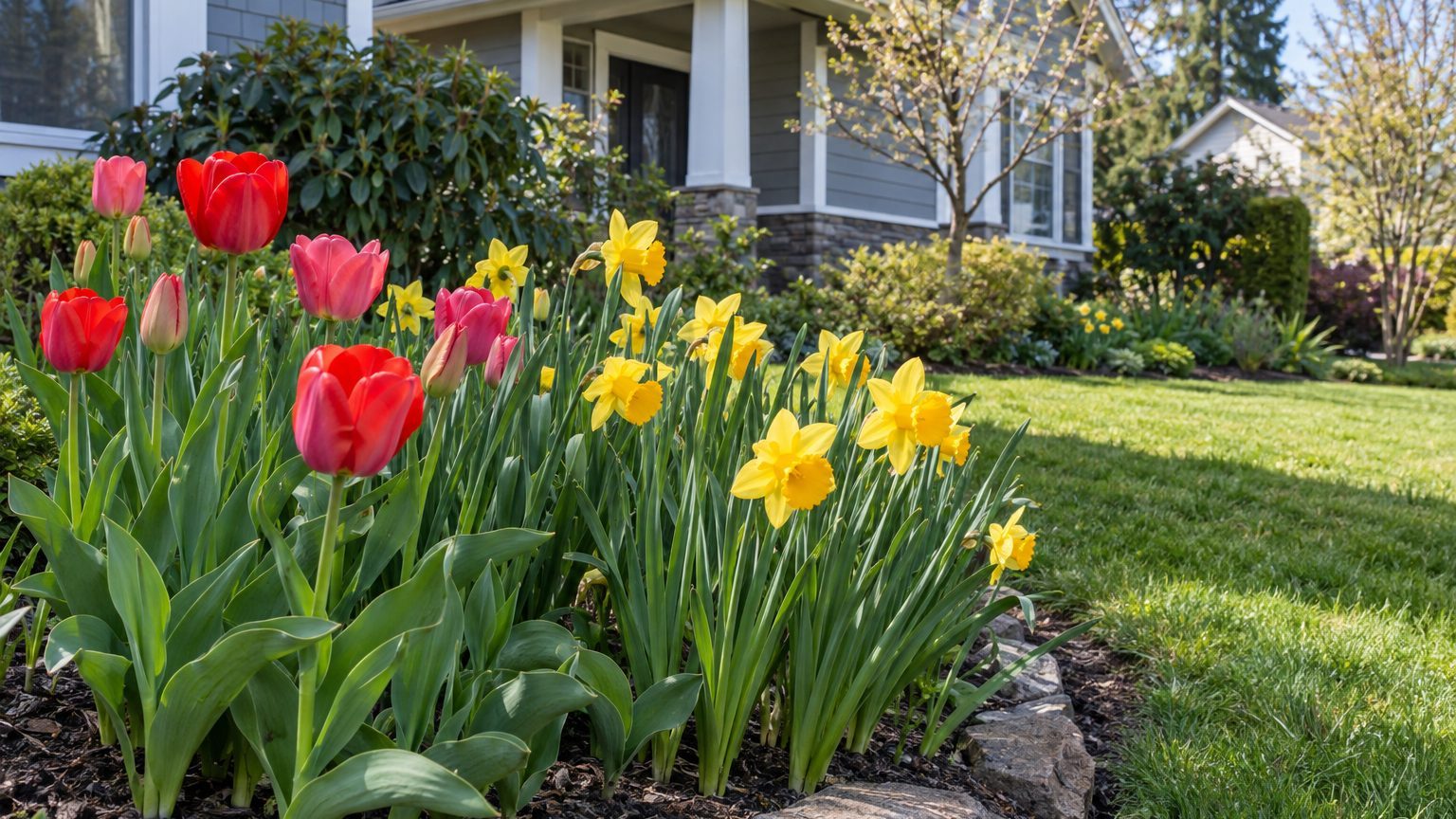
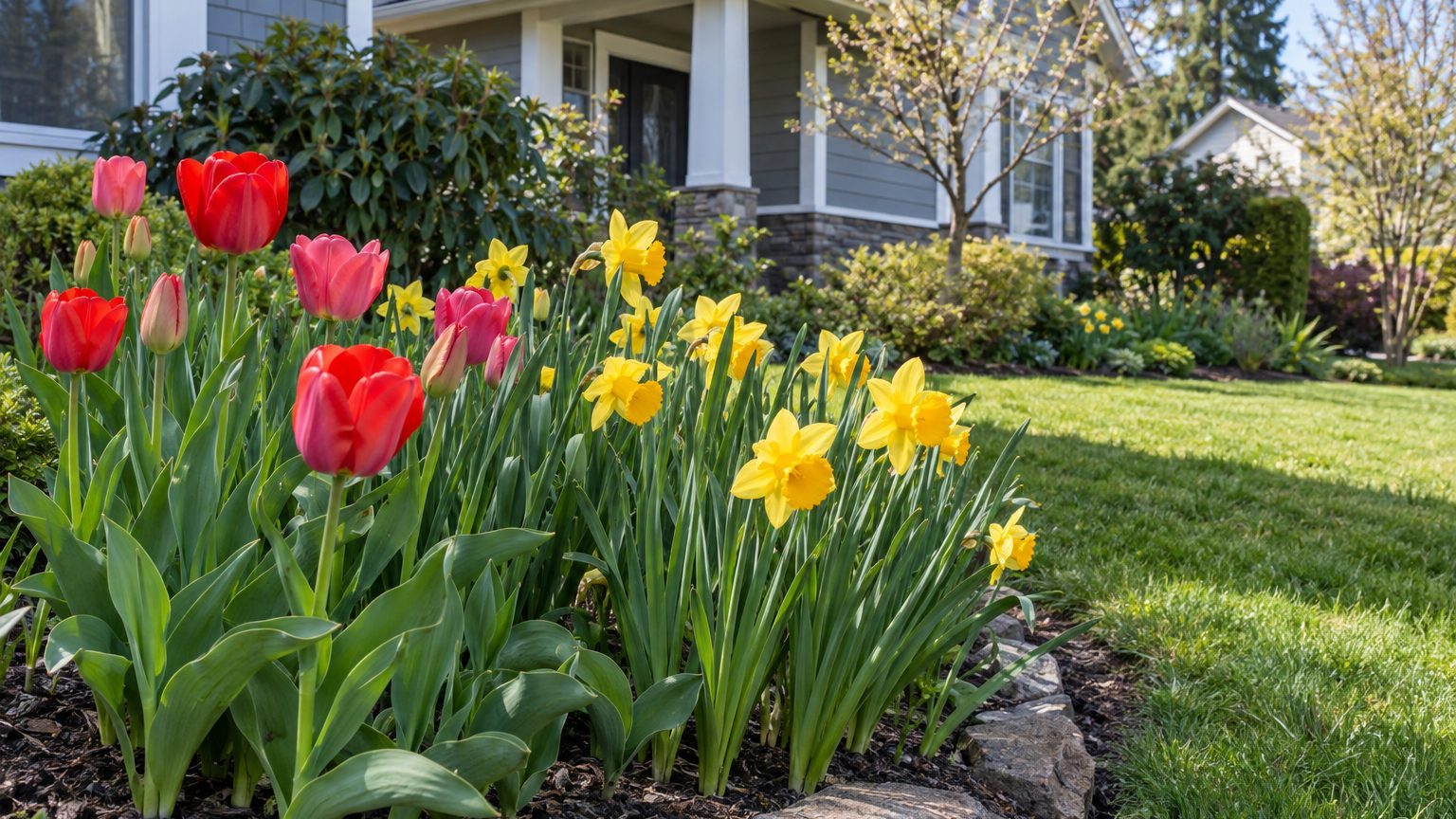
Tulips pushing up through cool, damp ground and daffodils nodding along a fence are as much a Washington spring as the rain. Planting them is a fall job, and the bulbs that last in a Washington yard come down to a short list of reliable types.

Best Spring Bulbs to Grow in Washington

Healthy spring bulbs in bloom

Daffodils, tulips with a hardy streak, and crocus all tolerate Washington soil and winters. The USDA hardiness zone range here runs from 4a to 9a, so the milder western side and the colder interior ask for slightly different choices, but these three groups cover both.

Daffodils

Daffodils are the more reliable perennial bulb, and they last longer in the garden than tulips. Deer and voles leave them alone because the sap holds needle-sharp crystals of calcium oxalate. Choose early and late bloomers to stretch color toward early summer.

Darwin Hybrid Tulips

Tulips are often short-lived, but Darwin hybrids are bred to return for several years. They bloom in spring and suit beds where you want big, classic color. Fence them or plant them near daffodils if deer visit your yard.

Emperor Tulips

Emperor tulips share that same trait: they are bred to return for several years. They give you tulip color without replanting every fall. Leave the leaves in place after bloom until they turn brown, since the foliage feeds the bulb for next year.

Species Tulips

Species tulips are less showy than the big hybrids but very hardy, and they are great for naturalizing. Smaller and more likely to return each year, they settle into lawn edges and borders and keep coming back with little fuss.

Crocus

Crocuses are deer-resistant, although not slug-resistant, so watch the damp beds where slugs gather. They make a good first start to the bulb season. Voles, squirrels and rabbits do eat them, so plant them where those animals are less of a problem.

Hyacinths and Alliums

Hyacinths are planted in fall like the others and need winter cold to flower. According to Iowa State University Extension, alliums need the cold of winter to bloom, and they are a good way to finish the season with ornamental onions.

How to Choose Spring Bulbs for Your Washington Garden

Start with what your yard throws at a bulb: animals, cold, and how much time you want to spend. Most spring bulbs need about 12 to 16 weeks of cold to flower, which Washington winters usually supply.

Match the bulb to the situation, then plant in the fall window and leave the foliage alone after bloom.

Your situation What suits it in Washington Why
Very cold winter Species tulips, daffodils Species tulips are very hardy, and daffodils last longer than tulips
Deer or voles visit Daffodils Daffodil sap holds calcium oxalate crystals, so animals leave them alone
Little time to garden Darwin hybrid or Emperor tulips Bred to return for several years
Small space or a lawn edge Species tulips, crocus Smaller, and species tulips naturalize and return each year
Not sure the winter is cold enough Chill tulips and hyacinths first Most bulbs need about 12 to 16 weeks of cold, and refrigerating gives it where winters are too mild

Hybrid tulips come in early, mid and late spring bloomers, so you can have tulips opening from late March to early May. Planting a mix extends the show across March, April and May.

Which Spring Bulbs Suit Different Parts of Washington

Washington splits at the Cascades, and planting time and bulb choice shift with it.

  • Skagit Valley: Late October is a good time to plant here. Roots form a good system before the ground freezes, and the bulbs do not try to bloom before winter sets in.
  • Puget Sound and the Seattle area: Western Washington is mild and maritime, with a last spring frost between February 27 and March 18. Bulbs go in during October and November, and a mild frost date does not mean early planting, since cold wet soil holds spring growth back.
  • Eastern Washington: Beyond the Cascades the land is high desert with a far shorter season. In the colder interior, plant by late September to October, so tougher bulbs like daffodils and species tulips suit it.

If the bulbs are still in the bag when the ground is workable in December, plant them anyway.

Spring Bulb Buying Mistakes to Avoid in Washington

Buying Tulips for Deer Country

Deer enjoy a tulip snack, and voles, squirrels and rabbits eat tulips and crocus too. The cost is a bed of bare stems by spring. Switch to daffodils, which these animals leave alone, or protect the tulips.

Planting Too Early or Too Late

Planting before the soil has cooled below about 60°F invites sprouting in the fall. Planting too late leaves no time for roots. Aim for October and November, with late September in the colder interior and into December while the soil can be dug.

Cutting the Leaves Too Soon

Tidying green foliage after bloom starves the bulb, and a tulip that is already short-lived will fade faster. Remove only the faded flowers and let the leaves turn brown before you clear them away.

Where to Get Spring Bulb Advice in Washington

Washington State University Extension publishes planting guidance for the state, and your county office can speak to local soil and weather.

  • Check the extension guides on tulips, daffodils and crocus before ordering.
  • Call your county office with questions about slugs, voles or deer in your own beds.
  • Bring a photo of any bulb that fails to bloom, then plant what is left in the bag while the ground can be dug.

Common Questions

Can You Plant Tulips in Washington in December?

Yes, as long as the soil is workable. Bulbs can go in into mid-December, and a bulb still in the bag is better planted late than stored over the winter.

Do Daffodils Need to Be Dug Up Each Year?

No. Daffodils last longer than tulips and return reliably when you leave the leaves until they turn brown.

Do Alliums Need Winter Chilling?

Yes. Alliums need the cold of winter to bloom.
When Do Tulips and Daffodils Bloom in Washington?

When Do Tulips and Daffodils Bloom in Washington?

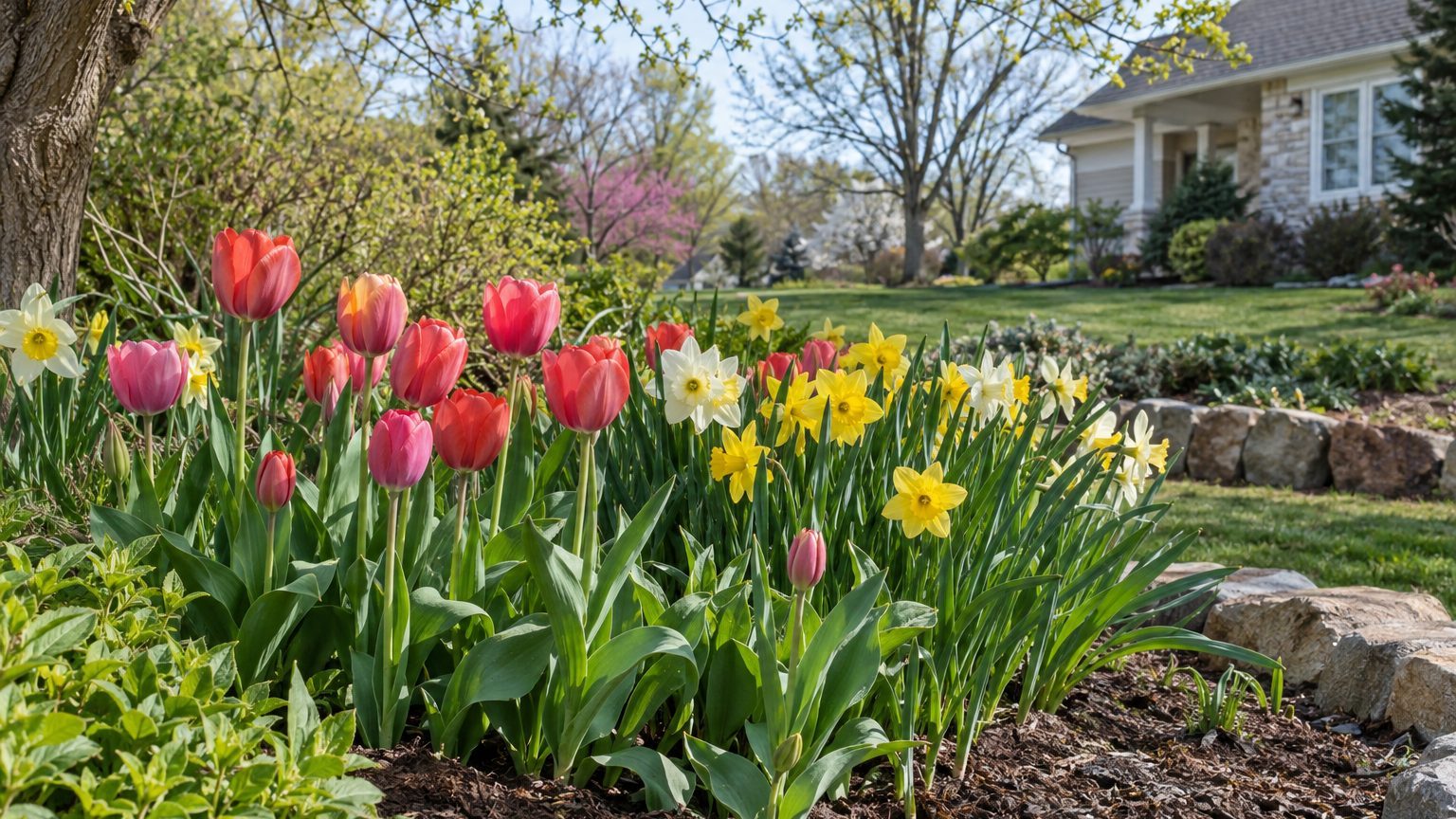
Yellow daffodils nodding beside a driveway and rows of tulips opening in a front bed mean spring has settled into Washington. The timing follows how fast the weather warms, and it varies from the mild west side of the state to the cooler interior. Here is when the blooms arrive and what to do once they do.

When Do Tulips and Daffodils Bloom in Washington?

When Do Tulips and Daffodils Bloom in Washington?

Tulips and daffodils bloom in Washington from March through May. Flowering follows the warming of spring rather than a fixed date, so a cool, wet stretch holds buds closed a little longer and a run of mild days opens them sooner.

Tulips spread their color across the season because they come in early, mid and late varieties. Hybrid tulips open from late March to early May, which lets one bed stay in flower for weeks.

Bulb When it blooms in Washington What sets the timing
Daffodils and tulips March to May Warming spring weather
Hybrid tulips Late March to early May Early, mid or late spring variety
Alliums Toward the end of the spring bulb season Warming weather, and needs winter cold to bloom

Crocus and hyacinths run through the same long spring, and species tulips, which are smaller and very hardy, add to it. Planting a mix of early and late varieties is the simplest way to stretch the show, and the daffodil and tulip groups can overlap in the same bed.

How to Tell Your Bulbs Are About to Bloom

Bulbs give plenty of warning before the first petal opens, and a walk around the beds shows where each planting stands.

  • Green tips pushing through the soil mean the bulb has finished its cold rest, which for most spring bulbs takes about 12 to 16 weeks of winter cold.
  • Leaves that stand taller and fatter day by day tell you the bulb is drawing on stored energy, so keep any mulch loose and let the shoots through.
  • A bud rising on a stem, still green and tight, means flowers are only a short time away.
  • A bud that shows a streak of color at its tip is close to opening, and tulips in particular show this before the petals loosen.
  • Allium leaves appear well before the round flower heads, and according to Iowa State University Extension, alliums need the cold of winter to bloom.

Shoots that look slow after a cold, wet week usually catch up as soon as the weather warms, so there is no reason to dig for them.

What to Do After Tulips and Daffodils Bloom in Washington

Remove only the faded flowers and leave everything else standing. The leaves keep feeding the bulb for next year’s bloom, so leave them in place until they turn brown. Never tie them, braid them or cut them while they are green, however untidy the bed looks.

Tulips are often short-lived in the garden, while daffodils last longer and are the more reliable perennial bulb. Some tulips are bred to come back. In Washington, Darwin hybrids and Emperor tulips are bred to return for several years, and species tulips naturalize well.

Planting the next round in a bed with a mix of daffodils and returning tulips keeps the spring display going with little work. Interplanting low perennials in front of the fading foliage hides it as it yellows, so the bed looks tidy without anyone touching a leaf.

How Bloom Time Shifts Across Washington

Washington spans USDA zones 4a to 9a, so a bed on Puget Sound and a bed east of the mountains do not bloom on the same schedule.

  • Skagit Valley: Late October planting works here, giving bulbs time to root before the ground freezes without tempting them to sprout before winter. This is the valley known for its tulip fields.
  • Western Washington around Seattle: Winters are mild and maritime, so spring warmth arrives early and bulbs lead the season. Cold wet soil and low light can still slow growth well past the last freeze.
  • Eastern Washington beyond the Cascades: This is high desert with a far shorter season. Bulbs go in earlier, in late September in the colder interior, and spring generally warms later, so blooms open after those on the west side.

Treat the March to May window as a guide and watch your own beds for the cues above.

Where to Get Bulb Advice in Washington

Local questions about varieties, planting depth or pests are best taken to people who know the soil and weather in your county. Washington State University Extension is the state’s land-grant extension service and a dependable place to start.

  • The Washington State University Extension site carries fall planting guides and spring bulb fact sheets, which are worth reading before the bulbs go in.
  • Your county extension office can answer questions about local soil, drainage and pests, and it is a good call in late summer, before you buy bulbs.

Common Questions

When Should You Plant Spring Bulbs in Washington?

October and November are the usual planting months, with late September working in the colder interior. Planting can run into mid-December while the soil can still be dug. Aim to plant once the soil has cooled below about 60°F, so roots form but the bulbs do not sprout in the fall.

Will Deer and Other Animals Eat Your Tulips and Daffodils?

Deer enjoy tulips but leave daffodils alone, because daffodil sap contains needle-sharp crystals that burn the mouth. Voles, squirrels and rabbits go after tulips and crocus too. Crocuses are deer-resistant but not slug-resistant, so watch for slugs in damp spring weather.

What If Your Bulbs Are Still in the Bag?

Plant them. A bulb that is still unplanted is better in the ground late than stored over the winter, and it can go in as long as the soil can be dug.

When to Plant Tulips and Daffodils in Washington

When to Plant Tulips and Daffodils in Washington

Tulip and daffodil shoots push through Washington soil in late winter, months after the bulbs went in the ground. Fall is when the work happens, and the exact window shifts between the mild, wet west side and the colder interior.

When to Plant Tulips and Daffodils in Washington

When to Plant Tulips and Daffodils in Washington

Plant tulips and daffodils in Washington in October and November, which gives roots the time they need before winter, and treat September and December as backup months when the ground allows. A bulb’s year here runs like this.

  • In September, buy your bulbs while the selection is full, choosing ones that feel firm and heavy for their size, and keep them somewhere cool and dry until planting.
  • In October, planting begins as the soil cools, and this is the month to go ahead in colder parts of the state, where bulbs need a head start on the freeze.
  • In November, planting carries on in the west side’s mild weather, and Seattle’s first fall frost typically falls between November 13 and November 30, so roots still have time to settle before real cold.
  • After planting, through late fall, a loose layer of mulch over the bed keeps the soil from swinging between soggy and cold.
  • In December, any bulbs still in the bag can go in as long as the ground can be dug, and it can be done into mid-December in many yards.
  • In late winter, green tips appear, and hybrid tulips open from late March to early May.

Washington spans USDA hardiness zones 4a to 9a, so the mild western side and the high interior treat bulbs very differently.

Which Spring Bulbs Do Best in Washington?

Daffodils, species tulips and the long-lived hybrid tulips do best here, with crocus, hyacinths and alliums filling in around them. Winters supply the cold bulbs need, the soil suits fall planting, and the main trouble comes from hungry animals more than from the climate.

Choosing the right kind of tulip matters more than choosing tulips at all, because many hybrids fade after a season or two.

Bulb type How it does in Washington Why
Darwin hybrid and Emperor tulips Return for several years Bred to come back instead of fading after one show
Species tulips Very hardy, good for naturalizing Less showy than the big hybrids, but more likely to return
Daffodils Reliable perennial bulb They last longer than tulips, which are often short-lived

Crocus and hyacinths go in during the same fall window as the rest. According to Iowa State University Extension, alliums need the cold of winter to bloom, and they can be tucked in among other bulbs.

When to Plant, Chill and Care for Spring Bulbs in Washington

Spring bulbs ask for very little care, but a few of the gestures depend on timing. Planting is the big one, and the soil’s temperature is a better guide than the calendar when the weather runs warm or cold.

Task Best timing in Washington Why then
Plant tulips, daffodils, crocus, hyacinths and alliums October and November, once the soil is below about 60°F Roots form before the ground freezes, and the bulbs do not sprout early in fall
Plant bulbs that are still in the bag As long as the ground can be dug, even into December A late planting beats a bulb stored over winter
Leave the leaves after bloom Until they turn yellow and then brown The leaves feed the bulb for next year’s flowers

Along the way, remove only the faded flowers and leave the foliage standing, even when it looks untidy. The leaves are doing the work that sets next spring’s buds.

How Bulb Planting Time Changes Across Washington

The Cascades split the state into two very different gardens, and elevation, water and distance from the coast move the planting window earlier or later.

  • Seattle and the Puget Sound lowlands: The mild, maritime climate keeps the soil workable for a long season, so planting runs comfortably through October and November and can stretch into December.
  • Skagit Valley: Late October works well here, early enough for a good root system before the ground freezes but not so early that bulbs try to bloom before winter.
  • East of the Cascades: The interior is colder, so planting moves earlier, with late September starting the window to give roots time before the soil locks up.

Higher ground anywhere in the state follows the same logic as the eastern side, with earlier planting to match an earlier freeze.

Where to Get Bulb Advice in Washington

For questions about a bed that never seems to flower or a spot where bulbs rot, local help is close at hand.

  • Washington State University Extension publishes planting guides for the state, and September is a good time to read them before shopping.
  • Your county extension office can look at a failing bulb or a patch of poor soil, so bring a sample in early fall.
  • A soil test through the county office tells you how your bed drains and what it holds, which is worth knowing before bulbs go in.

Common Questions

Do Alliums Need to Be Chilled Before Planting?

No. According to Iowa State University Extension, alliums need the cold of winter to bloom, so they go straight into the ground in fall with the rest of your bulbs.

How Much Winter Cold Do Spring Bulbs Need to Flower?

Most spring-flowering bulbs need about 12 to 16 weeks of cold. Where winters are too mild to give it, tulips and hyacinths are chilled in the refrigerator before planting.

Will Deer, Voles and Squirrels Eat Spring Bulbs?

Tulips are the favorite snack of deer, and voles, squirrels and rabbits go after tulips and crocus too. Daffodils are left alone, because their sap contains needle-sharp crystals that burn the mouth. Crocuses are deer-resistant, though slugs still feed on them.

Best Grass Seed for Washington

Best Grass Seed for Washington

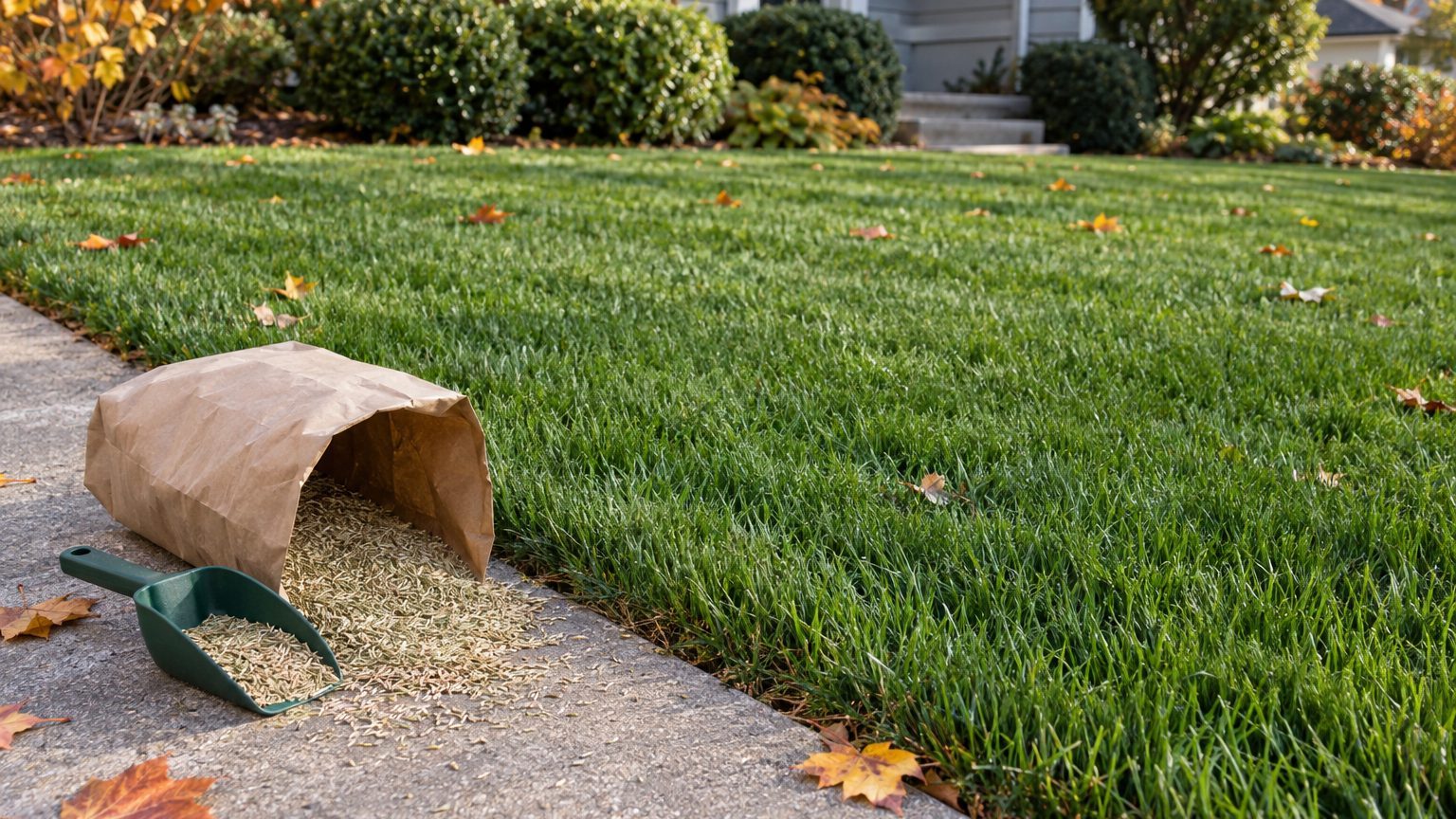
A thin, patchy lawn in Washington often looks fine in May and tired by August, and the grass you seeded decides which. Cool-season grasses suit the state, especially the mild, wet side west of the Cascades. Seed choice and seeding season shape the whole year that follows.

Which Grass Grows Best in Washington?

Cool-season grasses are the ones that work here, because they grow in the mild, damp spring and fall and rest through the dry stretch of summer. Warm-season grasses are a poor fit for the state’s cool soils. The state spans USDA hardiness zones 4a-9a, so the high, cold interior asks more of a grass than the Puget Sound lowlands do. These four species suit a broad range of Washington lawns.

Perennial Ryegrass

Perennial Ryegrass — Best Grass Seed for Washington

Perennial ryegrass sprouts fast and fills in bare spots quickly, which suits the mild, wet weather west of the Cascades. It is less happy in hard freezes, so it does better in lowland yards than in cold interior ones.

Use it where you want green quickly, often mixed with a finer grass.

Tall Fescue

Tall fescue puts down deep roots, which help it through a dry summer. That depth matters in a state where July and August bring little rain.

It is a sensible pick for sunny, busy yards and for anyone who would rather water less.

Fine Fescues

Creeping red, chewings and hard fescue all do well in shade and on thin, lean soil. They need less fertilizer and less mowing than bluegrass, and they handle the cool, cloudy conditions common under Washington evergreens.

They wear poorly under heavy foot traffic, so keep them for quieter corners.

Kentucky Bluegrass

Kentucky bluegrass makes a dense, dark green lawn and spreads to repair itself, and it tolerates cold well. It is slow to germinate and wants full sun and regular watering in summer.

It carries more risk in a dry yard where you cannot irrigate, since it browns and goes dormant when starved of water.

How to Choose Grass Seed for a Washington Yard

Start with what your yard gives the grass: sun or shade, feet or paws, a hose or none. Then think about how often you want to mow and water. Matching those few facts to a species avoids most of the disappointment.

Seed is often sold as a blend, so read the label for the species it lists and pick the blend whose main grass fits your yard.

Your yard Grass that fits Why
Full sun, heavy use Tall fescue Deep roots and tough blades handle wear and dry spells
Shade under trees Fine fescues Cope with low light and lean soil
Want fast green-up Perennial ryegrass Sprouts quickly and fills bare ground
Sunny, can water often Kentucky bluegrass Dense and self-repairing, but thirsty
Little mowing, little watering Fine fescues Grow slowly and ask for less care

Many yards are a mix of these conditions, and a blend of tall fescue with a little ryegrass or fine fescue handles a patchwork of sun and shade better than a single species.

Which Grasses Grow Where in Washington

The Cascades divide Washington into contrasting climate patterns, and grass that thrives on one side can struggle on the other.

  • Puget Sound and the Seattle area: Mild, damp weather lets ryegrass, fine fescues and tall fescue grow well, and the frost-free stretch is long. Cold, wet soil still holds spring growth back well past the last freeze, so patience pays.
  • Spokane and the Columbia Basin: Winters are colder and summers hotter and drier, so tall fescue and bluegrass with irrigation carry the lawn. Summer watering matters far more here than on the coast.
  • Cascade foothills and higher ground: Cold winters favor bluegrass and fine fescues, and the growing season is shorter, so seed needs time to root before the cold arrives.

The mild frost dates of the Seattle area do not carry over to the eastern side of the state.

Grass Seed Mistakes to Avoid in Washington

Choosing the Wrong Species

A bluegrass lawn in a shady, unwatered yard fades into moss and bare soil. Match the grass to the light and water you really have, using the shade and sun guidance above.

Seeding at the Wrong Time

Seed in August or September, when soil is warm; April and May also work. Midsummer heat can dry out seedlings, while winter cold can keep them from establishing.

Burying Seed or Spreading It Wrong

Cover seed no more than 0.25 inch and press it firmly into the soil so each seed touches the ground. Deeply buried seed may not reach the surface, while seed left loose on top can wash or blow away. Follow the rate on the bag rather than guessing: too much seed crowds seedlings into weak, disease-prone stands, and too little leaves gaps that weeds fill.

Where to Get Lawn Advice in Washington

Local help can fit lawn advice to conditions on either side of the Cascades.

  • WSU Extension offers lawn guides and seed recommendations, useful before you buy seed in late summer.
  • Your county extension office can answer questions about your own soil and climate, and it is worth a call before you start a renovation.

Common Questions

When Should You Seed a Lawn in Washington?

August and September are the strongest months, and April and May also work. If you miss early fall, a spring seeding still gives the grass time to root before summer.

Can You Grow a Lawn in Eastern Washington Without Much Water?

It is hard. Tall fescue handles dry weather well, but regular irrigation may still be needed to keep it green through eastern Washington summers.

Is a Seed Blend Better than a Single Grass?

A blend combines grasses suited to different conditions across the yard. Sun, shade and wear differ from corner to corner, and different grasses take over where they suit best.

Lawn Problems and Solutions in Washington

Lawn Problems and Solutions in Washington

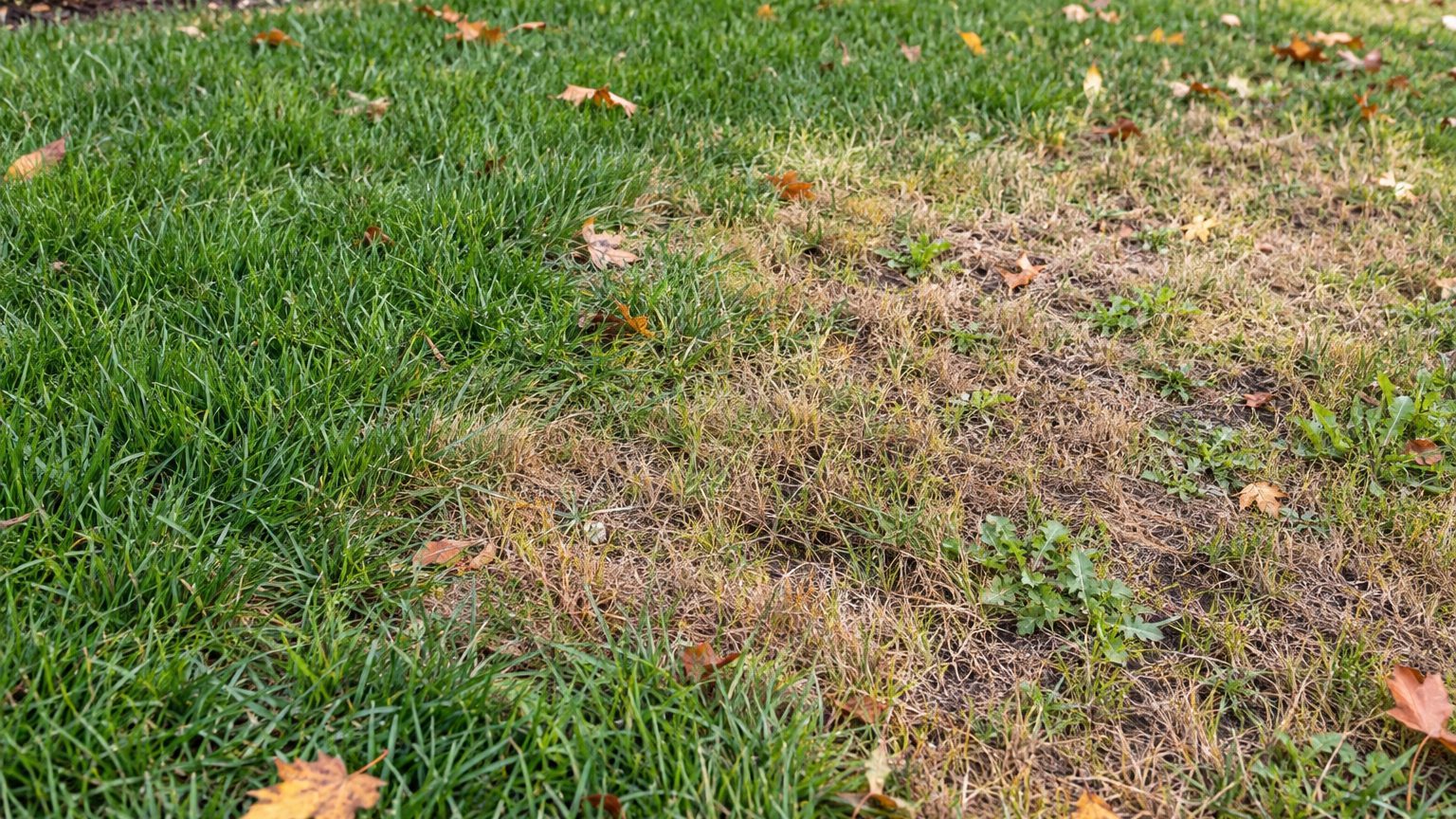
Thin grass under a Douglas fir, a spongy green carpet of moss where turf used to be, pink-tinged patches after a drizzly spring: Washington lawns tell you what is wrong if you know how to read them. Most trouble west of the Cascades comes from wet, mild weather and shade, while the dry east brings its own set of problems.

Lawn Pests and Diseases in Washington

Moss in Wet Winters

Moss creeps in where grass is thin, shaded, compacted or poorly drained, and western Washington’s long wet season gives it plenty of help. It is a symptom more than an invader. Raking it out clears the surface, but the grass only returns once light, drainage and soil firmness improve.

Open up the canopy, aerate compacted ground, and overseed the bare spots when the seed has time to root.

Crabgrass in Warm Weather

Crabgrass in Warm Weather — Lawn Problems and Solutions in Washington

Crabgrass shows up as coarse, light green clumps that sprawl flat across thin turf and bare soil, usually after the ground warms. It dies with the first hard frost but leaves seed behind for next year.

A pre-emergence preventer goes down in April, and it still works in May. Applied later, it misses the seeds that have already sprouted.

Dandelions and Clover

Dandelions send up a taproot and a rosette of toothed leaves, and clover spreads in low, creeping mats. Both gain ground wherever turf is thin or mowed too short.

Pull dandelions after rain, when the root slides out whole. A thicker lawn, helped along by overseeding, crowds out most of the rest.

Red Thread Patches

Red thread appears as irregular tan or pinkish patches, and if you look closely you can see thin red, needle-like strands growing off the grass blades. It favors cool, damp weather in spring and fall, and it often points to hungry soil.

It rarely kills the lawn. A properly timed feeding in September usually helps the grass outgrow it.

Crane Fly Larvae

European crane fly larvae are gray-brown, legless grubs that chew grass roots and crowns through the cool, wet months. Patches turn thin and brown, and crows or starlings tear at the turf to reach the grubs. Tug the grass. If it lifts like loose carpet and you find grubs near the soil surface, you have found the cause.

Healthy, well-watered turf tolerates light feeding. Heavy damage is worth a call to your county extension office before you treat.

Thatch Buildup

Thatch is a spongy mat of stems and roots between green blades and soil. A layer up to 1/2 inch thick is healthy, but anything thicker blocks water and breeds disease.

Dethatch or core aerate once it passes that mark. Dethatch in August or September; if you miss that window, April also works. Aerate in September; April and May also work if you miss fall.

How to Tell Which Lawn Problem You Have

Pair what the patch looks like with where and when it appears. Patch color alone can mislead, since different problems turn grass brown.

Tug on the grass, check the shade, and notice the season. Tug on the grass, check the shade and notice the season to narrow the list quickly.

What you see Where or when Likely problem
Soft green mat, grass thinning Shade, soggy or packed soil, winter and spring Moss
Coarse, light green sprawling clumps Thin sunny turf, warm weather Crabgrass
Pink-tan patches with red strands Cool, damp spells in spring and fall Red thread
Brown turf that peels up like carpet Cool, wet months, with birds digging Crane fly larvae
Spongy feel underfoot, water runs off Whole lawn, building up over time Thatch

Dandelions and clover are easy to spot by their leaves alone. Wherever they take over, look first at how thin the grass is and how short it is mowed.

Where Lawn Problems Are Worst in Washington

Washington’s climate splits sharply at the Cascades, so the problems you face depend on which side you live on.

  • Puget Sound lowlands: Seattle, Tacoma and Everett get mild, wet winters and long cool springs. Moss, red thread and crane fly damage are the usual trouble, especially under conifers.
  • Olympic Peninsula and the coast: Frequent dampness and fog favor moss, and soils drain slowly in many spots. Raised, sunny, well-aerated ground supports healthier grass.
  • Spokane and the Columbia Basin: Summers are dry and hot, and winters are colder than on the west side. Drought stress and weeds in thin, underwatered turf matter more than moss.
  • Yakima Valley: Irrigated lawns here face dry heat and compaction, so watering habits are especially important.

Timing advice for spring and fall differs on each side of the mountains, so adjust any date to your own side.

Lawn Care Mistakes That Invite Problems in Washington

Mowing Too Short

Scalped grass has little leaf to feed its roots, so weeds and moss move into the gaps. Mowing runs from April through November in Washington, and lawns in the wetter west often keep growing through much of that stretch.

Raise the mower deck, cut often enough that you remove only a small part of the blade, and keep the blade sharp.

Watering a Little Every Day

Shallow, frequent watering keeps roots near the surface and the thatch damp, which suits disease and weeds. Rain handles most of the job in the west for much of the year, and lawns there need extra water mainly from June through August.

Water deeply but less often, and early in the morning so blades dry quickly.

Feeding at the Wrong Time

Heavy spring feeding pushes soft, fast growth that feeds disease and means more mowing. Fertilize in September or November; May also works if you miss the fall window.

Follow the label rate, and skip feeding when heavy rain is coming, since it washes nutrients toward storm drains.

Where to Get Lawn Advice in Washington

Local expertise fits the problem to your soil and your side of the mountains. Start with Washington State University Extension, then reach out to the office closest to you.

  • State extension pages cover turf diseases, weeds and lawn care for Washington conditions, and they are worth a read before you buy anything.
  • Your county extension office can look at a sample of damaged turf or a soil question, so go when a patch appears and you cannot name the cause.
  • Take a photo and a small plug of grass, roots included, along with a note on shade and watering.

Common Questions

When Should You Aerate a Lawn in Washington?

Aerate in September; April and May also work if you miss fall. April and May also work if you missed fall.

When Should You Seed a Lawn in Washington?

August and September give new seed warm soil and cooling air. If you miss that window, April and May still work.

Why Does Moss Keep Coming Back After You Rake It Out?

Raking removes the moss but not what let it settle: shade, packed or soggy soil, and thin grass. Fix those and overseed, or the moss returns.

Washington Lawn Care Schedule, Month by Month

Washington Lawn Care Schedule, Month by Month

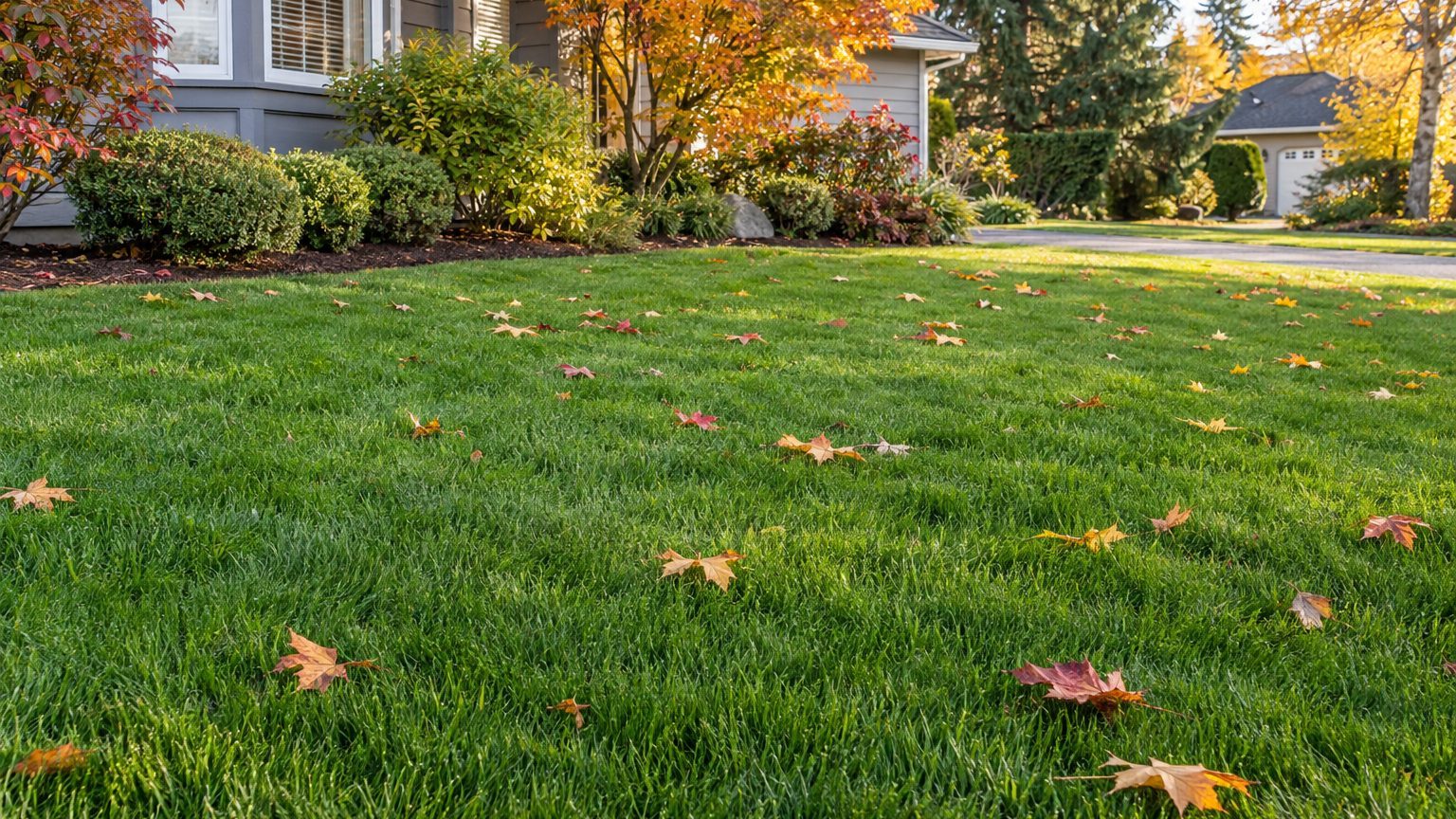
Moss greening up in a soggy March lawn and brown patches in an August dry spell frame Washington’s lawn year. Between them, the work follows a clear order of mowing, feeding, seeding and watering, and timing matters more than most homeowners expect, especially on either side of the Cascades.

What to Do Each Month in a Washington Lawn

For a western Washington baseline, most of the work clusters from April through May and again from August through September. The months in between are mostly about mowing and, in summer, keeping the grass watered.

Month In the lawn
January Rest. The grass is dormant or barely growing, so stay off soggy turf and let it be.
February Rest. Nothing to apply yet. Watch for standing water and moss, which tell you where drainage is poor.
March Still waiting. Soil is cold and wet, so leave seeding and fertilizing for their recommended months. Clear fallen branches and plan the spring jobs.
April Start mowing as growth picks up. Put down crabgrass preventer now, before weed seed sprouts. Aeration, dethatching and seeding also work this month.
May Keep mowing. If you missed April, crabgrass preventer still works now, and so does a light feeding. Aeration and seeding are still open too.
June Mow regularly and begin watering as the dry season sets in, since roots need moisture before heat arrives.
July Mow and water deeply. Keep watering deeply through this dry stretch, especially east of the Cascades.
August Keep watering and mowing. Dethatching and seeding begin, so bare spots can be repaired while the soil is warm.
September The big month. Core aerate, dethatch, seed and fertilize while soil warmth and fall moisture help new grass root. Washington law bars phosphorus lawn fertilizer except on a new lawn or when a soil test shows a shortage, and never on frozen ground.
October Mow as long as the grass grows and rake leaves so they do not smother it. Seeding season has closed.
November Fertilize to feed roots through winter, then make the last cuts as growth slows.
December Rest. Growth is slow, so put the mower away and keep foot traffic light.

If a month feels empty, that is intentional. Winter and early spring are quiet periods, so wait for the listed work windows.

When Does the Lawn Season Start and End in Washington?

Grass starts growing when the soil warms, not when the last frost passes. Cool-season seed germinates once soil sits at 50 to 65 °F, which is why seed spread in a cold, wet March often just sits there. In the Seattle area, the last freeze usually falls between February 27 and March 18.

That window mainly tells you when a young seedling might still get nipped. By April, frost risk is mostly behind a Seattle-area lawn, and warming soil is what sets the pace for mowing and seeding.

The season closes in the same quiet way. The first fall freeze in the Seattle area typically arrives between November 13 and November 30, so seed sown in August or September has plenty of time to root first. Mowing and feeding wind down as growth slows, not on a fixed date.

How the Lawn Calendar Shifts Across Washington

Washington spans sharply different climates, and the calendar bends with each place.

  • Puget Sound lowlands: Seattle, Tacoma and Olympia have mild, damp conditions, so mowing starts early and runs late. Moss pressure is high in shady, soggy spots.
  • Coast and Olympic Peninsula: Cooler, wetter and cloudier, so growth wakes a little later and moss gets a stronger hold. Drainage and sunlight matter more than watering.
  • Spokane and the Inland Northwest: Colder winters push the start of spring work later and hurry the fall. Aim for the early part of the seeding window so seedlings root before hard cold.
  • Yakima Valley and Tri-Cities: Hot, dry summers make watering the main summer job, and the lawn needs steady moisture through the heat. Spring comes sooner here than in Spokane.

Treat the calendar above as a western Washington baseline and nudge it later or earlier from there.

Lawn Care Timing Mistakes to Avoid in Washington

Seeding Too Early in Spring

A mild frost date tempts people to seed in March, but the soil is still cold and soaked. The seed may rot or wash away, and seedlings that appear grow slowly under low light.

Wait for April or May if you must seed in spring. August and September give far better results.

Crabgrass Preventer Too Late

Preventer works only before weed seed sprouts. Applied after crabgrass is up, it does nothing to those plants, and you spend a summer pulling weeds from thin turf.

Put it down in April, or in May if you fall behind. It also blocks grass seed, so skip it where you plan to seed.

Waiting for Brown Grass to Water

Washington summers turn dry quickly, and a lawn that waits until it browns may already be dormant and under stress. Recovery is slow, and weeds fill the gaps.

Start watering in June, before stress shows, and keep going through August. Deep soaking encourages deeper roots than light sprinkles.

Where to Get Lawn Advice in Washington

Local conditions vary enough that a nearby source is worth a call. Washington State University Extension covers the whole state, and your county office can speak to your soil and microclimate.

  • Its research-based guidance on grass types, fertilizer rules and common lawn problems is useful before you buy seed or product.
  • Your county extension office can help with soil testing questions and local timing, so contact it before the September work begins.

Common Questions

Is October Too Late to Seed a Lawn in Washington?

October falls outside the seeding months. Seed sown then has little warm soil left to root in. If September passes, wait for April.

Do You Need a Soil Test Before Fertilizing in Washington?

A soil test is worth doing before any phosphorus is added to an established lawn, since the state limits it. The results also show whether pH or other nutrients need attention.

Does a Lawn Need Watering in Spring in Western Washington?

Spring rain usually covers established grass. New seed sown in April or May is the exception and needs steady moisture to germinate and root.

Washington Lawn Care: What to Do and When

Washington Lawn Care: What to Do and When

Lawns in Washington grow green through a long, damp, mild stretch on the west side of the Cascades, while the dry country to the east asks for a different rhythm. Grass here wants cool weather, steady moisture in summer and a fall that does the heavy lifting. The right timing and grass choice depend on which side of the mountains your yard is on.

Frost Dates and Growing Season in Washington

On the west side, around Seattle, the last spring freeze usually falls between February 27 and March 18, and the first fall freeze between November 13 and November 30. Washington spans USDA zones 4a to 9a, so the east side runs far colder and shorter. Grass grows with soil warmth, not the calendar, and the lawn year breaks into these moments.

  • In early spring, from March into April, the freeze risk fades on the west side, yet cold wet soil keeps growth slow, so a young seeding here can still be nipped by a late frost.
  • In April and May, mowing picks up, crabgrass preventer goes down in April, and seeding also works in April or May if you missed the fall window.
  • From June through August, the lawn leans on watering, and these are the months when dry summers make regular irrigation matter.
  • In August, seeding and dethatching begin; September brings seeding, dethatching and core aeration together, because warm soil and cooling air help new grass root before the cold arrives.
  • In October and November, mowing continues while growth slows, and November fertilizing supports the lawn as the season winds down.

Late-summer seed on the west side has time to settle in before the first fall freeze arrives in mid to late November.

Cool-Season or Warm-Season Grass in Washington?

Cool-season grass is the answer here. Winters are cold enough to stall warm-season types, and the growing months favor grasses that thrive in mild, moist weather. The east side adds hot, dry summers, so drought tolerance becomes the deciding trait there.

Four cool-season choices cover most Washington yards, and each fits a slightly different yard.

Grass Season How it does here
Kentucky bluegrass Cool Makes a dense, green turf and fills in gaps on its own
Fine fescues (creeping red, chewings, hard) Cool Handles shade and lean soil in a low-care lawn
Perennial ryegrass Cool Sprouts fast, so it suits quick repairs and mixes
Tall fescue Cool Roots deeply, which helps through dry summer spells

Warm-season grasses such as bermudagrass or zoysia do not suit the state’s winters, so they rarely make sense here. Mixes of the grasses above are common, since each covers a weakness in the others.

When to Seed, Fertilize and Aerate a Lawn in Washington

Late summer into fall carries most of the work. Warm soil and cooling air help seed sprout and root, and fall feeding builds strength for the next year.

Washington law limits phosphorus in lawn fertilizer, allowing it only for a new lawn or when a soil test shows a shortage, and never on frozen ground.

Task Recommended timing in Washington Why then
Seeding August, September Warm soil and cooler air help seed root before winter
Core aeration September Grass is growing and recovers fast from the holes
Dethatching August, September Turf rebounds quickly in active growth
Fertilizing September, November Roots store the nutrients heading into winter
Crabgrass preventer April Goes down before weed seeds sprout
Watering June, July, August Dry summer weather calls for regular irrigation

If you miss the fall window, seeding also works in April or May, and fertilizing also works in May. Dethatching can happen in April too. Mowing runs from April through November.

Lawn Problems to Watch for in Washington

Moss in Shady Damp Spots

Green velvet creeping through thin turf, especially under trees or along the north side of the house, points to moss. Long wet winters, shade and compacted soil all favor it over grass. Core aeration in September, more light and a soil test to check fertility give grass the upper hand.

Brown Grass in Summer

Brown Grass in Summer — Washington Lawn Care: What to Do and When

Straw-colored turf in July or August, mostly in sunny, open areas, usually means the lawn has gone dormant from dryness. Summers here are dry, and shallow roots suffer first. Regular watering in June through August keeps it green, and deep roots from fall seeding and tall fescue help.

Weeds in Thin Turf

Crabgrass and other weeds crowd in where the lawn is thin and the soil is bare, often along driveways and sidewalks. Applying preventer in April, before seeds sprout, stops many of them. Thick turf from fall seeding does the rest.

How Lawn Care Dates Change Across Washington

The dates above fit the west side best, and the state’s geography shifts them in a few clear ways.

  • Seattle and Puget Sound: The water keeps winters mild and the freeze window short, so spring growth starts earlier and fall work stretches later.
  • Spokane and the Columbia Basin: Winters are colder and summers hotter and drier, so the season starts later and watering matters more in summer.
  • Cascade foothills and mountain towns: Elevation brings later springs and earlier fall chill, so seeding should happen earlier in the late-summer window.

Treat the dates in this article as a starting point, then adjust by a little for your own elevation and exposure.

Where to Get Lawn Advice in Washington

Washington State University Extension gives research-backed guidance for the state’s climates, and your county office can help with local conditions.

  • The extension website has guides on grass choice, fertilizer and watering, useful before you plan a seeding.
  • Your county extension office can point you to a soil test, helpful before any fertilizer, since phosphorus is restricted.
  • Bring a sample of troubled turf to the county office when the problem first shows.

Common Questions

Can You Grow a Lawn in Eastern Washington?

Yes, with more attention to water. Drought-tolerant tall fescue and fine fescues handle the dry summers better, and irrigation is part of the routine.

Is Moss a Sign You Need More Lime?

Not on its own. Moss that appears with shade and soggy ground points to light and drainage first, so test the soil before adding anything.

Should You Mow Shorter in Fall?

Keep mowing through November as the grass keeps growing, and avoid scalping it. A slightly lower final cut is fine, but leave enough blade to protect the crown.

Hydrangeas That Grow Well in Washington

Hydrangeas That Grow Well in Washington

Panicle and smooth hydrangeas are the safest bets across Washington. Bigleaf and oakleaf types also do well in the mild western lowlands, while mountain and rough-leaf types need more shelter and more luck.

The catch is geography. Seattle’s maritime climate is not Spokane’s high desert, so the right shrub depends on which side of the Cascades your yard sits on.

Hydrangeas that grow well in Washington: The Short Answer

NOAA NCEI 1991-2020 Climate Normals puts the last spring freeze in Seattle between February 27 and March 18, with the first fall freeze between November 13 and November 30.

That long, mild stretch is why most hydrangeas that grow well in Washington do so on the west side. The ranking below runs from safest to riskiest for the state as a whole.

Panicle hydrangea

Large shrub with upright, woody stems; cone- or pyramid-shaped flower clusters 15–30 cm long, made of many small flowers with a few larger four-petale

Hydrangea paniculata blooms on wood grown the same season, so a hard winter or a late freeze rarely costs you flowers. It takes more sun than any other type here, and Limelight is a widely grown cultivar. That reliability puts it first on the list, east side included.

Annabelle smooth hydrangea

Hydrangea arborescens ‘Annabelle’ also flowers on new growth, so even a winter that kills the stems back leaves you big white heads by summer. It likes part shade and steady moisture. Stems flop after heavy rain, which a low support ring fixes.

Bigleaf hydrangea

Hydrangea macrophylla is the classic mophead, at home in Seattle’s mild winters and cool summers. Many kinds set buds on old stems, so a hard freeze or a winter haircut costs the bloom. The pruning window is June and July, laid out in When to Plant and Prune Hydrangeas in Washington.

Oakleaf hydrangea

Hydrangea quercifolia offers lobed leaves, cone-shaped white flowers and burgundy fall color, and it tolerates dry shade better than most. It holds up in the western lowlands, but it also sets buds on old wood, so cold east of the Cascades can thin the show. Give it room to spread.

Mountain hydrangea

Hydrangea serrata is a smaller, finer cousin of bigleaf with lacecap flowers, and somewhat hardier. It blooms on old wood too, so cold that reaches the buds hurts it the same way. Plant it in a sheltered spot on the west side and treat it as a step up in risk.

Rough-leaf hydrangea

Hydrangea aspera has velvety leaves and wide lavender-and-pink flowers, and it is the riskiest name here. It wants shelter from wind and cold plus mild winters, so it belongs in protected western yards only. Buy one as a project, not as the backbone of a planting.

How to Work Out the Dates for Your Own Yard

Start from the NOAA NCEI 1991-2020 Climate Normals for Seattle, which give a last spring freeze between February 27 and March 18 and a first fall freeze between November 13 and November 30.

  1. Confirm you live on the west side: those windows describe western Washington, and east of the Cascades the season is far shorter, so the numbers slide toward a later spring and an earlier fall.
  2. Count back from the fall range: give a new shrub a month of root time and subtract four weeks, so November 13 to November 30 becomes October 16 to November 2. The calendar’s fall planting months, September and October, sit at or ahead of that range.
  3. Treat the spring range as a floor: February and March are planting months on the calendar, but a freeze date is not a planting date, because cold wet soil and low light hold growth back well past it.
  4. Test the name against the winter: a panicle hydrangea flowers on new wood, so a freeze that damages last year’s stems costs it little. Bigleaf carries next summer’s buds on old stems and can lose them in a cold snap east of the Cascades.
  5. Test it against the summer too: afternoon sun scorches bigleaf leaves, so give it morning sun, while panicle types shrug off far more heat.

Write the result as a range, never a single day. A range minus a few weeks is still a range, and that is the honest answer for a yard on the Sound or in the foothills.

Washington North to South: How the Dates Shift

Elevation, saltwater and the Cascade divide all move the Seattle dates around the state, each in its own direction.

  • Puget Sound lowlands (Seattle, Tacoma, Olympia): water moderates the temperature, so the Seattle window is the baseline here, with the far north running a little cooler.
  • Pacific coast and Olympic Peninsula (Long Beach, Aberdeen, Forks): ocean air keeps winters mild and freezes rare, but cool summers and wind slow bloom and favor tough shrubs.
  • Cascade foothills and passes (North Bend, Skykomish, Snoqualmie Pass): elevation pulls the last freeze later and the first one earlier, so plant toward the late end and lean on panicle and smooth types.
  • Eastern Washington (Spokane, Yakima, Wenatchee): rain shadow, high desert, colder winter lows and hot dry summers shorten the season, and bigleaf becomes a gamble.

For the full picture of the state, start with Hydrangeas in Washington.

Mistakes Washington Punishes

Planting the day frost ends

NOAA NCEI 1991-2020 Climate Normals put Seattle’s last freeze between February 27 and March 18, yet cold wet soil and low light hold growth back well past it. Plant when the ground drains and warms. Sodden roots invite trouble, covered in Hydrangea Pests and Diseases in Washington.

Pruning bigleaf in late winter

Bigleaf hydrangeas carry next summer’s flower buds on old stems, so a late-winter cut removes the bloom. Prune in June and July, right after flowering, and shape lightly. The exact months are in When to Plant and Prune Hydrangeas in Washington.

Using Seattle dates statewide

Seattle sits in mild, maritime western Washington. Beyond the Cascades the climate is high desert with a far shorter season, so the same dates would put a shrub in the ground too early or leave it exposed in fall. Work out your own range, starting from Hydrangeas in Washington.

Washington Extension Offices and County Contacts

The Seattle window is a starting point, not a verdict on your street. Washington State University Extension, at extension.wsu.edu, and your county office hold the local detail on soil, elevation and microclimate. Three pages here cover the rest.

  • Hydrangeas in Washington: the state guide, with the frost dates and the climate picture for where you live.
  • When to Plant and Prune Hydrangeas in Washington: the month-by-month windows for planting, feeding and pruning.
  • Hydrangea Pests and Diseases in Washington: what shows up on leaves and stems through the season. Read it, then take a photo of any trouble to your county office.

Common questions

Which hydrangea is safest in Washington?

Panicle hydrangeas, followed by smooth types such as Annabelle. Both bloom on new wood, so winter damage costs them little. Bigleaf and oakleaf do well on the mild west side, but the buds they carry on old stems are at risk east of the Cascades.

When do I prune bigleaf hydrangeas in Washington?

The calendar window is June and July, right after the flowers fade. Cutting in late winter removes the buds meant for the coming summer.

When should I feed hydrangeas in Washington?

The calendar lists March, May and July as the feeding months. Use them as a rhythm, and ask your county office how the soil in your area changes the amount.

Hydrangea Pests and Diseases in Washington

Hydrangea Pests and Diseases in Washington

Wet, mild, and shaded much of the year, western Washington gives hydrangeas a longer disease season than most of the country, not a longer pest season. In Seattle, four fungal problems do more damage than any insect: powdery mildew, botrytis blight, leaf spot, and root rot. Aphids and slugs show up too, but rarely kill a shrub the way soggy clay does.

Hydrangea pests and diseases Washington: The Short Answer

NOAA NCEI 1991-2020 Climate Normals for station USW00024233 puts Seattle’s last spring frost at February 27 to March 18 and the first fall frost at November 13 to November 30, which leaves a long, damp growing season that fungal disease uses far better than insects do.

Aphids on new growth

Small green or black clusters gather on the soft tips as spring growth flushes, curling leaves and leaving a sticky residue behind. A strong hose spray every few days usually clears a light case, and it rarely needs anything stronger on an established shrub.

Cercospora leaf spot

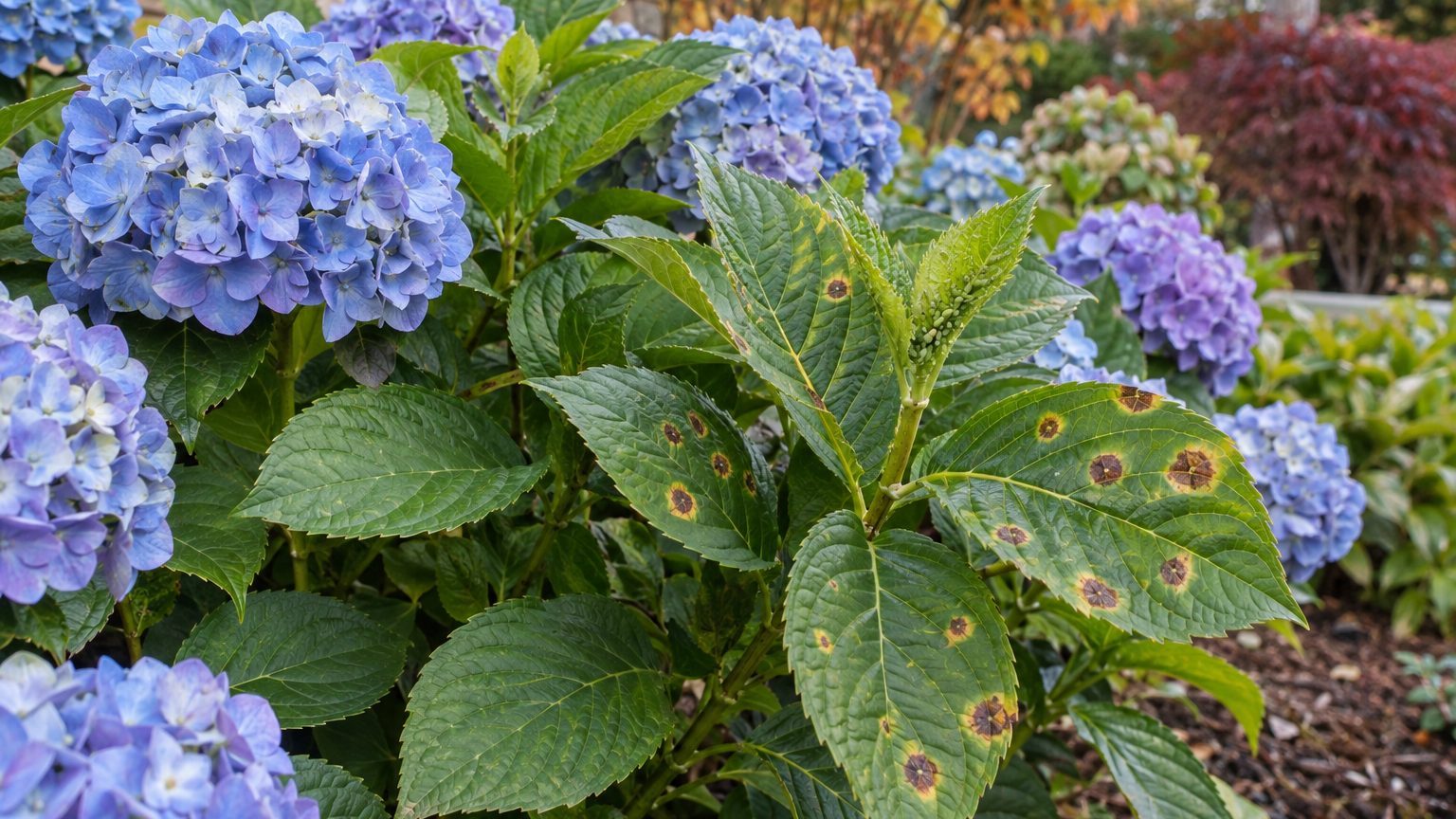
Purple-brown spots with tan centers appear on lower, older leaves first, usually after a stretch of wet weather in late spring. Remove and bag the spotted leaves rather than composting them, and water the soil, not the foliage, going forward.

Powdery mildew

A gray-white dusting settles over leaf tops during humid summer stretches, especially on shrubs crowded against a fence or wall with no airflow. Thinning out crowded stems and spacing new plantings wider solves more of this than any spray does.

Botrytis blight

Cool, damp weather turns flower petals and soft stems brown and mushy almost overnight, often right around bloom. Cutting out the affected stems during the June to July prune window for bigleaf hydrangea keeps it from spreading into next year’s buds.

Slugs and snails

Slugs and snails — Hydrangea Pests and Diseases in Washington

Ragged holes chewed through leaf edges, plus a silvery slime trail at dusk, point straight to slugs rather than any insect. Damp mulch near the crown is their favorite address, so pulling mulch back a few inches from the stems helps.

Root rot

Root rot — Hydrangea Pests and Diseases in Washington

A shrub that wilts even after rain, with leaves yellowing from the bottom up, usually sits in clay that never drains. Improving drainage before one of the fall or spring planting windows matters more here than anything applied after the fact.

Deer browsing

Stems chewed clean at an angle, not shredded, and entire flower heads missing overnight signal deer, not insects. Fencing or repellent applied before the dormant season keeps next year’s buds from disappearing along with this year’s blooms.

How to Work Out the Dates for Your Own Yard

Diagnosing what is actually wrong on a Washington hydrangea starts with the calendar, not the leaf.

  1. Match the symptom to the season: spotting that shows up before the June to July prune window points to leaf spot, while browning right at bloom points to botrytis instead.
  2. Check the fertilize windows first: with fertilizing set for March, May, and July, feeding a shrub mid-outbreak pushes soft new growth that mildew moves into fastest.
  3. Test drainage before the planting windows: February, March, September, and October are the planting months here, and a spot that puddles for hours after rain during any of them is a future root rot site.
  4. Prune only inside the June to July window: cutting bigleaf hydrangea outside that range removes next year’s flower buds, which can look like disease damage but isn’t.
  5. Bring a sample before spraying: a cut stem or a spotted leaf tells a county office more in five minutes than a description over the phone ever will.

Run through those five checks in order and most Washington hydrangea problems sort themselves into fungal, pest, or drainage before you’ve bought a single product.

Washington North to South: How the Dates Shift

USDA Plant Hardiness Zone Map puts Washington anywhere from 4a to 9a, and where a yard falls inside that range decides which of these problems actually shows up.

  • Puget Sound lowlands (Seattle, Tacoma, Bellingham): mild and wet nearly year round, this is where fungal pressure runs highest.
  • Cascade foothills and mountain valleys: shorter, drier summers cut back on mildew and blight but raise the odds of winter stem dieback.
  • Eastern Washington (Spokane, Yakima, the Tri-Cities): high desert air keeps most fungal disease away, trading it for spider mites and leaf scorch.
  • Olympic Peninsula and outer coast: the wettest corner of the state carries the longest fungal disease season of anywhere in Washington.

Whichever pocket a yard sits in, the state calendar page adjusts these same windows to the mild edge or the dry edge of that range.

Mistakes Washington Punishes

Watering the foliage at night

Overhead watering in the evening leaves leaves wet through the cool night hours, which is exactly the setup powdery mildew and botrytis need. Switching to morning watering at the soil line, not the leaves, cuts that risk without changing how often a shrub gets water.

Skipping fall garden cleanup

Fallen leaves and spent flower heads left under the shrub overwinter fungal spores in the mild Puget Sound climate that never gets cold enough to kill them off. Raking and bagging that debris before the dormant season breaks the cycle for next spring.

Planting too deep in heavy clay

Setting the root ball below grade in Washington’s common clay soils traps water right where the roots need air, which is how root rot starts. Planting slightly high, with the top of the root ball at or above grade, during one of the planting windows avoids the problem entirely.

Washington Extension Offices and County Contacts

The frost and calendar figures above are a starting point, not a diagnosis. County offices and WSU Extension carry the rest.

  • Your county WSU Extension office: soil testing and on the ground diagnosis specific to your ZIP code.
  • WSU Extension: statewide factsheets on identifying hydrangea disease before it spreads.
  • Master Gardener plant clinics: free sample diagnosis during the growing season, no appointment needed at most locations.

Bring a cut stem or a spotted leaf to that first visit, not just a phone photo.

Common questions

Do Washington hydrangeas need fungicide every year?

Not automatically. Spacing plants for airflow and watering at the soil line prevent most of the fungal problems common here before any spray is needed.

What’s eating holes in my hydrangea leaves in Seattle?

Ragged edges with a slime trail nearby point to slugs and snails rather than an insect, especially in damp mulch close to the stems.

Can I compost blighted hydrangea leaves?

Bag and discard spotted or blighted leaves instead. Home compost piles rarely reach a temperature high enough to kill off the spores that cause leaf spot and botrytis.

When to Prune Hydrangeas in Washington

When to Prune Hydrangeas in Washington

In western Washington, the planting window falls in February, March, September, and October, timed around Seattle’s last spring frost of February 27 to March 18 and first fall frost of November 13 to November 30. Prune bigleaf hydrangeas in June and July, right after bloom, never in fall. East of the Cascades, the season runs shorter and colder.

When to prune hydrangeas in Washington: The Short Answer

Seattle’s frost calendar decides everything here. NOAA NCEI 1991-2020 Climate Normals puts the last spring frost at February 27 to March 18 and the first fall frost at November 13 to November 30, which is why the site’s planting window sits in February, March, September, and October rather than the traditional spring rush.

  • January: The ground is still cold and wet, so this is not a planting month here. Wrap the root zone in mulch and leave pruning tools in the shed.
  • February: Planting opens even though the last frost hasn’t cleared yet, because container stock can settle into cool, workable soil. Water in well and skip fertilizer until the ground warms.
  • March: Planting continues and the first fertilizer round of the year lands now. The tail end of frost risk means new leaves can still get nipped, so hold off on cutting anything back.
  • April: No planting, fertilizing, or pruning task is scheduled this month for Washington. Spend it watching new growth and pulling weeds before they compete for water.
  • May: The second fertilizer feeding of the season goes down now. Buds are forming on old wood, so this is not the month to prune anything.
  • June: Bigleaf pruning opens as soon as the first flush of blooms fades. Cut just above a healthy bud pair and stop there, since next year’s flowers are already setting.
  • July: Pruning continues alongside the third and final fertilizer round of the year. Water deeply during any dry stretch, since summer heat here is short but real.
  • August: No listed gesture falls in August. Keep watering consistent and let the shrub finish its bloom cycle undisturbed.
  • September: The fall planting window opens, roughly two months ahead of the first frost. Roots still have time to establish before the ground cools.
  • October: Planting wraps up this month, the last safe stretch before frost risk climbs. Get any new shrub in the ground early in the month rather than late.
  • November: The first frost arrives somewhere between the 13th and the 30th. Mulch the base heavier once the ground starts to chill.
  • December: The shrub is fully dormant. Leave it alone until the calendar turns back to February.

That’s twelve months of gestures pinned to a single station’s frost data, but Washington is a state of microclimates, and the next two sections show how far these dates can drift and how to translate them onto your own ground.

How to Work Out the Dates for Your Own Yard

Your own frost date might differ from Seattle’s by a week or more, so here’s how to adjust the calendar above to your actual yard.

  1. Find your local frost window: check a nearby station or ask your county extension office rather than assuming Seattle’s range applies if you garden inland or at elevation.
  2. Count back from planting: if your last frost lands later than the Sound’s window, push the February planting start back by however many weeks separate you from that range.
  3. Watch the soil, not just the calendar: cold, wet clay holds spring planting back well past the last freeze, so wait until the ground crumbles rather than clumps in your hand.
  4. Time pruning to bloom, not to the month: bigleaf hydrangeas get cut back in June and July here because that’s right after the first flush fades, so a later-blooming shrub earns a later cut.
  5. Check your hardiness zone: USDA Plant Hardiness Zone Map places Washington between 4a and 9a, and a shrub rated for the low end of that range needs less winter cover than one rated for the high end.

None of this replaces watching your own yard. A south-facing bed against a brick wall warms weeks ahead of an open lawn, and that gap matters more than any single date.

Washington North to South: How the Dates Shift

Washington’s hydrangea calendar shifts hard between the wet west side and the dry east side, and elevation adds another layer on top of that.

  • Puget Sound lowlands (Seattle, Tacoma, Olympia): the mildest, wettest corner of the state, where the frost windows above apply most directly and shrubs can lean toward the earlier end of each planting month.
  • Olympic Peninsula and the coast (Aberdeen, Port Angeles): ocean influence keeps winters even milder than the Sound, though near-constant rain means drainage matters more than frost timing.
  • Cascade foothills and higher elevation (North Bend, Cle Elum): every few hundred feet of elevation pushes both frost dates outward, shrinking the planting window from both ends.
  • Eastern Washington (Spokane, Yakima, the Columbia Basin): high desert conditions mean colder winters, hotter summers, and a shorter season overall, closer to the cold end of the state’s hardiness range than the mild Sound.

If you’re east of the Cascades, treat every date as a starting point and lean on the state guide for how far it moves in your county.

Mistakes Washington Punishes

No flowers after fall pruning

No flowers after fall pruning — When to Plant and Prune Hydrangeas in Washington

Bigleaf hydrangeas set next year’s buds on old wood by late summer, so cutting them back in September or October removes the very growth that would have bloomed. Prune only in June and July, right after the first flush fades.

Root rot in wet clay

Western Washington’s rain keeps native clay soaked through winter, and roots sitting in standing water rot before spring arrives. Plant on a slight mound or work in coarse material, especially in low spots that stay soggy longest.

Planted too early, stalled all spring

February technically opens the planting window, but cold, wet soil holds root growth back for weeks even after frost risk fades. Wait until the ground crumbles rather than clumps before digging, which usually pushes real planting closer to March.

Washington Extension Offices and County Contacts

The frost windows above come from one Seattle-area station, but soil, elevation, and microclimate vary by county, and your local extension office fills that gap with numbers tuned to your yard.

  • Your state page: the frost dates and the pruning window where you live.
  • Which ones hold up here: the hydrangea varieties suited to Washington’s range of climates.
  • WSU Extension: county-level contacts for soil tests and planting advice specific to your area.

Common questions

Can I plant hydrangeas in fall in Washington?

Yes, September and October are part of the state’s planting window, giving roots about a month or more to settle in before the first frost arrives between November 13 and November 30 in the Seattle area.

What month is best for planting hydrangeas in Seattle?

March tends to work best for most yards, since the last spring frost falls between February 27 and March 18 and the soil has usually warmed enough by then to stop holding roots back.

Do hydrangeas need winter protection in Washington?

It depends on where in the state you garden. Western Washington’s mild, maritime conditions rarely require extra winter cover, but areas toward the cold end of the state’s 4a to 9a range should mulch the base heavier before November.

The almanac, state by state. Every date on this site comes from a state’s own frost facts and its extension service’s calendar — and says where it comes from.