Skip to content
  1. Jan
  2. Feb
  3. Mar
  4. Apr
  5. May
  6. Jun
  7. Jul
  8. Aug
  9. Sep
  10. Oct
  11. Nov
  12. Dec
State
Vermont
USDA zones
3b-5b
Last spring frost
April 30 to May 10
First fall frost
October 3 to October 13
Annual rain
38 in
Lawn zone
cool-season
Source
NOAA NCEI 1991-2020 Climate Normals, 32F freeze probabilities · Burlington

The year in Vermont, from the calendar

  1. Jan—
  2. Feb—
  3. MarFeed hydrangeas · Renew an overgrown lilac · Prune fruit trees
  4. AprSpring bulbs bloom · Plant hydrangeas · Lilacs bloom · Renew an overgrown lilac · Feed roses
  5. MaySpring bulbs bloom · Feed hydrangeas · Plant hydrangeas · Lilacs bloom · Prune lilacs
  6. JunPrune bigleaf hydrangeas · Prune lilacs · Peonies bloom · Feed roses · Mow
  7. JulFeed hydrangeas · Prune bigleaf hydrangeas · Feed roses · Mow · Water
  8. AugPlant hydrangeas · Seed the lawn · Plant peonies · Mow · Plant trees
  9. SepPlant hydrangeas · Seed the lawn · Plant peonies · Aerate · Dethatch
  10. OctPlant spring bulbs · Mow · Plant trees
  11. NovCut back peonies · Protect roses for winter · Mow
  12. DecCut back peonies

From the state frost facts and extension calendars: Vermont statute 10 V.S.A. § 1266b — phosphorus and nitrogen fertilizer on nonagricultural turf · University of New Hampshire Extension ; University of New Hampshire Extension · Cornell Cooperative Extension (Monroe County) · Clemson HGIC factsheet — Hydrangea.

Best Spring Bulbs for Vermont

Best Spring Bulbs for Vermont

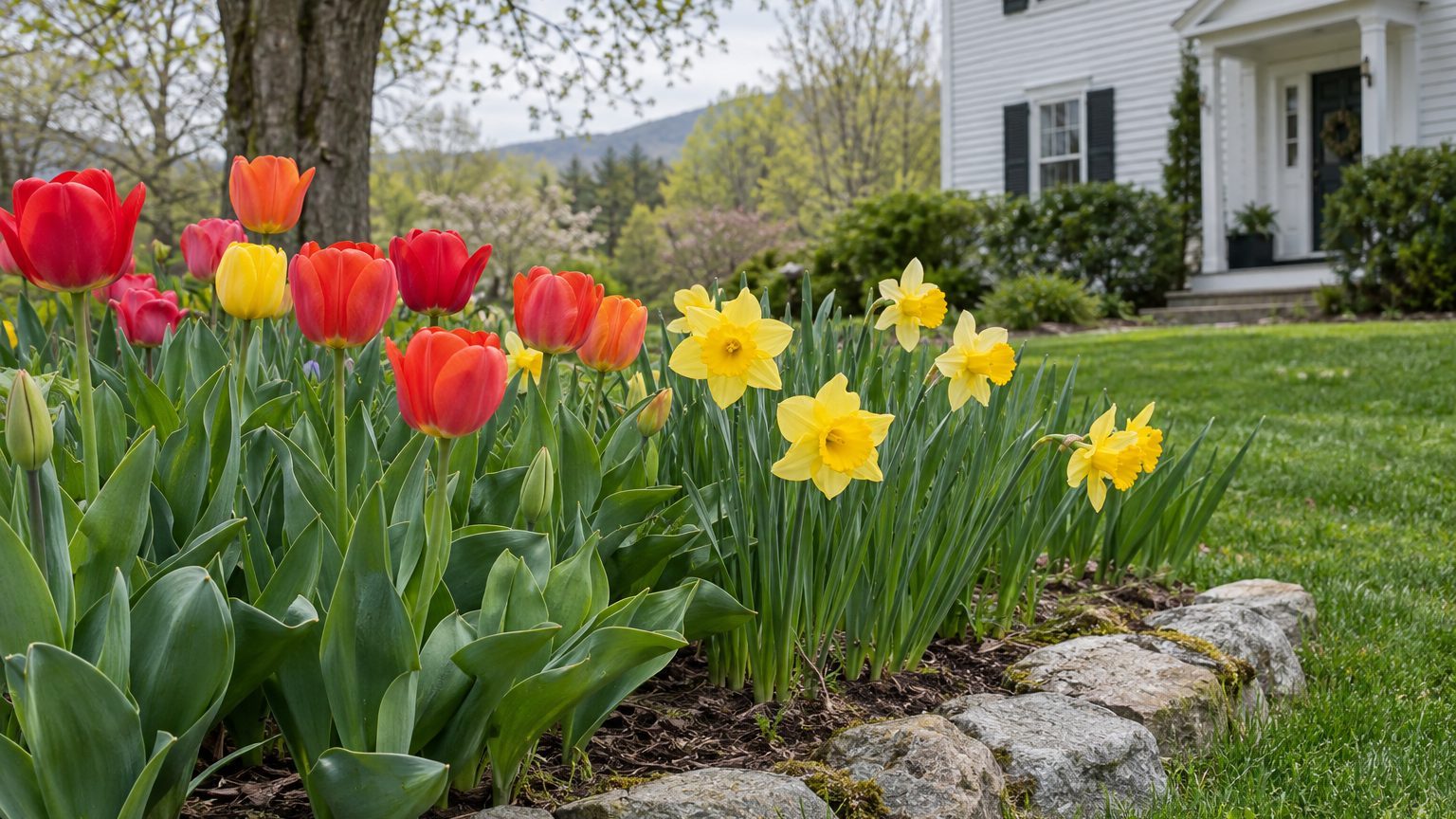
Daffodils nodding beside the last patch of snow are a Vermont spring signature, and they went into the ground the autumn before. Winters here are cold enough to give spring bulbs the rest they need, so the real question is which ones return year after year. Daffodils, fosteriana tulips and alliums answer it well.

Best Spring Bulbs to Grow in Vermont

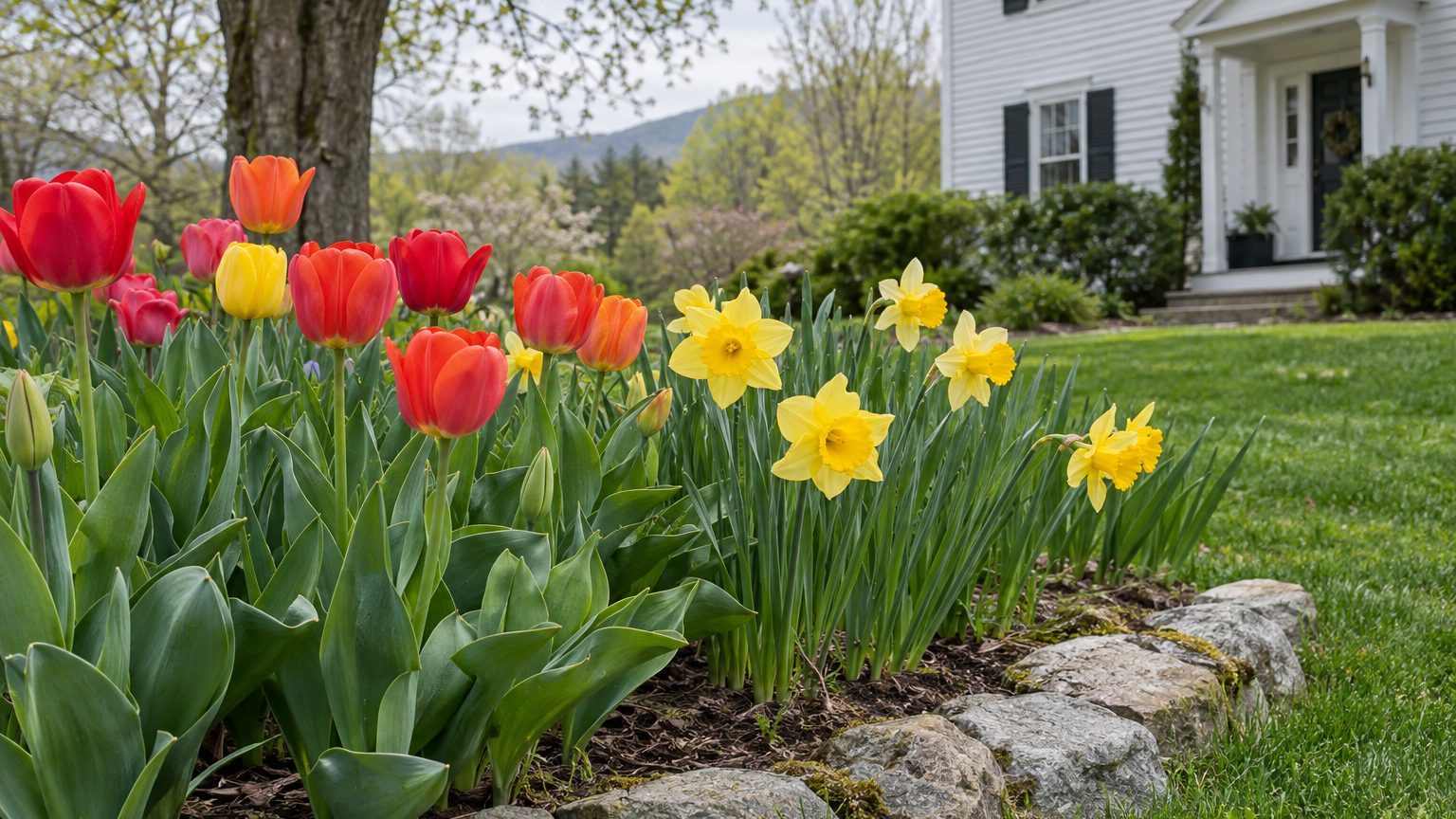
Healthy spring bulbs in bloom

Daffodils lead the list, with fosteriana tulips and alliums close behind. Vermont runs from zone 3b to 5b on the USDA hardiness system, and daffodils handle that range. Tulips and crocus also grow here, but animals make them a gamble.

Daffodils

Most daffodils are hardy to zone 3, so you can grow them in every corner of Vermont, from the Champlain shore to the coldest hill town.

They also naturalize well, especially in partly shady spots under trees or along a fence. Planted once, they settle in, spread and last longer than tulips. Squirrels, voles, rabbits and deer leave them alone.

Fosteriana Tulips

Tulips are often short-lived in the garden, and the usual pattern is a strong first spring followed by thinner bloom. Fosteriana tulips are the group that perennializes well, which makes them the sensible tulip for a Vermont bed where you want repeat color without replanting every fall.

Alliums

According to Iowa State University Extension, ornamental onions, the alliums, need a chill period to bloom. Vermont gives bulbs plenty of cold anyway, so alliums get the chill they need, but they are not forgiving in any bed without winter cold. They close out the bulb season, flowering after the tulips and daffodils have finished.

Tulips and Crocus

Voles, squirrels, rabbits and deer eat tulips and crocus, and those animals are common around Vermont yards and woodland edges. Hardiness is not the problem for these two. Plant them close to the house, or tuck them among daffodils, and expect to lose a few.

How to Choose Spring Bulbs for Your Vermont Garden

Pick by what your yard throws at the bulbs, not by what looks best in a catalog photo. Winter cold in Vermont is rarely the obstacle. Hungry wildlife, shade and the effort you want to spend are the real deciding factors.

Your situation What suits it in Vermont Why
Very cold winter, such as the hills and north Daffodils Most are hardy to zone 3
Little time for replanting Daffodils They last longer and are the more reliable perennial bulb
Want tulips that return Fosteriana tulips They perennialize well, unlike many tulips
Deer, voles and rabbits visit Daffodils, with tulips and crocus kept close to the house Animals leave daffodils alone and eat tulips and crocus
Partly shady beds Daffodils They naturalize well in partial shade
Need cold to bloom Tulips and hyacinths go straight into the ground Vermont winters supply the cold, so no refrigerator chilling is needed

Hyacinths do not have a row of their own because they behave like tulips here. Plant them in the ground in fall and let Vermont winter do the chilling.

Which Spring Bulbs Suit Different Parts of Vermont

Vermont is small, but elevation and the lake change the odds for your bulb choices.

  • Lake Champlain shore and Burlington: winters here are milder than in the hills, so tulips, including the fosteriana group, tend to last longer here than they do in the hills.
  • Green Mountains: the growing season is shorter on the slopes, so build the bed around daffodils and alliums and treat tulips as a bonus.
  • Northeast Kingdom: winters run coldest here, and daffodils, hardy to zone 3, are the dependable foundation for any planting.

Wherever you live, protection from deer and voles matters more than a few degrees of difference in winter low.

Spring Bulb Buying Mistakes to Avoid in Vermont

Bulbs Not Hardy Enough

A bulb rated for milder winters can rot or fail in a Vermont bed, and the loss shows only the following spring. Check the label before you buy. Daffodils and most spring bulbs here are hardy to zone 3, which covers the colder parts of the state.

Planting Before the Soil Cools

Bulbs set in warm soil can sprout in fall, and the green shoots then take a beating from winter. Wait until the soil has cooled below about 60°F. October is the right month in Vermont, so the roots form before the ground freezes. November or December still works if the ground is not frozen.

Storing Bulbs Over Winter

A bag of tulips or daffodils left in the garage will not improve with age. Plant any unplanted bulb as soon as the ground can be dug, even if the calendar says late. A late bulb in the ground beats a dry one in storage.

Where to Get Spring Bulb Advice in Vermont

University of Vermont Extension is the state’s source for gardening questions, and its county-level offices can speak to local conditions in your valley or on your hillside.

  • The extension website has fall planting guidance, so check it in late summer before you order bulbs.
  • Your county office can tell you how deer and voles behave in your area, which is worth asking before you plant tulips.

Common Questions

When Do Tulips and Daffodils Bloom in Vermont?

April and May is the usual window for tulips and daffodils. The hardy bulbs that come up first can start in March, while later varieties reach into late April and May.

Do Tulips and Hyacinths Need to Be Chilled in the Refrigerator Before Planting?

Not in Vermont. Most spring bulbs need about 12 to 16 weeks of cold to flower, and a Vermont winter delivers that outdoors. Refrigerator chilling is for places with winters too mild to do the job.

What Should You Do with Bulb Leaves After the Flowers Fade?

Remove only the faded flowers and leave the leaves on the plant until they turn brown. The leaves feed the bulb for next year, so cutting them while green costs you flowers in the following spring.
When Do Tulips and Daffodils Bloom in Vermont?

When Do Tulips and Daffodils Bloom in Vermont?

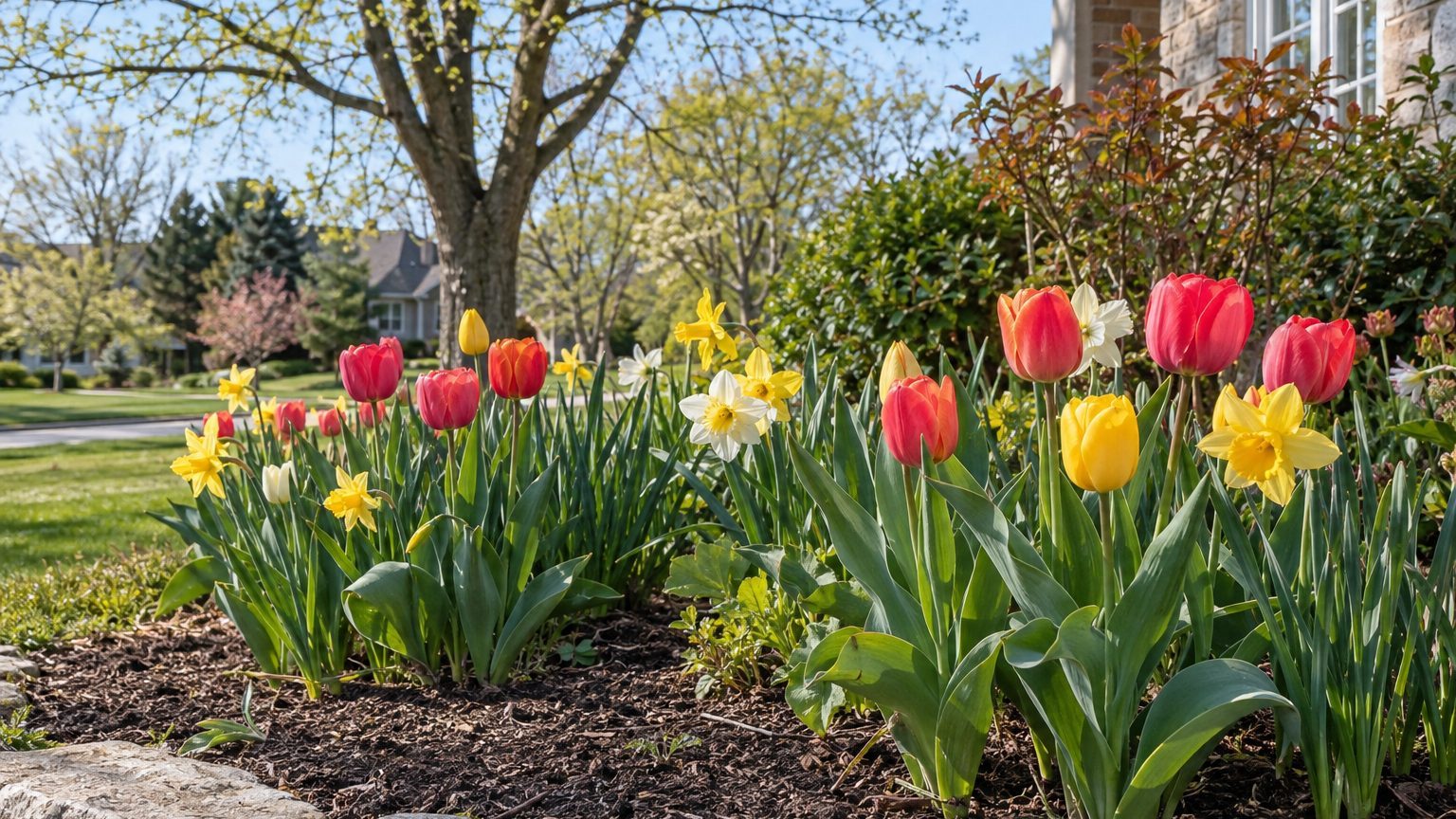
Green daffodil spears pushing through the last crusty snow are a sure sign of a Vermont spring, with tulips following as the soil warms. Bloom spreads mostly across April and May, and a few hardy bulbs open in March. Where you live in the state and how the spring unfolds decide the exact week in your yard.

When Do Tulips and Daffodils Bloom in Vermont?

When Do Tulips and Daffodils Bloom in Vermont?

Tulips and daffodils bloom in Vermont mainly in April and May, and the early hardy bulbs can start as soon as March. No fixed date applies, because flowering follows the warming of spring.

A cold, slow spring holds the buds back, while a mild one brings them out sooner. Vermont gardens fall in USDA hardiness zones 3b to 5b, and most daffodil and tulip species and hybrids are hardy to zone 3, so winter cold rarely limits them.

Bulb When it blooms in Vermont What sets the timing
Early hardy bulbs March The first stretch of mild weather after winter
Tulips and daffodils April and May How quickly spring warms the soil
Later-blooming varieties Late April and May Their place later in the bloom succession

Spring bulbs flower in a long succession, from snowdrops and winter aconites at the start of the season to ornamental onions, the alliums, at the end. According to Iowa State University Extension, alliums need a chill period to bloom. Plant a mix of early and later varieties and the color keeps coming for weeks instead of arriving in a single burst.

How to Tell Your Bulbs Are About to Bloom

Bulbs announce themselves well before the first petal opens, and the signs are easy to read if you walk the beds regularly.

  • Pale green tips breaking the soil mean the bulb has finished its winter rest and is growing, so any mulch can be pulled back a little to let them through.
  • Leaves that widen and rise into a clump tell you the plant is building the energy it will spend on its flower.
  • A fat bud nestled in the center of the leaves means bloom is coming, and a hard frost at that stage is worth a thought if you plan to cover the bed.
  • Buds that begin to show color, a stripe of red on a tulip or yellow on a daffodil, mean the flower will open soon.
  • Stems that stretch and buds that nod upward show the flower is nearly ready, so cut stems for a vase just before the bud fully opens.

All of this rests on winter cold done properly, since most spring bulbs need about 12 to 16 weeks of it to flower.

What to Do After Tulips and Daffodils Bloom in Vermont

Snap off the faded flowers and leave everything else alone. Removing the spent bloom keeps the plant from putting energy into seed, while the leaves keep working. Leave the foliage in place until it turns brown, because tulips and daffodils flower next year on the energy those leaves store now.

Resist the urge to tie leaves into tidy knots or to cut them back while they are green. Both steps starve the bulb. A better way to hide the untidy foliage is to plant perennials nearby that grow up and cover it as the season moves along.

Plan for the difference between the two bulbs. Tulips are often short-lived in the garden, and many beds need fresh bulbs after a few seasons. Daffodils last longer and are the more reliable perennial bulb, and they naturalize well, especially in partly shady spots. Among tulips, the Fosteriana group also perennializes well, so it is a sensible choice if you dislike replanting.

How Bloom Time Shifts Across Vermont

Bloom moves with the length of the growing season, and Vermont’s lakes and mountains stretch that season in different ways.

  • Burlington and the Lake Champlain shore: The lake keeps this corner milder than the rest of the state, so bulbs here tend to open earlier than elsewhere in Vermont.
  • The Green Mountains: Higher ground has a shorter growing season, so expect bloom to arrive later as you climb, with tulips and daffodils flowering well after valley gardens.
  • The Northeast Kingdom: Cold lingers here, and spring bulbs generally open later than in the Champlain Valley, often toward the later part of the April and May window.

A garden on a sheltered south-facing slope may open ahead of a neighbor’s on a shaded north-facing one, even within the same town.

Where to Get Bulb Advice in Vermont

For questions about your own soil, your own slope and the bulbs that suit them, University of Vermont Extension and your local county office are the best-fitting places to ask.

  • The extension website carries gardening guidance written for Vermont conditions, and it is worth a look before you shop for bulbs in the fall.
  • The county extension office can answer questions about your area, so call in the fall before planting, or in spring if bulbs came up thin.

Common Questions

When Should You Plant Tulip and Daffodil Bulbs in Vermont?

October is the planting month, so the roots form before the ground freezes. Wait until the soil has cooled below about 60°F, which keeps the bulbs from sprouting in the fall. If the ground is not frozen, November and December are a fallback. A bulb still in the bag goes in as soon as the ground can be dug.

Do Deer and Voles Eat Tulips and Daffodils?

Tulips and crocus are the favorites, and voles, squirrels, rabbits and deer will eat them. Daffodils are left alone. Planting daffodils around tulip beds can discourage browsing, since deer tend to avoid them and learn to leave nearby plants alone.

Will Daffodils Come Back Every Year in Vermont?

Yes, daffodils return reliably in Vermont. Most are hardy to zone 3, and Vermont gardens fall in USDA zones 3b to 5b, so winter rarely stops them. They spread slowly into larger clumps, especially in partly shady spots, and a clump that has stopped blooming can be dug and divided after the leaves have turned brown.

When to Plant Tulips and Daffodils in Vermont

When to Plant Tulips and Daffodils in Vermont

Daffodils lighting up the base of a stone wall as the last snow melts away are a familiar Vermont sight, and they start with a bulb pushed into cold soil months earlier. Planting tulips and daffodils in Vermont comes down to getting them in during the fall, then leaving winter to do the rest of the work.

When to Plant Tulips and Daffodils in Vermont

When to Plant Tulips and Daffodils in Vermont

October is the month to plant tulips, daffodils, crocus, alliums and hyacinths in Vermont, and the planting can run into November and December if the ground has not frozen. The bulb’s year is mostly spent underground, and each stage has its own moment.

  • In late summer and early fall, buy bulbs while the selection is good, and choose firm ones with no soft spots or mold.
  • In October, plant once the soil has cooled below about 60°F, which is early enough for roots to form before the ground freezes and late enough that the bulbs do not sprout in the fall.
  • In late fall, after the ground has frozen, spread a layer of mulch over the bed to keep the soil steady and keep thaws from heaving the bulbs.
  • Through winter, no chilling in the refrigerator is needed, because Vermont’s own cold does that work in the ground.
  • In early spring, green shoots push up as the soil warms, and the earliest hardy bulbs open from March.

In Burlington, the first fall frost typically arrives October 3 to October 13, a useful reminder that the soil cools fast after that. The USDA hardiness zone system puts Vermont between zones 3b and 5b, so other parts of the state run colder than Burlington.

Which Spring Bulbs Do Best in Vermont?

Daffodils are the dependable choice here. Most are hardy to zone 3, so they handle even the coldest corners of the state, and animals leave them alone. Tulips grow well too, though they are often short-lived and attract hungry wildlife.

Winters in Vermont give every spring bulb the cold it needs, so the question is less about whether a bulb can flower and more about what will survive in your yard.

Bulb type How it does in Vermont Why
Daffodils Reliable, and they last for years Hardy to zone 3, and voles, squirrels, rabbits and deer leave them alone
Tulips Beautiful but often short-lived Voles, squirrels, rabbits and deer eat them
Crocus Good where animals are kept off Most species and hybrids are hardy to zone 3, but animals go after them as they do tulips
Alliums Easy and cold-hardy They need the cold of winter to bloom and open at the end of the bulb season

Hyacinths are planted on the same schedule as the others and take to Vermont winters. Daffodils are the safer bet if deer or rabbits visit your yard regularly, since the other bulbs on this list may need protection.

When to Plant, Chill and Care for Spring Bulbs in Vermont

Most spring-flowering bulbs need about 12 to 16 weeks of cold to flower. Vermont winters supply that in the ground, so the chilling step that gardeners in mild climates handle in the refrigerator can be skipped.

Care after planting is simple, and the timing follows the bulb and the soil more than the calendar.

Task Best timing in Vermont Why then
Plant October, or November and December if the ground is not frozen Roots form before the ground freezes
Chill Not needed, winter does it outdoors Cold enough in the ground to set the flower buds
Leave the foliage after bloom As long as the leaves are green, until they turn brown The leaves feed the bulb for next year

After bloom, remove only the faded flowers. A bulb still sitting in the bag is better planted late than stored over the winter, so plant as long as the ground can be dug.

How Bulb Planting Time Changes Across Vermont

Vermont is small, but its mountains and its lake pull the planting window around. Soil cools sooner where the elevation is higher or the air is colder, and that moves the best day to plant within October.

  • Champlain Valley: Lake Champlain keeps this area milder than much of the state, so the soil stays workable longer in the fall. Planting can run later here, with November still a fallback if the ground has not frozen.
  • Green Mountains: Higher elevation means colder soil and an earlier freeze. Plant toward the early part of October so the roots get their head start.
  • Northeast Kingdom: Winters come earlier and last longer here, and the growing season runs substantially shorter than in Burlington. Get bulbs in early in October and mulch once the ground has frozen.

Bloom follows the same pattern in spring, arriving later on the hills and in the Kingdom than along the lake.

Where to Get Bulb Advice in Vermont

Questions about a bed that fails year after year, a soil that stays wet, or a pest that keeps digging usually get a faster answer from someone who knows local conditions.

  • The University of Vermont Extension answers gardening questions and offers guidance on soil testing, useful before a big planting.
  • Your county extension office can help diagnose a bulb that fails to come up, and it is a good place to ask about local wildlife pressure.
  • Visit either one before the ground freezes, then get your bulbs planted in October.

Common Questions

Which Tulips Come Back Year After Year in Vermont?

Tulips are often short-lived in the garden, but Fosteriana tulips perennialize well. Planting them in a spot where animals cannot dig easily improves the odds that they return.

Can You Plant Daffodils in Partial Shade?

Yes. Daffodils naturalize well, especially in partly shady areas, so the edge of a woodland bed or the ground under deciduous trees suits them.

Can Daffodils Help Protect Other Plants from Deer?

Daffodils can be used as deer training plants, set among tender plants that deer love to protect them from browsing. It is a useful trick for beds that deer visit.

Best Grass Seed for Vermont

Best Grass Seed for Vermont

A Vermont lawn that greens up thick in May and still looks good after a cold winter is usually made of cool-season grasses, not a single species. Kentucky bluegrass, fine fescues, perennial ryegrass and tall fescue all grow here, and which one leads depends on your sun, your soil and how much work you want to do.

Which Grass Grows Best in Vermont?

Vermont spans USDA hardiness zones 3b to 5b, and cool-season grasses handle its cold winters and grow actively in spring and fall. Warm-season grasses stall in the short, cool summers and rarely come back dependably. These grasses offer different balances of winter hardiness, maintenance, traffic tolerance, and establishment speed.

Fine Fescues

Creeping red, chewings and hard fescue handle cold, shade and thin soil better than bluegrass does. They need less fertilizer and less mowing, which suits a yard under maples or on a rocky slope.

The trade-off is traffic. Fine fescue wears down under kids and dogs, so keep it for the quieter parts of the yard.

Kentucky Bluegrass

Bluegrass is the classic Vermont lawn. It tolerates winters in every zone of the state, and it spreads by underground stems to fill in thin spots on its own.

It wants full sun and regular feeding, and it germinates slowly. Plan on patience after seeding, since the seedlings take their time showing up.

Tall Fescue

Tall fescue sends down deep roots, so it copes well with dry spells and heavy use. It makes a coarser, bunchier lawn than bluegrass.

Hard winters can thin it in colder hills, while milder lower valleys and high-traffic yards suit it well.

Perennial Ryegrass

Ryegrass sprouts fast, which makes it useful for quick cover on bare spots and as a partner in a mix. Ryegrass can suffer winter injury in Vermont.

Use it as a minor part of a blend rather than on its own, especially in the colder parts of the state where winter injury is a real risk.

How to Choose Grass Seed for a Vermont Yard

Start with the conditions you can see: how many hours of sun reach the lawn, how much the yard gets walked on, and whether you can water. Then decide how much mowing you are willing to do.

Vermont yards can be patchwork, so a blend of suitable grasses often works better than a single species.

Your yard Grass that fits Why
Full sun, tidy lawn Kentucky bluegrass Dense turf that repairs itself
Shade under trees Fine fescues Tolerate low light and poor soil
Heavy foot traffic Tall fescue Deep roots, tough blades
No watering planned Fine fescues or tall fescue Handle dry spells well
Low mowing, low feeding Fine fescues Grow slowly and need little
Quick cover on bare soil Perennial ryegrass in a blend Sprouts fast

Sunny and shady spots in the same yard can take different seed. Sow bluegrass-heavy mixes where the sun is strong, and fescue-heavy mixes under the trees.

Which Grasses Grow Where in Vermont

Vermont is small, but elevation and the lake shape the growing season, and that shifts which grass is the safer bet.

  • Burlington and the Lake Champlain Valley: this is the mildest corner of the state, with a spring last frost between April 30 and May 10. Bluegrass and tall fescue both do well here.
  • The Green Mountains: shorter seasons and colder winters favor fine fescues and hardy bluegrass over ryegrass and tall fescue.
  • The Northeast Kingdom: this is the coldest, shortest-season part of the state, so lean on fine fescues and bluegrass and seed early in the window.

Outside Burlington, elevation and local exposure can shorten the time new seed has to root.

Grass Seed Mistakes to Avoid in Vermont

Seeding at the Wrong Time

Seed does best in August and September, when soil is warm and cold has not arrived yet. If you miss that window, May also works. In Burlington, the first fall frost lands between October 3 and October 13, so young grass needs those earlier weeks to root.

Burying the Seed

Cover seed with no more than 0.25 inch of soil, and press it down so it touches the ground firmly. Deep seed may never sprout. A light raking and a roll or a walk-over with a flat board does the job.

Choosing the Wrong Species

Planting ryegrass alone in a cold hollow, or bluegrass in deep shade, sets you up for thin turf. Match the seed to the spot, and use a blend when conditions vary across the yard.

Fertilizing new grass has a legal limit too. Vermont law bars lawn fertilizer before April 1 or after October 15, and on frozen ground.

Where to Get Lawn Advice in Vermont

Local help can settle questions about soil, shade and the right mix for your own yard.

  • University of Vermont Extension offers turf guidance and soil testing information, so check in before you buy seed.
  • Your county extension office can speak to conditions in your town, and it is a good call in late summer, before the seeding window opens.

Common Questions

Can You Plant Warm-Season Grass in Vermont?

Warm-season grasses are a poor fit here. Summers are short and winters are cold, so they struggle to establish and rarely survive. Stick with cool-season species.

Is a Seed Blend Better than a Single Grass?

Yes, when conditions vary across the property. Sun, shade and slopes mix together on one property, and a blend lets each grass fill the spot it likes best.

Can You Overseed an Existing Lawn in Spring?

You can, and May is the spring fallback. August and September give better results, because the soil is warm and weeds are less aggressive.

Lawn Problems and Solutions in Vermont

Lawn Problems and Solutions in Vermont

Gray, matted patches show up where the last snowbank melted, and thin spots turn crabgrass-green by summer. Vermont lawns deal with a short growing season, long snow cover, and cool, damp stretches that favor fungus. Most problems here trace back to a handful of causes, and each has a season and a fix.

Lawn Pests and Diseases in Vermont

Snow Mold After Melt

Snow Mold After Melt — Lawn Problems and Solutions in Vermont

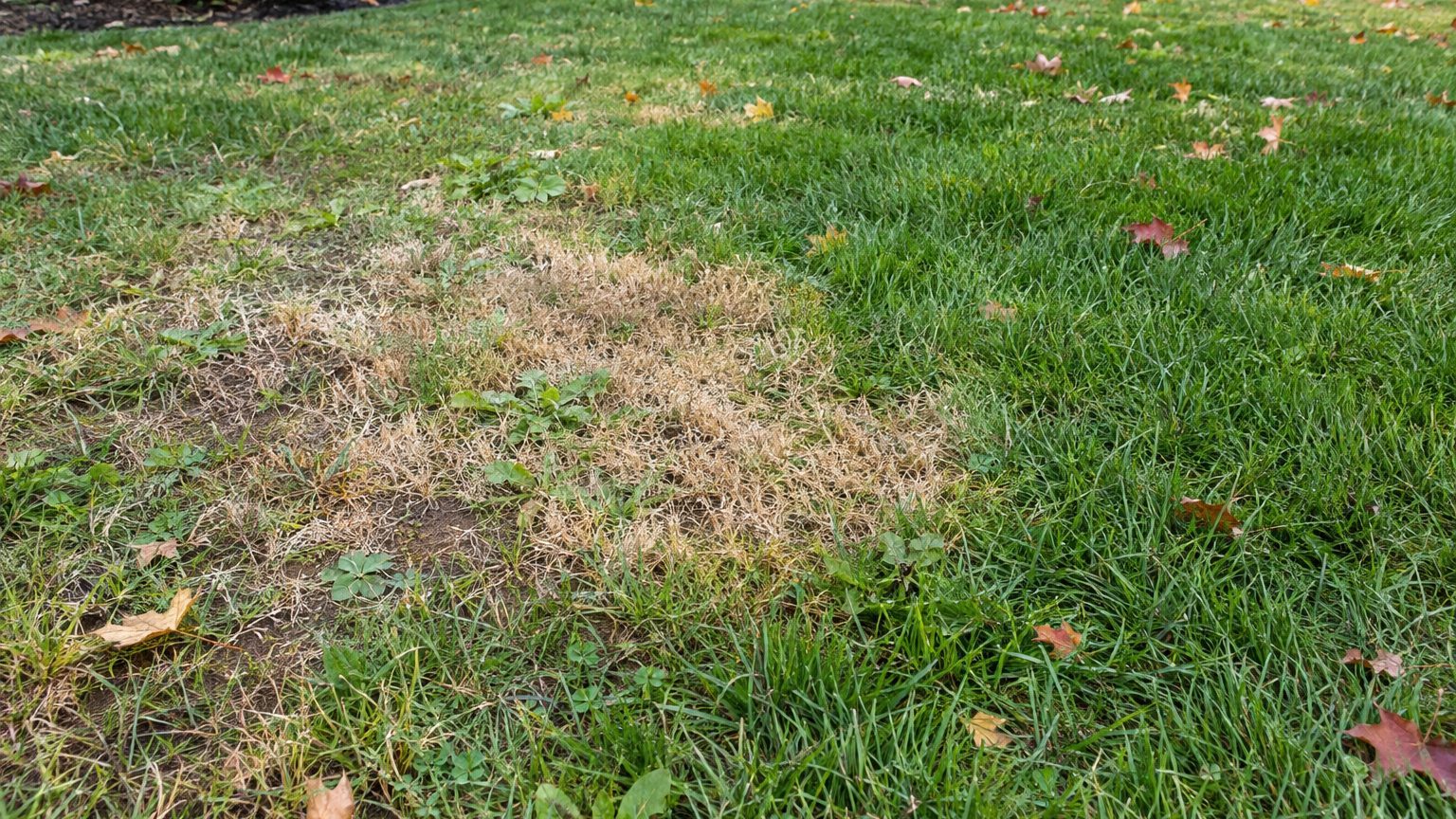
As snow recedes, you may find circular patches of gray or pinkish matted grass, often crusty on top. Long snow cover over unfrozen ground sets it up, and Vermont delivers that often. Rake the patches gently to fluff the blades and let air in, then give the grass time to recover before deciding whether to reseed.

Crabgrass in Thin Spots

Crabgrass appears as coarse, light green clumps that spread flat in bare or thin turf once the soil warms. A pre-emergence preventer works best in April, and it also works in May. After that window, thicker grass is your main defense, so fill bare spots rather than leaving soil open.

Dollar Spot in Summer

Look for small, straw-colored spots, sometimes with thin tan bands across individual blades in the morning dew. It shows up in warm, humid weather, especially on lawns short on nitrogen. Mow at a healthy height, water deeply in the morning, and feed on schedule so the turf stays dense enough to outgrow it.

Red Thread in Cool, Wet Weather

Pink to red threads stick out from grass blades, and the lawn looks scorched in irregular patches. It favors cool, damp weather and underfed turf, which describes plenty of Vermont springs and autumns. The grass usually survives it. A fertilizer application in the right window typically helps the lawn grow out of it.

White Grubs in Late Summer

Grubs are plump, white, C-shaped larvae that chew roots, so damaged turf lifts like a loose carpet. Brown patches that peel back with no resistance, especially in late summer and early fall, point to them. Skunks and crows digging up the lawn are another giveaway. Reseed damaged areas in August or September.

Moss and Thin Grass in Shade

Moss takes over where trees block sun, soil stays wet, or the ground is compacted. Spongy turf that squishes underfoot may also hold a thatch layer, and a layer up to 1/2 inch thick is healthy. Beyond that, dethatch or core aerate. Open up the canopy where you can and use a shade-tolerant seed mix.

How to Tell Which Lawn Problem You Have

Start with the shape of the patch and the time of year, then pull on the grass. Whether the turf lifts, whether it is wet or dry, and whether the spot sits in sun or shade narrow things down quickly.

Symptoms can mislead you, so compare the patch, timing, and turf condition before you act. A brown patch could be a disease, a pest, or simple drought stress.

What you see When Where Points to
Gray or pink matted circles Right after snowmelt Where snow piled up Snow mold
Coarse light green clumps Summer Thin or bare turf Crabgrass
Small straw-colored spots Warm, humid spells Dry, underfed lawns Dollar spot
Pink threads on blades Cool, wet weather Lawns low on nitrogen Red thread
Turf peels up like carpet Late summer to early fall Sunny, irrigated areas White grubs
Soft green mat, thin grass Any season Shade, wet or packed soil Moss

If the grass resists a gentle tug, suspect a fungus or a stress problem. If it comes away with no roots, grubs are the likelier culprit.

Where Lawn Problems Are Worst in Vermont

Vermont’s lawns face different pressure depending on elevation and distance from Lake Champlain.

  • Champlain Valley: The lake moderates temperatures, so Burlington and nearby towns have the mildest conditions. Crabgrass and summer fungi can remain active longer here, and spring work can start earlier.
  • Green Mountains: Snow lingers on the slopes and the season runs substantially shorter. Snow mold is more persistent, and seed needs earlier timing to root before cold returns.
  • Northeast Kingdom: Cold settles in early and stays late, so snow mold and winter injury are the common troubles. Choose hardy grass blends and give new seed a full late-summer start.

Wherever you live, microclimates matter, since a shaded north-facing yard acts like a higher elevation.

Lawn Care Mistakes That Invite Problems in Vermont

Mowing Too Short

Scalped grass lets sunlight reach the soil and invites crabgrass and weak roots. Mowing runs from April through November here, so there are many chances to get it wrong. Set the mower high, keep the blade sharp, and leave clippings to feed the lawn.

Watering Lightly and Often

Frequent light sprinkling keeps the surface damp, which helps dollar spot and red thread take hold and keeps roots shallow. Water matters most in June, July and August. Soak the lawn deeply in the morning, then let the top layer dry before watering again.

Fertilizing at the Wrong Time

Vermont law bars lawn fertilizer before April 1 or after October 15, and on frozen ground. Within that window, feed in May and September, and October also works. Applying nitrogen in midsummer pushes soft growth that disease likes, so skip it.

Where to Get Lawn Advice in Vermont

For problems that do not match a clear description, local expertise saves guessing. A sample of the damaged turf, plus a photo of the whole area, gives an advisor much more to work with.

  • University of Vermont Extension offers lawn guides and a way to ask questions, so go there when a patch resists a quick diagnosis.
  • Your county extension office can help identify pests and diseases, so contact it as soon as you spot unusual damage.
  • A soil test before September seeding or feeding tells you what the lawn needs, so collect samples ahead of that window.

Common Questions

When Should You Seed a Lawn in Vermont?

August and September give new grass warm soil and cooler air to root before winter. If you miss that window, May also works, though summer heat and weeds compete harder with spring seedlings.

When Should You Core Aerate or Dethatch in Vermont?

September suits both jobs, because the grass recovers quickly and seed can go down right after. If you miss it, May is the fallback.

How Long Can You Keep Mowing in Vermont?

Mowing continues from April through November, as long as the grass is growing. Keep cutting at a steady height into late fall so the lawn does not go into winter long and matted, which makes snow mold worse.

Vermont Lawn Care Schedule, Month by Month

Vermont Lawn Care Schedule, Month by Month

Vermont lawns spend a long stretch under snow, then green up fast once the soil thaws and drains. The work comes in a spring push, a quieter summer, and an early-fall rush.

What to Do Each Month in a Vermont Lawn

Cool-season grasses carry the Vermont lawn, so the big jobs cluster in spring and early fall, when roots and shoots can recover. Summer is for mowing and watering, and winter is for staying off the turf.

Month In the lawn
January Rest. The grass is dormant under snow, so keep foot traffic and plow piles off the turf.
February Rest. Nothing is growing, and frozen or soggy ground is easily damaged by walking.
March Still dormant. Watch for matted, gray patches as the snow melts, and rake lightly only once the ground is firm.
April Start mowing as growth picks up, and put down crabgrass preventer before the weed seed sprouts.
May Feed the lawn as it grows hardest. If you missed April, crabgrass preventer still works now, and so do seeding, aeration and dethatching for a spring fix.
June Mow regularly and start watering when rain falls short. Deep soaking beats frequent sprinkling.
July Keep mowing and watering through the heat. Brown, crisp turf in dry spells is often dormancy, not death.
August Begin seeding bare or thin areas, and keep the seedbed moist. Mow and water as in July.
September The big month. Core aerate, dethatch, seed and feed while warm soil and cool nights help roots take hold.
October Keep mowing. If you missed September, feeding still works now. Vermont law bars lawn fertilizer on frozen ground and after October 15. It also bars it before April 1.
November Mow until growth stops, and clear fallen leaves so they do not smother the grass.
December Rest. The grass is dormant, and the lawn needs nothing from you.

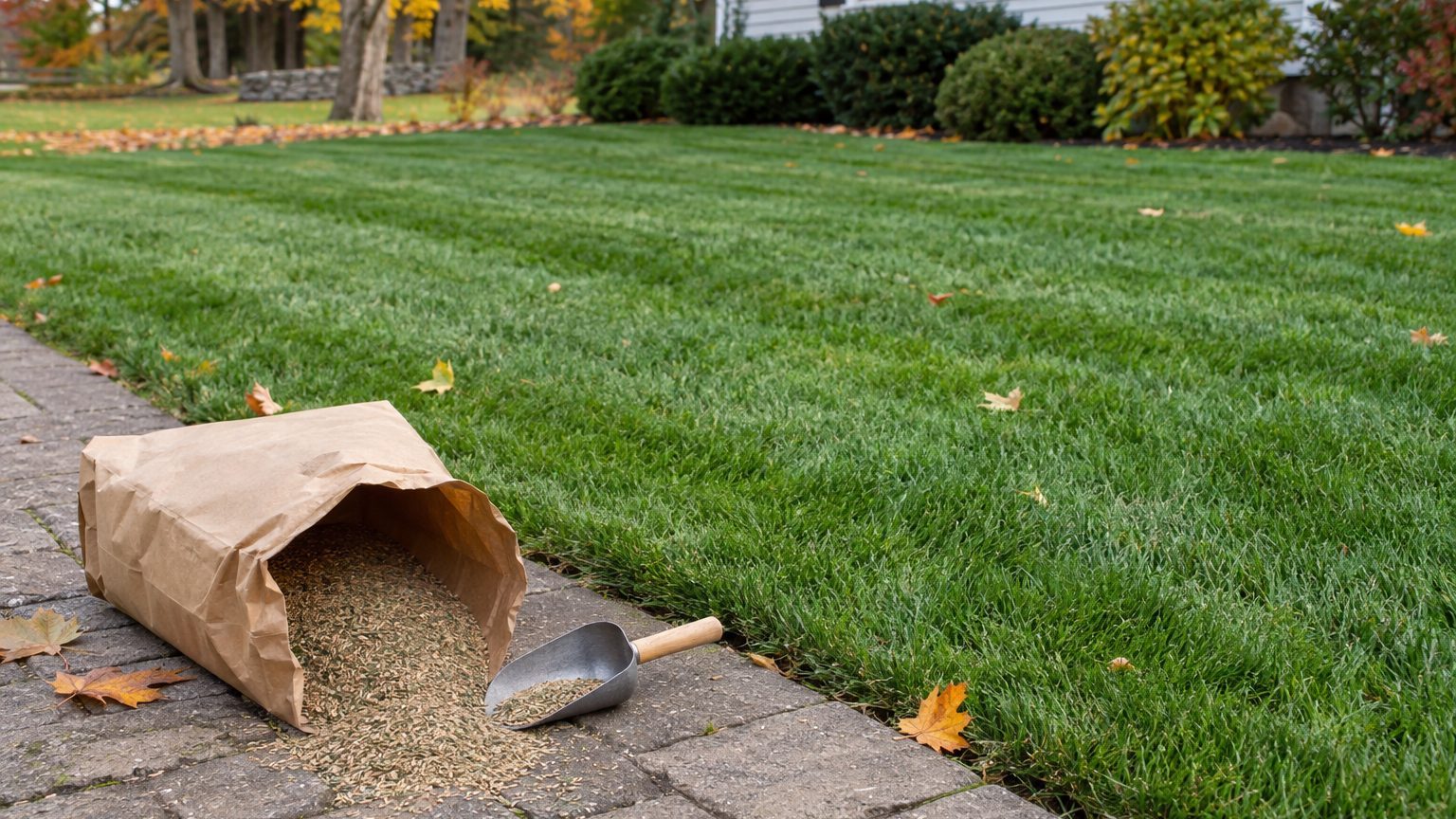
Seeding is easy to push into the wrong season. August and September give seedlings warm soil and the whole fall to root, while spring seeding has to race summer heat and weeds.

When Does the Lawn Season Start and End in Vermont?

Grass wakes up when the soil warms, not when the calendar says spring. Seed germinates once the soil reaches 50 to 65 °F, which is why April mowing starts slowly and why seed tossed on cold ground just sits there. Cool-season lawns slow as soil cools in late fall, and mowing carries on into November until growth stops.

Frost dates matter mainly for young grass. In Burlington, the last spring frost usually falls between April 30 and May 10, so seedlings sown in spring can still get nipped. Other parts of the state run later.

The first fall frost arrives between October 3 and October 13 in Burlington. Seed sown in late summer needs time to establish before then, which is the reason August and September are the seeding months. Higher ground sees frost sooner.

How the Lawn Calendar Shifts Across Vermont

USDA hardiness zones run from 3b to 5b across the state. Elevation and Lake Champlain both shape local lawn conditions.

  • Champlain Valley: The lake keeps the Burlington area mildest. Spring work starts here first and fall work can stretch a little longer.
  • Green Mountains: Cold air and a shorter season push spring jobs later. Do your fall seeding toward the early part of the August to September window.
  • Northeast Kingdom: This area has a substantially shorter season than Burlington, so fall work may need to start sooner. Seed in August, and wait for the soil to warm before spring work.

At higher elevations, use local soil and growth conditions to adjust the statewide windows.

Lawn Care Timing Mistakes to Avoid in Vermont

Fertilizing Too Late in Fall

Fertilizing Too Late in Fall — Vermont Lawn Care Schedule, Month by Month

Feeding after the grass has slowed pushes soft top growth right before hard cold, and frozen ground sheds the fertilizer into runoff instead of the roots.

Feed in September, when roots are active. If you miss it, early October is the fallback.

Crabgrass Preventer Applied Late

Preventer works only before crabgrass seed sprouts. Spread it after the weeds are up and you have paid for a product that does nothing.

Apply it in April. May still works if spring got away from you, but treat it as a last window.

Seeding After the Season Cools

Seed that goes down in October has little time to root before the first hard frost, and winter heaves thin seedlings out of the ground. A late sowing often looks fine in fall and then vanishes in spring.

Seed in August or September while soil is warm. Spring seeding in May is the fallback, but expect more weed competition.

Where to Get Lawn Advice in Vermont

Vermont’s soils and microclimates vary a lot from one town to the next, so local advice is worth the call. University of Vermont Extension and your county office can sort out a problem patch in your own yard.

  • University of Vermont Extension offers lawn guidance and soil testing information, and a test before fall feeding tells you what the grass truly needs.
  • Your county extension office can help with specific problems like thin turf or weeds, so go before the September seeding window opens.

Common Questions

Is October Too Late to Seed a Lawn in Vermont?

Usually, yes. Seed goes in during August and September, so seedlings can root before cold. If you miss that window, try again in May rather than sowing in late fall.

When Should You Stop Mowing in Vermont?

Keep mowing through November, until the grass stops growing. After that the lawn is dormant, and there is nothing to cut until April.

Do You Need to Water a Vermont Lawn in Spring and Fall?

Not routinely. Regular watering matters most in June, July and August. In other months, water only new seed, which needs to stay moist while it sprouts and roots.

Vermont Lawn Care: What to Do and When

Vermont Lawn Care: What to Do and When

Snow melts off the lawn, the grass greens up slowly, and by midsummer a Vermont yard is thick and cool-looking if the right seed went down at the right time. Lawns in Vermont run on cool-season grasses, a short growing season and a legal fertilizer window, so the timing of each job matters more than the effort behind it.

Frost Dates and Growing Season in Vermont

Around Burlington, on the mild shore of Lake Champlain, the last spring freeze usually lands between April 30 and May 10, and the first fall freeze between October 3 and October 13. The statewide hardiness range runs from zone 3b to 5b (USDA system), so the Green Mountains and the Northeast Kingdom run shorter than those dates. The year in the yard unfolds like this:

  • In early spring, the ground thaws and the snow mold mats may need a light rake.
  • In April and May, crabgrass preventer goes down before the weed seed germinates, and a late freeze near the end of that stretch can still nip a young seeding.
  • Once the soil warms in late spring, mowing picks up and the lawn grows actively, which makes May a good month for feeding.
  • From June through August, watering becomes the main chore as summer dry spells stress cool-season grass.
  • In late summer and September, seeding, aeration and dethatching all have their best window, with soil still warm and nights turning cool.
  • In October and November, mowing continues as long as the grass grows, but the seeding window has already closed.

Frost dates mark when cold can injure tender growth, not when grass starts or stops. Growth follows soil warmth, so the lawn wakes later and sleeps earlier than the calendar alone suggests.

Cool-Season or Warm-Season Grass in Vermont?

Cool-season grass is the only sensible choice here. Warm-season species such as bermudagrass or zoysia are poorly suited to Vermont’s climate, while cool-season types go dormant under snow and return in spring.

Summer heat is mild by national standards, so the main stress is a dry spell in July or August rather than sustained heat.

Grass Season How it does here
Kentucky bluegrass Cool Handles hard winters and spreads to fill thin spots
Fine fescues Cool Copes with shade and poorer soil, needs less feeding
Perennial ryegrass Cool Sprouts fast and works well in seed mixes
Tall fescue Cool Deep roots help it ride out dry summer stretches

Fine fescues include creeping red, chewings and hard fescue. Blending these grasses can help a lawn hold up in both sun and shade.

When to Seed, Fertilize and Aerate a Lawn in Vermont

Vermont law bars lawn fertilizer before April 1 and after October 15, and on frozen ground at any time. Within that window, spring and early fall feedings are the ones that pay off.

If you miss the best seeding stretch, May still works, though summer heat then tests the new grass.

Task Recommended timing in Vermont Why then
Seeding August, September Warm soil and cool nights help seedlings root before winter
Fertilizing May, September Grass is growing actively and can use the nutrients
Core aeration September Opens compacted soil while grass can recover and seed can follow
Dethatching September Roots recover quickly in the cooler weather
Crabgrass preventer April Goes down before weed seed sprouts
Watering June, July, August Summer dry spells stress shallow roots

Aeration and dethatching also work in May, and a feeding can wait until October if September slips away. Mowing runs from April through November.

Lawn Problems to Watch for in Vermont

Matted Patches After Snowmelt

Matted Patches After Snowmelt — Vermont Lawn Care: What to Do and When

Grayish or pinkish circles of flattened grass appear as the snow leaves. This is snow mold, which develops under long snow cover. Rake the patches gently to lift the blades and let air in, and the grass usually recovers on its own. Heavy late fertilizing makes it worse.

Compacted, Thin Turf

Grass that thins along paths, near driveways or where kids play often sits on packed soil, and water pools or runs off instead of soaking in. Core aeration in September opens the soil, and overseeding right after fills the gaps while the weather favors seedlings.

Brown Grass in Summer Dry Spells

A lawn that turns straw-colored in July or August, and crunches underfoot, is usually dormant rather than dead. When rain falls short in June, July or August, water deeply enough to support the roots. Raising the mower height also shades the soil and slows the loss of moisture.

How Lawn Care Dates Change Across Vermont

Elevation and lake influence set the pace, so the dates above lean toward the mildest part of the state and shift as you move away from it.

  • Champlain Valley: Lake Champlain softens the cold, so spring comes earlier and fall frost arrives later than elsewhere in the state.
  • Green Mountains: Higher ground stays cold longer, so spring work starts later and the fall seeding window closes sooner.
  • Northeast Kingdom: Cold air settles here and the season runs shorter, so seed earlier in late summer to give roots time before freeze.
  • Connecticut River Valley: Lower elevations in the east tend to warm earlier than the hills, so spring tasks can start a little sooner.

When in doubt, watch the soil and the grass itself, and let your own spot set the schedule.

Where to Get Lawn Advice in Vermont

For soil testing and diagnosis of strange patches, local experts know Vermont conditions and can match advice to your yard.

  • University of Vermont Extension offers soil testing guidance and lawn care information, and the best time to ask is before you buy fertilizer or seed.
  • Your county extension office can help identify a problem from a sample or photo, so reach out when a patch of grass looks wrong.

Common Questions

Can You Fertilize a Lawn in Vermont in Winter?

No. Frozen soil cannot absorb nutrients anyway, so they would wash away.

Is a Vermont Lawn Ever Too Shady for Grass?

Heavy shade under maples and pines limits bluegrass, but fine fescues tolerate it better. If grass still thins out, and moss moves in where the soil stays damp, consider a shade-tolerant mix or a groundcover instead.

Should You Mow Vermont Grass Short Before Winter?

Lower the height a little for the final mowings, but do not scalp. Mowing continues into November while the grass grows, and moderate height protects the crown through the cold.

Hydrangeas That Grow Well in Vermont

Hydrangeas That Grow Well in Vermont

Panicle and smooth hydrangeas are the dependable choices in Vermont, because they flower on the current season’s growth and shrug off a hard winter. Oakleaf and climbing types come next, and bigleaf is the gamble, especially in the Green Mountains and the Northeast Kingdom. Here are six worth planting, ranked from safest to riskiest, and how to fit them to your own yard.

Hydrangeas that grow well in Vermont: The Short Answer

In Burlington, where NOAA NCEI Climate Normals put the last spring freeze at April 30 to May 10, the winner is any hydrangea whose buds form on new wood. They cannot be frozen off in winter because they do not exist yet. Old-wood bloomers carry theirs through January.

Burlington sits on Lake Champlain, the mildest corner of the state. The Green Mountains and the Northeast Kingdom run substantially shorter, so read this ranking, safest first, as a best case.

Limelight

Panicle hydrangea (Hydrangea paniculata) with large cone-shaped flower heads, 20–30 cm long, made of many small four-petalled florets. They open lime-

A panicle hydrangea, and the most dependable choice for a Vermont front yard. It flowers on new wood, so a hard winter that kills back tips costs nothing come August. Give it full sun to part shade and cut it back in late winter before growth starts. Cold is rarely the problem, heavy blooms flopping in wind can be.

Annabelle

The classic smooth hydrangea, and it thrives on neglect. Even if winter kills every stem to the ground, it regrows and blooms on that season’s growth. The flaw is soft stems: big white heads flop after rain. Plant it in sun to part shade with some support nearby and cut it low in late winter.

Incrediball

A smooth hydrangea bred for stiffer stems, so the heads stay upright where Annabelle bows. It shares the same new-wood habit, which is why Vermont winters barely slow it down. Choose it for a spot along a walkway or near the house where a sagging bloom would show. Same late-winter cut, same sun to part shade.

Climbing hydrangea

Slow to start, then long-lived. It clings to a stone wall or a mature tree and blooms on old wood, so a sheltered wall beats an exposed one. Expect a few years of leaves before flowers. Near Lake Champlain it does better than on a windy hilltop.

Oakleaf hydrangea

Oakleaf hydrangea, with lobed leaves and bold fall color, is native to the Southeast and blooms on old wood. A cold Vermont winter can kill the buds even when the stems live. Plant it against a south or east wall, mulch the roots, and treat any bloom as a bonus.

Endless Summer

The bigleaf gamble. Bigleaf hydrangeas set buds on old wood, and Vermont cold often kills them, so a shrub can look healthy and never flower. Reblooming types like Endless Summer also bloom on new growth, which helps. Even so, keep them on a sheltered site, and prune only after bloom, not in spring.

How to Work Out the Dates for Your Own Yard

Work backward from the frost window, then adjust for your own hill or valley.

  1. Find the first fall freeze: NOAA NCEI Climate Normals put Burlington at October 3 to October 13.
  2. Subtract about six weeks: that rule of thumb for root settling turns the window into August 22 to September 1, inside the August and September planting months.
  3. Anchor the spring side: the last freeze runs April 30 to May 10, so May planting follows it, while April suits only dormant, hardy stock.
  4. Match the wood to the winter: the USDA system runs 3b to 5b across Vermont, and Burlington sits at the mild end. Annabelle blooms on new wood, so it passes the winter even when stems die to the ground. A classic bigleaf sets buds on old wood the summer before, so the same winter can leave leaves and no flowers.
  5. Fix the maintenance dates: feed in March, May and July, and prune bigleaf in June and July, right after bloom.

Your yard will not match Burlington. A hollow where cold air pools or an exposed ridge can move every date, so log your own first killing frost each fall and shift the range to match.

Vermont North to South: How the Dates Shift

Elevation and water move these dates more than latitude does, and every shift below is measured against Burlington.

  • Champlain Valley (Burlington, Shelburne, Charlotte): the lake holds warmth into autumn, so frost arrives later and the whole ranking is in play, including a trial bigleaf.
  • Green Mountains (Stowe, Killington, the Mad River Valley): each step up in elevation shortens the season, so frost comes earlier in fall and lingers in spring. Stay with panicle and smooth types.
  • Northeast Kingdom (Newport, St. Johnsbury, Island Pond): the coldest winters and the shortest season. Plant early in the window and skip oakleaf and bigleaf.
  • Connecticut River Valley (Brattleboro, Windsor, Bellows Falls): low, sheltered ground runs milder than the hills above it, and south-facing slopes add a little more.
  • Southern hills (Bennington, Manchester, Wilmington): valley floors are forgiving, ridges are not, and cold air pools in hollows.

For the full state picture on frost and pruning, start with Hydrangeas in Vermont.

Mistakes Vermont Punishes

Pruning bigleaf in early spring

Bigleaf carries next summer’s flower buds on last year’s stems, so a spring haircut removes the show. Prune bigleaf in June and July, right after it blooms, and trim only dead tips before then. The timing table sits in When to Plant and Prune Hydrangeas in Vermont.

Planting too close to freeze

Late roots get no time to anchor before the ground locks up. NOAA NCEI Climate Normals put Burlington’s first fall freeze at October 3 to October 13, so finish fall planting in August or September, well ahead of that window, and water the new shrub through dry weeks.

Blaming pests for dead stems

Black, brittle stems in spring usually mean winter dieback, not disease. Wait for leaf-out, then cut back to living wood. If leaves later show spots, holes or a coating, check Hydrangea Pests and Diseases in Vermont before you spray anything.

Vermont Extension Offices and County Contacts

The USDA NIFA Land-Grant University Extension directory lists the University of Vermont’s Extension service at uvm.edu/extension. The statewide numbers here are a starting point, and county staff know your soil and your frost pockets.

  • Your state page: the frost dates and the pruning window where you live.
  • The calendar page: month-by-month planting, feeding and pruning.
  • The problems page: what to check when leaves spot or stems die. Bring a photo of the stems when you call your county office.

Common questions

Can bigleaf hydrangeas grow in Vermont?

Yes, on sheltered sites, with mixed results. A classic bigleaf can survive and never flower after a hard winter. Odds are better near Lake Champlain than in the Green Mountains or the Northeast Kingdom. Reblooming types hedge the bet. Prune in June or July, after bloom.

What is the best month to plant hydrangeas in Vermont?

The calendar lists April, May, August and September. Fall planting gives roots warm soil and time before Burlington’s first freeze. Spring planting works best once the last freeze has passed, which is why May beats April for most shrubs.

When should I fertilize hydrangeas in Vermont?

The calendar lists March, May and July. Stop after July, since a late push of soft growth can be caught by the first freeze. Follow the label rate, and skip a feeding if the shrub already grows well.

Hydrangea Pests and Diseases in Vermont

Hydrangea Pests and Diseases in Vermont

Hydrangea trouble in Vermont follows the freeze, not the calendar. Winter bud kill on bigleaf varieties, powdery mildew in humid summer stretches, and vole damage under snow cover account for most of the state’s problems, with Burlington’s short frost-free season setting the rhythm. Panicle and smooth hydrangeas dodge nearly all of it. The list below covers only what actually shows up here, in the order it appears each season.

Hydrangea pests and diseases Vermont: The Short Answer

USDA Plant Hardiness Zone Map places Burlington and the rest of Vermont across zone 3b to 5b, a range built on the average annual extreme minimum temperature, and that cold accounts for most of what goes wrong here. Vermont hydrangea trouble leans toward winter bud kill and fungal leaf disease rather than the insect pressure that dominates warmer states, with each problem arriving in a fairly predictable order through the season.

No blooms after a hard winter

Flower buds set the previous fall froze out over winter, common where lows dip toward the zone 3b end of Vermont’s range. Prune out only the dead wood once new leaves appear in spring. Panicle and smooth hydrangeas bloom on new wood instead and skip this problem most years.

Curled new growth in early summer

Curled new growth in early summer — Hydrangea Pests and Diseases in Vermont

Aphids cluster on tender shoot tips as new growth pushes out, leaving sticky honeydew and sooty mold behind on the leaves below. A strong hose spray every few days clears light infestations before ladybugs and lacewings move in on their own. Save insecticidal soap for heavy clusters only.

White dust on the upper leaves

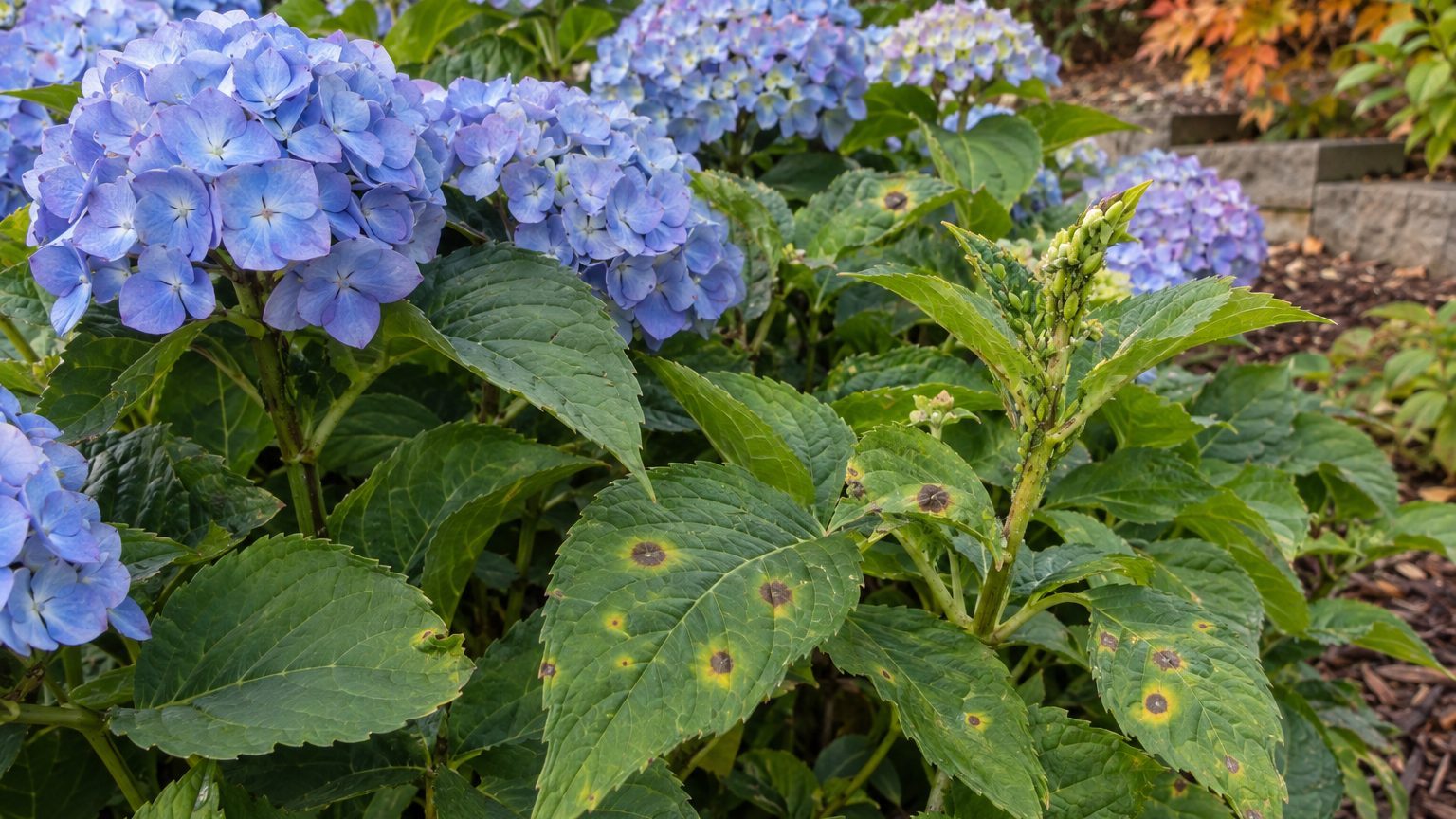
Powdery mildew coats leaves during warm days followed by cool, humid nights, a pattern Vermont’s short but muggy summers deliver often enough to matter. It rarely kills the plant outright but weakens next year’s bloom. Thin crowded stems for airflow and water the soil, not the foliage.

Brown spots ringed in purple

Brown spots ringed in purple — Hydrangea Pests and Diseases in Vermont

Cercospora leaf spot shows up on the lower, older leaves first during wet stretches in mid to late summer, then spreads upward as spores splash off wet foliage. Rake and discard fallen leaves each fall instead of composting them. A layer of mulch keeps soil-borne spores from splashing back up.

Flowers turning to gray mush

Flowers turning to gray mush — Hydrangea Pests and Diseases in Vermont

Botrytis blight moves fast through spent blooms and soft new growth during cool, damp stretches, turning petals to gray fuzz almost overnight. Deadhead spent flowers promptly and space plants out for better airflow between them. Bigleaf varieties, with their dense mophead clusters, hold moisture longest and see this most.

Stems gnawed near the ground

Stems gnawed near the ground — Hydrangea Pests and Diseases in Vermont

Voles chew bark at snow level over winter, girdling stems hidden under drifts, while deer browse buds and soft shoots whenever the ground is bare. A hardware-cloth collar around the base stops both kinds of damage. Wrap the base in late fall, before the ground freezes hard for good.

How to Work Out the Dates for Your Own Yard

Pinning down which of these problems you actually have starts with the calendar, because Vermont’s compressed frost-to-frost season narrows the list fast once you know what points to what, before you reach for pruners or spray.

  1. Check the date against frost: damage showing up before Burlington’s last spring frost, which NOAA NCEI 1991-2020 Climate Normals puts at April 30 to May 10, almost always traces back to winter cold rather than a fungus or insect.
  2. Read the moisture, not just the damage: a cool, rainy stretch anywhere in the growing season favors botrytis blight and powdery mildew both, while a dry, hot week is usually when aphid numbers climb fastest on new growth instead.
  3. Count back from the first fall frost: spots or wilting that show up within a few weeks of October 3 to October 13 are usually late leaf spot finishing its run, not a fresh infection worth spraying for.
  4. Match the plant part to the cause: bare, brittle wood with no leaves points to winter injury, spotted leaves point to fungus, sticky or curled leaves point to aphids, and gnawed bark points to deer or voles.
  5. Note which hydrangea type is in the ground: bigleaf carries most of the bud-blast and botrytis risk described above, while panicle and smooth hydrangeas mostly sidestep both and rarely need this checklist.
  6. Check drainage after heavy rain: standing water around the root ball for more than a day stresses roots and opens the door to fungal problems even when every other sign on the calendar looks fine.

Running through these six checks takes less time than a trip to the garden center, and it keeps a healthy shrub from being pruned back or sprayed for a problem it never actually had this season.

Vermont North to South: How the Dates Shift

Frost timing and hardiness zone both slide as you move away from Lake Champlain, and that shift changes which hydrangea problem shows up first and how hard it hits each year.

  • Champlain Valley (Burlington, Vergennes, St. Albans): the lake keeps this corner in the milder end of Vermont’s hardiness range, so bud blast is less common here than anywhere else in the state.
  • Green Mountains and higher elevations (Stowe, Killington, Manchester): colder nights push bud blast risk up sharply, and the frost-free stretch runs noticeably shorter than the reference dates for Burlington.
  • Northeast Kingdom (St. Johnsbury, Newport, Island Pond): the coldest corner of the state, where bigleaf hydrangeas struggle most and winter injury outweighs every fungal problem put together.
  • Connecticut River Valley and the south (Brattleboro, Bellows Falls, Springfield): milder than the mountains and closer to the Champlain Valley’s timing, though still a step behind it most years.

None of that changes which pests and diseases turn up, only how early and how hard each one hits, so check the state guide for the frost and hardiness specifics that apply to your part of Vermont.

Mistakes Vermont Punishes

Wrapping shrubs too early

Burlap or foam cones piled on while stems are still damp from fall rain trap moisture against the plant, and that turns into botrytis blight before winter sets in. NOAA NCEI 1991-2020 Climate Normals puts Burlington’s first fall frost at October 3 to October 13, so wait for nights near that range before covering anything.

Pruning bigleaf in fall

Cutting back bigleaf stems in September or October removes the very buds meant to open into next year’s flowers, since this variety sets bloom on old wood rather than new. Save any major cuts for June or July instead, and remove only clearly dead wood at other times of year.

Planting in full afternoon sun

A hot, exposed spot pushes hydrangeas to wilt daily even when watered well, and that ongoing stress leaves them open to powdery mildew and aphid buildup for the rest of the growing season. Morning sun paired with afternoon shade suits every hydrangea type Vermont can reasonably grow well.

Vermont Extension Offices and County Contacts

Vermont’s zone 3b to 5b range and Burlington’s frost dates are a starting point, not a full diagnosis, and University of Vermont Extension fills in the county-level detail your specific soil and site need.

  • Your state page: the frost dates and the pruning window where you live.
  • Which ones hold up here: which hydrangea types tolerate Vermont winters and which ones struggle.
  • UVM Extension: county offices that can confirm a diagnosis and suggest a treatment for your yard.

Bring a photo or a clipped sample to the call, it settles the question faster than a description ever does.

Common questions

Do I need to spray my hydrangeas every year in Vermont?

Most Vermont yards only need treatment when a problem actually shows up, not on a fixed schedule. Panicle and smooth hydrangeas often go years without any spray at all, while bigleaf varieties benefit more from good spacing and morning watering than from routine chemicals.

Can I compost diseased hydrangea leaves?

Leaves with leaf spot or botrytis blight should go in the trash or a hot municipal compost pile, not a backyard bin. Home compost rarely reaches the temperature needed to kill fungal spores, and they can survive to reinfect next year’s growth.

Will a late spring frost kill my hydrangea outright?

A frost after Burlington’s typical April 30 to May 10 window usually damages soft new growth and flower buds rather than killing the whole plant. Bigleaf types lose the most bloom potential, while panicle and smooth hydrangeas, which leaf out later, generally come through unharmed.

When to Prune Hydrangeas in Vermont

When to Prune Hydrangeas in Vermont

In Burlington, the safe planting windows for hydrangeas run April, May, August, and September, timed around a last spring frost of April 30 to May 10 and a first fall frost of October 3 to October 13. Bigleaf pruning waits until June or July, after bloom, never in fall.

When to prune hydrangeas in Vermont: The Short Answer

NOAA NCEI’s 1991-2020 Climate Normals put Burlington’s last spring frost at April 30 to May 10 and its first fall frost at October 3 to October 13, and the state’s hydrangea calendar builds outward from those two windows.

  • January: the ground is frozen solid and nothing goes in the soil. Leave any mulch dome over the crown untouched.
  • February: still dormant season here. Order stock now so it arrives ready for the April planting window.
  • March: the first fertilize month of the year. Feed once new growth starts to swell, not before.
  • April: the plant window opens, but frost risk lingers into early May. Hold containers by a wall until the ground truly warms.
  • May: planting continues and it’s also a fertilize month. Wait until after May 10 in most yards before committing roots to open ground.
  • June: the bigleaf pruning window opens right after the first flush of bloom. Cut spent flower heads back to the first healthy bud pair.
  • July: pruning and fertilizing both continue. This is the last feeding of the season, so root growth slows before fall.
  • August: a second plant window. Roots set now have real weeks to establish before the ground cools.
  • September: the last safe planting month. Anything set in now needs mulch on standby for the frost that follows.
  • October: the first fall frost lands October 3 to October 13. Stop planting and mulch anything new heavily.
  • November: fully dormant. Check that mulch still covers the root zone after any hard rain.
  • December: nothing to do outside. Use the quiet month to plan next spring’s plant list.

Every gesture on that list traces back to the same two dates. Miss the frost window in either direction and the plant pays for it, not the calendar.

How to Work Out the Dates for Your Own Yard

USDA’s Plant Hardiness Zone Map puts Vermont anywhere from 3b to 5b, and that range is the first thing to pin down before you count backward from frost.

  1. Find your zone: a yard at 3b behaves very differently from one at 5b, and it decides whether bigleaf hydrangea survives the winter at all here.
  2. Get your local frost window: compare your address to Burlington’s April 30 to May 10 spring frost and October 3 to October 13 fall frost, then adjust earlier for elevation.
  3. Pick a planting month: match your frost-free stretch to the state window of April, May, August, or September, favoring the month furthest from either frost date.
  4. Schedule pruning after bloom: bigleaf gets cut back in June or July only, once flowering has finished for the season.
  5. Align feeding to the calendar: fertilize in March, May, and July, and skip the March feed entirely if the ground is still frozen at your elevation.
  6. Recheck before the ground freezes: confirm mulch is down before your local first frost, not Burlington’s.

A shrub planted in the Champlain lowlands can go in the ground weeks before one in the Green Mountains reaches the same soil temperature, even though both sit inside the same statewide window.

Vermont North to South: How the Dates Shift

Elevation and the lake do more work here than latitude ever does.

  • The Champlain Valley (Burlington, Vergennes, Middlebury): the mildest corner of the state, closest to the frost dates cited above.
  • The Green Mountains (Stowe, Killington, Manchester): elevation pushes both frost dates inward, so the safe planting window shrinks from both ends.
  • The Northeast Kingdom (St. Johnsbury, Newport, Island Pond): the shortest season in Vermont, where fall planting after early September carries real risk.
  • Southern Vermont (Brattleboro, Bennington): lower elevation than the Kingdom softens both frost dates slightly, closer to the Champlain pattern.

None of these local shifts are figures NOAA breaks out by town, so treat Burlington’s dates as the reference point and adjust by feel from there.

Mistakes Vermont Punishes

No Blooms After a Hard Winter

Bigleaf sets its flower buds on old wood the summer before, and a Vermont winter at zone 3b or 4a can kill those buds outright even when the shrub survives. Choose reblooming types or a hardier species for this state.

Fall Pruning That Cuts Off Next Year’s Flowers

Cutting bigleaf back in September or October removes the very buds meant to bloom next summer. Prune only in June or July, right after flowering finishes.

Planting Too Close to October Frost

Roots set in late September have almost no time to establish before the first fall frost arrives October 3 to October 13. Push fall planting earlier in the window, or wait for spring instead.

Vermont Extension Offices and County Contacts

Vermont’s statewide dates are a starting point, and UVM Extension fills in what your specific soil and county actually need.

  • Your state page: the frost dates and the pruning window where you live.
  • Which ones hold up here: the varieties bred to survive a Vermont winter without dying back to the ground.
  • What goes wrong here: the pests and problems this state’s growing conditions actually produce.

Common questions

Can I plant hydrangeas in Vermont in October?
No. The first fall frost lands October 3 to October 13, and roots planted that late have too little time to establish before the ground freezes.

Why didn’t my hydrangea bloom this year?
In most Vermont yards it’s winter bud damage on bigleaf types, not a planting or pruning mistake. A hard freeze at zone 3b or 4a can kill flower buds set the previous summer.

Is spring or fall better for planting hydrangeas here?
Spring, specifically April or May, gives the longest stretch of frost-free growing time before winter. Fall planting in August or September still works, but leaves less margin for error.

The almanac, state by state. Every date on this site comes from a state’s own frost facts and its extension service’s calendar — and says where it comes from.