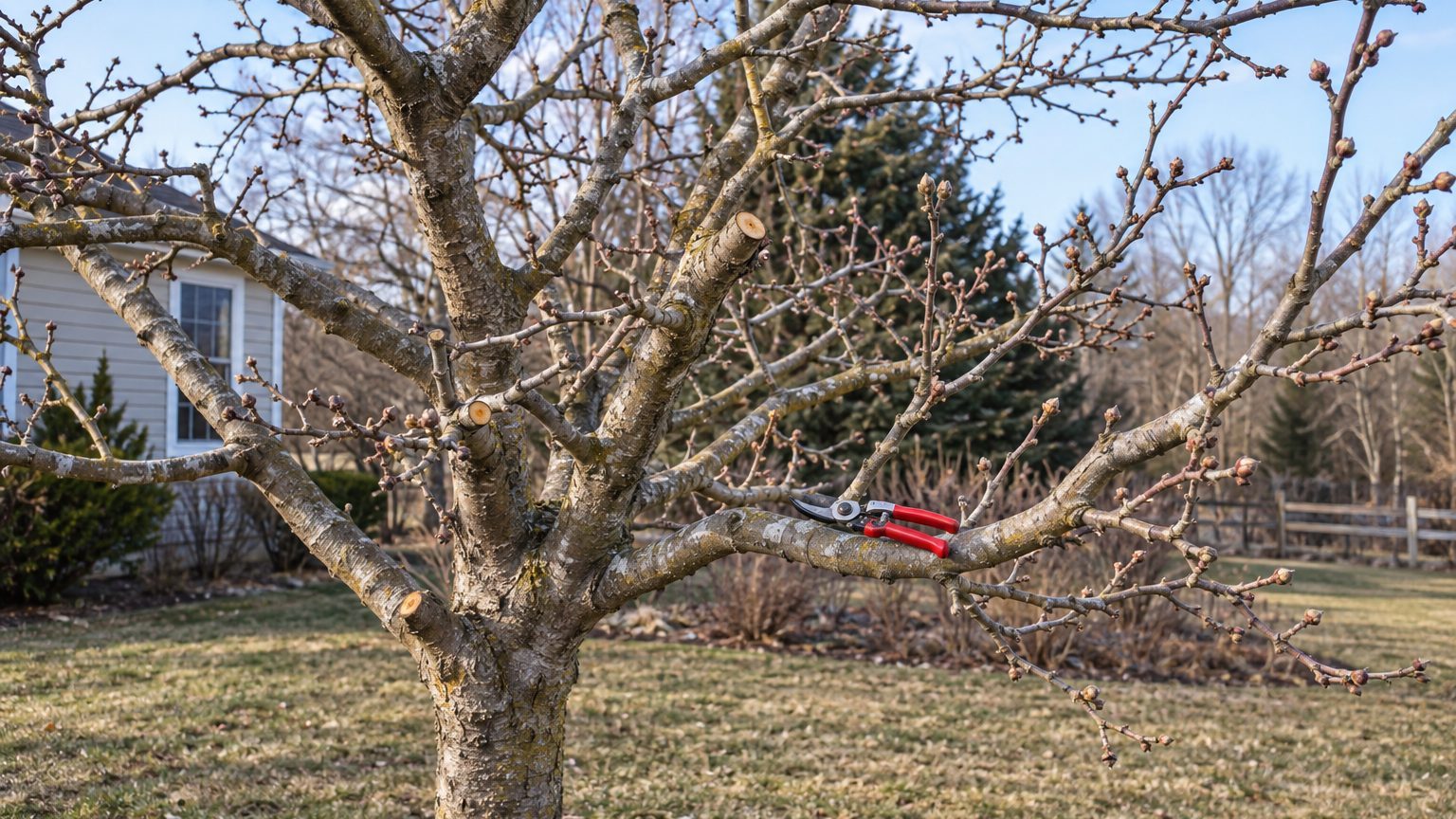
Bare branches against a snowy yard in late winter are the cue to pick up the pruning saw. In Alaska, fruit trees are pruned while they sleep, in the last stretch of winter and the first days of spring, before any bud has started to open. Timing depends on the tree and on how far along it is.
When to Prune Fruit Trees in Alaska

Prune apples, pears, peaches, cherries and plums in March and April, while the tree is still dormant. Cutting at that point lets wounds heal as growth restarts, and you can see the branch structure clearly without leaves in the way.
| Fruit tree | When to prune in Alaska | Why |
|---|---|---|
| Apples and pears | March to April, early in that window | Dormant wood cuts cleanly, and apples are pruned first |
| Peaches | April, last of all, closest to bloom | Flower buds are easily hurt by cold |
| Cherries and plums | March to April, before buds swell | Cuts made while the tree rests heal as growth begins |
| Young trees | March to April, while dormant | Shaping happens before new growth starts |
Skip fall and early winter. A cut made then can push new growth that has no time to harden before the cold arrives. Hardiness varies widely across the state, from USDA zone 1a to 8a, so the milder Anchorage area and the Interior will not feel the same on any given day.
Alaska — the year and the numbers
- State
- Alaska
- USDA zones
- 1a-8a
- Last spring frost
- May 3 to May 12
- First fall frost
- September 22 to October 1
- Annual rain
- 16 in
- Lawn zone
- cool-season
- Source
- NOAA NCEI 1991-2020 Climate Normals, 32F freeze probabilities · Anchorage
How to Tell Your Fruit Trees Are Ready to Prune
The tree gives clearer signals than a calendar page does, and in Alaska the signs shift from one yard to the next.
- Every leaf is gone, which means the tree is fully dormant and can take a cut without losing active growth.
- The hardest part of winter has passed, so the wood is less likely to be injured by a hard freeze after you open a wound.
- Buds are still tight and closed, which tells you there is time left to prune before growth starts.
- Buds that begin to swell mean the window is closing, so finish apples and pears first and leave peaches for last.
- Peach flower buds that look plump and close to opening are your sign to make the final cuts, since cold can damage them easily.
If the buds have already opened, wait and tidy the tree the following winter rather than cutting into active growth.
When to Prune Peach and Apple Trees in Alaska
Apples go first. Their wood is tough, and the tree can be pruned in the heart of the dormant stretch, in March, once the worst cold is behind you. Hardy choices for Alaska yards include Norland, which is represented by bearing trees in Fairbanks, Palmer and Anchorage, and Rescue, an apple-crabapple cross that bears very young.
Peaches wait. Their flower buds are easily hurt by cold, so the saw comes out last, in April, as close to bloom as you can safely get. Pruning them early would expose buds to cold snaps that are still possible in late winter.
Both kinds of tree are pruned while dormant and before the buds swell. Summer pruning is not part of the plan for Alaska fruit trees, so save your cuts for the dormant window.
Where to Get Fruit Tree Advice in Alaska
Conditions vary a great deal between Anchorage, the Mat-Su Valley and the Interior, so local advice is worth having before you cut. University of Alaska Fairbanks Cooperative Extension and your county office are good places to start.
- The extension service publishes guides on growing tree fruits and on hardy varieties, which are handy to read in winter before pruning season.
- Your local extension office can tell you which varieties suit your area, so call before you buy a tree or plan a big cut.
Common Questions
Can You Prune Fruit Trees in Fall in Alaska?
Fall pruning is best avoided. New growth triggered by a cut may not harden before the cold sets in, which leaves the tree open to winter injury.
Which Fruit Trees Survive Alaska Winters?
Hardy apples such as Norland and Rescue do well, as do sour pie cherries, which survive through zone 3. In Southcentral Alaska, Manchurian plum and Manchurian apricot are reliably winter-hardy. Dwarfing rootstocks common in the Lower 48 are not reliably hardy here.
Do Hardy Crabapples Need Pruning at the Same Time?
Crabapples are also a good fit for Alaska, with Siberian and Dolgo types growing well and some cultivars surviving temperatures down to -40°F in the Interior. They suit the same dormant-season timing as other fruit trees.