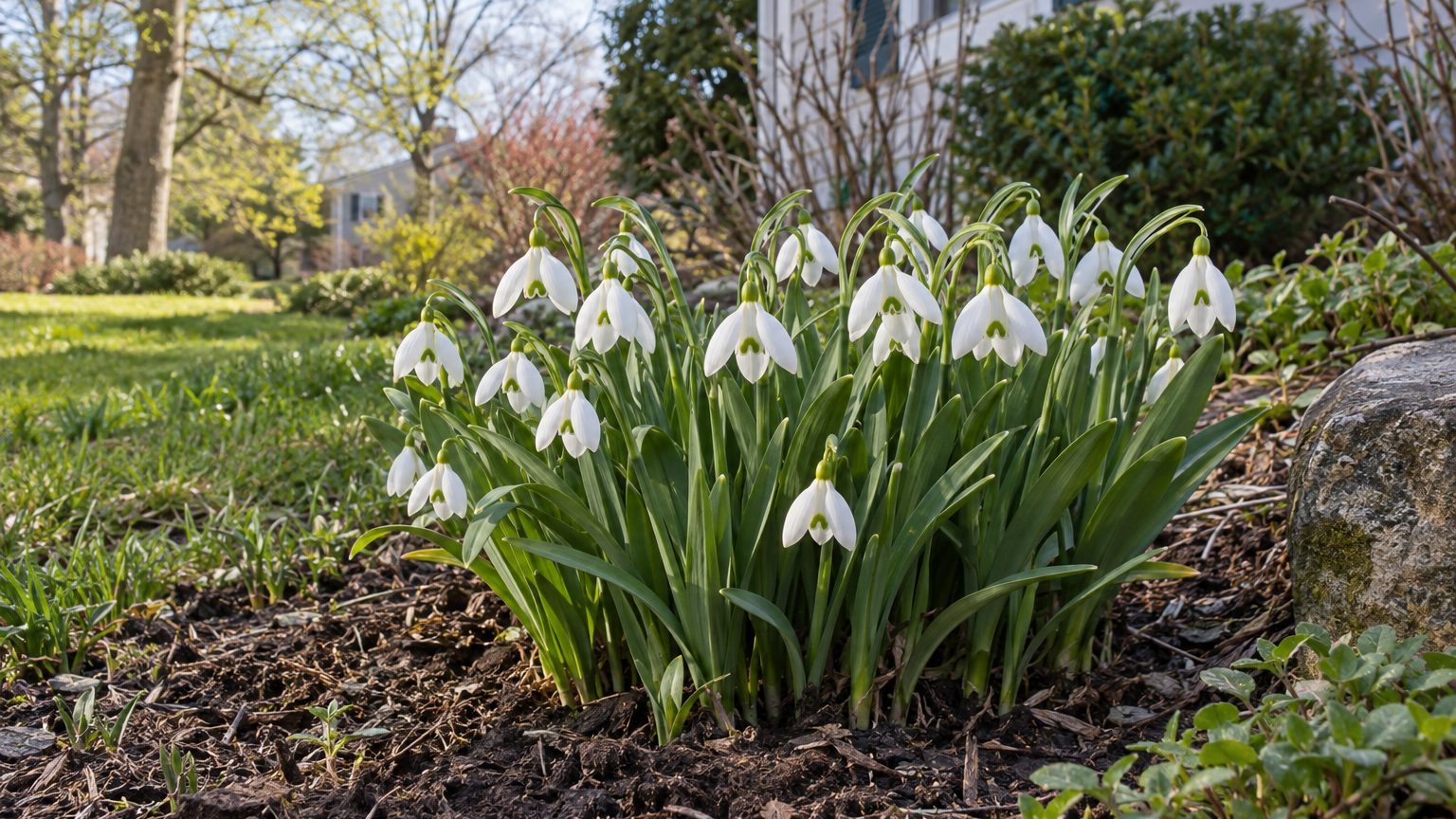
White bells hanging from bare stems above the last patches of snow come from a small bulb planted the autumn before. Snowdrop is a hardy little perennial that blooms in late winter to early spring and slowly fills a corner of the yard once it settles in.
What Is the Snowdrop?
Snowdrop is a small bulbous perennial in the Amaryllidaceae family, the same family as onions. Its flowers are milk white and nod from naked stems, with no leaves around them to compete for attention. The common name refers to the season, since the blooms open when snow can still be on the ground.
Two species turn up in garden talk. Common snowdrop stands between 4 inches and 10 inches tall, which keeps it low enough to tuck beside a path or a tree trunk.
Giant snowdrop grows up to a foot in height and carries a large, solitary white flower about 2 inches wide. Both spread by self-seeding and by bulb offsets, so a single planting grows into a colony.
Where Does the Snowdrop Grow Best?
Common snowdrop is listed for USDA Zones 3a through 9b, a spread that covers cold northern winters and mild southern ones. Within that range, the colder end suits it better. Seeds need a cold spell below 20 degrees F to germinate, so the plant may have a shorter lifespan in warmer climates.
Giant snowdrop prefers cooler climates too and may be short-lived when grown south of USDA Zone 7. If your winters are mild, expect a few seasons of bloom rather than a permanent carpet.
For the spot itself, choose full sun to part shade. The soil should be clay or loam with high organic matter. A bed that has been enriched with leaf mold or compost gives the bulbs what they like. Your own USDA zone tells you which end of the range you are on, so check it before choosing planting months for your area.
How to Plant and Care for the Snowdrop Through the Year
Fall
Plant the bulbs once the soil has cooled below about 60°F. That timing lets roots form before the ground freezes, while keeping the bulbs from sprouting too soon. Set them in a naturalized area or a woodland garden under deciduous trees or shrubs, where they have room to roam.
A bulb still sitting in its bag goes into the ground as soon as the soil can be dug, rather than waiting a year.
Winter
Little is asked of you in winter. The cold itself does part of the work, because snowdrop seeds need a spell below 20 degrees F before they will germinate. Seedlings follow in the years after, which is one way a patch thickens.
Leave fallen leaves from nearby trees where they lie, since that mimics the woodland floor the plant likes.
Bloom
Flowers appear on naked stems in late winter to early spring, pushing above the snow if any is present. Common snowdrop is happiest with some organic matter in the soil, so a light mulch of compost beside the clump after flowering is a gentle way to feed it.
Cut a few stems for a small vase if you like, and leave the rest to set seed for new clumps.
After Bloom
Remove only the faded flowers if you want a tidier look. Leave the leaves in place until they turn brown, because they are feeding the bulb for next year’s flowers. Cutting or tying green foliage now means weaker bloom later.
Clumps that have grown crowded can be lifted and divided while the leaves are still green and the plants are active, then replanted at the same depth.
Summer
By summer the foliage has faded and the bulbs rest below ground. Keep other plants from smothering the spot, and mark the clump with a small stake so you do not dig it up while planting something else.
Shade from the trees overhead suits the resting bulbs well, which is why they do so well beneath deciduous trees and shrubs.
Snowdrop Weak Points: Animals, Diseases and Staying Power
Snowdrop is a forgiving bulb. Deer pass it by, and the common snowdrop shows no significant insect or disease problems. Many other spring bulbs cannot say the same, since voles, squirrels, rabbits and deer eat tulips and crocus.
The weak spot is climate rather than pests. Warm winters shorten its life, and giant snowdrop has an insect to watch for.
| Issue | How the Snowdrop handles it |
|---|---|
| Deer | Resistant |
| Insects and diseases | Common snowdrop has no significant problems, giant snowdrop can be hit by narcissus bulb fly |
| Warm winters | Short-lived south of Zone 7, seeds need cold below 20 degrees F |
| Staying power | Naturalizes readily by self-seeding and bulb offsets, can form large colonies |
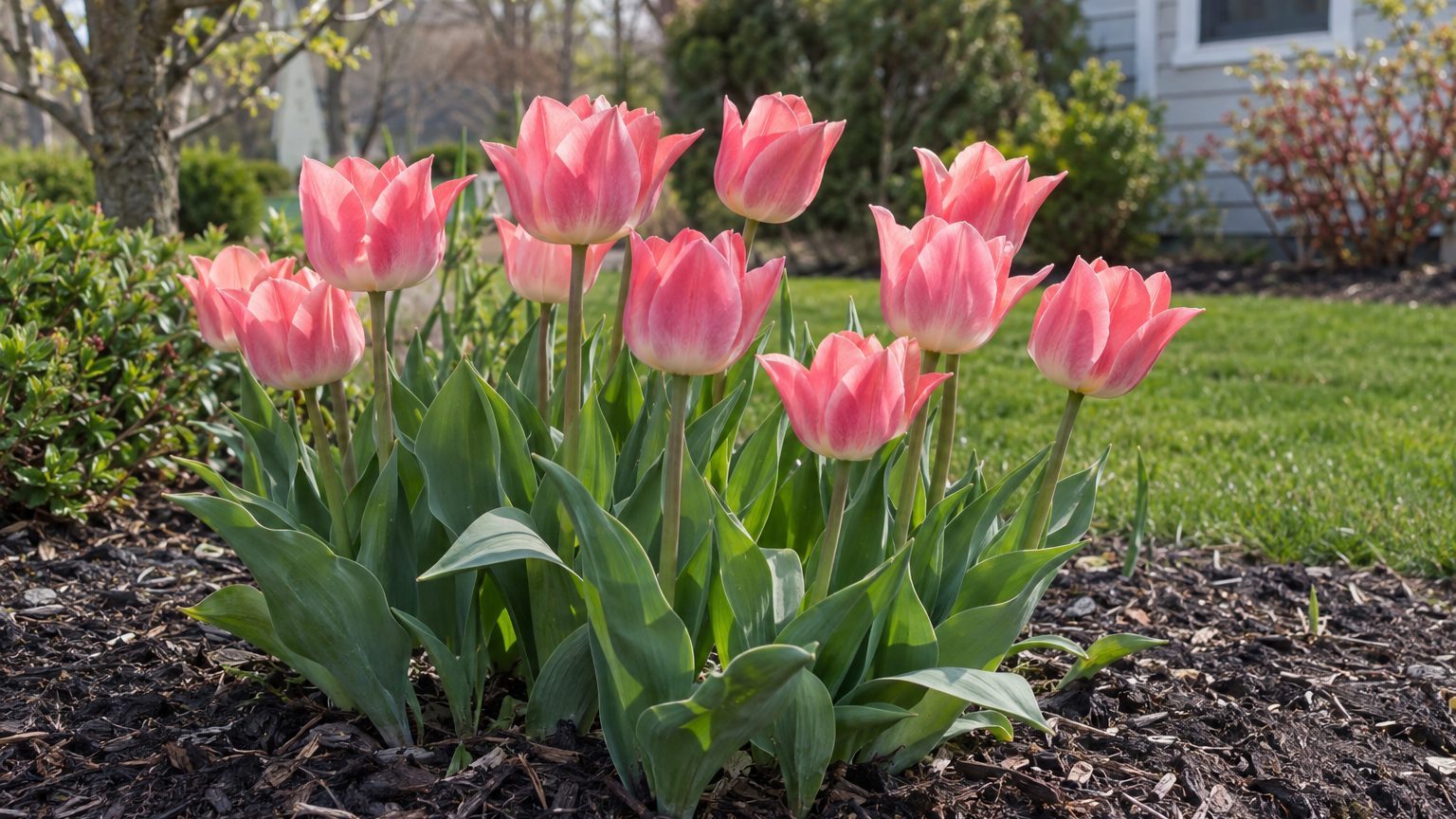
Tulips are often short-lived in the garden, while snowdrop thickens over the years wherever the winters are cold enough for it. That makes it a bulb to plant once and leave alone.
Is the Snowdrop Right for Your Yard?
Snowdrop suits a yard with some shade, humus-rich soil and room for a patch to spread. It is a poor match for a tidy bed where every plant must stay put, or for a mild-winter spot where the cold it needs never arrives.
- Plant it under deciduous trees or along a woodland edge, where the clumps can spread freely and bloom before the leaves return.
- Choose common snowdrop for low edging and giant snowdrop when you want a taller stem with a larger flower.
- Look up your state page on State by State Garden for the planting months in your area, then plant when the soil has cooled.
Common Questions
Can You Still Plant Snowdrop Bulbs That Stayed in the Bag?
Yes. A bulb that has not been planted does better in the ground than stored over the winter, so plant it as long as the soil can be dug. Choose a shaded spot with loose, humus-rich soil.
Will Snowdrops Bloom Through Snow?
They can. The flowers open on naked stems in late winter to early spring and poke above the snow when it is present. A late storm does not cancel the show.
What Blooms After Snowdrops?
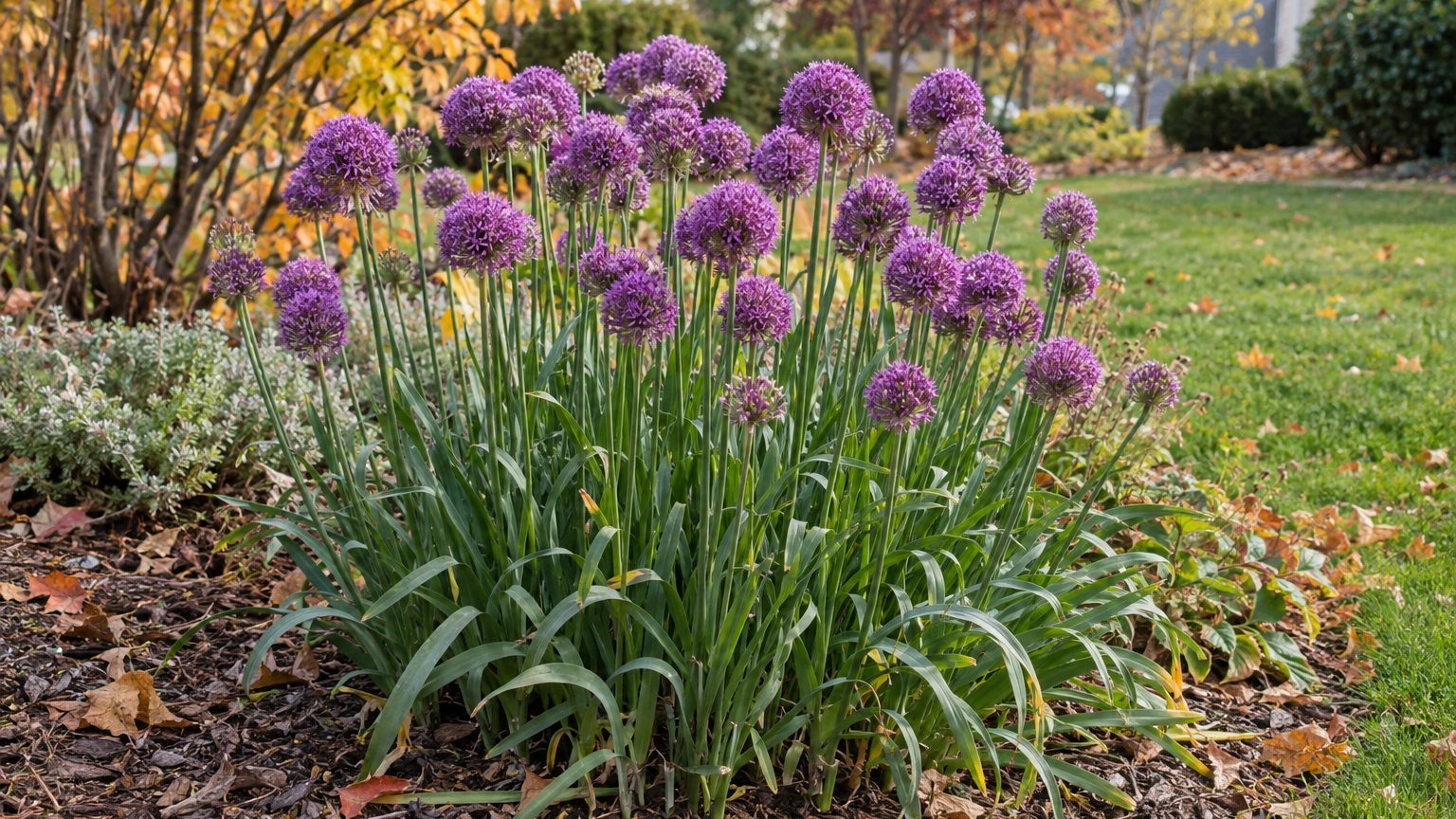
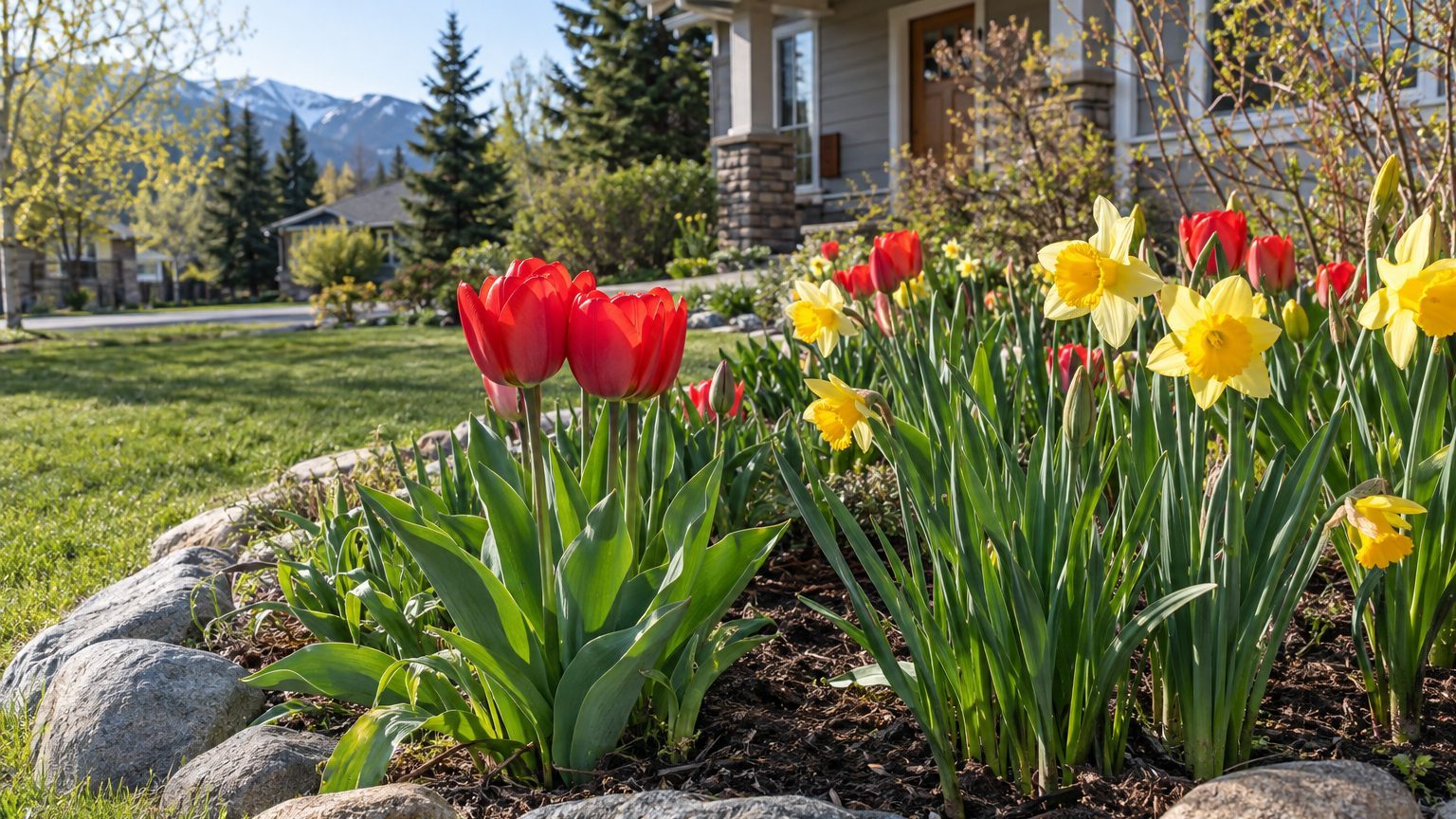
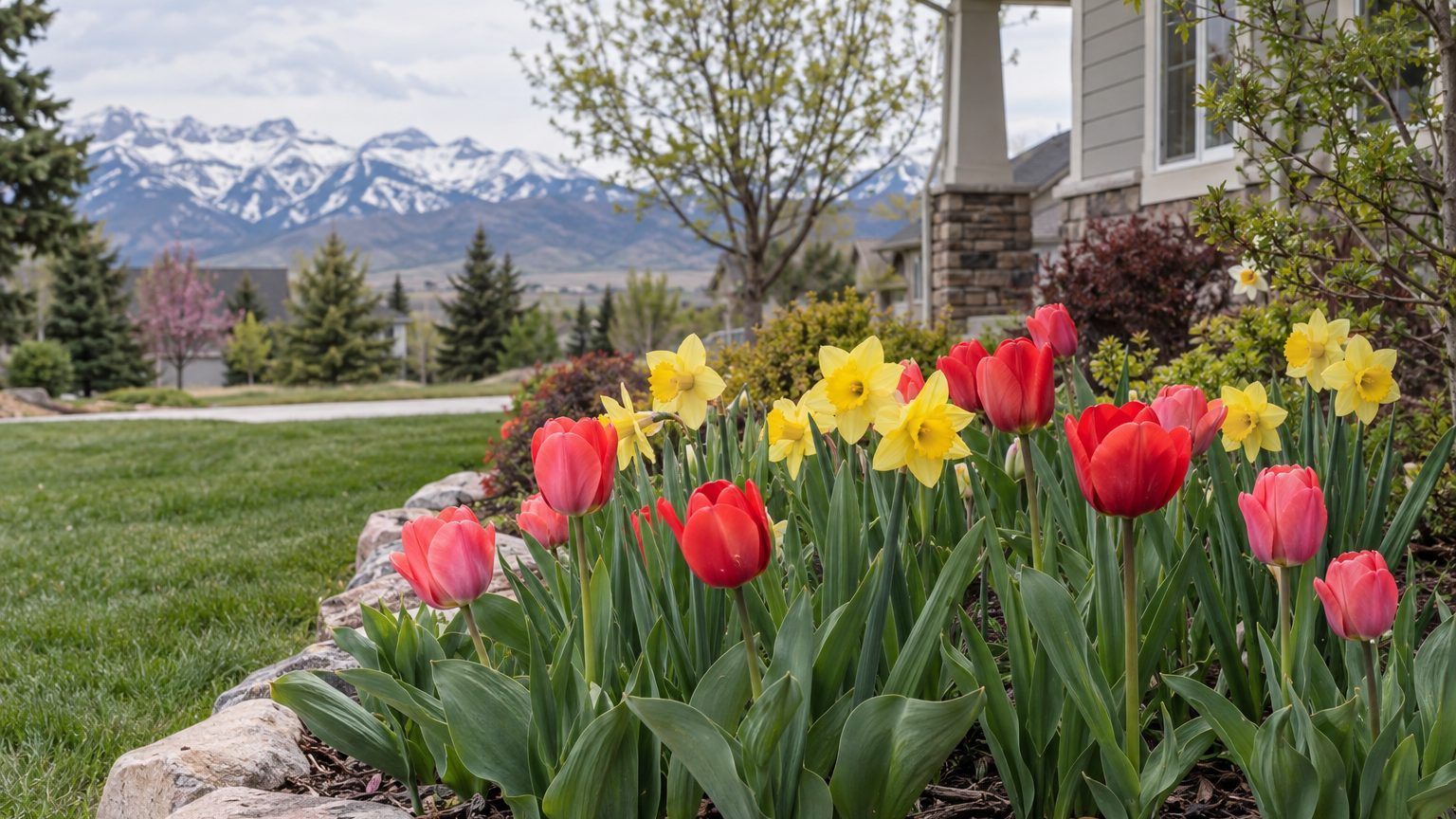
Spring bulbs flower in a long succession, with snowdrops at the start of the season and ornamental onions (alliums) at the end. Between them, you can plant daffodils, which last longer than tulips and are left alone by deer and rodents.