Skip to content
  1. Jan
  2. Feb
  3. Mar
  4. Apr
  5. May
  6. Jun
  7. Jul
  8. Aug
  9. Sep
  10. Oct
  11. Nov
  12. Dec
State
Michigan
USDA zones
4a-6b
Last spring frost
April 30 in the Detroit area; early to mid May across most of the Lower Peninsula
First fall frost
October 6 to October 21
Annual rain
34 in
Lawn zone
cool-season
Source
MSU Extension — Frost-Free Dates · Detroit

The year in Michigan, from the calendar

  1. Jan—
  2. FebPrune fruit trees
  3. MarFeed hydrangeas · Renew an overgrown lilac · Plant roses · Prune roses · Uncover roses in spring
  4. AprSpring bulbs bloom · Plant hydrangeas · Lilacs bloom · Renew an overgrown lilac · Feed roses
  5. MaySpring bulbs bloom · Feed hydrangeas · Plant hydrangeas · Lilacs bloom · Prune lilacs
  6. JunPrune bigleaf hydrangeas · Prune lilacs · Peonies bloom · Feed roses · Mow
  7. JulFeed hydrangeas · Prune bigleaf hydrangeas · Feed roses · Mow · Water
  8. AugPlant hydrangeas · Seed the lawn · Dethatch · Mow · Plant trees
  9. SepPlant spring bulbs · Plant hydrangeas · Seed the lawn · Plant peonies · Aerate
  10. OctPlant spring bulbs · Cut back peonies · Plant peonies · Plant trees · Mow
  11. NovCut back peonies · Protect roses for winter · Fertilize the lawn · Mow
  12. Dec—

From the state frost facts and extension calendars: Iowa State University Extension ; K-State Research and Extension · Iowa State University Extension ; Purdue Extension · Clemson HGIC factsheet — Hydrangea · Purdue Extension — AY-13 Lawn Improvement Programs.

Best Spring Bulbs for Michigan

Best Spring Bulbs for Michigan

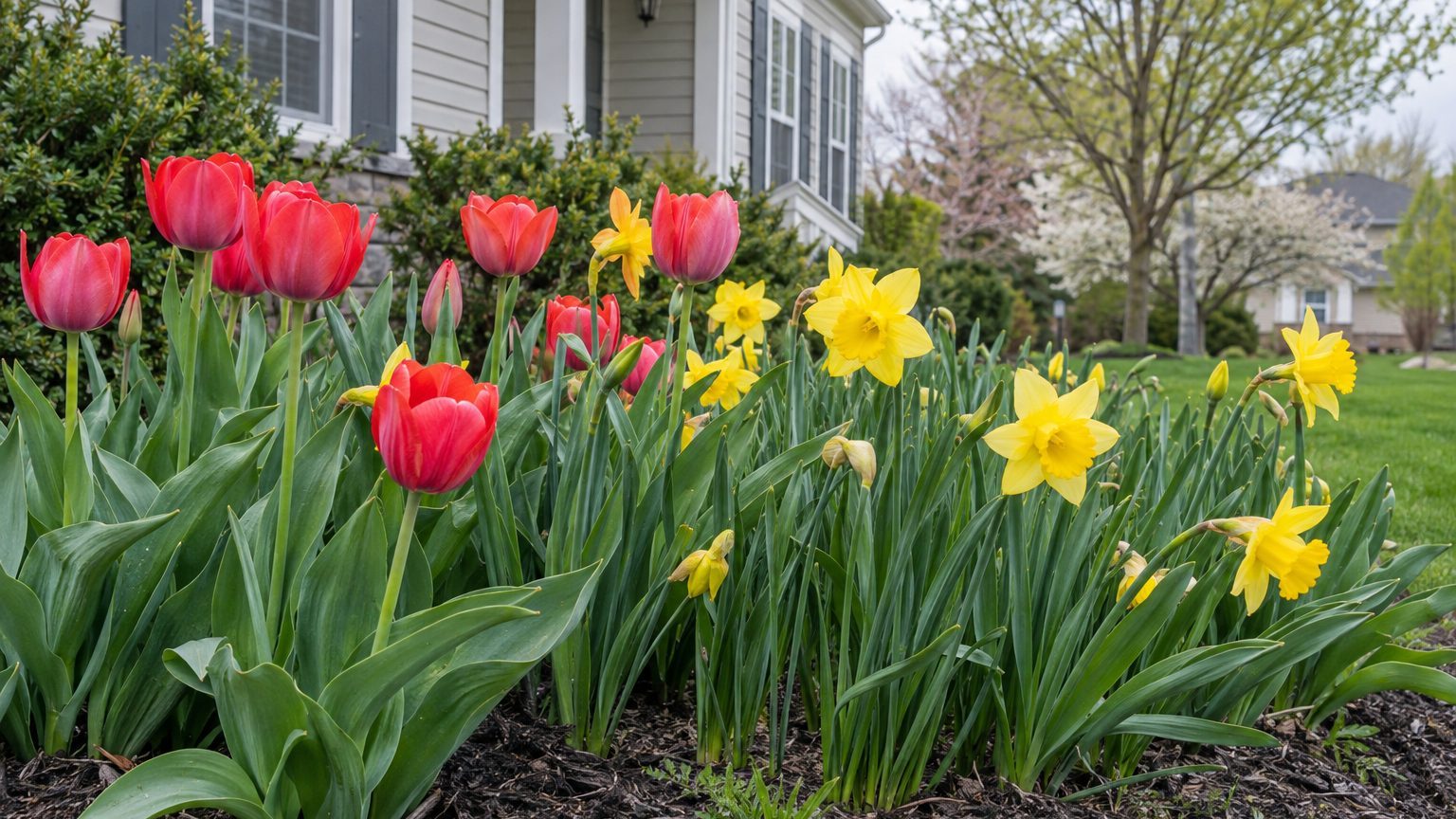
Daffodils pushing through cold soil are a dependable sight in a Michigan yard, and they keep coming back long after other bulbs have faded. Michigan winters give spring bulbs the cold they need, so the real choice is which bulbs hold up, and which ones the rabbits and squirrels leave alone.

Best Spring Bulbs to Grow in Michigan

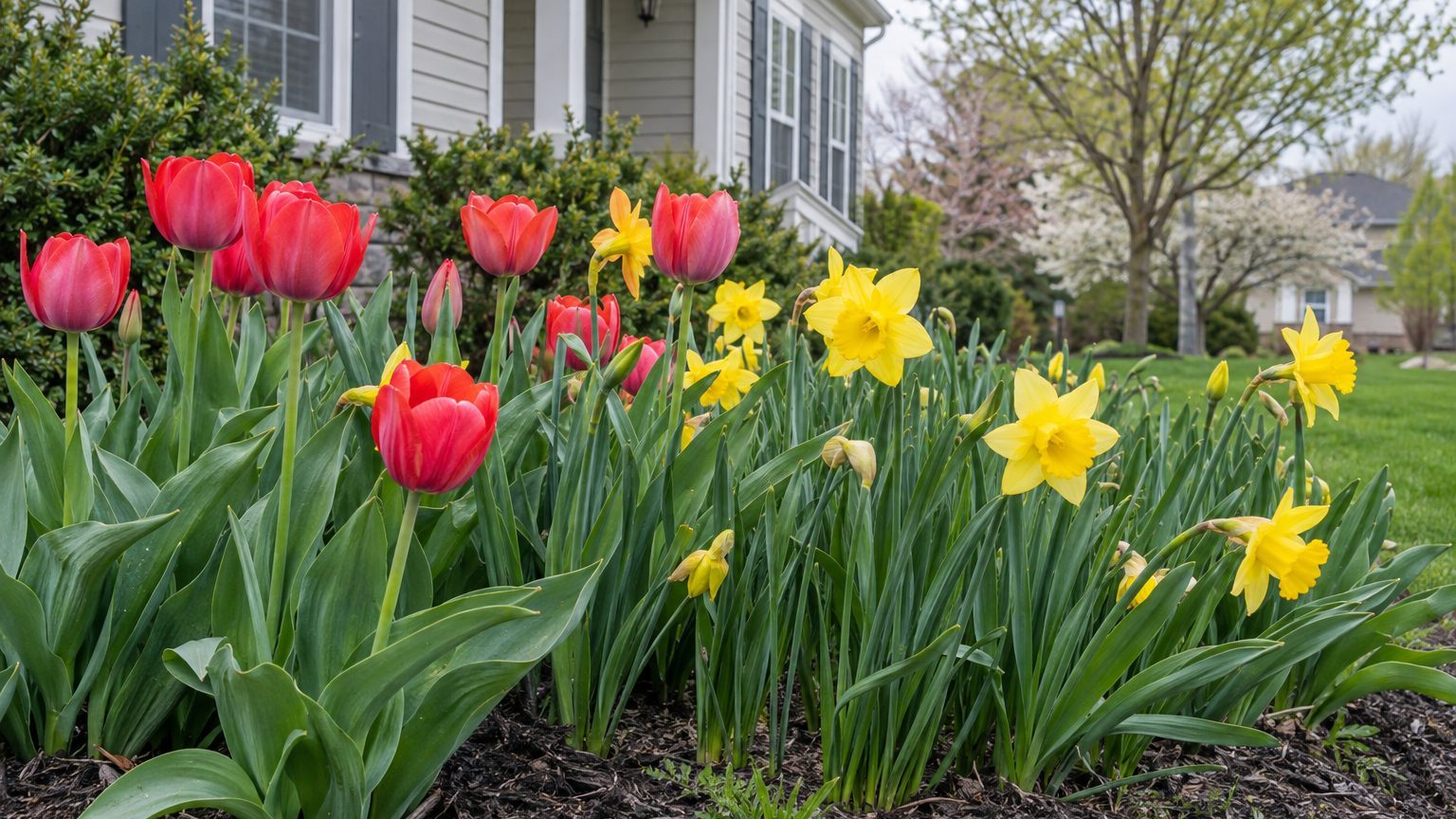
Healthy spring bulbs in bloom

Daffodils are the dependable pick here, with tulips, crocus, alliums and hyacinths filling in around them. Michigan sits in USDA hardiness zones 4a to 6b, so winters are cold enough to meet the chill most bulbs need. Nothing about the climate is too mild or too hot for them.

Daffodils

Daffodils are more vigorous than tulips and most other spring bulbs, and they last longer in the garden. That makes them the more reliable perennial bulb for a Michigan bed.

Squirrels, voles, rabbits and deer leave them alone, and in Nebraska, extension growers describe them as deer-resistant and reliable bloomers. Look for cultivars that have earned the Wister Award from the American Daffodil Society, given for long-lasting flowers, disease resistance and good vigor.

Tulips

Tulips give the biggest color, but they are often short-lived, so many gardeners treat them as annuals. In Kansas, the larger tulips are lifted in late spring to make room for other plants, and that approach works in a Michigan bed too.

Giant Darwin hybrids are popular for strong stems and bright color, flowering April through May. Plant them where a fence or a mesh cover can keep rabbits and deer away.

Crocus

Crocus is a small bulb that adds early color, but it is a favorite of voles, squirrels and rabbits. Plant it close to the house or beneath wire mesh, and expect to replant a few corms over time.

Alliums

Alliums, the ornamental onions, close out the spring bulb season. They do not need a chill period to bloom, though Michigan winters supply plenty of cold anyway, and they are a good partner for tulips as the tulips fade.

Hyacinths

Hyacinths do well wherever winters are cold, and Michigan’s give them the 12 to 16 weeks of cold that most spring bulbs need to flower. Plant them in groups for fragrance near a door or a walk.

How to Choose Spring Bulbs for Your Michigan Garden

Match the bulb to the way you garden. A bed you rarely tend needs bulbs that come back on their own, while a showy container can hold tulips you plan to replace.

Michigan’s cold is on your side, so the question is mostly about animals and effort.

Your situation What suits it in Michigan Why
Very cold winter Daffodils, hyacinths, alliums The winter cold meets the 12 to 16 weeks that most spring bulbs need to flower
Little time for upkeep Daffodils They are more vigorous than tulips and last longer in the garden
Deer, rabbits and voles around Daffodils Animals eat tulips and crocus but leave daffodils alone
Short on bed space Tulips treated as annuals The bulbs can be lifted in late spring to make room for other plants

Tulips are often short-lived in the garden, so plant daffodils where you want a reliable perennial bulb. Daffodils remain the safest place to start.

Which Spring Bulbs Suit Different Parts of Michigan

Michigan stretches from the Detroit area to the northern Lower Peninsula, and winter cold changes along the way. The bulb list stays the same, but the choice leans differently in each area.

  • Detroit area: The last spring frost falls around April 30, so early bulbs get a gentler start. Tulips and hyacinths are a fair bet here, with fencing against animals.
  • Northern Lower Peninsula: Zone 4a is at the cold end of the state’s range, and the last frost comes in early to mid May. Daffodils, alliums and other hardy bulbs are the safer anchor, with tulips as a bonus.
  • Along the Great Lakes shoreline: The lakes soften the cold in many coastal spots, which can nudge a yard toward a warmer zone. Check your own zone before planting borderline bulbs.

Zone and frost date together tell you how much to lean on daffodils versus showier tulips.

Spring Bulb Buying Mistakes to Avoid in Michigan

Planting Tulips Where Animals Roam

Voles, squirrels, rabbits and deer eat tulips and crocus, and a bed can disappear in a season. Plant daffodils around the edges or in their place, or protect the beds with mesh or fencing.

Expecting Tulips to Last Forever

Tulips are often short-lived in the garden, so a bed that thins out after a few springs is normal. Plan to replant them every so often, or lean on daffodils for the long haul.

Storing Bulbs Instead of Planting

A bulb still in the bag is better planted late than stored over the winter. Plant as long as the ground can be dug, and the bulb will do far better than one held back. Fall planting runs September and October, and November and even December work if the ground is still unfrozen. Wait until the soil has cooled below about 60°F so roots form before the freeze without top growth showing in fall.

Where to Get Spring Bulb Advice in Michigan

MSU Extension offers local help with bulb choices and planting for your part of the state. Your county office is the closest source for questions about your own soil and animal pressure.

  • Extension staff can help you match bulbs to your zone, and fall planting questions are best asked in September or October.
  • Your county office can talk through local animal problems, and a visit before you buy saves replanting later.

Common Questions

When Do Spring Bulbs Bloom in Michigan?

Tulips and daffodils flower in April and May. Bulbs come up in March or early April, and the earliest daffodils can open in late February.

Should You Cut the Leaves After Bulbs Bloom?

Remove only the faded flowers and leave the leaves until they turn brown. The leaves feed the bulb for next year’s bloom.

Do You Need to Chill Bulbs Before Planting in Michigan?

Michigan winters supply the cold, so chilling in the refrigerator is not needed. That step is for places where winters are too mild for tulips and hyacinths.
When Do Tulips and Daffodils Bloom in Michigan?

When Do Tulips and Daffodils Bloom in Michigan?

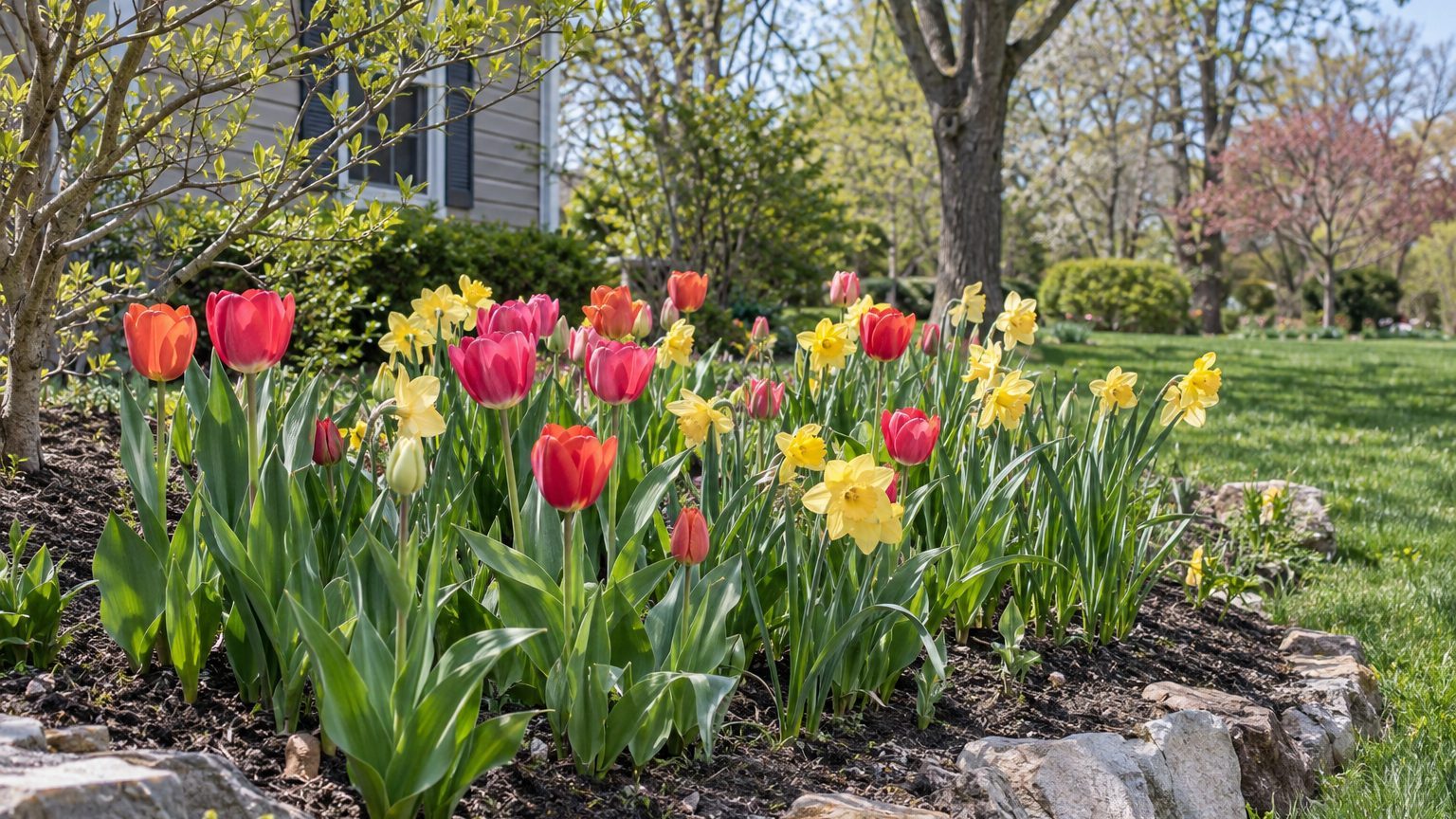
Green tips push through the mulch while patches of snow are still hanging on, and a yard that looked bare through winter suddenly has daffodils nodding by the walkway. Tulips and daffodils in Michigan follow the warming of spring, and the display unfolds gradually across the yard.

When Do Tulips and Daffodils Bloom in Michigan?

When Do Tulips and Daffodils Bloom in Michigan?

Most tulips and daffodils flower in April and May. The first daffodils can open as early as late February in a mild stretch, and March flowers are possible too. Michigan runs from USDA hardiness zone 4a to 6b, so the timing shifts with where you garden.

Bulb When it blooms in Michigan What sets the timing
Daffodils Late February in the mildest spells, mostly April and May Shoots come up in March or early April and open as the ground warms
Tulips, including Giant Darwin hybrids April through May Warming spring weather after a full winter of cold
Alliums Near the end of the spring bulb season Needs winter chill, then responds to spring warmth

Crocus open at the start of the season, alongside snowdrops and winter aconites, well before the tulips. Hyacinths ride the same spring warmth and, like most spring bulbs, need a long winter chill to flower. Michigan winters supply it, so the refrigerator trick used in mild climates is unnecessary here.

How to Tell Your Bulbs Are About to Bloom

The bulbs announce themselves well ahead of the flowers, and a few small changes tell you how close the show is.

  • Pointed green tips breaking the soil in March or early April mean the bulb has woken up, so keep winter mulch loose enough for them to push through.
  • Daffodil buds form at the top of the stem and swell while still green, which tells you the flowers are only a short wait away.
  • A tulip bud that begins to show color at its tip is close to opening, so any cleanup near the bed should be done by then.
  • Thick, flat leaves rising before any bud means the bulb is working through its growth, and the flower stalk will follow from the center.
  • A cold night after the tips emerge rarely harms the leaves, but open flowers are more vulnerable, and frost risk lingers until about April 30 in the Detroit area.
  • Across most of the Lower Peninsula, the last spring frost comes in early to mid May, so open blooms there may still meet a cold night.

Watching the buds beats watching the calendar, because a warm spell can bring flowers out earlier than a cold one.

What to Do After Tulips and Daffodils Bloom in Michigan

Snip off the faded flowers and leave everything else. The green leaves are feeding the bulb for next year’s bloom, so they stay on the plant until they turn brown. Do not cut them back early, since that cuts down the surface that collects sunlight.

Tulips are often short-lived in the garden, and a bed may thin out over time. Larger bulbs such as tulips are sometimes treated as annuals to make room for other plants. Daffodils last longer and are the more reliable perennial bulb, which makes them the better choice where you want flowers to return without fuss.

Browning foliage looks untidy for a while. Planting perennials or annuals nearby lets their growth cover the fading leaves without disturbing the bulbs below.

How Bloom Time Shifts Across Michigan

Michigan stretches far enough north and is wrapped in enough lake water that bloom does not arrive everywhere together.

  • Detroit area: Spring warms sooner in the southeast corner, so daffodils and tulips here tend to open earlier than in the northern half of the Lower Peninsula.
  • Lake Michigan shore: Cold lake water holds back spring warmth along the coast, so bulbs often open a little later than they do farther inland at the same latitude.
  • Northern Lower Peninsula: Winters last longer, and tulips and daffodils usually reach full bloom well after the southern part of the state.
  • Upper Peninsula: Snow cover lingers into spring, so the bulb season starts later here than in the south, and hardy daffodils are dependable performers.

A sheltered south-facing wall can bring flowers out earlier in any of these places, while a shady north side holds them back.

Where to Get Bulb Advice in Michigan

Local questions about varieties, soil and timing are best put to people who know Michigan ground. MSU Extension runs the state’s gardening help, with a county office in every corner of the state.

  • The service has horticulture resources on spring bulbs, and the fall planting season is the right time to read them.
  • Your county extension office can answer questions about local soil, deer pressure and what grows well in your part of the state.

Common Questions

Can You Plant Tulips and Daffodils in December in Michigan?

Yes, as long as the ground can still be dug. September and October are the main planting months, but November and even December work if the soil has not frozen. A bulb still sitting in the bag is better planted late than held over the winter.

Do Deer and Rodents Eat Tulips and Daffodils?

Tulips and crocus attract voles, squirrels, rabbits and deer, and chipmunks, mice and gophers may help themselves too. Daffodils are left alone, which helps them hold up as a dependable bulb in yards with a lot of wildlife.

Can You Plant Forced Daffodils Outdoors in Michigan?

Daffodils are an exception among forced bulbs. They are more vigorous than tulips and most other spring bulbs, so forced daffodils can be saved and planted outdoors, where many perform well in later years.

When to Plant Tulips and Daffodils in Michigan

When to Plant Tulips and Daffodils in Michigan

Tulip tips and daffodil leaves push through cold ground in Michigan every spring, and the work that makes them happen was done months earlier, in fall. That planting window is wider than most gardeners expect.

When to Plant Tulips and Daffodils in Michigan

When to Plant Tulips and Daffodils in Michigan

Plant tulips and daffodils in September and October, and keep going in November or even December if the ground is still unfrozen. In USDA zone 6a, the first fall frost usually arrives October 6 to October 21. Michigan as a whole spans zones 4a to 6b, so a northern yard runs on an earlier clock than a Detroit one. A bulb’s year goes like this:

  • In late summer and early fall, buy bulbs that feel firm and heavy for their size and keep them somewhere cool and dry until the planting window opens.
  • Through winter, the chilling happens outdoors, because Michigan winters supply the 12 to 16 weeks of cold most spring bulbs need, so the refrigerator step used in mild-winter states is unnecessary here.
  • In September and October, set the bulbs in the ground once the soil has cooled off, early enough for roots to form before the ground freezes and late enough that the bulbs do not sprout in the fall.
  • In late fall, after planting, spread a layer of mulch over the bed to keep the soil temperature steady through the winter.
  • When March or early April arrives, the first green tips break the surface, and the flowers follow in April and May.

Bulbs that miss the early window are not wasted. November and December planting works as long as a trowel still goes into the soil.

Which Spring Bulbs Do Best in Michigan?

Tulips, daffodils, crocus, alliums and hyacinths can all be grown here, since the winters give them the cold they need. The real differences come from wildlife and staying power, and daffodils come out ahead on both.

Voles, squirrels, rabbits and deer eat tulips and crocus, while daffodils are left alone. A bed near woods or a field edge is a good place to lean on daffodils.

Bulb type How it does in Michigan Why
Daffodils Reliable year after year More vigorous than tulips, and animals leave them alone
Tulips Often fade after a few seasons Short-lived in gardens, and a favorite of voles, squirrels, rabbits and deer
Crocus Grows well but needs protection Rodents and deer go after the bulbs
Alliums Easy to plant in fall They need the cold of winter to bloom, and they finish the spring succession

Hyacinths fit the same fall planting schedule as tulips and daffodils, so they can share a bed with either. In Michigan, larger bulbs like tulips are sometimes treated as annuals and lifted in late spring to make room for other plants, which is a sensible plan for a border where tulips tend to fade.

When to Plant, Chill and Care for Spring Bulbs in Michigan

The bulb year has three jobs for the gardener, and each has its own timing. Planting follows the calendar, chilling is left to the weather, and the care after bloom follows what the leaves are doing.

Task Best timing in Michigan Why then
Plant tulips, daffodils, crocus, alliums and hyacinths September through October, or November and December while the ground can be dug A bulb still in the bag does better planted late than stored over winter
Chill Outdoors, through the winter in the ground Refrigerator chilling is for places with winters too mild to do it
Let the foliage die back After bloom, until the leaves turn brown The leaves feed the bulb for next year’s flowers

Only the faded flowers come off after bloom. Cutting or tying the green leaves cuts off the bulb’s food supply, and the following spring’s show suffers for it.

How Bulb Planting Time Changes Across Michigan

Michigan stretches far enough that planting dates drift from one end to the other. The direction of the shift is easy to remember: colder soil means starting earlier in the window, and milder soil lets you finish later.

  • Upper Peninsula: Winter arrives early, so aim for the start of the September to October window. Getting bulbs in while the soil is workable gives the roots time to settle before the freeze.
  • Northern Lower Peninsula: Cold comes sooner than in the south, and a late-September start keeps you ahead of a hard freeze.
  • Detroit area: The soil cools later here, so planting can run through October and, if the weather allows, into November.
  • West Michigan lakeshore: Lake Michigan holds warmth into fall, so the ground often stays diggable longer than inland, which suits a late planting.

Wherever you garden, the soil’s temperature is a better guide than the date on the calendar.

Where to Get Bulb Advice in Michigan

Michigan State University Extension and your county extension office can answer bulb questions specific to your soil, your yard and your wildlife pressure.

  • The county office can run a soil test if your bulbs have failed to return, and it can help diagnose what went wrong.
  • Staff and master gardeners can tell you what is working in your part of the state, so ask them before you order a large batch of bulbs.
  • If a bag of bulbs is still sitting in the garage, check whether the soil can be dug and get them in the ground.

Common Questions

Can You Plant Forced Daffodils Outdoors in Michigan?

Yes. In Michigan, forced daffodils are saved and planted outdoors with good results. Plant them out once the ground can be dug.

Should You Dig Up Tulips Every Year?

You do not have to. In Michigan, larger bulbs like tulips are sometimes lifted in late spring to make room for other plants. In Michigan, leaving them in works too, though they may fade after a few seasons.

How Do You Choose Daffodil Varieties That Last?

Look for cultivars that have won the Wister Award from the American Daffodil Society. The award goes to daffodils with long-lasting flowers, disease resistance and good garden vigor.

Best Grass Seed for Michigan

Best Grass Seed for Michigan

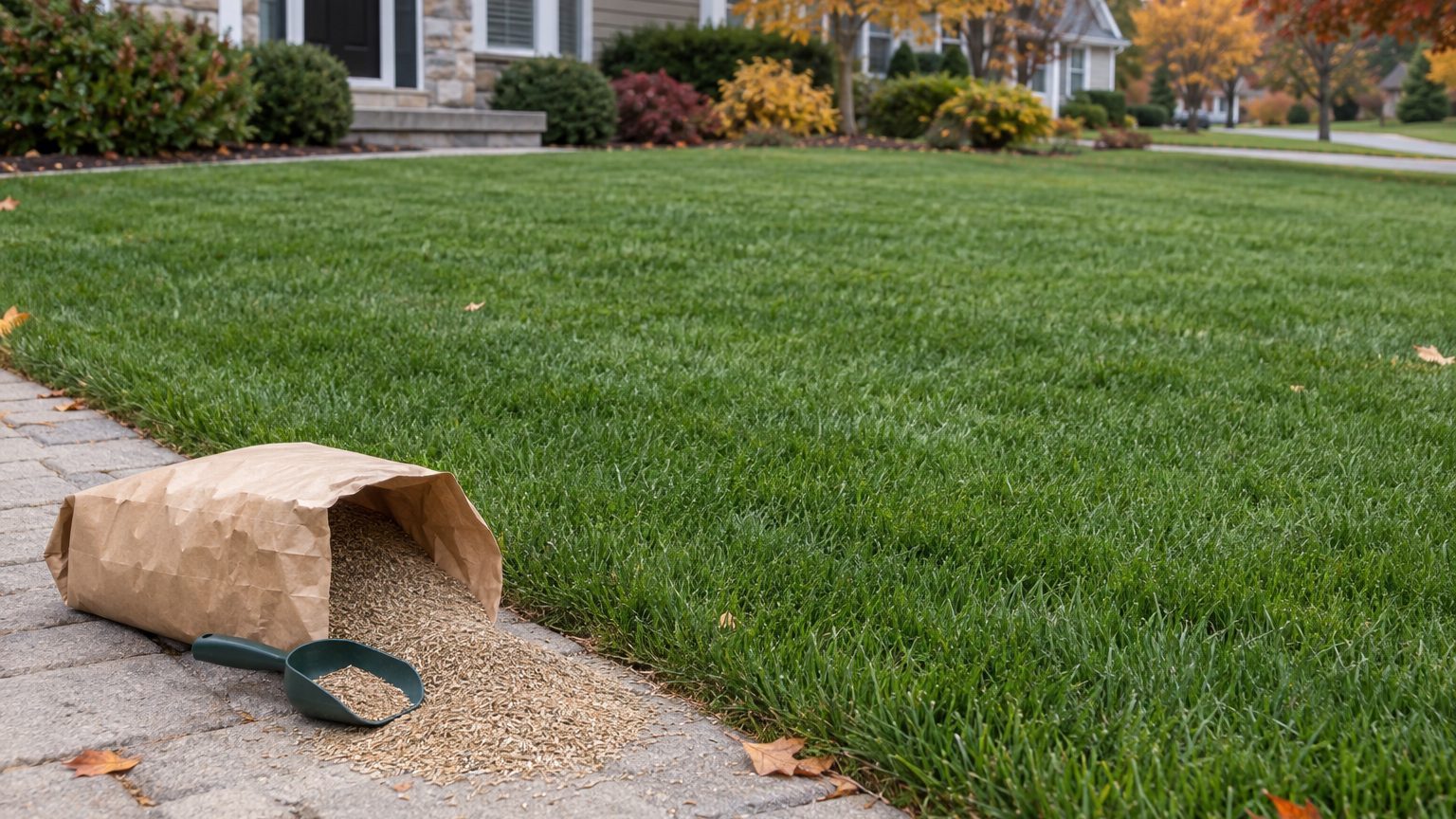
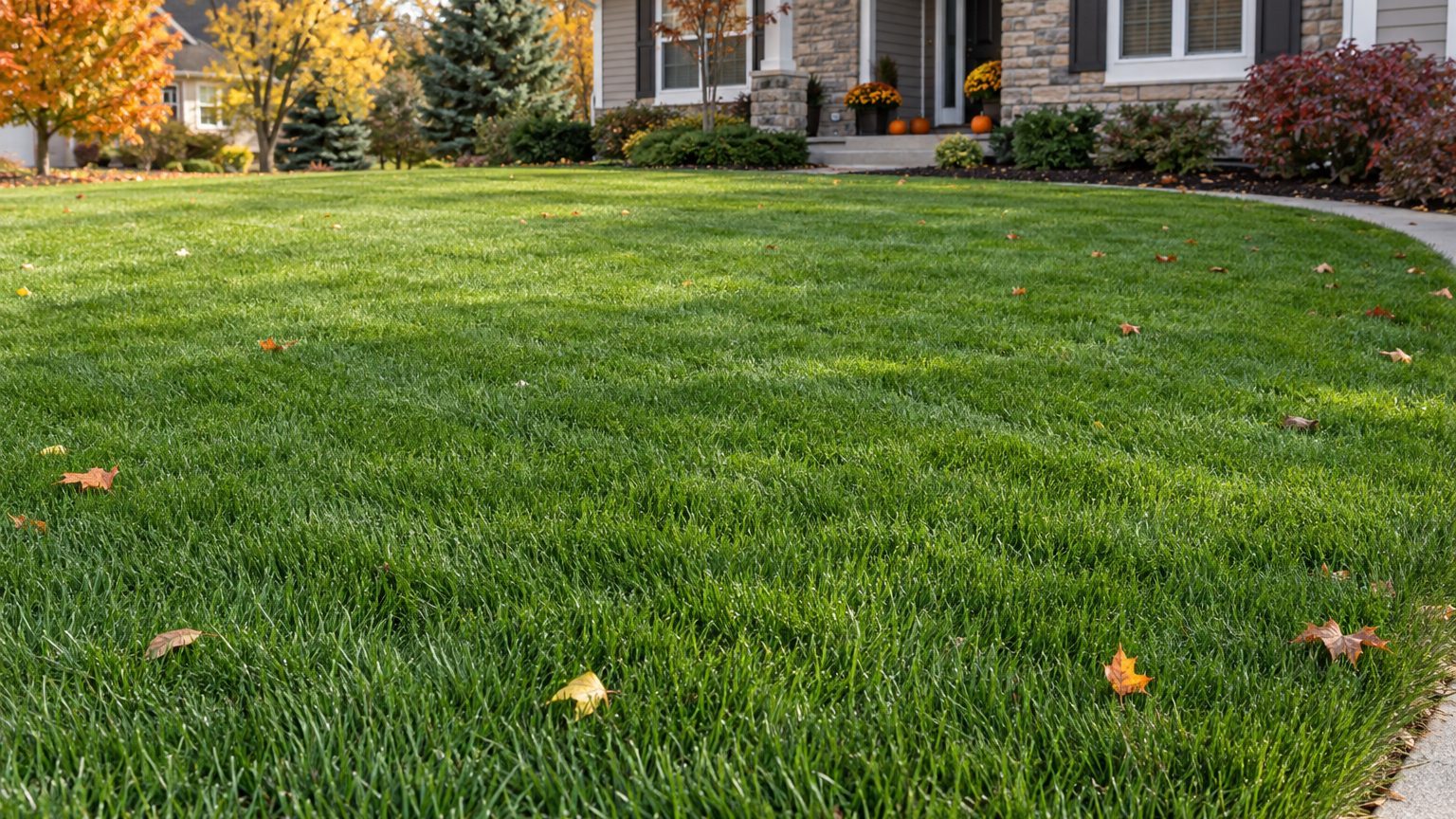
Walk a Michigan lawn in late summer and you can tell which grasses are happy: the ones staying thick and green through the cool nights. Cool-season grasses suit this state, and a practical seed choice is usually bluegrass, fine fescue, tall fescue or ryegrass, matched to your sun, shade and foot traffic.

Which Grass Grows Best in Michigan?

Cool-season grasses are well suited to Michigan because they are active in spring and fall and tolerate cold winters. Michigan spans USDA hardiness zones 4a to 6b, so winter survival matters more than summer heat. The main choices are Kentucky bluegrass, fine fescues, tall fescue and perennial ryegrass, each with different strengths.

Kentucky Bluegrass

Kentucky bluegrass is the classic Michigan lawn grass. It shrugs off hard winters and spreads by underground stems, so it slowly fills thin spots on its own.

The trade-off is patience. It germinates slowly and wants sun, so patience matters after seeding.

Fine Fescues

Creeping red, chewings and hard fescue form a fine, soft turf that handles shade, dry soil and cold better than bluegrass. They suit lawns under maples and oaks, and they need less fertilizer.

They do not love heavy foot traffic, so they fit the quiet corners of the yard more than the kids’ play area.

Tall Fescue

Tall fescue is a coarser, deep-rooted grass that stays green through dry spells and wears well under traffic. It grows in clumps rather than spreading, so bare patches need reseeding instead of filling in by themselves.

Its winter performance varies with local conditions, especially farther north.

Perennial Ryegrass

Perennial Ryegrass — Best Grass Seed for Michigan

Perennial ryegrass sprouts fast, which makes it handy for quick cover and for blending into mixes. It can struggle when winters turn harsh and snow cover is thin.

Use it as a partner in a blend rather than as the whole lawn, especially as you move north.

How to Choose Grass Seed for a Michigan Yard

Start with the yard you actually have, not the lawn on the bag. Sun, shade, foot traffic, and how much you want to water and mow determine which grass will keep looking good over time.

Most real yards mix conditions, and that is fine. Seed each patch with what suits it, or use a blend whose grasses can adapt to different parts of the yard.

Your yard Grass Why it fits
Full sun, regular use Kentucky bluegrass Dense turf that recovers and fills in
Shade under trees Fine fescues Tolerate low light and root competition
Heavy traffic, pets, kids Tall fescue Tough, deep roots that wear well
Little watering Tall fescue or fine fescues Hold up better when summer turns dry
Less frequent mowing Fine fescues Grow slowly and can be left a bit taller
Fast cover on bare soil Perennial ryegrass in a blend Sprouts quickly and shelters slower grasses

If you like a neat, frequently mowed look and have sun, bluegrass rewards the effort. If you want a lawn that asks for less, lean on fescues.

Which Grasses Grow Where in Michigan

Michigan is long and lake-bound, so winter cold and lake influence change which grass is the safer bet from one part of the state to another.

  • In Detroit, the last spring frost comes around April 30, though local lawn timing still depends on conditions in the yard. Tall fescue and bluegrass blends do well, and ryegrass is a lower risk here than elsewhere.
  • Along the Lake Michigan shore: Lake air can moderate winter cold and slow spring warm-up. Bluegrass and fescue mixes settle in comfortably.
  • Upper Peninsula: Winters are colder here, and snow can linger. Lean on Kentucky bluegrass and fine fescues, and keep ryegrass to a small share of any blend.

Whatever your corner, cold-hardy grasses are the safe default, and local snow cover is the thing to watch.

Grass Seed Mistakes to Avoid in Michigan

Choosing the Wrong Grass

Grass that does not match the light in a yard may thin out or struggle. Match the seed to the light in each part of the yard, and check the bag for the species names rather than the marketing.

Seeding at the Wrong Time

Late summer is the sweet spot here, with August and September giving seed warm soil and cool air. That timing lets young grass root well before the first fall frost, which arrives October 6 to October 21 in Detroit.

If you miss it, April and May still work, but crabgrass preventer applied in spring can stop new seed from sprouting, so choose one job or the other.

Burying the Seed Too Deep

Grass seed is small and needs light and moisture to sprout. Cover it with no more than 0.25 inch of soil and press it firmly so every seed touches the ground. Seed left on top of thatch or buried deeper tends to come up patchy.

Where to Get Lawn Advice in Michigan

Soil, shade and microclimate vary yard by yard, so a nearby expert can tune any of this to your lot.

  • MSU Extension offers lawn guidance written for Michigan conditions, which is handy before you buy seed in late summer.
  • Your county extension office can answer questions about your local soil, and a soil test taken ahead of seeding tells you what the yard needs.

Common Questions

Should You Aerate Before Seeding a Michigan Lawn?

On compacted or thatchy turf, yes. Core aeration works well in September, and April or May is a fallback. It opens the soil so seed sits in contact with ground rather than on top of the thatch.

Is a Seed Blend Better than a Single Grass?

For most yards, a blend is safer because different grasses cover different conditions, from sunny stretches to shady corners. Single-species seed makes sense when the whole yard is alike, such as an open, sunny lot.

Can Warm-Season Grass Grow in Michigan?

It is a poor match. Warm-season grasses turn brown and dormant for a long stretch in cold weather, and Michigan winters are hard on them. The cool-season grasses described above stay the dependable choice.

Lawn Problems and Solutions in Michigan

Lawn Problems and Solutions in Michigan

Brown patches that appear after a hot stretch, grass that thins out under maples, and weeds that fill bare spots are familiar complaints on Michigan lawns. Most trace back to a few causes tied to the state’s cold winters, humid summers and shade from mature trees. Each one shows itself in a different way, and each has a fix.

Lawn Pests and Diseases in Michigan

Crabgrass in Thin Spots

Crabgrass in Thin Spots — Lawn Problems and Solutions in Michigan

Crabgrass is a pale green, sprawling annual that fills bare or thin areas once the soil warms. It dies with the first frost, which arrives October 6 to October 21 around Detroit, but leaves seed behind. Apply a pre-emergence preventer in April, or in May if you missed it.

Dandelions and Clover

Dandelions show a rosette of toothed leaves and a deep taproot, and clover forms low mats of divided leaves. These weeds move into thin turf. Pull dandelions when the soil is damp so the whole root comes out, and thicken the lawn with seed in August or September.

Thatch Buildup

Thatch is the spongy brown layer between green blades and soil. Up to 1/2 inch is healthy, but more than that blocks water and shelters pests and disease. Dethatch in August or September, or in April, and core aerate in September if the layer is thick.

Brown Patches in Midsummer

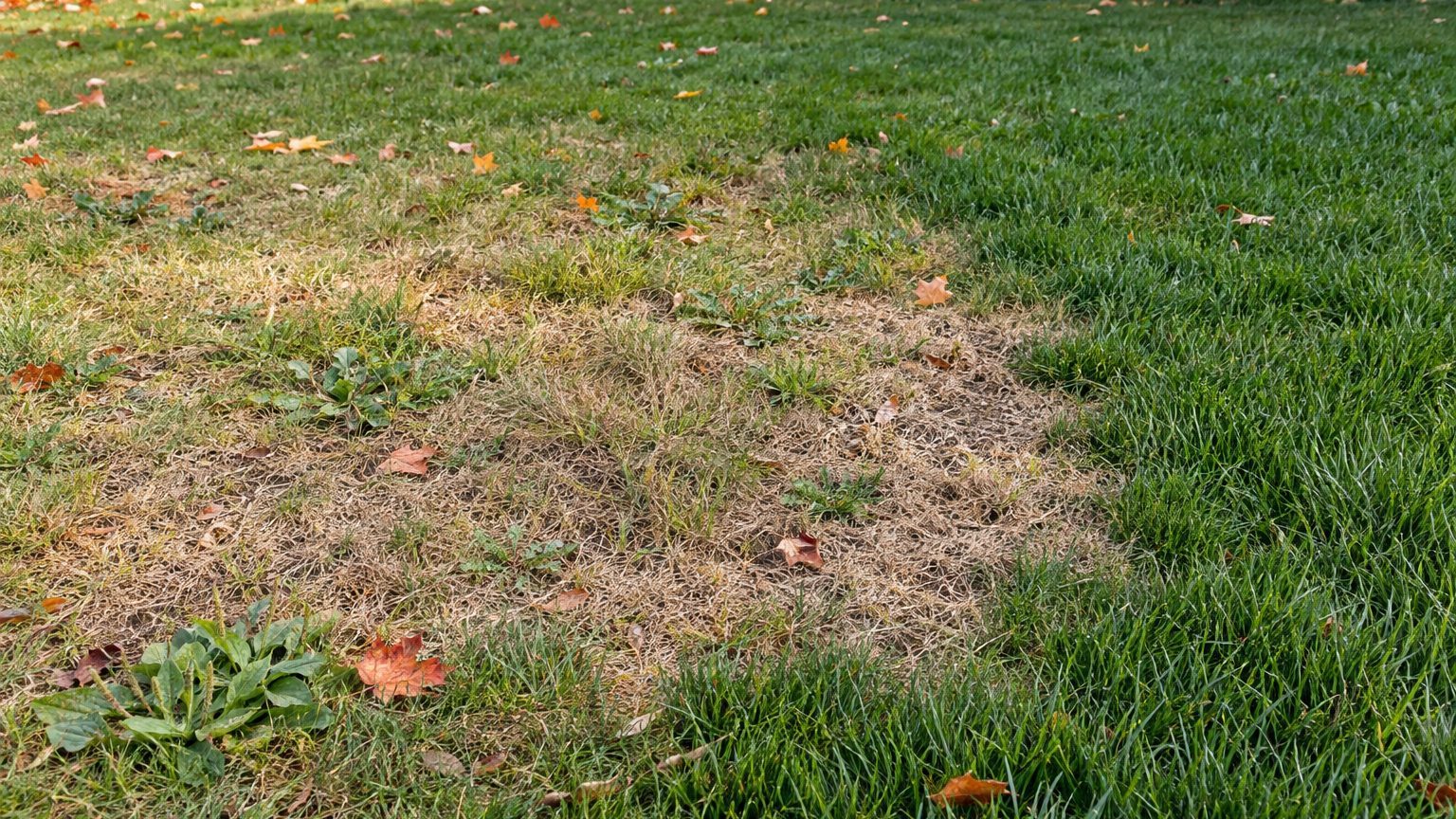
Humid Michigan summers invite fungal disease, which shows as tan or brown patches that grow outward, sometimes with a darker ring in the morning. Mow with a sharp blade, water early in the day so the grass dries quickly, and avoid heavy feeding in hot weather.

Grubs and Chewed Roots

Grubs are C-shaped white larvae that chew roots, leaving turf that feels loose and lifts like a carpet. Skunks and birds digging at the lawn are another sign. Healthy, deeply rooted grass tolerates some feeding, so aerate in September and keep up regular watering from June through August.

Snow Mold After Winter

When snow melts in spring, matted gray or pinkish circles may appear where it lay longest. Snow mold usually looks worse than it is. Rake the patches gently to lift the blades and let air in, and the grass typically recovers as mowing begins in April.

How to Tell Which Lawn Problem You Have

A symptom rarely settles the diagnosis. Pair the shape of the damage with where it sits and when it showed up, then try a simple test: tug the grass and see whether it stays rooted or lifts away.

Walking the yard can sort common problems into a short list of likely causes.

What you see Where and when Likely problem
Grass lifts like a rug Late summer into fall, in irrigated sunny areas Grubs
Matted gray or pink circles Spring, where snow piled up Snow mold
Tan patches with dark edges Humid midsummer mornings Fungal disease
Coarse sprawling blades Open thin spots, summer Crabgrass
Spongy turf, brown layer at base Any season, firm underfoot Thatch

Thin grass under trees is a different case. Shade and root competition usually explain it, so lasting improvement often depends on more light or a shade-tolerant seed mix.

Where Lawn Problems Are Worst in Michigan

Conditions shift across the state, and so do the problems you are most likely to meet.

  • Detroit area: The last spring frost falls around April 30 in the Detroit area, so watch for warming soil as crabgrass season approaches. April is the main month for crabgrass preventer.
  • Northern Lower Peninsula: Frost lingers into May and snow cover stays long, so snow mold is more common and seeding often shifts later.
  • Upper Peninsula: Winters are harsher and the growing season shorter, which favors hardy grasses and slows recovery from any damage.
  • Lakeshore towns: Lake influence moderates temperature swings, but humid air keeps fungal disease active in summer.

Check your own conditions first, because the USDA zone range of 4a to 6b means a nearby lawn may face a different season.

Lawn Care Mistakes That Invite Problems in Michigan

Mowing Too Short

Scalped grass weakens roots and lets sunlight reach weed seeds. Raise the mower and cut often, since mowing runs from April through November. Leave the clippings to return nutrients.

Shallow Daily Watering

Frequent light sprinkling keeps the surface wet, which feeds disease and keeps roots shallow. Water deeply and less often, mostly from June through August, and do it in the morning so blades dry by evening.

Fertilizing at the Wrong Time

Heavy summer feeding pushes soft growth that disease likes. Feed in September and again in November, with May as a fallback, so roots build strength going into winter.

Where to Get Lawn Advice in Michigan

Michigan State University Extension offers research-based guidance on turf problems, and your county office can help with local conditions.

  • Visit the extension site when a patch looks unfamiliar, to compare symptoms before you treat anything.
  • Contact your county office in spring or late summer, when most seeding and weed decisions are made.
  • Bring a small cut sample of the affected turf, roots and soil included, for a clearer diagnosis.

Common Questions

Why Does My Michigan Lawn Have Dead Patches After Winter?

Matted gray or pink circles in spring, in spots where snow sat longest, point to snow mold. Raking them lightly and mowing in April usually brings the grass back.

Is a Thick Thatch Layer Always a Problem?

No. A thin layer protects the soil. It becomes a problem when it feels spongy underfoot and water runs off instead of soaking in.

Can You Fix a Thin Lawn Without Replacing It?

Usually yes. Overseed in August or September, when seed has time to root before winter, and correct the cause such as shade, mowing height or compaction first.

Michigan Lawn Care Schedule, Month by Month

Michigan Lawn Care Schedule, Month by Month

Mowing in Michigan runs from the first green-up in April until the last cut in November, and almost every other job fits into a few windows around that stretch. Core aeration, seeding, dethatching and feeding cluster in late summer and fall, while crabgrass control belongs to spring.

What to Do Each Month in a Michigan Lawn

Lawn in Michigan

Cool-season grass does its heaviest lifting when the soil is warm and the air is cool, so the busiest stretch comes in late summer and early fall. The rest of the year is mostly mowing, watching and waiting.

Month In the lawn
January Rest. The grass is dormant under snow, so keep foot traffic and plows off it where you can.
February Rest. Dormant turf still needs no work. Watch for matted snow mold spots that you can rake gently once things thaw.
March Wait. The ground is thawing and soggy, and walking on it now compacts the soil. Michigan law bars lawn fertilizer on frozen or waterlogged soil, so hold off on feeding.
April Put down crabgrass preventer before the weeds sprout. This is also a fine time to start mowing, and aeration, dethatching or seeding thin spots all work now if fall got away from you.
May Mow regularly as growth picks up. If you missed April, preventer still works now, and so do seeding, aeration and a light feeding.
June Keep mowing and start watering as the weather dries out, giving the lawn a deep soak instead of a sprinkle.
July Water deeply in heat and mow on schedule. Brown patches in midsummer often mean the grass is resting, not dead.
August Seed and dethatch as the nights cool, and keep watering if rain is thin. New grass has time to root before cold arrives.
September Core aerate, seed, dethatch and feed. This is the month that does the most for next year’s lawn.
October Keep mowing and rake leaves so they do not smother the grass. Frost can arrive this month, so avoid starting new grass this late.
November Make the last cuts and give the lawn its late feeding while the roots are still working. Stop once the soil freezes.
December Rest. The lawn is dormant, so clear fallen branches and leave the grass alone.

If a fall task slips past you, the following spring still gives a second chance for most of them. Just do not stack seeding and crabgrass preventer on the same patch, since the preventer blocks new grass seed as well as weeds.

When Does the Lawn Season Start and End in Michigan?

Grass wakes up when the soil warms, and seed sprouts once the soil sits at 50 to 65 °F. Michigan lawns are mostly cool-season grasses such as Kentucky bluegrass, fescue and ryegrass, which grow hardest in spring and fall and slow down in midsummer heat.

Frost dates matter mostly for young grass. In the Detroit area the last spring frost falls around April 30, while most of the Lower Peninsula sees it in early to mid May. Seedlings that emerge ahead of those dates can get nipped, so spring seeding is a gamble compared with late summer.

In the fall, the first frost in Detroit’s zone 6a comes between October 6 and October 21. Seed sown in August and September has time to root before then. Mowing carries on past the first frost because the grass keeps growing until the soil turns cold.

How the Lawn Calendar Shifts Across Michigan

Michigan spans USDA hardiness zones 4a to 6b, and local conditions can shift the work within the calendar’s listed months.

  • Southeast Michigan and Detroit: In the Detroit area, the last spring frost falls around April 30. Crabgrass preventer and first mowing happen on the early side of their windows.
  • West Michigan along Lake Michigan: The lake keeps spring a little cooler and delays warm-up, but it also holds off the first fall frost, which gives fall seeding extra time.
  • Northern Lower Peninsula: Spring arrives later and fall frost comes sooner, so aim for the early end of the seeding window and the later end of spring jobs.
  • Upper Peninsula: Snow lingers well into spring and the season is short, so work follows the thaw rather than the month.

When in doubt, let the soil and the grass tell you whether conditions are ready within the listed months.

Lawn Care Timing Mistakes to Avoid in Michigan

Feeding Too Early in Spring

A big dose of fertilizer on cold, soggy ground washes away and pushes weak, leafy growth. It can also break Michigan’s rules on frozen or waterlogged soil. Wait until May, or better, do most of your feeding in September and November.

Seeding Too Late in the Fall

Seed that goes down after the window closes may sprout and then freeze before the roots take hold. Aim for August and September. If you miss it, spring seeding in April or May still works, though weeds will compete harder.

Applying Preventer at the Wrong Time

Crabgrass preventer works only before the weed seeds germinate. Apply it in April, or in May if you are late. Putting it down after crabgrass germinates will not kill established plants, and it can also stop grass seed from taking.

Where to Get Lawn Advice in Michigan

Local conditions vary, and soil tests settle questions the calendar cannot. MSU Extension is the state’s land-grant resource, and your county office can point you to the right help.

  • Check MSU Extension for lawn guidance written for Michigan grasses, and go there before planning fall work.
  • Contact your county extension office to arrange a soil test, ideally before you feed or seed, since phosphorus is allowed only for a new lawn in its first season or where testing shows a shortage.

Common Questions

Can You Seed a Michigan Lawn in Spring?

Yes. April and May both work, though young grass faces weeds and summer heat with a shallow root system. Late summer is easier on new seed.

When Do You Stop Mowing in Michigan?

Mowing continues through November, as long as the grass is still growing. Once the soil freezes and growth stops, the mower can go in the garage.

How Much Should You Water a Michigan Lawn in Summer?

Water mostly in June, July and August, and soak the lawn deeply instead of sprinkling lightly. Deep watering encourages roots to reach down, which helps the grass ride out dry spells.

Michigan Lawn Care: What to Do and When

Michigan Lawn Care: What to Do and When

A Michigan lawn rests under winter snow, wakes up slowly in spring, and becomes active again in late summer. Cool-season grasses suit the state, and the busiest seeding and feeding happen in late summer and early fall rather than in spring.

Frost Dates and Growing Season in Michigan

Frost sets the outer edges of the season, but grass grows when the soil warms, not when the last frost passes. In Detroit, the last spring frost comes around April 30, while most of the Lower Peninsula sees it in early to mid May. Hardiness zones in Michigan run from 4a to 6b on the USDA system, so the north and the south differ.

  • In early spring, the lawn is still dormant or barely stirring, and a late frost can nip tender new seedlings. Mowing begins in April once the grass grows, and crabgrass preventer goes down in April, or in May if you are late.
  • In late spring, the soil warms and growth picks up fast. Fertilizing can happen in May, and the first frost danger for young grass has passed in most places by then.
  • In summer, from June to August, cool-season grass slows in heat, so water is the main task. Mowing carries on through the whole warm season.
  • In late summer, August and September bring the best seeding window. In Detroit, the first fall frost arrives between October 6 and October 21 in zone 6a, so seed sown now has time to root before it hits.
  • In fall, core aeration and fertilizing fit September, with another feeding in November. Mowing continues until growth stops, usually into November.

Seed sown too close to the first fall frost may not root well enough to survive winter, which is why August and September matter so much here.

Cool-Season or Warm-Season Grass in Michigan?

Cool-season grass is the answer. Michigan winters are cold enough that warm-season grasses struggle to survive, and the lawn species that thrive here grow best in spring and fall, then slow down or rest in summer heat and drought.

The main cool-season choices for Michigan lawns are listed below.

Grass How it does in Michigan Why
Kentucky bluegrass Dense, hardy lawn Cool-season grass that spreads and fills in thin spots
Fine fescues (creeping red, chewings, hard) Reliable in cool conditions Cool-season grasses suited to the region
Perennial ryegrass Fast to sprout Cool-season grass that establishes quickly
Tall fescue Sturdy lawn Cool-season grass used across the region

Many lawns use a blend of these grasses. The state’s Best Grass Seed page goes into which mix suits sun, shade and traffic.

When to Seed, Fertilize and Aerate a Lawn in Michigan

Late summer and early fall carry most of the heavy work. Seed, aeration and feeding all fit into the same part of the season, when soil is warm and air is cooler. Spring works as a fallback for several tasks.

Michigan law limits lawn feeding. Lawn fertilizer cannot go on frozen or waterlogged soil, and phosphorus fertilizer is only for a new lawn in its first season or where a soil test shows a shortage.

Task Best months in Michigan Why then
Seeding August, September (April, May also work) Warm soil and cool air help seed sprout, and roots form before winter
Fertilizing September, November (May also works) Grass stores nutrients for winter and greens up faster in spring
Core aeration September (April, May also work) Grass recovers quickly and fills in the holes while it is growing strongly
Dethatching August, September (April also works) The lawn is growing actively and heals fast
Crabgrass preventer April (May also works) It has to be down before crabgrass seed sprouts

Water from June to August as needed, especially during dry, hot weather. If you miss September for seeding, wait until spring rather than sowing in October.

Lawn Problems to Watch for in Michigan

Thin Grass After Winter

Thin Grass After Winter — Michigan Lawn Care: What to Do and When

Snow cover, cold and ice can leave patches thin or bare by spring. Seeding in August or September, or in April and May as a fallback, fills them in. Rake out dead grass first so seed reaches the soil.

Brown Lawn in Summer Heat

Cool-season grass slows in heat and dry spells, and a lawn that turns tan in July is often resting, not dead. Water during summer dry spells, and mow only while the grass is growing.

Crabgrass in Thin Spots

Crabgrass moves into thin or bare patches where summer heat has weakened the turf. Preventer applied in April stops seed from sprouting, and May is the fallback. A dense, healthy lawn also helps crowd out weeds.

How Lawn Care Dates Change Across Michigan

Michigan stretches far north to south and sits between big lakes, so the season does not start on the same day everywhere.

  • In Detroit, the last spring frost comes around April 30, while local soil conditions still determine when lawn work begins.
  • Northern Lower Peninsula: Frost lingers into May and the soil warms later, so spring work shifts back and fall seeding should start early in the window.
  • Upper Peninsula: Cold zones such as 4a reach into the north, so the season is shorter, spring is later and the fall cold arrives sooner.
  • Lakeshore communities: Great Lakes water cools spring and holds warmth in fall, which can slow green-up near the shore and extend the fall season a little.

Shift spring work later as you move north, but aim for the early part of the fall seeding window.

Where to Get Lawn Advice in Michigan

MSU Extension is the state’s land-grant extension service, and it can answer questions about soil, grass and lawn trouble specific to Michigan.

  • Your county extension office can point you to a soil test, which tells you whether phosphorus is allowed on your lawn under state rules.
  • Bring a sample of a troubled patch to the county office for a diagnosis, ideally before the August and September seeding window opens.

Common Questions

Can You Put Phosphorus on a Michigan Lawn?

Only on a new lawn in its first season, or where a soil test shows a shortage. A soil test through the county extension office settles it.

Is Spring a Good Time to Seed in Michigan?

It works in April and May, though August and September give better results. Spring seedlings face summer heat before roots are deep.

What Is the Hardiness Zone in Michigan?

Michigan ranges from 4a to 6b on the USDA system. Detroit sits near the warm end, while the north is colder, so local dates differ.

Hydrangeas That Grow Well in Michigan

Hydrangeas That Grow Well in Michigan

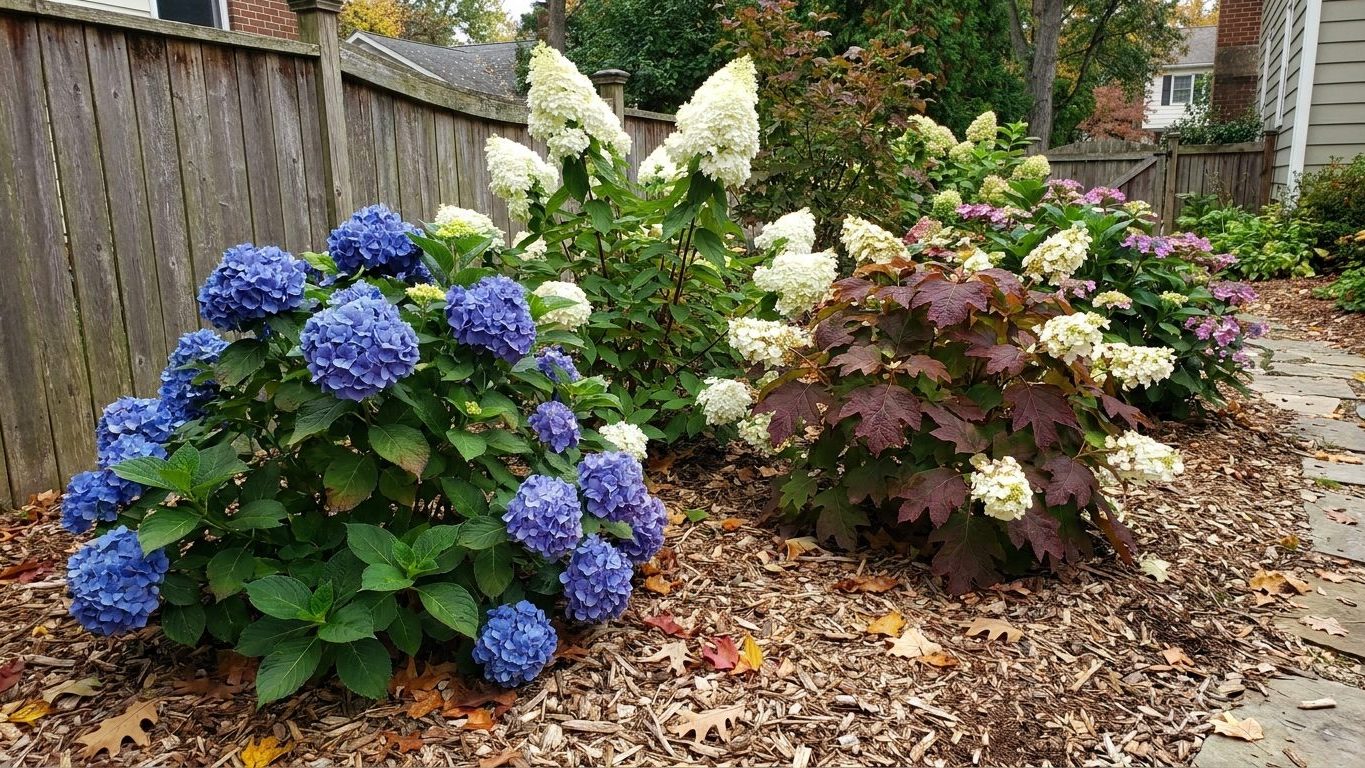
Panicle and smooth hydrangeas are the safest bets across Michigan, hardy enough for the state’s coldest zone and reliable enough to bloom every year because they set their flower buds on new wood. Bigleaf and mountain types can work near Detroit, where winters ease into the state’s mildest zone, but they need a sheltered spot and modest expectations for bloom in most years.

Hydrangeas that grow well in Michigan: The Short Answer

The USDA Plant Hardiness Zone Map puts Michigan anywhere from zone 4a in the Upper Peninsula to zone 6b near Detroit, and that spread decides which hydrangeas actually flower instead of just surviving. A shrub that only needs new wood to bloom shrugs off a Michigan winter, while one that depends on last year’s buds is gambling every season the cold decides to stay hard.

Panicle Hydrangea

Panicle Hydrangea — Hydrangeas That Grow Well in Michigan

Hydrangea paniculata sets its flower buds on new wood each spring, so a hard Michigan winter never touches next summer’s bloom. It tolerates the coldest pockets of the state and asks for little beyond full sun and normal watering. This is the variety most Michigan yards can plant and forget.

Smooth Hydrangea

Smooth Hydrangea — Hydrangeas That Grow Well in Michigan

Hydrangea arborescens, the native behind cultivars like Annabelle, also blooms on new wood and can die back hard some winters without losing next year’s flowers. It handles Michigan clay better than most hydrangeas and takes more shade than panicle types. Winter damage here is cosmetic, not fatal to the bloom.

Climbing Hydrangea

Climbing Hydrangea — Hydrangeas That Grow Well in Michigan

Hydrangea anomala subsp. petiolaris is hardy through the coldest Michigan zones, but it needs two or three seasons just to establish before it climbs or flowers at all. Patience is the real requirement, not cold tolerance. Give it a sturdy wall or trellis and Michigan winters are rarely the problem.

Mountain Hydrangea

Mountain Hydrangea — Hydrangeas That Grow Well in Michigan

Hydrangea serrata is a step down in reliability from the first three because some of its flower buds form on old wood, so a severe winter can trim the bloom without killing the plant. It handles cold slightly better than bigleaf types. In the state’s colder pockets, expect a smaller show most years.

Oakleaf Hydrangea

Oakleaf Hydrangea — Hydrangeas That Grow Well in Michigan

Hydrangea quercifolia usually survives a Michigan winter at the root, but its stems and the old-wood buds on them often do not, especially away from Detroit’s milder pocket. The plant regrows and the foliage still turns color in fall. Flowers are the part that becomes unreliable north of the state’s warmest zone.

Bigleaf Hydrangea

Bigleaf Hydrangea — Hydrangeas That Grow Well in Michigan

Hydrangea macrophylla is the riskiest pick statewide because it blooms mostly on old wood, and Michigan’s winter lows routinely kill those buds before they open. Gardeners near Detroit’s mild pocket have the best odds, and even there a hard winter can mean a summer with leaves but no flowers.

How to Work Out the Dates for Your Own Yard

  1. Find your last spring frost: MSU Extension’s Frost-Free Dates page puts it around April 30 near Detroit and early to mid May across most of the Lower Peninsula, and that week or two of gap changes when it is safe to plant.
  2. Count back from your first fall frost: the season closes between October 6 and October 21 in zone 6a, so a shrub set out in August has roughly six to ten weeks to root before cold arrives.
  3. Match your planting to the state’s windows: April, May, August, and September are the months the calendar allows, and picking the one closest to your local frost date beats guessing.
  4. Prune bigleaf only in June or July: pruning outside that window risks cutting the old-wood buds that carry next year’s bloom, since a Michigan winter has already thinned them once.
  5. Fertilize on the March, May, and July schedule: feeding later pushes soft new growth that will not harden off before the fall frost window closes.
  6. Recheck after a rough winter: if bigleaf or mountain hydrangeas show dieback, wait until late May before pruning so live wood is easy to tell from dead.

A panicle hydrangea planted in May shrugs off both ends of that calendar because it flowers on wood it grows the same year. A bigleaf hydrangea planted on the same day is betting its buds survive a winter low the zone map already flags as the risk.

Michigan North to South: How the Dates Shift

Michigan’s own geography moves these dates around more than a single statewide number suggests, since the Great Lakes act like a thermal buffer wrapped around three sides of the state.

  • The Upper Peninsula and the far north (Marquette, Sault Ste. Marie, Gaylord): the coldest ground in the state, where the growing season starts later and closes first, favoring panicle and smooth hydrangeas almost exclusively.
  • Inland Lower Peninsula away from open water (Lansing, Mount Pleasant): fewer lake effects mean sharper swings between day and night, so frost can linger past the dates that hold near open water.
  • The Lake Michigan and Lake Huron shorelines (Traverse City, Grand Haven, Port Huron): the lakes delay both the spring warm-up and the fall cool-down, softening the extremes that damage bigleaf buds.
  • Southeast Michigan near Detroit (Detroit, Ann Arbor, Monroe): the state’s mildest pocket, and the closest match to the reference frost dates.

The state guide breaks these zones down further for anyone planting close to a county line.

Mistakes Michigan Punishes

Pruning bigleaf hydrangeas in fall

Cutting back bigleaf or mountain hydrangeas after summer removes the old-wood buds that already survived one winter and were about to carry next year’s flowers. The state’s own calendar reserves June and July for this cut. Wait until then, and only remove wood that stayed bare after new leaves appear elsewhere.

Skipping winter protection on exposed sites

A bigleaf or mountain hydrangea planted against a north or west wall takes the full force of wind that drops effective temperatures well below the zone map’s number. Mound mulch over the crown before the ground freezes and choose a spot with a building or fence between the shrub and prevailing wind.

Fertilizing past midsummer

Feeding a hydrangea in August or later, outside the March, May, and July windows, pushes tender new growth that has no time to harden before the first fall frost arrives in early to mid October. That soft growth dies back and takes some of next year’s buds with it. Stop feeding after July.

Michigan Extension Offices and County Contacts

The state’s 4a to 6b range is a starting point, not a verdict for your specific yard, and county-level detail fills in the rest. Michigan State University Extension keeps that detail current for growers across the state.

  • Your state page: the frost dates and the pruning window for wherever you live in Michigan.
  • The bloom calendar: the month-by-month schedule for planting, fertilizing, and pruning hydrangeas here.
  • What goes wrong here: the pests and problems that actually show up on Michigan hydrangeas, and what fixes them.

Find your county’s office through Michigan State University Extension before deciding which of these varieties goes in the ground next.

Common questions

Can bigleaf hydrangeas survive Michigan winters?

Root systems usually survive down to the state’s coldest zone, but the old-wood flower buds that give bigleaf hydrangeas their color often do not, especially away from the milder ground near Detroit. Expect a shrub that lives but skips blooming in some years.

What is the best hydrangea for a Michigan yard that gets full winter wind?

Panicle or smooth hydrangeas handle wind and cold together better than any other type sold in Michigan, because they rebuild their flower buds from new wood every spring regardless of what the winter did to the stems above ground.

Do hydrangeas need winter protection in Michigan?

Panicle and smooth types rarely need it. Bigleaf, mountain, and oakleaf hydrangeas benefit from mulch mounded over the crown before the ground freezes, particularly north of the Detroit area where the zone map already shows a colder low.

Hydrangea Pests and Diseases in Michigan

Hydrangea Pests and Diseases in Michigan

In Michigan, the hydrangea problems worth watching are cold-driven, not pest-driven, since winter dieback and frost-killed flower buds outrank any insect or fungus most years. Around Detroit, the USDA hardiness range of 4a to 6b and a last frost that can linger into early May set the season’s risk before a single aphid shows up.

Hydrangea pests and diseases Michigan: The Short Answer

Michigan hydrangeas run into trouble in a fairly predictable order across the growing season, from cold damage in early spring to fungal issues once summer humidity settles in. Here is what actually shows up, in the order it appears, and what has worked for the shrubs I have walked past for years.

Blackened stem tips in early spring

Michigan’s winters explain most dieback before any pest gets blamed. USDA Plant Hardiness Zone Map places the state’s growing range at 4a to 6b, cold enough to kill unprotected stem tips on bigleaf hydrangeas most years. Cut back to the first live, green bud once new leaves show, and check the which-ones-hold-up guide before fall.

No blooms on stems that leafed out fine

This is bud blight, not disease. A late cold snap after growth starts, common when frost lingers into late April in the Detroit area, kills flower buds while leaves survive. Skip pruning after midsummer, and lean on panicle or smooth types, which set buds on new wood.

Sticky curled new leaves

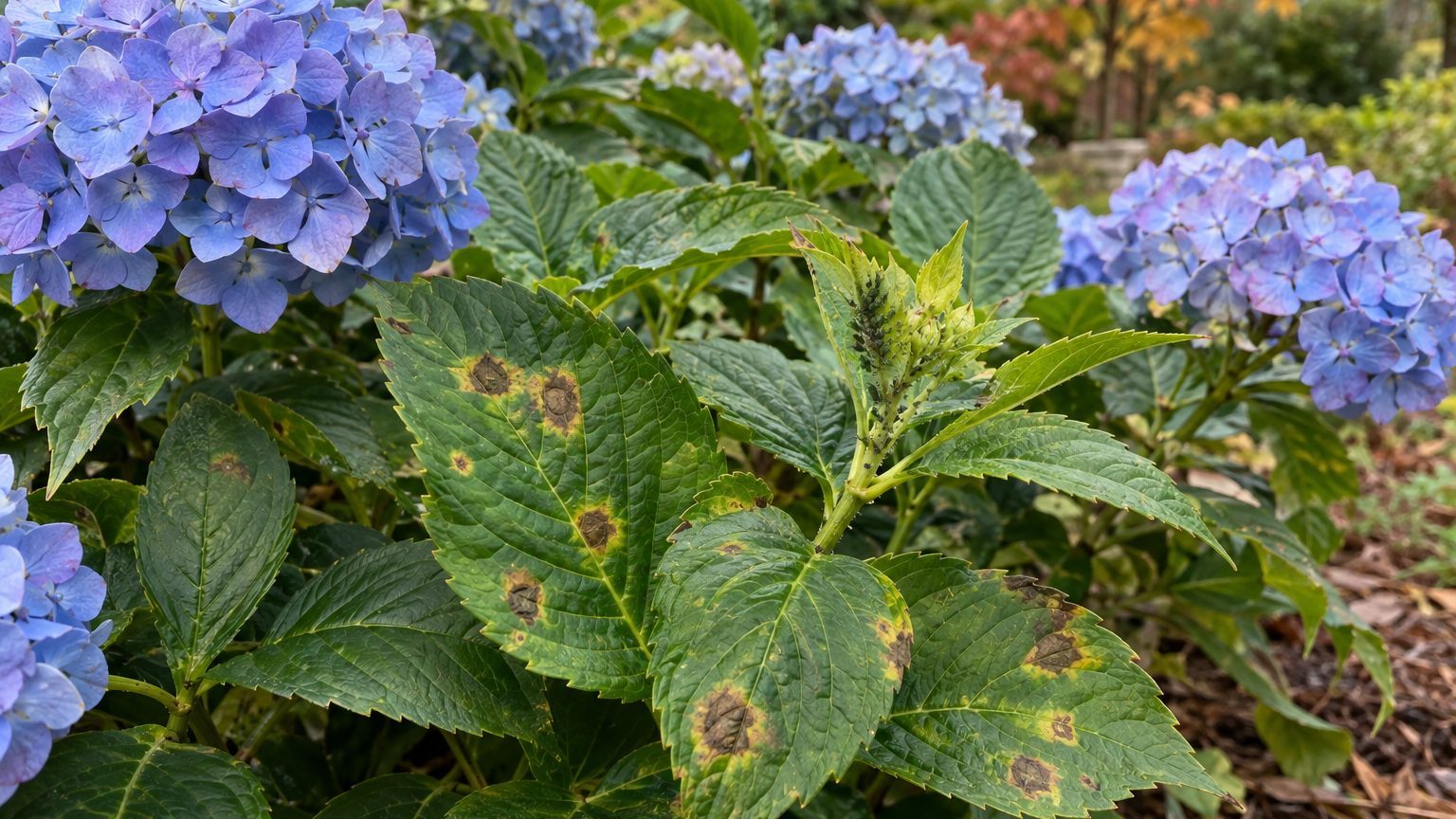
Aphids cluster on tender new growth in late spring and leave a sticky residue that draws ants and sooty mold. A strong water spray every few days knocks most colonies off before they curl the leaf tips permanently, and ladybugs usually finish the job outdoors.

White powdery coating on leaves

Michigan’s humid Great Lakes summers push powdery mildew onto crowded plants by midsummer, coating leaves in a gray-white film that rarely kills but stunts blooms. Space shrubs for airflow, water the soil instead of the leaves, and remove the worst leaves rather than spraying fungicide on a shrub that will drop them anyway in fall.

Brown spots ringed in purple

Brown spots ringed in purple — Hydrangea Pests and Diseases in Michigan

Cercospora leaf spot shows up as small brown circles with a purple edge on the lower, older leaves after a wet stretch. It rarely spreads to the blooms. Rake and discard fallen leaves each fall instead of composting them, since the fungus overwinters in that leaf litter.

Wilting despite soaked soil

Wilting despite soaked soil — Hydrangea Pests and Diseases in Michigan

Wilting leaves on a shrub that has had plenty of rain usually points to root rot, not thirst, especially in heavy clay that holds water after Michigan’s summer downpours. Pull mulch back from the base, check for soft brown roots, and move the shrub to higher ground if the problem repeats next season.

How to Work Out the Dates for Your Own Yard

Figuring out when to check for damage or treat a problem starts with your local frost window, not a fixed date on a seed packet.

  1. Start from your last frost: MSU Extension’s Frost-Free Dates puts the last spring frost around April 30 in the Detroit area, with early to mid May typical across most of the Lower Peninsula, so hold off judging winter dieback until new leaves are due.
  2. Watch the fertilize window: the state calendar runs fertilizing in March, May, and July, and a shrub that skips its spring feeding often shows weaker leaves that mildew finds first.
  3. Match planting to April, May, August, or September: hydrangeas planted outside those months struggle to root before either summer heat or the first fall frost, which lands October 6 to October 21 in zone 6a.
  4. Prune bigleaf types only in June or July: cutting outside that window removes the buds meant for next year’s blooms, the same buds a late frost can already threaten.
  5. Recheck after the first hot, humid week: powdery mildew and leaf spot both need humidity, so the calendar’s July fertilizing window doubles as a good reminder to walk the bed for early spots.

None of this replaces walking the bed yourself. The calendar sets the outside edges, but soil, shade, and how sheltered your yard sits inside those Michigan frost windows will move the real dates by a week or two in either direction.

Michigan North to South: How the Dates Shift

Michigan’s own hydrangea troubles shift with the lake and the latitude, not just the calendar.

  • The Upper Peninsula and the far north (colder pockets near Lake Superior): winter dieback and bud blight are the default problem, since the growing season barely gives buds time to harden before the first hard freeze.
  • West Michigan near Lake Michigan (the lakeshore fruit belt): the same lake effect that delays spring frost also holds humidity, so powdery mildew and leaf spot show up more than dieback.
  • Southeast Michigan around Detroit (the state’s mildest corner): frost damage eases first here, but aphids and root rot in heavy clay soil become the bigger nuisance once summer rain sets in.
  • Inland and central counties (away from either lake): temperature swings are sharper, so bud blight from a late spring snap stays the most common complaint of the four.

Check the state guide for the frost and pruning windows that apply where you actually garden before assuming your neighbor’s problem is yours.

Mistakes Michigan Punishes

Pruning in fall

Cutting bigleaf stems back after summer removes next year’s flower buds along with any dead wood, since the calendar’s prune window is June and July only. Wait for that window, and if in doubt, remove just the spent flower heads and leave the rest of the stem through winter.

Watering overhead in humid weather

Sprinklers that wet the leaves in July’s humid stretch feed both powdery mildew and leaf spot at once. Switch to soaker hoses or hand-watering at the base, and do it in the morning so any splashed leaf has hours to dry before evening.

Planting outside the window

Setting a hydrangea into the ground in June or October skips the planting windows entirely. MSU Extension’s Michigan Garden Calendar puts the first fall frost at October 6 to October 21 in zone 6a, too soon for roots planted that late to settle in. Stick to April, May, August, or September instead.

Michigan Extension Offices and County Contacts

USDA Plant Hardiness Zone Map’s 4a to 6b range is a starting point, not a diagnosis for what’s on your particular shrub. Michigan State University Extension’s county offices, reached through canr.msu.edu, look at your actual leaves and soil before naming a pest or disease.

  • Your state page: the frost dates and the pruning window for all of Michigan in one place.
  • Which ones hold up here: the varieties that shrug off a Michigan winter versus the ones that struggle.
  • MSU Extension: your county office for a hands-on look at what’s actually on your shrub.

Common questions

What is the most common hydrangea disease in Michigan?

Powdery mildew and Cercospora leaf spot show up most often once Michigan’s summer humidity settles in, especially on crowded bigleaf shrubs planted too close to a fence or another plant. Neither usually kills the shrub, but both weaken next year’s blooms if the fallen leaves aren’t raked up each fall.

Why didn’t my hydrangea bloom this year in Michigan?

The usual cause is bud blight, not disease. A late frost after the buds have swollen kills the flower before it opens even though the leaves look fine. Panicle and smooth hydrangeas, which set buds on new wood, dodge this problem better than bigleaf types.

Do I need to spray hydrangeas for pests in Michigan?

Rarely. Aphids and the fungal leaf issues common in the state usually respond to a strong water spray, better airflow, and watering at the soil rather than the leaves, so routine fungicide or insecticide spraying isn’t the first answer for most yards.

What to Plant in Michigan in September

What to Plant in Michigan in September

Michigan homeowners can still plant trees, shrubs, perennials, cool-season lawn grass, and garlic through September, while spring bulbs wait until the soil cools closer to month’s end. The window stays open because soil holds summer warmth even as air cools, giving new roots weeks to settle before frost. Warm-season vegetables and tender annuals are the exception, since no county has enough frost-free time left to finish them.

in Michigan, in one paragraph

September sits after summer’s peak and before the first freeze. Detroit’s last spring frost lands around April 30, and MSU Extension’s Frost-Free Dates data puts the first fall frost for zone 6a between October 6 and October 21.

Soil still runs warm from summer even as nights cool fast. That gap is what makes September a planting window across most of the state, not a closing one.

Hardiness ranges from 4a in the north to 6b near the Detroit River, per the USDA Plant Hardiness Zone Map. A shrub rooting easily downstate may need extra care three counties north.

Lawns thicken as cooler nights slow weed pressure. Most of what worked in August still applies, just on a tighter clock before frost.

What to plant now

September is the last wide-open planting window before frost, and it favors anything that needs weeks of warm soil to root rather than months of warm air to fruit.

  • Trees and shrubs settle fastest when planted in the first half of the month, giving roots six to seven weeks of warm soil before the ground locks up.
  • Perennials and divisions transplant well now, since cooler air stresses top growth less than August’s heat did.
  • Cool-season lawn grass such as fescue and bluegrass germinates reliably in September’s mix of warm days and cool nights.
  • Spring-flowering bulbs go into the ground once soil temperatures drop, which for most of the state means toward month’s end.
  • Garlic cloves planted now spend the fall building roots and reappear as shoots once soil warms again in spring.
  • Cool-season vegetables like spinach and lettuce still have time to mature before the first hard freeze near Detroit.

Warm-season vegetables and tender annuals are the one exception, they need a full frost-free stretch this month can no longer promise anywhere in the state.

What to do now

Order matters this month, since some tasks only work while soil is warm and others need the cooling air.

  1. Test soil temperature before planting bulbs: wait until nights consistently sit cooler, which usually happens late in the month across the Lower Peninsula.
  2. Plant trees, shrubs, and perennials early: aim for the first half of September so roots get six or more weeks before frost, per MSU Extension’s Garden Calendar.
  3. Seed or overseed the lawn: cool nights and warm soil this month push faster germination than spring seeding does.
  4. Water new plantings deeply: a weekly soak matters more now than fertilizer, since new roots dry out fast in warm September afternoons.
  5. Cut back perennials only after bloom fades: pruning too early removes energy the roots still need before dormancy.
  6. Mulch beds once nights cool: a 2 to 3 inch layer holds soil warmth into October and buffers the first frost between October 6 and October 21.

None of these gestures need a calendar app, just a thermometer and a sense of how many weeks remain before the ground locks up. Local extension offices track frost timing than any statewide range can.

What you will see this month

Powdery mildew on late perennials

Warm days and cool, damp nights coat leaves in a gray-white film, especially on phlox and bee balm. Thin crowded stems for airflow and skip watering from overhead, since wet foliage overnight is what lets the fungus spread.

Brown patches in cool-season lawns

Patches that stayed green through August but brown now usually point to compacted soil rather than drought, since September rain rarely causes it. Aerate before reseeding those spots, or the new seed will struggle in the same hard ground.

Early leaf drop on stressed trees

Trees that dropped leaves early after a hot summer are shedding stress, not disease, ahead of the season’s first freeze. MSU Extension’s Garden Calendar puts that freeze at October 6 to October 21 for zone 6a, so this is the wrong time to fertilize and push new growth.

Rules in force this month

Michigan sets no statewide watering or burning mandate for September, so what applies depends on where you live.

  • Municipal watering schedules, common in southeast Michigan, usually still apply through September until utilities lift them for the season.
  • Local burn permits, required in many townships for yard debris, stay in effect and depend on daily fire risk.
  • Tree removal permits, where cities require them for shade trees on private property, don’t pause for the season.
  • Oak pruning is generally lower-risk now than in spring, since the insects that spread oak wilt slow down once nights cool.

Check with your township or city office before burning brush or pruning oaks near a property line, since rules differ by municipality.

Next month

October brings the season’s real frost, arriving between October 6 and October 21 across the zone 6a stretch that includes Detroit. Planting shifts from roots-first perennials toward bulbs and garlic that want cold ahead.

Lawn care moves toward the year’s last mow and last feed. See what October in Michigan covers task by task.

Common questions

Is it too late to plant a tree in Michigan in September?

No, early September is one of the better times, since roots get six or more weeks of warm soil before the ground cools toward the first fall frost.

Can I still seed my lawn in September?

Yes, cool nights and warm soil this month give cool-season grass seed some of its fastest germination of the year, better than most spring seeding attempts.

Should I plant bulbs now or wait?

Wait until soil temperatures drop later in the month. Planting spring bulbs too early, while soil is still warm, can encourage premature growth that frost will damage.

The almanac, state by state. Every date on this site comes from a state’s own frost facts and its extension service’s calendar — and says where it comes from.