Skip to content

Lawn Problems and Solutions in Ontario

Lawn Problems and Solutions in Ontario

Pale, matted patches after the snow melts, crabgrass fingers in the driveway edge, a lawn gone straw-colored in August: Ontario yards show the same handful of troubles year after year. Most trace back to a few causes, and most can be fixed with timing and habits rather than a spray, since the province limits what you can apply to turf.

Lawn Pests and Diseases in Ontario

Lawn Problems and Solutions in Ontario

Snow Mold

Snow Mold — Lawn Problems and Solutions in Ontario

Once the snow melts, circles of flattened, grayish or pinkish grass may appear where drifts sat longest. The blades are stuck together in a crust. Most of the time the grass underneath recovers. Rake the patches gently to let air in and dry the surface, then wait for growth before deciding on seed.

Dandelions and Other Broadleaf Weeds

Dandelions and Other Broadleaf Weeds — Lawn Problems and Solutions in Ontario

Spring brings dandelions, plantain and clover into thin turf, where they take the gaps. Ontario’s Cosmetic Pesticides Ban, in force since 2009, keeps most weed killers and insecticides off home lawns, so only products on the province’s allowable list may be used. That makes thick grass your main tool, along with pulling weeds by hand when the soil is damp.

Crabgrass

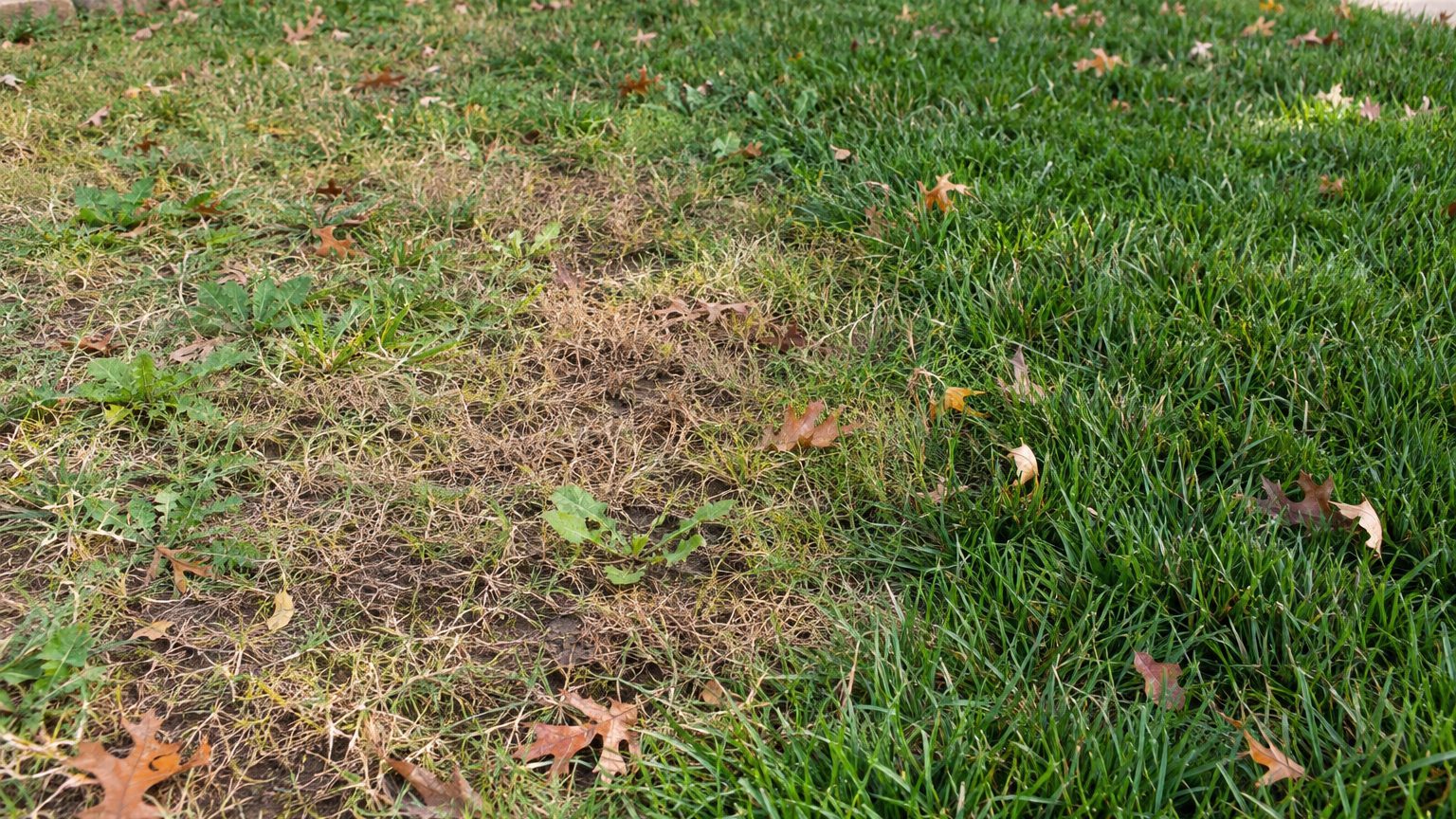
Crabgrass is a coarse, pale green annual that sprawls flat from a center point and turns purple, then dies at the first hard frost. It leaves bare, weedy ground behind. It sprouts in warm soil wherever grass is thin, so a lawn mowed tall and seeded in thin spots gives it little room.

Brown Patches in Midsummer

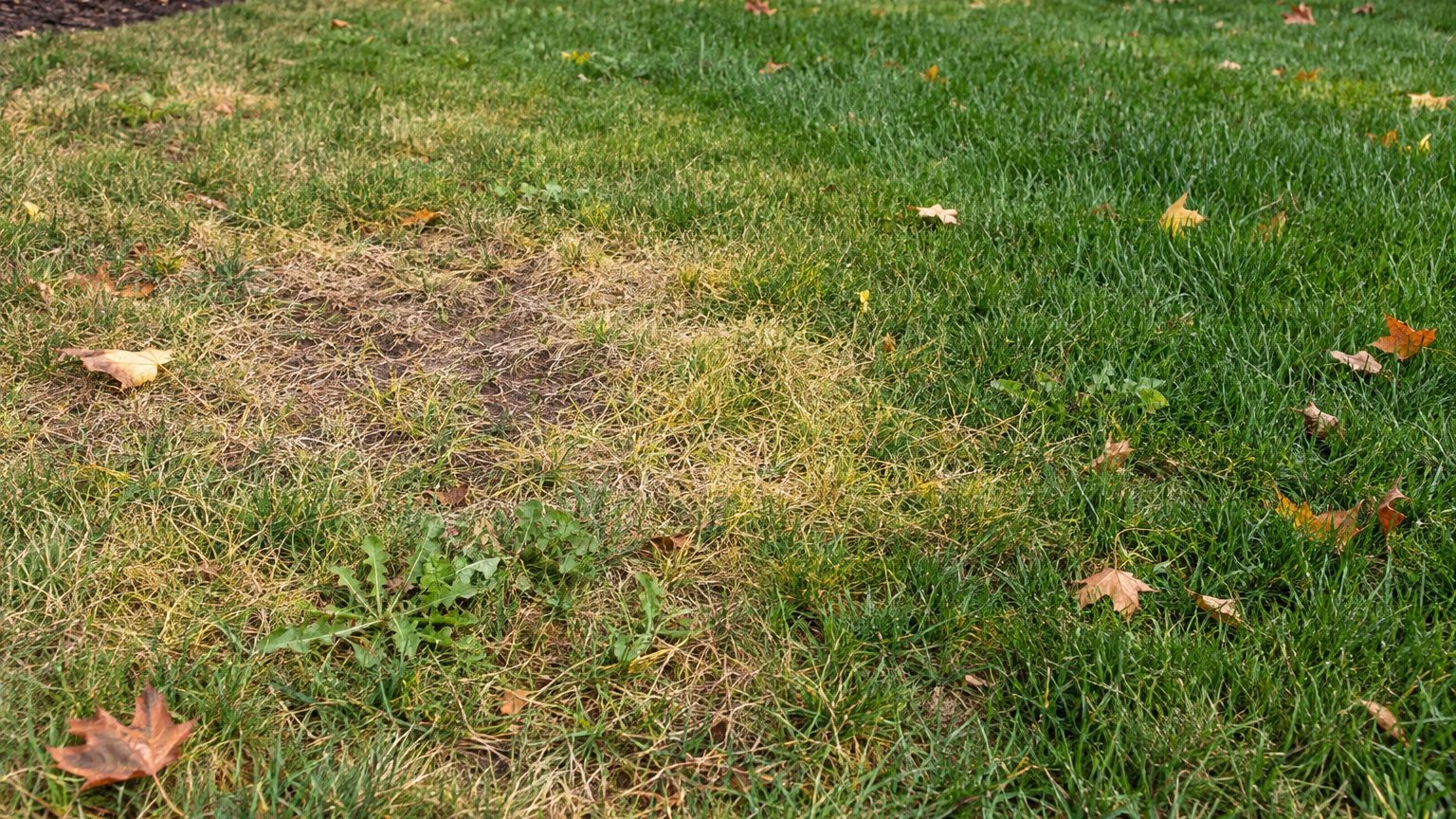
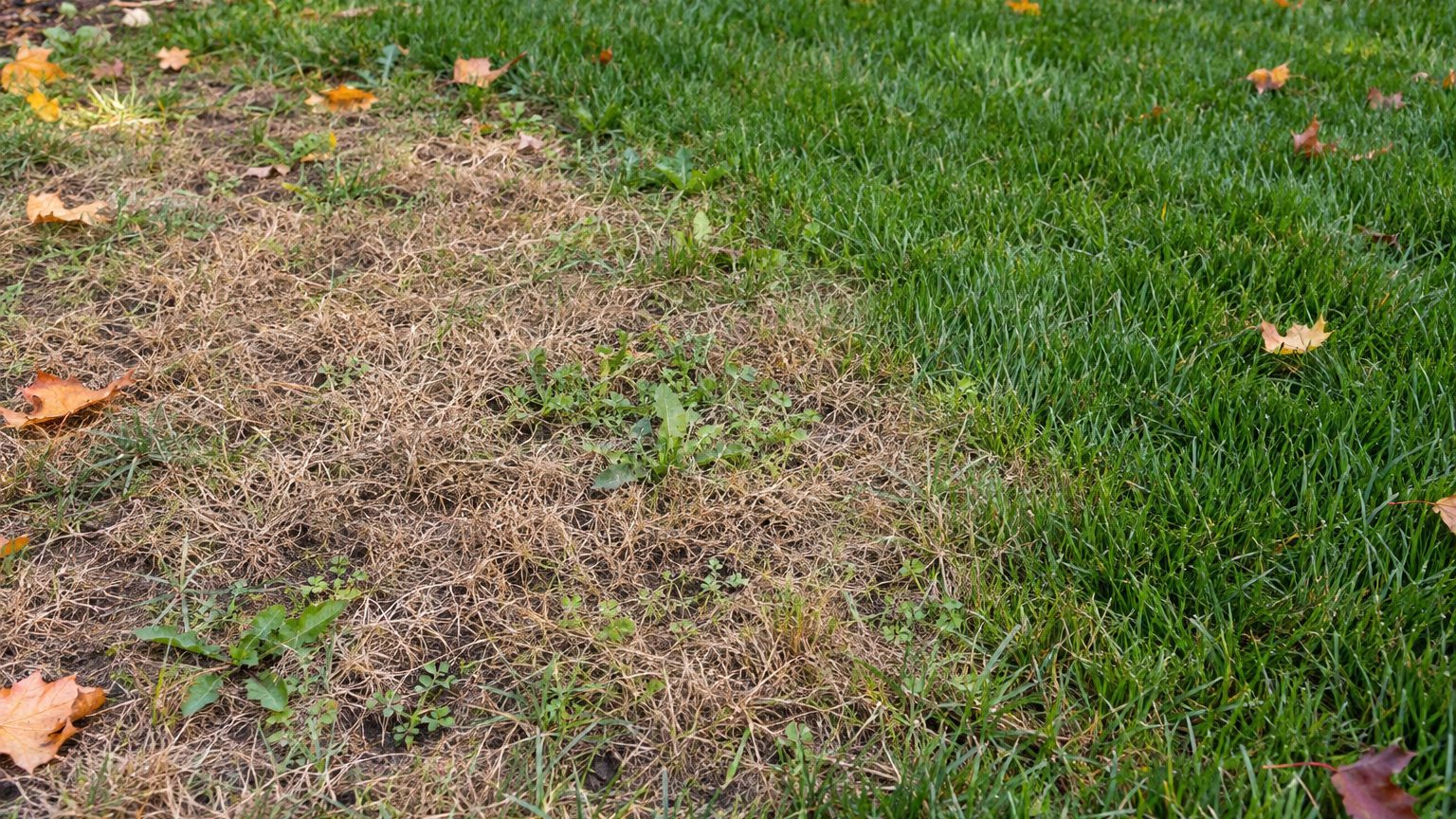
Tan patches in July can come from drought dormancy, from a fungal disease such as dollar spot, or from grubs. Dollar spot leaves small, straw-colored spots that merge and often appears on lean, dry turf. Water deeply in the morning and keep grass from staying wet overnight.

White Grubs

Fat, C-shaped, cream-colored larvae chew grass roots from late summer into fall, including those of the European chafer, which is established in parts of southern Ontario. The sign is turf that peels back like a carpet. Raccoons and skunks tearing up the lawn at night usually mean grubs are present, so lift a square of sod and look.

How to Tell Which Lawn Problem You Have

Start by examining the patch’s shape and timing, how easily the grass pulls up, and whether the spot is sunny or shaded. Check the soil as well, because a short dig tells you more than the blades do.

Thatch is worth checking in any spongy lawn. A layer up to 1.3 cm (1/2 inch) is healthy, and above that you should dethatch in August or September or core aerate in September.

What you see When it shows Likely cause
Matted gray or pink circles Early spring Snow mold
Coarse pale clumps spreading flat Summer, after warm soil Crabgrass
Small straw-colored spots that merge Midsummer Dollar spot
Turf rolls back, roots missing Late summer to fall White grubs
Whole lawn tan, roots alive Dry spells Drought dormancy
Thin grass in shade, moss Any season Too little light or compaction

Wet patches that stay soggy usually point to compaction, which core aeration relieves best in September, though May also works.

Where Lawn Problems Are Worst in Ontario

The province stretches from the Great Lakes shoreline to the boreal north, and what hurts a lawn changes along the way.

  • Greater Toronto Area and the Golden Horseshoe: Summer heat can bring drought stress, while dollar spot and grubs can cause separate patches of damage.
  • Niagara Peninsula: The long, mild season lets crabgrass and grubs get a longer run, while lake moisture keeps disease pressure high.
  • Ottawa Valley: Winters are colder and snow lingers, so snow mold is common in spring and the growing season starts later.
  • Northern Ontario (Sudbury, Thunder Bay): A short season and thin soils make recovery slow, and spring cleanup and seeding run behind the south.

Shaded lots anywhere in the province often struggle, since thin turf under mature maples invites moss and weeds.

Lawn Care Mistakes That Invite Problems in Ontario

Mowing Too Short

Scalped turf has shallow roots and lets sunlight reach weed seeds, which is how crabgrass gets started. Keep the mower on a high setting and cut regularly from May through October. April and November also work when grass is still growing.

Watering Lightly and Often

Frequent, shallow sprinkling keeps the surface wet, which favors fungus and keeps roots shallow. Water deeply and less often during June, July and August, early in the morning, so blades dry before dark. A lawn left to go dormant can survive a dry spell.

Feeding at the Wrong Time

Heavy spring feeding pushes soft top growth that disease likes. September is the best time to fertilize, but May and October work too. Fall feeding builds roots rather than leaves.

Where to Get Lawn Advice in Ontario

Canada has no county extension office, so provincial and local sources do that work. Start with a ministry page, then ask someone who knows your soil.

  • Browse Ontario Agriculture and Food for provincial guidance, and check the allowable products list before buying anything for weeds or insects.
  • Contact a local master gardener group in spring or fall, when most lawn questions come up.
  • Take a turf sample to a garden centre when you see damage, and bring photos plus a plug of grass with its roots.

Common Questions

When Should You Seed a Lawn in Ontario?

August and September are the best months, when warm soil and cooler air help seedlings root. May works too. Dormant seeding in November is another option, where seed sits on cold soil and sprouts in spring.

Is Spring or Fall Better for Aerating an Ontario Lawn?

September is the better time for core aeration, because grass recovers quickly and seed or fertilizer can follow right away. May is possible if compaction is bad and you cannot wait.

Can You Fix a Dead Patch Without Reseeding the Whole Lawn?

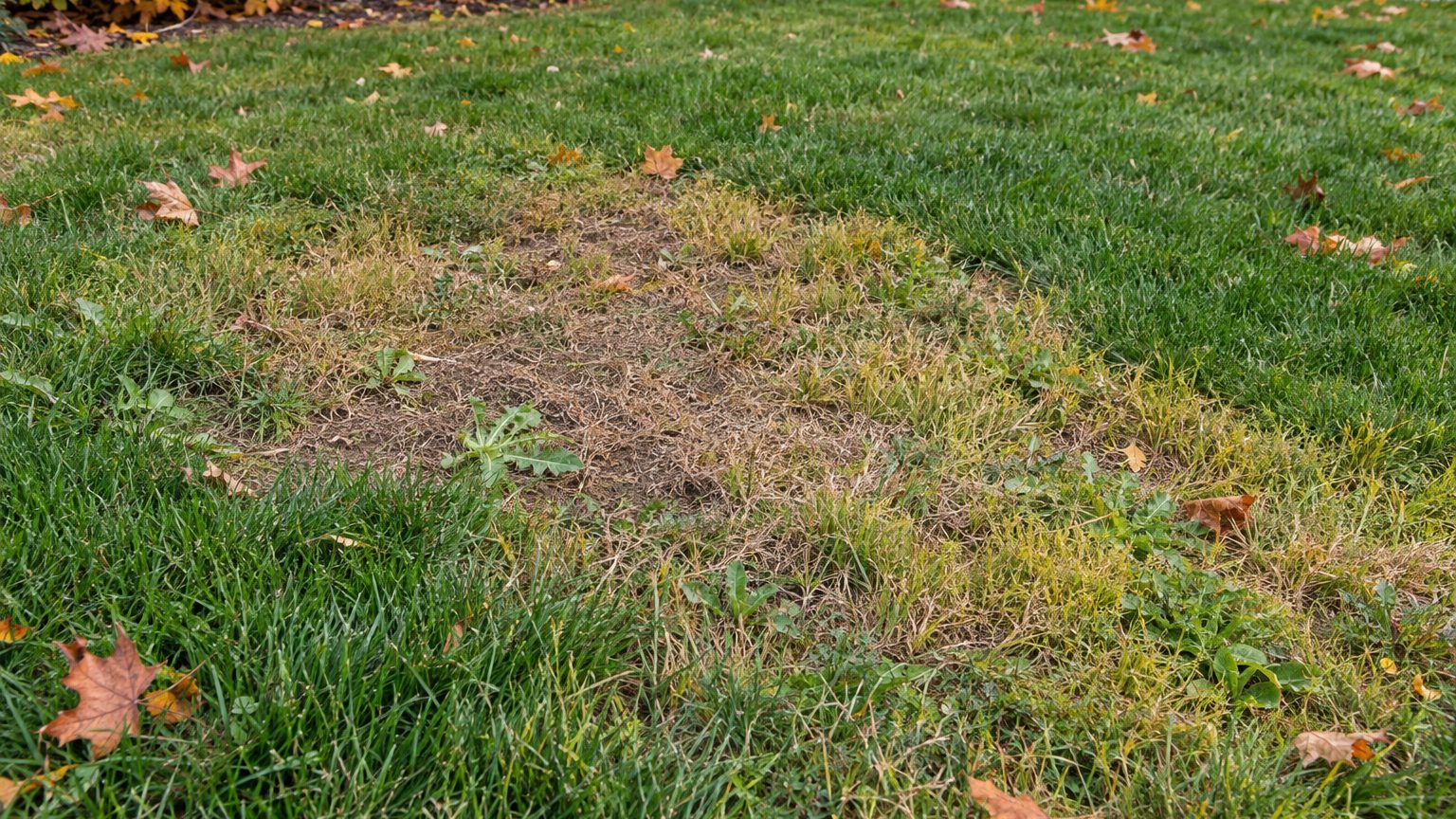
Yes. Rake out the dead grass, loosen the soil, and sow seed on that spot in August or September. Keep the area evenly damp until the new grass has filled in.
Ontario Lawn Care Schedule, Month by Month

Ontario Lawn Care Schedule, Month by Month

Mowing starts as the grass greens up in spring, and the heaviest work comes in late summer, when seeding, aeration and feeding all land together. Across Ontario, the lawn year follows soil warmth far more than the calendar page.

What to Do Each Month in an Ontario Lawn

Most of the work gathers in May and again from August through October. The months between are for mowing, watering and staying off the grass when it cannot take traffic.

Month In the lawn
January Rest. The grass is dormant, so keep heavy snow piles and foot traffic off the frozen turf.
February Rest. Nothing grows, and this is the month to service the mower and sharpen the blade.
March Rest, mostly. Stay off soggy ground as the thaw comes, because wet crowns tear and leave ruts.
April The first mow works once the grass is truly growing. Rake out matted patches gently and leave the heavy jobs for later.
May Apply crabgrass preventer now, before the weed seed sprouts. Ontario’s Cosmetic Pesticides Ban, in force since 2009, bars most weed killers and insecticides on lawns, including 2,4-D, so only products on the province’s allowable list may be used. Mowing is in full swing. Aeration, feeding and seeding also work this month if fall gets away from you.
June Mow regularly and begin watering deeply as the rain thins out. Roots grow down when you water less often but more thoroughly.
July Keep watering and mowing. Heat slows cool-season grass, so a tan, tired lawn in a dry spell may be resting rather than dying.
August Dethatch if the spongy layer is thick, then seed bare or thin areas. Keep watering and mowing through the heat.
September The big month. Core aerate, feed, seed and dethatch while the soil is still warm and the nights are cooling.
October Keep mowing as long as the grass grows. If you missed September, feeding still works now and helps roots store energy for winter.
November Make the last cut early in the month. Seeding on cold soil also works now, since the seed waits and sprouts in spring.
December Rest. The grass is dormant, and the only job is keeping salt and heavy loads off the edges.

September rewards the effort because the seed and the roots both have warm soil and cooler air. Spring offers a gentler fallback.

When Does the Lawn Season Start and End in Ontario?

Grass wakes up when the soil warms, not when the last frost passes. Seed germinates once the soil sits between 10 and 18 °C (50 and 65 °F), and Ontario’s cool-season grasses, such as Kentucky bluegrass, fescues and ryegrass, grow most willingly in the mild stretches of spring and fall.

Frost dates only mark the risk to young seedlings. In Toronto, the last spring frost falls on average around April 30, which means in about half of years it comes later. Treat that as the middle of a window, and hold off on tender new seed until the cold nights are clearly behind you.

In fall, the first frost arrives on average around October 16 in Toronto, and again it can come later or earlier. Seed sown in August and September has time to root before that. Growth slows well before the first frost and stops once the soil turns cold, which is when the final mow happens.

How the Lawn Calendar Shifts Across Ontario

Ontario stretches from the Great Lakes shoreline to the boreal north, so the months above fit the south best and slide later or earlier as you move.

  • Windsor and Essex County: Spring arrives early here and fall lingers, so mowing begins early and fall seeding can run a little later than elsewhere. Summer heat can stress the lawn, so attentive watering matters.
  • Niagara Peninsula: The lakes soften both ends of the season, with an early spring start and a mild autumn that gives seed extra time to root.
  • Ottawa Valley: Winters are colder and spring comes later, so shift the spring jobs toward the end of their window and finish fall seeding on the early side.
  • Northern Ontario, around Sudbury and Thunder Bay: The season is shorter and runs weeks behind the south. Aim for the early end of the fall window, and expect frost on new seedlings later into spring.

Watch your own lawn as well. If the grass is still dormant and brown while a neighbour’s is green, wait.

Lawn Care Timing Mistakes to Avoid in Ontario

Crabgrass Preventer Applied Late

Crabgrass Preventer Applied Late — Ontario Lawn Care Schedule, Month by Month

Preventer works by stopping weed seed as it sprouts. Put it down after the seedlings are up and it does very little, so you pay for a product that cannot work. May is the window, so apply it early in the month, before the soil warms enough for the seed to get going.

Seeding After the Window

Seed sown in late October may sprout, then die when the cold arrives with roots still shallow. August and September give seedlings time to establish. If the window passes, either wait for May or seed deliberately on cold soil in November, so the seed stays dormant until spring.

Dethatching in Spring

Spring grass is tender, and raking hard at a thatch layer pulls out crowns that are only starting to grow. Dethatch in August or September, when the lawn can recover quickly, and follow with seed while the soil is warm enough for it to take.

Where to Get Lawn Advice in Ontario

Canada has no county extension offices, so advice comes from the province, from local gardeners and from nurseries that know your soil and your town.

  • The Ontario agriculture and food pages are the place to start for provincial guidance, and they are worth a look before spring work begins.
  • A local master gardener group can answer questions about your neighbourhood’s soil and shade, and a call in early spring gives you time to plan the fall.
  • A garden centre can confirm which products are on the province’s allowable list before you buy anything for May.

Common Questions

Should You Bag Grass Clippings in Ontario?

Usually not. Short clippings drop between the blades, break down quickly and return nutrients to the soil. Bag them only when the grass was very long or wet and the clippings would lie in clumps that smother the turf.

Is It Bad to Walk on Frost-Covered Grass?

Yes, when the blades are stiff and white with frost, they crack under your weight and leave brown footprints. Look for the pattern of dark lines along the paths you walk. Wait until the frost has melted before crossing the lawn.

How Do You Handle Dandelions Without Weed Killer?

Pull them by hand after a rain, when the soil is loose and the whole taproot slides out. Then fill the gaps with seed in September, since a thick lawn leaves little room for new weeds to settle.

Best Grass Seed for Oklahoma

Best Grass Seed for Oklahoma

Walk across an Oklahoma lawn in July and you can feel which grass was built for the place: bermudagrass stays springy and green while a tall fescue patch next to it goes thin and pale. Seed choice here comes down to heat, and the right pick depends on sun, traffic and how much you want to mow.

Which Grass Grows Best in Oklahoma?

Warm-season grass handles most Oklahoma yards, with tall fescue as the cool-season option for shadier spots. Oklahoma sits in the transition zone, with hardiness zones running from 6a-8a (USDA system), so winters are cold enough to stress southern grasses in the north and summers hot enough to punish northern ones everywhere.

Bermudagrass

Bermudagrass is a strong choice for sunny Oklahoma lawns. It loves summer heat, recovers quickly from traffic, and can go in as seed or sod. Sow it in May, or in June if May slips away.

Zoysiagrass

Zoysiagrass makes a dense, soft lawn and tolerates some shade, but it is mostly sold as sod or plugs rather than seed. Lay sod in May, or as late as July. Expect it to fill in more slowly than bermudagrass.

Tall Fescue

Tall fescue stays green through much of the year and copes with partial shade better than bermudagrass. The trouble is July and August, when it struggles without regular water. Seed it in August, or in September if you miss that window.

Kentucky Bluegrass

Kentucky bluegrass is a limited choice in Oklahoma. It does best on cooler, higher ground and tends to thin out in Oklahoma summer heat. Unless you have a cooler pocket and a way to water regularly, choose another grass.

How to Choose Grass Seed for an Oklahoma Yard

Start with how much sun the yard gets, then think about foot traffic and your water supply. Those factors narrow the field quickly. Mowing habits matter too, since some grasses want frequent trimming to look tidy.

Whatever you plant, cover the seed with no more than 0.25 inch of soil and press it down so it touches the ground firmly. Seed buried deeper often never comes up.

Your yard Grass Why it fits
Full sun, heavy traffic Bermudagrass Handles heat and wear, seeds in May
Full sun, soft dense turf Zoysiagrass Dense lawn, installed as sod or plugs
Partial shade Tall fescue Tolerates shade, seeds in August
Little water available Bermudagrass Warm-season grass suited to summer heat
Frequent mowing is fine Bermudagrass Mow April through October to keep it neat

Kentucky bluegrass fits only cooler, higher ground with regular watering, so it rarely earns a spot in a typical Oklahoma yard. Heavy shade under mature trees is tough for every lawn grass, though tall fescue may still persist there.

Which Grasses Grow Where in Oklahoma

Oklahoma is wide enough that the cold end and the hot end of the state favor different grasses.

  • Panhandle: Winters bite harder here and the land sits higher, so bermudagrass can suffer winter injury and cooler-season grasses have a little more room to work if watered.
  • Oklahoma City and Tulsa: Hot summers favor bermudagrass and zoysiagrass in sun, while tall fescue holds up in shadier yards that get regular water.
  • Southern Oklahoma near the Red River: Longer, hotter summers make warm-season grasses the easy call, and tall fescue is harder to keep looking good.

In the Oklahoma City area, the last spring frost usually falls between March 28 and April 10, though suburban and rural yards often see it later, so check your own county before sowing.

Grass Seed Mistakes to Avoid in Oklahoma

Planting the Wrong Grass for Your Sun

Tall fescue in a baking, full-sun front yard may decline during summer, and bermudagrass in deep shade thins out. Match the grass to the light first. Choose bermudagrass for sun and tall fescue for shade.

Seeding at the Wrong Time

Warm-season seed needs warm soil, so sow bermudagrass in May, with June as a fallback. Tall fescue goes in during August, or September if needed. Seed sown in the wrong season struggles to root before weather turns.

Too Much or Too Little Seed

Thin sowing leaves gaps where weeds move in, while heavy sowing crowds seedlings so they compete and weaken. Follow the rate printed on the bag for your species, spread it evenly, and water regularly so the surface never dries out while seedlings establish.

Where to Get Lawn Advice in Oklahoma

Local soil, shade and rainfall vary from one county to the next, so local help fills in what general advice cannot.

  • Oklahoma State University Extension offers turfgrass guidance written for the state, useful before you buy seed.
  • Your county extension office can answer questions about your own soil and local conditions, and it is worth a call before seeding season.

Common Questions

Can You Plant Zoysiagrass from Seed in Oklahoma?

Zoysiagrass is mostly sold as sod or plugs, so seed is hard to find and slower to establish. If you want it, plan on laying sod in May, or as late as July.

Is Bermudagrass Hard to Get Rid of Once It Spreads?

It spreads aggressively, so it can creep into flower beds and neighboring lawns. Edging along beds and keeping it mowed in its own territory helps contain it.

When Should You Fertilize a Bermudagrass Lawn in Oklahoma?

Feed warm-season lawns in May, June and July, when the grass is actively growing. Tall fescue is different, and it should be fed in early spring and fall, never in summer.

Lawn Problems and Solutions in Oklahoma

Lawn Problems and Solutions in Oklahoma

Tan rings in a bermuda lawn as it wakes up, crabgrass crowding thin spots, and sod that peels back like carpet in late summer are familiar troubles in Oklahoma yards. Hot summers and hard winter swings shape nearly all of them, and each one has a window when the fix works best.

Lawn Pests and Diseases in Oklahoma

Spring Dead Spot

Circular straw-colored patches show up in bermuda just as the rest of the lawn greens up. Roots under the patch are dead or rotted, so the grass tugs loose with no resistance. It tends to follow a stressful, over-fed fall.

Keep feeding to the warm months, since bermuda eats best in May, June and July, and expect the patches to fill in slowly once the soil is warm.

Crabgrass

Crabgrass — Lawn Problems and Solutions in Oklahoma

Coarse, light green clumps sprawl flat from a central point and thrive in thin turf and along hot driveway edges. Each plant dies with the first cold, but not before dropping seed for next year.

Stopping it means acting before seedlings appear. March is the best month for a preventer, though February, April and May also work. A thick lawn shades out most of the rest.

Brown Patch in Tall Fescue

Tall fescue is a cool-season grass working through a hot, humid Oklahoma summer, and that is when brown patch strikes. Look for roundish tan patches with a darker, smoky edge that appear in muggy weather, often after evening watering.

Water early in the day so blades dry quickly, and hold off on nitrogen until fall.

White Grubs

Beetle larvae chew roots in the soil, and by late summer the turf above them turns brown and lifts like a loose rug. Skunks, armadillos and birds digging up the lawn are another sign that grubs may be present.

Healthy, deeply rooted grass is more resilient to grub feeding. Lawns with large, spreading dead areas need treatment aimed at the larvae, so confirm by peeling back a patch first.

Thick Thatch Layer

Thatch is the mat of stems and roots between green blades and soil. A layer up to 1/2 inch is healthy. Beyond that it holds moisture against the crown, shelters pests and sheds water, and the lawn feels spongy underfoot.

Dethatch bermuda and zoysia in May or June. For tall fescue, August is the month for core aeration, with dethatching in August or September.

How to Tell Which Lawn Problem You Have

A single sign can mislead, so consider what the damage looks like along with when or where it appears. Pull gently on the grass at the edge of a patch. Whether it resists or comes away tells you whether the roots are still working.

What you see When and where Likely cause
Straw-colored rings, roots dead Spring green-up, bermuda Spring dead spot
Coarse, flat, light green clumps Summer heat, thin turf or edges Crabgrass
Tan patches with a dark rim Humid summer, tall fescue Brown patch
Turf lifts like carpet, no roots Late summer, animals digging White grubs
Spongy feel, water beads up Any season, older lawns Thick thatch

Shade and sun matter too. Thinning that follows the shadow of a tree points to a light problem rather than a pest, and bermuda in particular fades fast with too little sun.

Where Lawn Problems Are Worst in Oklahoma

Oklahoma spans hardiness zones 6a to 8a on the USDA system, and rainfall drops steadily from east to west, so the same lawn faces different threats depending on where it grows.

  • Panhandle: Drier air and colder winters mean fewer fungal outbreaks but more winter injury and drought stress, so deep, infrequent watering matters most.
  • Tulsa and Green Country: Heavier rainfall and humidity favor brown patch and other fungal trouble in tall fescue, along with wet, compacted soil.
  • Oklahoma City and central Oklahoma: Hot summers and swings between wet and dry spells can bring crabgrass, grubs and spring dead spot.
  • Lawton and the Red River country: Longer heat favors bermuda, so fescue struggles and summer stress shows up sooner.

Suburban and rural yards usually see frost later in spring and earlier in fall than city readings suggest, so check dates with your own county.

Lawn Care Mistakes That Invite Problems in Oklahoma

Mowing Too Short

Cutting low weakens roots and opens bare soil to crabgrass seed. Tall fescue is mowed regularly from March through November, and bermuda and zoysia from April through October.

Raise the blade and keep it sharp so the tips don’t fray.

Light, Frequent Watering

Short, frequent sprinkles keep the surface wet and the roots shallow, which feeds brown patch and leaves grass helpless in July heat. Watering matters most from June through August.

Soak the lawn deeply in the early morning, then wait until the soil surface begins to dry before watering again.

Feeding at the Wrong Time

Tall fescue fed in summer pushes soft growth that fungus loves, so feed it in early spring and fall. Feed tall fescue in March, September and October.

Bermuda and zoysia are the opposite. Feed them from May through July, when they are actively growing and can use it.

Where to Get Lawn Advice in Oklahoma

Local help matches your soil and grass type better than general advice. Local guidance is worth checking before you buy any treatment.

  • Oklahoma State University Extension publishes lawn fact sheets on grass types, weeds and diseases, and is worth checking before planting or treating.
  • Your county extension office can identify a problem from a sample or photo, so bring a plug of affected turf with roots attached when you visit.

Common Questions

Is October Too Late to Seed Tall Fescue in Oklahoma?

Yes, for most lawns. Seeding works best in August, with September as the fallback, because young grass needs time to root before winter. October is better used for feeding an established lawn.

When Does the First Fall Frost Reach Oklahoma Lawns?

In Oklahoma City, the first freeze typically arrives between October 29 and November 8. Yards outside the city often see it sooner, and bermuda goes dormant and turns tan afterward, which is normal.

When Should You Lay Sod in Oklahoma?

Bermuda and zoysia sod does best in May. June and July also work if you can water it regularly while it roots.

Oklahoma Lawn Care Schedule, Month by Month

Oklahoma Lawn Care Schedule, Month by Month

Bermuda turns tan after the first hard freeze, while tall fescue can stay green during an Oklahoma winter. That difference between warm-season and cool-season grass shapes an Oklahoma lawn care schedule, from seeding and feeding to the final mow.

What to Do Each Month in an Oklahoma Lawn

Lawn in Oklahoma

Oklahoma lawns commonly use bermuda or zoysia, with tall fescue in shadier yards. Each month below notes the work for both groups, and says so where they differ.

Month In the lawn
January Rest. The grass is dormant or slow, so keep traffic light and let the lawn sleep.
February Rest, with one early move: crabgrass preventer can go down now if spring turns warm early.
March Apply crabgrass preventer before the weeds sprout, and feed tall fescue as it wakes up. Mowing starts for cool-season grass.
April Mow bermuda and zoysia as they green up. Preventer and tall fescue fertilizer still work this month if March slipped by, and warm-season dethatching can begin.
May Seed bermuda or zoysia, or lay sod, while the soil is warming. Dethatch and start feeding warm-season lawns. Preventer still works now.
June Water deeply as heat builds and keep feeding warm-season grass. Seeding and sod still work this month, and so does dethatching.
July Heat is the main stress. Water regularly, keep mowing, and feed bermuda and zoysia. Sod can still go down if you are late.
August Core aerate and seed tall fescue, and dethatch where thatch has built up. Keep watering through the heat.
September Fertilize cool-season lawns. If you missed August, aeration, seeding and dethatching still work now.
October Feed tall fescue again as growth slows, and keep mowing until the grass stops. Watch for the first frost.
November Mow tall fescue as needed while bermuda and zoysia go dormant. Little else is needed.
December Rest. Warm-season grass is dormant, so just clear fallen leaves off the turf.

Tall fescue should never be fed in summer. Warm-season grasses take their feeding in the heat, which is the opposite of what cool-season grass wants.

When Does the Lawn Season Start and End in Oklahoma?

Grass wakes up when the soil warms, not when the calendar flips. Cool-season seed such as tall fescue germinates in soil at 50 to 65 °F, while bermuda and zoysia want 65 to 70 °F. That is why fescue is seeded in late summer and warm-season grass in late spring.

Frost dates only tell you how risky it is for young seedlings. In Oklahoma City, the last spring freeze usually falls between March 28 and April 10, and gardens outside the city often see it later. Check your own county before you seed.

In fall, the first freeze in Oklahoma City usually arrives between October 29 and November 8, and rural yards often see it sooner. Bermuda slows well before that and browns after a hard freeze, while fescue keeps growing into November.

How the Lawn Calendar Shifts Across Oklahoma

Oklahoma spans USDA hardiness zones 6a to 8a, a range based on average annual extreme minimum temperatures. Lawn-care timing still shifts across the state with local conditions.

  • The Panhandle: Higher, drier and colder in winter, so spring green-up comes later and fall dormancy earlier. Wait for warm soil before seeding bermuda.
  • Tulsa and the northeast: Cooler winters than the south favor tall fescue, and late-summer seeding fits well here.
  • Southern Oklahoma near the Red River: Warmer soil arrives sooner, so warm-season work can start at the early end of its window and bermuda stays active longer into fall.

Within any of these areas, a low spot or a north-facing yard can run behind a sunny slope.

Lawn Care Timing Mistakes to Avoid in Oklahoma

Seeding Bermuda Too Early

Seed put down in cool soil germinates poorly and can leave the stand thin. Wait for May, when the soil has warmed, and June still works if you miss it.

Feeding Fescue in Summer

Fertilizer on stressed cool-season grass in July feeds disease and weeds rather than roots. Feed tall fescue in early spring and again in September and October, and leave summer alone.

Applying Preventer Too Late

Crabgrass preventer works before seeds sprout, so a bag spread after the weeds appear does little. March is the target, with February or April as backups if the weather runs early or late.

Where to Get Lawn Advice in Oklahoma

Local conditions vary enough that a quick check with the people who study Oklahoma turf saves guesswork, especially for soil and grass choice.

  • Oklahoma State University Extension offers turfgrass guidance written for Oklahoma, so look there before choosing a grass or a fertilizer plan.
  • Your county extension office can answer questions about your own soil and local frost timing, and it is worth a call before seeding season.

Common Questions

Can You Plant Tall Fescue in Oklahoma, or Is It Too Hot?

It can work, especially in shade and in the cooler northeast. Seed in late summer and expect it to need more water in July and August than bermuda does.

Why Is the Lawn Still Brown in April When the Trees Have Leafed Out?

Bermuda and zoysia wait for warm soil, not warm air. If the grass is evenly brown but the crowns remain firm, it is probably still dormant, so give it time before reseeding.

Should You Mow Dormant Bermuda in Winter?

No mowing is needed once it has stopped growing. Mowing picks up again in April as the grass greens.

Best Grass Seed for Ohio

Best Grass Seed for Ohio

Tan, thinning patches after a hot Ohio summer usually point to a grass that was never quite right for the spot. Ohio sits squarely in cool-season territory, so the seed worth buying comes from four families: Kentucky bluegrass, tall fescue, fine fescues, and perennial ryegrass. Which one fits depends on sun, traffic, and how much watering you want to do.

Which Grass Grows Best in Ohio?

Cool-season grasses suit Ohio. They grow hard in spring and fall, slow down in summer heat, and shrug off winters that fall within USDA hardiness zones 5b to 6b. Warm-season grasses struggle with that winter cold, which is why every dependable lawn seed here comes from the cool-season group.

Kentucky Bluegrass

This is the classic Ohio lawn, with a dense, deep green look that holds up well across the state’s winters. It spreads sideways on underground stems, so it fills small bare spots on its own once established.

Bluegrass wants full sun and is slow to sprout from seed. Expect it to turn tan in dry midsummer spells, then green up again when cooler weather and rain return.

Tall Fescue

Tall fescue sends roots deeper than bluegrass, which helps it ride out the dry stretches Ohio often gets in July and August. It stays greener through heat with less watering, and it tolerates kids and dogs well.

It grows in clumps rather than spreading, so thin spots need reseeding instead of waiting for the grass to fill in. It handles light shade better than bluegrass.

Fine Fescues

Creeping red, chewings, and hard fescue make up this group, and they are the ones to reach for under maples and oaks. The blades are thin, the growth is slow, and the lawn needs less mowing and less fertilizer.

The trade-off is traffic. Fine fescues wear down under running kids and heavy foot paths, and they dislike soggy, compacted soil.

Perennial Ryegrass

Perennial ryegrass sprouts fast, which makes it useful for quick cover and for mixing into other seed. Its quick growth provides early cover while slower grasses establish.

On its own it carries more risk in Ohio, because hard winters and summer stress can thin it out. Treat it as a partner in a mix rather than the whole lawn.

How to Choose Grass Seed for an Ohio Yard

Start with the light, because shade can change the answer. Then think about how the yard gets used and whether you are willing to run a sprinkler through summer.

An Ohio yard can combine conditions, such as a sunny front slope and a shaded back corner. Seeding each area with the grass that suits it works better than forcing one type everywhere.

Your yard Grass Why it fits
Full sun, kids and pets Kentucky bluegrass or tall fescue Both take wear, and bluegrass repairs itself by spreading
Shade under trees Fine fescues They tolerate low light better than bluegrass
Little watering Tall fescue Deep roots keep it greener through dry spells
Less mowing Fine fescues Slow, fine growth means fewer trips with the mower
Quick cover on bare soil Perennial ryegrass in a mix It sprouts fast and shields slower grasses

A mix of bluegrass and fine fescue is a common way to cover a yard with both sun and partial shade. If you are unsure, note where the old lawn thinned out, then check light, traffic, drainage, and soil before choosing seed.

Which Grasses Grow Where in Ohio

The same four grasses work across the state, but their balance shifts a little from the lake to the river.

  • Lake Erie shore: Cleveland, Toledo, and the towns along the lake get cooler summers and lake-moderated weather, which suits bluegrass and fine fescue and keeps summer stress lower.
  • Northwest Ohio: The flat, heavy-soil farm country around Findlay and Defiance holds water in spring, so choose grasses that tolerate wet, compacted ground and plan for good drainage.
  • Columbus and central Ohio: Summers run hotter and drier here, so a tall fescue or a bluegrass and tall fescue blend gives a safety margin.
  • Cincinnati and the Ohio River valley: Warmer summer conditions can favor tall fescue where heat stresses bluegrass.

Wherever you live, the neighborhood matters too, since a shaded street in Cleveland may need the same fine fescue as one in Cincinnati.

Grass Seed Mistakes to Avoid in Ohio

Seeding at the Wrong Time

Cool-season seed wants warm soil and cool air together, and Ohio delivers that in August and September. Spring seeding in April and May also works, but young grass then has to survive its first summer.

If you seed in spring, skip the crabgrass preventer in that area, because the same barrier that stops weed seed also stops grass seed. Preventer belongs on lawns you are not seeding, usually in April.

Burying the Seed Too Deep

Grass seed needs shallow placement and firm soil contact to sprout well. Cover it no more than 0.25 inch, and press it into the soil so every seed touches the ground firmly.

Raking the seed into a thick layer of soil buries it. A light raking followed by a roller or a walk across the area works better.

Sowing Too Much or Too Little

More seed does not make a thicker lawn. Crowded seedlings compete, stay weak, and invite disease, while a thin sowing leaves gaps for weeds to claim.

Follow the rate printed on the bag for the grass you bought, and spread it evenly so the coverage matches across the yard.

Where to Get Lawn Advice in Ohio

Local help is easy to find, and it is worth using before you buy seed. Soil, drainage, and shade vary from one neighborhood to the next.

  • Ohio State University Extension publishes lawn guidance written for Ohio conditions, so check it before choosing a grass.
  • Your county extension office can answer questions about your own soil and weeds, and it can point you to a soil test before you seed.

Common Questions

Can You Mix Different Grass Seeds in an Ohio Lawn?

Yes. Blends of bluegrass, fine fescue, and ryegrass are common because each covers a different condition. Just check that the mix suits your light, since a sun mix will thin out in shade.

Should You Aerate Before Overseeding?

Core aeration in September opens the soil so seed reaches the ground and roots. If thatch has built up, dethatching in August or September clears the way before you spread seed.

How Wet Should New Grass Seed Be Kept?

Keep the top of the soil damp until the seed sprouts, since dry spells at that stage kill seedlings. Once the lawn is established, the main watering season runs June through August.

Lawn Problems and Solutions in Ohio

Lawn Problems and Solutions in Ohio

Tan, thinning patches in midsummer and ragged clumps of crabgrass along the driveway are the sights that send Ohio homeowners looking for answers. Most lawn trouble in the state traces back to a handful of causes: warm humid summers, heavy clay in many yards, and mowing, watering and feeding habits that do not match the season.

Lawn Pests and Diseases in Ohio

Crabgrass in Thin Spots

Crabgrass in Thin Spots — Lawn Problems and Solutions in Ohio

Crabgrass shows up as coarse, light green blades sprawling flat from a central point, usually where turf is thin or beside hot pavement. It sprouts as soil warms in spring and dies with fall cold, leaving bare patches behind.

A pre-emergence preventer works only before seeds sprout, so April is the target in Ohio, and May still helps if spring got away from you.

Dollar Spot on Dry Lawns

Dollar spot leaves small, straw-colored spots, often about the size of a silver dollar, that can merge into larger blotches. Early morning dew makes the grass look cobwebbed. It tends to follow nitrogen-starved turf and long stretches of dry soil with humid nights.

Regular feeding in the right months and deep watering during dry spells usually calm it.

Brown Patch in Midsummer

Brown patch makes roughly circular tan areas, sometimes with a darker, smoky edge in the morning. Tall fescue and ryegrass lawns suffer most when nights stay warm and the blades stay wet. Water earlier in the day so the grass dries quickly, and hold back on heavy feeding while the heat lasts.

White Grubs in Late Summer

Grubs are plump, white, C-shaped larvae that chew roots just under the surface. The turf goes drought-looking, then lifts like a loose carpet when you tug it. Raccoons, skunks and crows tearing up the lawn are another clue.

Confirm by peeling back a square of sod before treating anything, then reseed the damaged area.

Thin Grass Under Trees

Under maples and oaks, sun-loving grass fades, and moss moves into the gaps. Roots compete with the tree, and leaf cover blocks light in fall. Rake leaves promptly, choose a shade-tolerant mix when you overseed, and accept that a mulched bed may suit the deepest shade better than grass.

How to Tell Which Lawn Problem You Have

Symptoms rarely identify the cause on their own. Pair what the patch looks like with when it appeared and whether it sits in sun or shade. Tug on the grass, too. Grass that lifts like a loose carpet suggests root-feeding insects, while grass that holds fast calls for a closer look at disease or drought.

What you see When and where Likely cause
Turf peels back like carpet Late summer into fall, irregular patches White grubs
Round tan patches, darker rim Hot, humid stretches, often in tall fescue Brown patch
Small straw-colored spots that merge Dry soil, humid nights, hungry lawn Dollar spot
Coarse, light green clumps Summer, thin sunny spots near pavement Crabgrass
Thin grass, moss creeping in Beneath trees, shaded most of the day Shade stress

Spongy turf that feels like a mattress underfoot is a different problem. A thatch layer up to 1/2 inch thick is healthy, and anything thicker calls for dethatching or core aeration. Dethatch in August or September in Ohio, and April works if you missed fall.

Where Lawn Problems Are Worst in Ohio

The state sits in USDA hardiness zones 5b to 6b, and lawns behave differently from one end of Ohio to the other.

  • Lake Erie shore: Cleveland and Toledo lawns get cooler summers but frequent humidity and morning dew, which keeps leaf diseases in play on tall fescue and bluegrass.
  • Northwest Ohio: Flat ground and heavy clay hold water, so compaction and soggy spots can be recurring problems.
  • Cincinnati and the Ohio River valley: Hotter, longer summers push brown patch and crabgrass harder, and cool-season grass runs out of steam by August.
  • Appalachian foothills of southeast Ohio: Slopes and thinner soil dry out quickly, so drought stress and thin turf show up before disease does.

Your own yard’s soil and shade often matter more than your county.

Lawn Care Mistakes That Invite Problems in Ohio

Mowing Too Short

Scalped grass has shallow roots, lets sunlight reach weed seeds, and wilts fast in July heat. Raise the mower deck, keep blades sharp, and mow regularly from April through November rather than waiting until the lawn is shaggy and cutting it hard.

Watering Lightly Every Day

A quick daily sprinkle keeps the surface wet, which favors brown patch and encourages shallow roots. Water deeply when the grass needs it, ideally in the morning, with most irrigation falling in June, July and August.

Feeding at the Wrong Time

A heavy summer feeding pushes soft, lush growth that diseases love. Feed in September and November, when cool-season grass builds roots, and use May as the fallback if you missed those windows.

Where to Get Lawn Advice in Ohio

Local advice beats general rules, because soil, shade and microclimate vary even between neighboring towns. Local extension resources cover most questions about Ohio turf.

  • Ohio State University Extension publishes lawn guides and a gardening calendar, useful when a patch looks unfamiliar.
  • Your county extension office can help identify a sample or arrange a soil test, so call before you buy treatments.

Common Questions

Can You Fix Bare Spots in Spring?

Yes. Seeding in April or May works, though young grass has to compete with crabgrass and summer heat. August and September give seedlings far friendlier conditions.

Does Ohio Clay Cause Lawn Problems?

Often. Compacted clay drains slowly and starves roots of air. Core aeration in September is the best fit, and April or May also works.

Is November Too Late to Fertilize?

No. November is one of the recommended months for Ohio lawns, because the grass keeps storing energy even as top growth slows.

Ohio Lawn Care Schedule, Month by Month

Ohio Lawn Care Schedule, Month by Month

Ohio lawns spend the spring mowing, the summer coping with heat, and the fall doing the work that matters most. Cool-season grass such as bluegrass, fescue and ryegrass grows hardest when the air cools down, so the big jobs of aerating, seeding and feeding belong to late summer and early fall, with a short spring window for crabgrass control.

What to Do Each Month in an Ohio Lawn

The workload changes with the season, and winter is mostly quiet. Follow the rhythm and the lawn rarely needs rescuing. Dates below fit central Ohio, and the north and south shift a little.

Month In the lawn
January Rest. The grass is dormant, so keep heavy traffic and salt off frozen turf.
February Rest. Dormant grass cannot use feed or seed, so use the time to clean and sharpen the mower.
March Rest, mostly. The soil is still cold and wet, so stay off soggy turf and let it wake on its own.
April Put down crabgrass preventer before the seeds sprout, and start mowing as growth picks up. Core aeration and dethatching also work now, and bare patches can be seeded if you missed fall.
May Keep mowing. If April slipped by, preventer still works now, and so does a light feeding, aeration or seeding of thin spots.
June Mow regularly and begin watering deeply as the heat arrives, since roots follow the moisture.
July Mow and water through the hottest weather. Cool-season grass slows down, so check the soil before deciding whether browning grass needs water.
August Dethatch, then start seeding as the heat eases. Keep watering and mowing, because new seed needs steady moisture.
September The busiest stretch. Core aerate, dethatch, seed and fertilize while the soil is warm and the nights are cool.
October Keep mowing and pull fallen leaves off the grass so it does not smother. The lawn is still growing.
November Fertilize once more to feed roots through winter, and keep mowing until growth stops.
December Rest. The grass is dormant, so stay off frosted turf.

Seeding in August or September gives new grass a long, mild runway before winter, which is why fall beats spring for building thick turf.

When Does the Lawn Season Start and End in Ohio?

Grass wakes up when the soil warms, not when the calendar flips. Seed sprouts best with soil at 50 to 65 °F, which is why April and May work for spring seeding and late summer works even better. Mowing begins in April and runs through November, as long as the grass keeps growing.

Frost dates matter mostly for young seedlings. In Columbus (zone 6a), the last spring frost falls between May 5 and May 15, so tender spring seedings can get nipped if they come up too early. Ohio spans USDA zones 5b to 6b, so your own frost dates may sit a little earlier or later.

In Columbus, the first fall frost falls between October 5 and October 15. By then, seed sown in August or September has had time to root, while seed sown later struggles. Growth keeps going after the first frost, tapering off through November as the soil cools, and the mower can stay out until then.

How the Lawn Calendar Shifts Across Ohio

Ohio is not one climate, and a few places pull the calendar earlier or later.

  • Cleveland and the Lake Erie shore: The lake keeps spring cooler and holds fall warmth longer, so spring jobs run a little later and fall seeding stays open a bit longer.
  • Cincinnati and the Ohio River valley: Warmer soil wakes the grass earlier in spring and summer heat stresses cool-season turf harder, so lean on fall for seeding.
  • The Appalachian foothills of southeast Ohio: Hilly ground and cooler pockets mean frost can linger, so young grass there deserves a little extra patience in spring.

Central Ohio around Columbus sits near the middle, which makes the monthly guide a good starting point anywhere in the state.

Lawn Care Timing Mistakes to Avoid in Ohio

Crabgrass Preventer Applied Too Late

Crabgrass Preventer Applied Too Late — Ohio Lawn Care Schedule, Month by Month

Preventer works by stopping seeds before they sprout, so a late application misses the window. Apply it in April, with May as the fallback, and skip it on any area you plan to seed, because it blocks grass seed too.

Seeding in Midsummer Heat

Seed thrown down in July dries out quickly and the seedlings cook before they root. Wait for August or September, when warm soil and cooler nights let new grass establish well before winter.

Feeding Too Early in Spring

A heavy spring feeding pushes soft top growth that struggles in summer heat. Save the main feedings for September and November, when the nutrients build roots, and if you must feed in spring, a light application in May is enough.

Where to Get Lawn Advice in Ohio

Local help can fine-tune the schedule for your soil and neighborhood. Start with Ohio State University Extension, then reach out to the office in your county.

  • The state extension site has turf guides and seasonal reminders, so check it before the August to September seeding window.
  • Your county extension office can advise on local problems and soil testing, and spring is a good time to ask.

Common Questions

Can You Seed an Ohio Lawn in Spring?

Yes, April and May both work, especially for patching thin areas. Spring seedings face summer heat and weeds before they mature, so they usually need more watering than fall seedings.

Do You Need to Water an Ohio Lawn All Year?

No. Watering matters most in June, July and August, when heat and dry spells stress the grass. In the cooler months, rainfall usually covers what the lawn needs, and dormant grass needs little.

When Should You Stop Mowing in Ohio?

Mow into November, as long as the grass is still growing. Once growth stops and the lawn goes dormant, put the mower away until April.

Best Grass Seed for Nunavut

Best Grass Seed for Nunavut

A Nunavut lawn starts with a short stretch of thawed ground and a lot of patience. Cool-season grasses are the only kind with a chance up here, and a blend led by fine fescues is the sensible place to begin. Expect a modest, slow-growing patch of turf rather than a southern carpet.

Which Grass Grows Best in Nunavut?

Cool-season grasses suit Nunavut because they grow in cold soil and shrug off long winters. Warm-season grasses need heat the territory never delivers. Rankin Inlet sits in Canadian hardiness zone 0a (a Canadian rating, not a USDA zone), and much of the territory is colder than that. Three lawn species are realistic.

Fine Fescues

Creeping red, Chewings, and hard fescues are practical choices for the territory. Their fine, narrow blades handle cold, thin soil and low fertility without fuss. They also tolerate shade better than bluegrass.

Choose fine fescues as the backbone of any mix, especially where the soil is poor or the site is sheltered but not rich.

Kentucky Bluegrass

Kentucky bluegrass is very winter hardy and spreads by underground stems, so it can fill thin spots on its own. The catch is speed. It is slow to germinate, and a short season leaves little room for a slow start.

Use it as a partner to fine fescues in sunny, sheltered spots where the lawn will see foot traffic. Alone, it is a gamble.

Perennial Ryegrass

Perennial Ryegrass — Best Grass Seed for Nunavut

Perennial ryegrass sprouts quickly, which is tempting when summer is brief. The trouble is that it is short-lived in Nunavut’s coldest winters.

A small share in a blend can give quick early green while the slower grasses catch up. Plan on reseeding it, because it will not last the way fescue does.

How to Choose Grass Seed for a Nunavut Yard

Match the seed to what your yard actually does. Sun, shade, foot traffic and how much you want to mow all point toward different species. Nothing here needs a brand name, only the right grass in the right spot.

Watering also matters. Seeding and the first summer of growth fall in June through August, so a yard where you can water through that stretch gives any of these grasses a better chance.

Grass Season Best for How it does here
Fine fescues Cool Shade, poor soil, infrequent mowing Practical in a low-input mix
Kentucky bluegrass Cool Sunny, sheltered, walked-on lawns Hardy but slow to start
Perennial ryegrass Cool Quick early cover in a mix Short-lived in the coldest winters

If you would rather mow rarely, lean on fine fescues and accept a shaggier look. If you want a tougher play area, add bluegrass and water it through the growing season.

Which Grasses Grow Where in Nunavut

Nunavut spans a huge area, and conditions shift a great deal from one community to the next. Seasons generally become colder and shorter toward the north, while the sea moderates or chills the coast depending on the ice.

  • Rankin Inlet and the Kivalliq coast: Hudson Bay keeps spring slow in this part of the territory. A mix of fine fescues and some bluegrass is reasonable.
  • Iqaluit and southern Baffin Island: Cold water and long ice cover delay the thaw. Stay with fine fescues and plan for a thin, slow lawn.
  • Cambridge Bay and the Kitikmeot: Cold, exposed and windy. A patch in the lee of a building has a better chance than open ground.
  • Resolute and the High Arctic: The season is so brief that a lawn is a long shot. A sheltered pocket planted with fine fescue offers a possible starting point.

Wherever you live, microclimate matters more than the map. A south-facing wall can make a small patch behave like a place farther south.

Grass Seed Mistakes to Avoid in Nunavut

Choosing a Warm-Season Grass

Warm-season grasses go dormant in cool weather and rarely survive a Nunavut winter. They also need sustained heat, and the summer here is brief. Buy a cool-season mix built on fine fescues instead, and check the label before you pay.

Seeding Too Late

Fall seeding does not work here because the season is too short. Seed in June once the ground has thawed, and if you miss it, July still works. In Rankin Inlet, frost can arrive later than the average last date of June 19, and in half of years it does, so cold nights may follow sowing.

Seedlings need time to root before freeze-up. In Rankin Inlet, the average first fall frost is September 13, and the earlier you seed, the more growth you get before it.

Burying the Seed

Grass seed is small and needs shallow coverage to establish. Rake it in so it is covered by no more than 6 mm (0.25 inch) of soil. Deeper than that, the seedlings use up their energy before reaching the surface. Press the seed in lightly and water gently so it stays put.

Where to Get Lawn Advice in Nunavut

Canada has no county extension offices, so advice comes from different places. Local conditions vary so much across the territory that a neighbor’s results can help you judge what will work.

  • Agriculture and Agri-Food Canada has general guidance on soil and plant information, which is useful before you buy seed in spring.
  • Local garden groups and greenhouse growers know which sites hold snow and which thaw early, so ask them before you mark out a patch.
  • Your nearest garden center or hardware supplier can tell you which cool-season seed they can get, so ask before the short season begins.

Common Questions

Is a Lawn Practical in Nunavut?

It can work in a sheltered yard with soil that thaws fully, but it will be thin and slow compared with a southern lawn. Start small and choose cool-season seed.

When Should You Water and Mow a New Lawn?

Water regularly from June through August, keeping the surface of the soil moist while seedlings establish. Mowing runs from June through September, once the grass is tall enough to cut.

When Should You Fertilize Grass in Nunavut?

Feed once the grass is growing, which means June this far north. If you miss June, August still works.

Lawn Problems and Solutions in Nunavut

Lawn Problems and Solutions in Nunavut

Pale, matted patches show up where the snowdrift melted last, and thin grass lingers in the low spots that stay soggy. In Nunavut, long cold and a very short growing season cause lawn trouble alongside insects and fungus. Knowing which problem you have tells you whether to wait, rake, drain or reseed.

Lawn Pests and Diseases in Nunavut

Snow Mold Patches

Snow Mold Patches — Lawn Problems and Solutions in Nunavut

Matted, grayish or pinkish circles appear right after the snow melts, where the drift sat longest on unfrozen grass. Cold and damp let the fungus work under the snow. Rake the patches gently to lift the blades and let air in. Most lawns recover without any treatment once the ground warms.

Frost Heave and Winterkill

Bare, bumpy ground with roots left exposed points to freezing and thawing, not to a pest. Canada’s hardiness system rates Rankin Inlet at zone 0a, a Canadian rating rather than a USDA zone. Press heaved sod back into place when the soil softens, then reseed bare spots in June.

Moss in Wet Spots

A green, spongy carpet where the grass has thinned usually means soil that stays wet, compacted or cold. Moss takes over because the grass has already given up there. Loosen the soil, improve drainage and reseed in June. Scraping out the moss without fixing the wet ground only brings it back.

Thatch Buildup

Cold slows decay, so dead stems and roots can pile up in a springy layer above the soil. A layer up to 1.3 cm (1/2 inch) is healthy. Beyond that, dethatch or core aerate so water and air reach the roots.

How to Tell Which Lawn Problem You Have

What you see can mislead you unless you pair it with when and where it appears. A gray patch means little until you know whether snow lay there. A thin area means little until you know whether the ground stays wet.

Pulling at the grass helps too. Blades that lift off easily in a mat suggest disease, while turf that rolls back with its roots showing suggests heaving.

What you see When and where Likely problem
Gray or pink matted circles Just after snowmelt, under old drifts Snow mold
Bumpy bare ground, roots exposed Spring thaw, on exposed or poorly drained ground Frost heave
Green, spongy mat replacing grass Summer, in wet or compacted spots Moss
Springy layer above the soil Any time, on older lawns Thatch

Dry, straw-colored grass in a windy open spot, with soil that feels hard and dusty below the surface, points to drought stress rather than disease. Check the soil before you reach for anything else.

Where Lawn Problems Are Worst in Nunavut

Lawns here are few and small, and conditions shift a lot among Nunavut’s regions. Frost dates for the northern and upland districts run weeks behind those of the Hudson Bay shore.

  • Rankin Inlet and the Kivalliq coast: In Rankin Inlet, the last spring frost falls on average June 19, so half of all years it comes later. Wind off Hudson Bay dries exposed turf and piles snow into drifts that invite snow mold.
  • Iqaluit and southern Baffin Island: Cool, damp coastal air and rock-and-gravel ground make wet pockets and moss more likely. Drainage matters more than feeding.
  • Cambridge Bay and the Kitikmeot: Colder, windier and treeless, with a still shorter season. Winterkill and heaving can threaten a lawn here, and a sheltered site gives the grass a better chance.

Wherever you live, a spot sheltered from wind and well drained gives grass a better chance.

Lawn Care Mistakes That Invite Problems in Nunavut

Mowing Too Short

Cutting low strips the blades the plant needs to gather energy in a brief season. Mow from June through September, and keep the grass on the tall side so it shades its own roots and shrugs off wind.

Watering at the Wrong Time

Soggy soil breeds moss, while a dry spell during the short summer stresses young grass. Water from June through August, only when the soil is dry a little way down, and skip it when the ground is already wet or the weather is cool.

Feeding Too Early or Too Heavily

Fertilizer applied before the grass is growing is wasted on cold soil. Give the first feeding in June, once the turf has greened up. If you miss the June feeding, a light feeding in August still works. Heavy doses push soft growth that the first fall frost, on average September 13 in Rankin Inlet, can damage.

Where to Get Lawn Advice in Nunavut

Canada has no county extension offices, so advice comes from different places. Nunavut conditions differ from the rest of the country, so ask someone who has grown grass in your community.

  • The federal department Agriculture and Agri-Food Canada offers general guidance on soils and growing, useful to read before spring thaw.
  • Local garden centers and greenhouse growers in your community know which seed mixes and soil fixes have worked nearby, so ask them in early June before you seed.
  • Territorial government staff and neighbors who keep a lawn can tell you how your local drifts and wet spots behave.

Common Questions

What Does Zone 0a Mean for a Lawn in Nunavut?

For Rankin Inlet, zone 0a is a Canadian hardiness rating, and it does not convert to a USDA zone. It signals very cold winters, so choose only the hardiest grass types and expect slow recovery after winter damage.

Can You Seed a Lawn in Nunavut in the Fall?

The season is too short for fall seeding. Seed in June once the ground has thawed, and if you miss that window, July still works.

When Can You Start Mowing in Nunavut?

Mowing runs from June through September. Start once the grass has actually grown tall enough to cut, and not before.

The almanac, state by state. Every date on this site comes from a state’s own frost facts and its extension service’s calendar — and says where it comes from.