Skip to content
  1. Jan
  2. Feb
  3. Mar
  4. Apr
  5. May
  6. Jun
  7. Jul
  8. Aug
  9. Sep
  10. Oct
  11. Nov
  12. Dec
State
Iowa
USDA zones
4b-6a
Last spring frost
April 12 to April 24
First fall frost
October 14 to October 25
Annual rain
37 in
Lawn zone
cool-season
Source
NOAA NCEI 1991-2020 Climate Normals, 32F freeze probabilities · Des Moines

The year in Iowa, from the calendar

  1. Jan—
  2. FebPrune fruit trees
  3. MarFeed hydrangeas · Renew an overgrown lilac · Plant roses · Prune roses · Uncover roses in spring
  4. AprSpring bulbs bloom · Plant hydrangeas · Lilacs bloom · Renew an overgrown lilac · Feed roses
  5. MaySpring bulbs bloom · Feed hydrangeas · Plant hydrangeas · Lilacs bloom · Prune lilacs
  6. JunPrune bigleaf hydrangeas · Prune lilacs · Peonies bloom · Feed roses · Mow
  7. JulFeed hydrangeas · Prune bigleaf hydrangeas · Feed roses · Mow · Water
  8. AugPlant hydrangeas · Seed the lawn · Dethatch · Mow · Plant trees
  9. SepPlant spring bulbs · Plant hydrangeas · Seed the lawn · Plant peonies · Aerate
  10. OctPlant spring bulbs · Cut back peonies · Plant peonies · Plant trees · Mow
  11. NovCut back peonies · Protect roses for winter · Fertilize the lawn · Mow
  12. Dec—

From the state frost facts and extension calendars: Iowa State University Extension ; K-State Research and Extension · Iowa State University Extension ; Purdue Extension · Clemson HGIC factsheet — Hydrangea · Purdue Extension — AY-13 Lawn Improvement Programs.

Best Spring Bulbs for Iowa

Best Spring Bulbs for Iowa

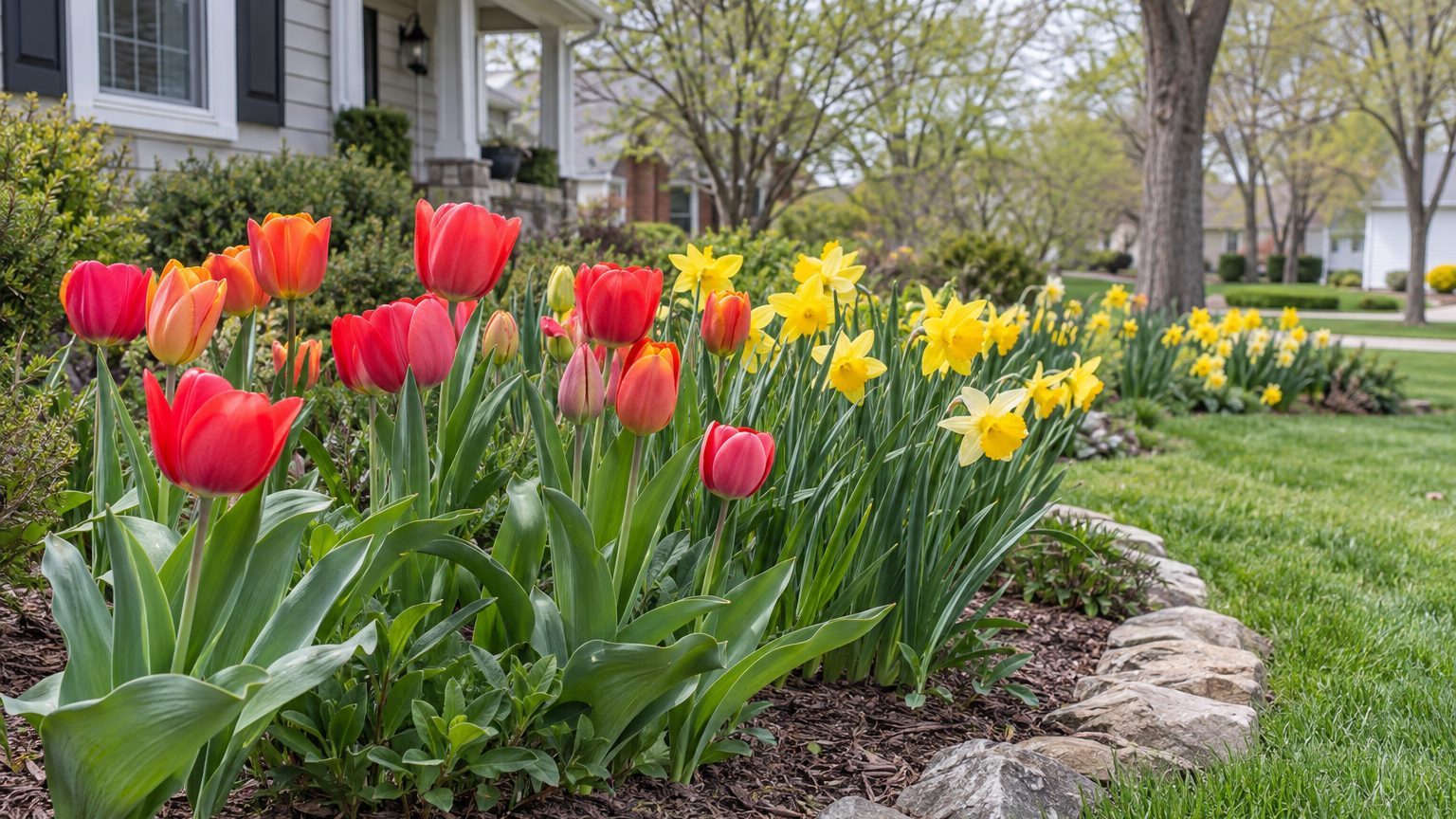
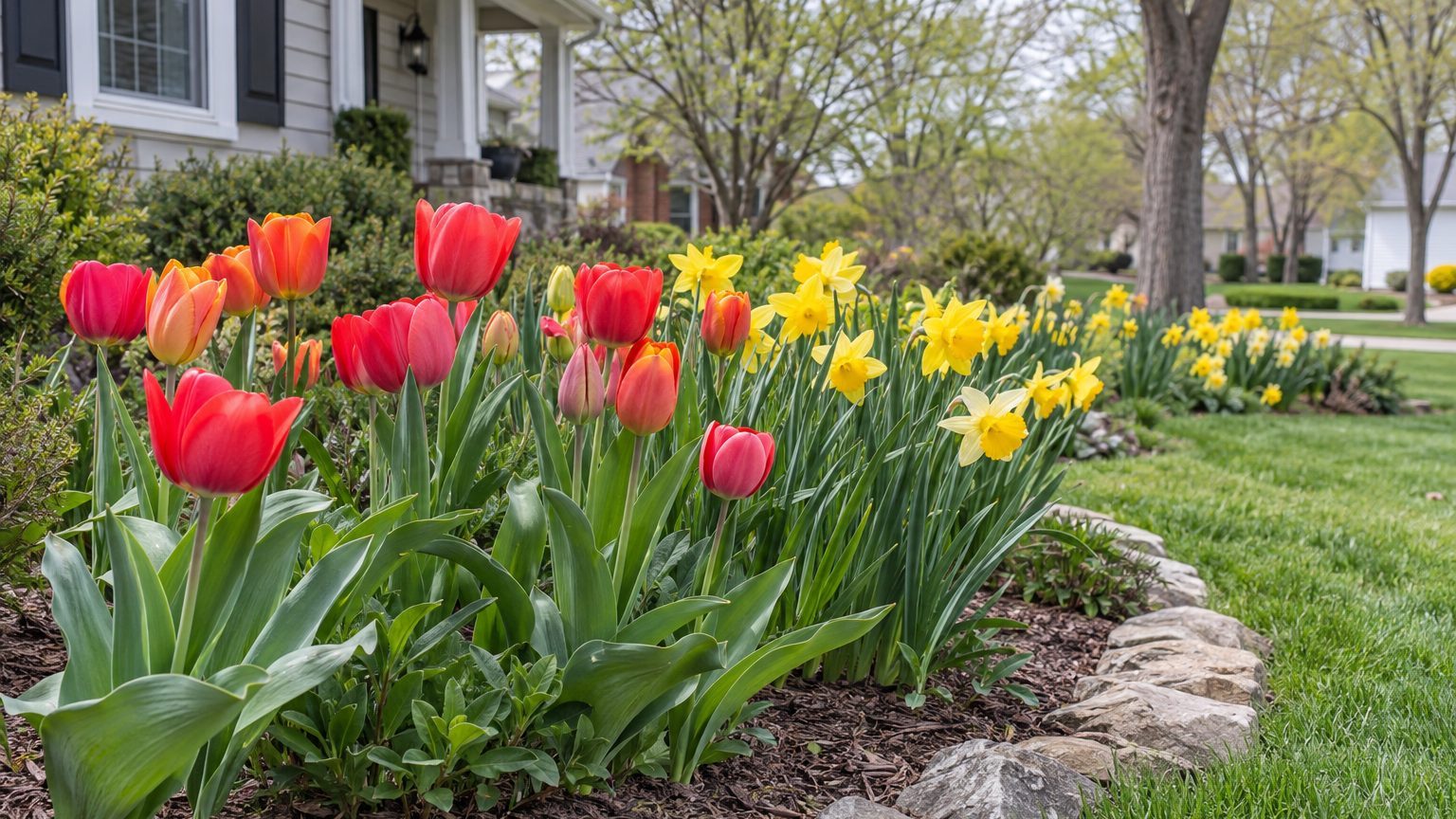
Green tips pushing through cold ground in March or early April are the first sign that fall planting paid off. In Iowa, daffodils, alliums, tulips and crocus all get the winter cold they need. Daffodils and alliums return more dependably than tulips or crocus. Which ones earn a spot depends on how much you want to replant and which animals visit your yard.

Best Spring Bulbs to Grow in Iowa

Healthy spring bulbs in bloom

Daffodils and alliums are the dependable choices for Iowa, because winters here supply the chill that most spring bulbs need, about 12 to 16 weeks of it. Tulips and crocus grow fine too, but they cost more effort and more replanting. USDA zones 4b to 6a cover the state, and every bulb below handles that cold.

Daffodils

Daffodils are the more reliable perennial bulb, lasting longer than tulips and growing with more vigor than most other spring-flowering bulbs. Voles, squirrels, rabbits and deer leave them alone, which matters in a front yard that wildlife crosses.

For named varieties, look for cultivars that have won the American Daffodil Society’s Wister Award, given for long-lasting flowers, disease resistance and good garden performance.

Tulips

Tulips give the boldest color, but they are often short-lived in the garden, so expect to replant some over the years. Voles, squirrels, rabbits and deer all eat them.

Plant them where the show is worth that risk, close to a door or walkway where you will enjoy every bloom, and let daffodils carry the rest of the bed.

Crocus

Crocus are small, and they draw the same hungry crowd as tulips, including voles, mice, chipmunks and rabbits. Some losses are likely.

Plant them in generous handfuls so a few missing bulbs do not leave gaps in the display.

Alliums

According to Iowa State University Extension, alliums, the ornamental onions, need the cold of winter to bloom, so they are easy to fit into any fall planting. They come at the end of the long spring succession that begins with snowdrops and winter aconites.

How to Choose Spring Bulbs for Your Iowa Garden

Most of the decision comes down to how much work you want in return and what else lives in or visits your yard. A bulb that survives the winter is only half the question. The other half is whether it will still be there in a few seasons.

Your situation What suits it in Iowa Why
Very cold winter Any of the common spring bulbs Most need 12 to 16 weeks of cold to flower, and Iowa winters supply it
Little time to spare Daffodils They last longer than tulips and are the more reliable perennial bulb
Deer, rabbits and voles in the yard Daffodils Animals leave them alone, while tulips and crocus get eaten
Want color across the season A mix from snowdrops and winter aconites to alliums Spring bulbs bloom in a long succession
Bulbs still in the bag Plant them anyway Late planting beats storing over the winter

Small beds suit the same logic. A compact planting of daffodils gives years of flowers, while tulips are best treated as a seasonal accent. Whichever you pick, leave the leaves standing after the bloom fades.

Which Spring Bulbs Suit Different Parts of Iowa

Iowa spans USDA hardiness zones 4b to 6a, so the colder and milder ends of the state lean toward slightly different choices.

  • Northern Iowa: Near the Minnesota line, where winters are colder, lean on daffodils and alliums, which hold up reliably, and treat tulips as a bonus.
  • Central Iowa: Around Des Moines and Ames, the full range of daffodils, tulips, crocus and alliums is open to you, with animal pressure being the main deciding factor.
  • Southern Iowa: Along the Missouri line, where the ground tends to stay open longer, a late planting of tulips has better odds of getting into the soil.

Wherever you garden, hardiness zones are a guide, and a sheltered, sunny yard can behave a notch milder than its neighbors.

Spring Bulb Buying Mistakes to Avoid in Iowa

Planting Tulips and Crocus Without a Plan

Voles, squirrels, rabbits and deer treat tulips and crocus as a buffet. The cost is a bed that blooms thinly or not at all after the first winter. Mix in daffodils, which animals ignore, and put your tulips where you will notice quickly if they disappear.

Expecting Tulips to Last Forever

Tulips are often short-lived in the garden. Buying them as if they were permanent leads to a bed that fades while you wait for it to recover. Daffodils are the better bet for long-term color. Budget for fresh tulip bulbs now and then.

Storing Bulbs Over the Winter

A bag of bulbs left in the garage looks like a plan for next fall, but bulbs are better planted late than stored. Plant as long as the ground can be dug, even into November or December while the soil is unfrozen. A late bulb still has a chance, while a stored one only dries out.

Where to Get Spring Bulb Advice in Iowa

Iowa State University Extension publishes planting guidance written for Iowa gardens, and your county office can help with local questions about soil and pests.

  • The extension website has articles on selecting and planting spring bulbs, which are worth reading before you order in late summer.
  • Your county extension office can answer questions about voles, rabbits and deer in your area, and is useful to call in early fall before bulbs go in.

Common Questions

When Do Spring Bulbs Bloom in Iowa?

Bulbs come up in March or early April, and tulips flower April through May. The earliest daffodils can open in late February.

How Do You Know When to Plant Spring Bulbs in Iowa?

Plant in September through October, once the soil has cooled below about 60°F. That gives roots time to form before the ground freezes, and it is late enough that the bulbs do not sprout in the fall.

What Should You Do with the Leaves After Bloom?

Remove only the faded flowers. Leave the leaves on the plant until they turn brown, because they feed the bulb for next year’s bloom.
When Do Tulips and Daffodils Bloom in Iowa?

When Do Tulips and Daffodils Bloom in Iowa?

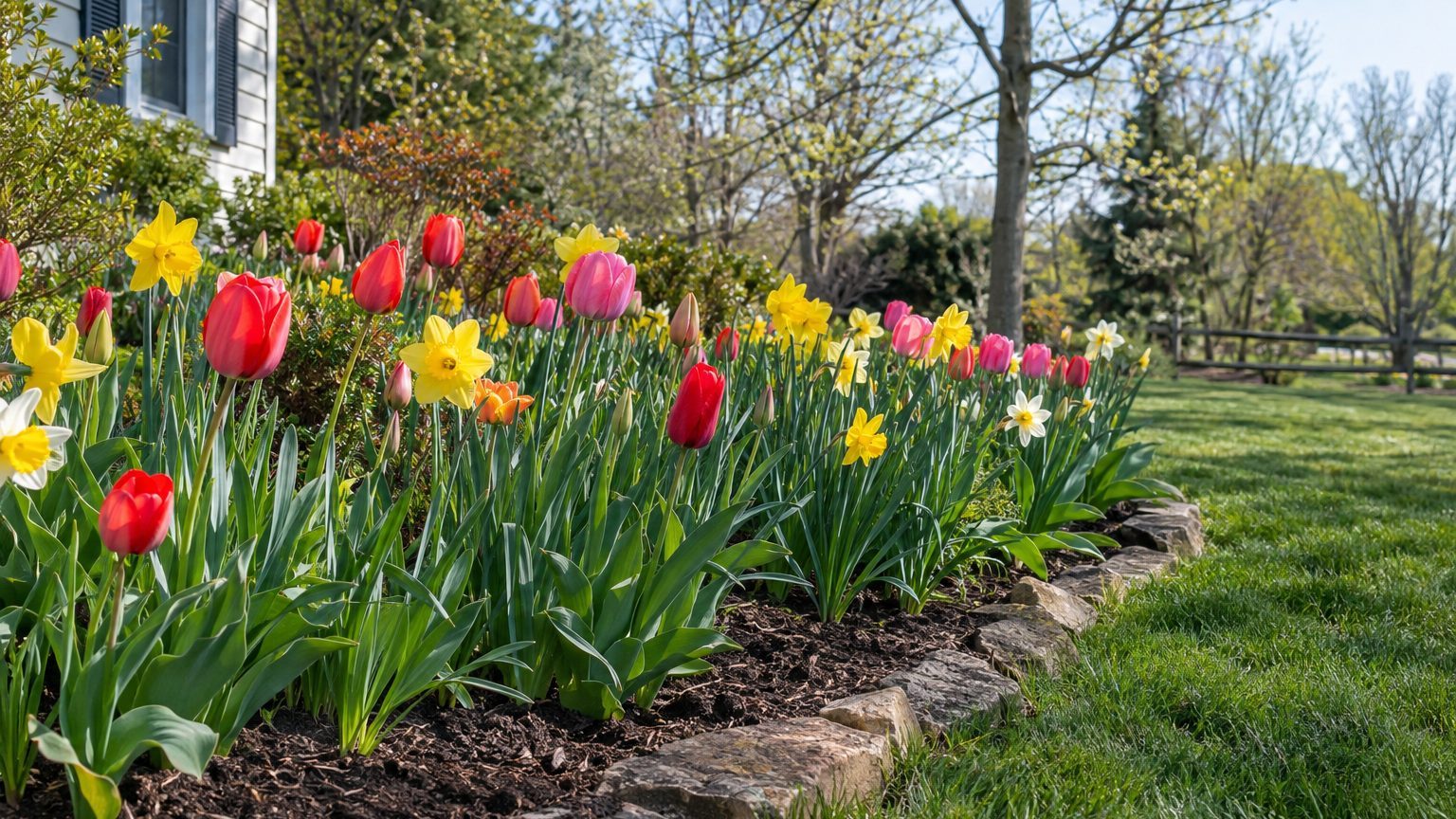
Green spears pushing up through cold mulch are the first sign that spring bulbs are awake, and they often show before winter has fully let go. The months for tulips and daffodils, and the care around them, depend on how spring warms up.

When Do Tulips and Daffodils Bloom in Iowa?

When Do Tulips and Daffodils Bloom in Iowa?

Tulips and daffodils bloom mostly from April through May, and some daffodils open as early as late February. The shoots usually break the ground in March or early April, so a mild late winter pulls everything forward.

Bulb When it blooms in Iowa What sets the timing
Daffodils Late February into May Variety, and how soon spring warms after the shoots emerge
Tulips April through May Variety, and warm spells after emergence in March or early April
Alliums Near the close of the spring bulb season Spring warmth after a required chill period

Crocus, hyacinths and the early, midseason and late tulip groups all follow the same pattern. Their flowers open as the weather warms, so a cold, slow spring shifts the whole parade later and a warm one hurries it. Spring bulbs bloom in a long succession, from snowdrops and winter aconites at the start of the season to alliums at the end. That spread is why a bed planted with several types can stay in flower for most of spring.

How to Tell Your Bulbs Are About to Bloom

Bulbs announce themselves well ahead of the flowers, and a quick walk along the beds tells you where things stand.

  • Pointed green tips breaking the soil in March or early April mean the bulb has finished its winter rest and is growing again.
  • Leaves that stand up and widen mean the flower stalk is forming inside, so a late cold snap is worth watching for.
  • A fat bud rising between the leaves means flowers are close, and daffodil buds usually show before tulip buds fatten.
  • Buds that show a stripe of color through the green sheath mean the petals are only a few warm days from opening.
  • Leaves that appear with no bud at all often point to a bulb that is too young, too crowded or hungry for sun, and they are worth noting for fall.

Frost on emerged leaves rarely hurts them, but a bud already in color is more tender, so cover it on a freezing night.

What to Do After Tulips and Daffodils Bloom in Iowa

Snip off the faded flowers and leave everything else. The leaves are what recharge the bulb for next year, so they stay on the plant until they turn brown. Do not braid, tie or cut them while they are green, however untidy the bed looks in the meantime.

Tulips are often short-lived in the garden, while daffodils last longer and are the more reliable perennial bulb. Here, larger bulbs such as tulips are sometimes treated as annuals and lifted in late spring to make room for other plants, which is an option if a bed has to look fresh all summer. Planting annuals or perennials in front of the fading leaves hides them without disturbing the bulbs.

Animals shape what returns, too. Voles, squirrels, rabbits and deer eat tulips and crocus, while daffodils are left alone. Where critters are a problem, daffodils are the safer bulb to count on year after year.

How Bloom Time Shifts Across Iowa

The state spans a wide range of winter cold, from USDA zone 4b to zone 6a, so the same bulb opens on different dates depending on where you garden.

  • Northern Iowa: Winters run colder and spring warms later, so shoots and flowers arrive after those farther south.
  • Central part of the state: Bloom falls in the middle of the state’s range, and the April through May window fits it well.
  • Southern part of the state: Spring warms sooner, so daffodils and early tulips open ahead of the rest of the state.

A sunny south wall or a sheltered corner of the yard can pull a single clump ahead of the same bulb in an open bed.

Where to Get Bulb Advice in Iowa

Questions about a stubborn bed, a bulb that skipped a year or a variety for your soil are best handled by people who know local conditions.

  • Iowa State University Extension publishes planting and care guides for spring bulbs, and a look in fall helps before you buy.
  • Your county extension office can answer local questions on soil, pests and varieties, and a visit in late winter beats a rushed one in spring.

Common Questions

Can You Plant Tulips and Daffodils in Iowa After October?

Yes. September and October suit planting, once the soil has cooled down. Bulbs still in the bag in November or even December can go in if the ground is unfrozen, and a late-planted bulb beats one stored over winter.

Do Forced Daffodils Bloom Again Outdoors in Iowa?

Daffodils are an exception among forced bulbs, since they are more vigorous than tulips and most others. Once the indoor flowers fade, many forced daffodil cultivars can be planted outdoors and perform well. Forced tulips rarely return as well.

Do Tulips and Daffodils Need Winter Cold to Bloom?

Most spring-flowering bulbs need about 12 to 16 weeks of cold before they flower. Local winters supply that on their own, so chilling bulbs in the refrigerator is not needed here as it is where winters run too mild.

When to Plant Tulips and Daffodils in Iowa

When to Plant Tulips and Daffodils in Iowa

Daffodil shoots pushing through cold, leafy ground are a sign that someone planted bulbs well the autumn before. Iowa’s planting season for tulips and daffodils is a long one, with a comfortable stretch in early fall and a forgiving tail that runs into winter. Timing, bulb choice and a few yearly habits decide how those shoots turn out.

When to Plant Tulips and Daffodils in Iowa

When to Plant Tulips and Daffodils in Iowa

Plant tulips, daffodils and other spring bulbs in September and October, with late September through October the sweet spot, and keep November and even December open as a fallback while the ground can still be dug. A bulb’s year in Iowa runs like this:

  • In late summer, buy bulbs that feel firm and heavy for their size, and keep them somewhere cool and dry until the soil is ready.
  • Through fall and winter, skip the refrigerator, because Iowa winters deliver all the cold that tulips and daffodils need to set flower buds.
  • In September and October, set the bulbs in the ground once the soil has cooled, which gives roots time to settle before the freeze.
  • In November and December, plant any leftovers if the ground is still unfrozen, since a late bulb in the soil does better than one waiting on a shelf.
  • After planting, once the weather turns reliably cold, spread a layer of mulch to even out thaws and freezes through winter.
  • In March or early April, shoots break the surface, and tulips open from April into May.

Fall frost typically arrives between October 14 and October 25 at the reference station, and the state sits in USDA zones 4b to 6a, so the north runs colder than the south. A frost date marks risk for tender plants. For bulbs underground, the calendar months above are what count.

Which Spring Bulbs Do Best in Iowa?

Winters here are cold enough to give tulips, daffodils, crocus, hyacinths and alliums the chill they need, and the soil is rarely the limit. Wildlife is the bigger question. Voles, squirrels, rabbits, deer and chipmunks take a keen interest in some bulbs and ignore others.

Daffodils come out ahead on reliability, while tulips are the bulb most likely to disappear or fade.

Bulb type How it does in Iowa Why
Daffodils Dependable and long-lived More vigorous than tulips, and animals leave them alone
Tulips Lovely but often short-lived Favorite food of voles, squirrels, rabbits and deer
Crocus Good where animals are kept off Rabbits, voles and chipmunks go after them, much as they do tulips
Alliums Thrive in cold winters They need the cold of winter to bloom.

Hyacinths go in during the same fall window as the others and ask for nothing special. If squirrels have a habit of raiding the bed, put the daffodils and alliums out front and tuck tulips where a cage or a fence can protect them. In Iowa, larger bulbs such as tulips are sometimes treated as annuals and lifted in late spring to make room for other plants, a sensible way to think about them anywhere.

When to Plant, Chill and Care for Spring Bulbs in Iowa

Three jobs fill the bulb year, and each has its moment. Planting comes first in fall, the cold treatment takes care of itself, and the leaves get left alone after the flowers fade.

Where a task has no month, a sign in the garden tells you when.

Task Best timing in Iowa Why then
Plant September and October Soil that has cooled down enough means roots form before the freeze without top growth starting in fall
Plant late November and December, while the ground can be dug A bulb in the soil beats one stored over winter
Chill No refrigerator step needed outdoors Most bulbs want about 12 to 16 weeks of cold, which Iowa winters supply, and alliums also need cold.
Leave the foliage After bloom, until the leaves turn brown Green leaves feed the bulb for next year

After flowering, remove only the faded blooms. Bloom runs April into May, and the leaves can stay ragged for a while, so plant bulbs where later perennials will cover the yellowing foliage.

How Bulb Planting Time Changes Across Iowa

Iowa spans a good stretch of climate, from the colder zone 4b to the milder 6a, and that shifts the comfortable end of the planting window.

  • Northern Iowa: Soil cools sooner and freezes earlier, so aim for the front of the window, September into early October, to give roots time to settle.
  • Southern Iowa: Milder winters keep the ground workable longer, which makes the November and December fallback more realistic for stragglers.

Whichever part of the state you garden in, test the soil with a trowel. If it digs easily, bulbs can still go in.

Where to Get Bulb Advice in Iowa

Iowa State University Extension publishes bulb guidance written for local conditions, and county offices can look at a problem in person. Both are worth a call when a bed refuses to perform.

  • The Iowa State University Extension site is where to look for planting and care questions, any time of year.
  • Your county extension office can run a soil test and help diagnose bulbs that came up weak, so go before fall planting.
  • Bring a few bulbs that failed, along with a note of where they grew and how wet the spot stays.

Common Questions

Can You Plant Forced Daffodils Outdoors in Iowa?

Yes. Daffodils are an exception to the rule that forced bulbs rarely survive, and many forced cultivars perform well once they are in the garden. Tulips and most other forced bulbs are far less likely to come back.

Do Tulips Come Back Every Year?

Sometimes, but tulips are often short-lived, and animals shorten that life further. Daffodils last longer and are the more reliable perennial bulb, so lean on them for flowers that return.

Does a Fall Frost Mean It Is Too Late to Plant Bulbs?

No. A frost date marks risk for tender plants above ground, not the end of bulb planting. Bulbs follow the calendar months and the state of the soil, so plant any bulb as long as the ground can be dug.

Best Grass Seed for Iowa

Best Grass Seed for Iowa

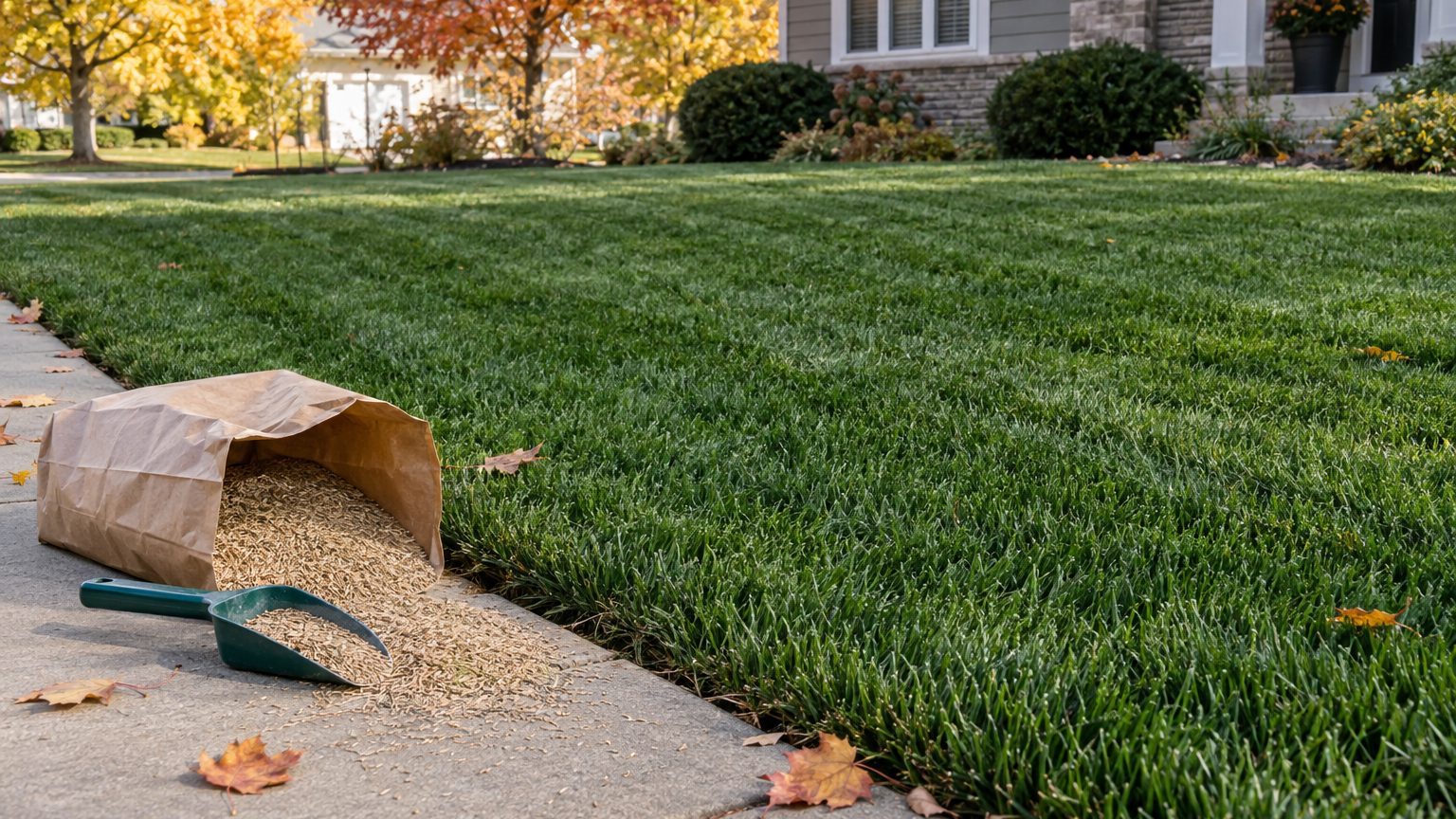
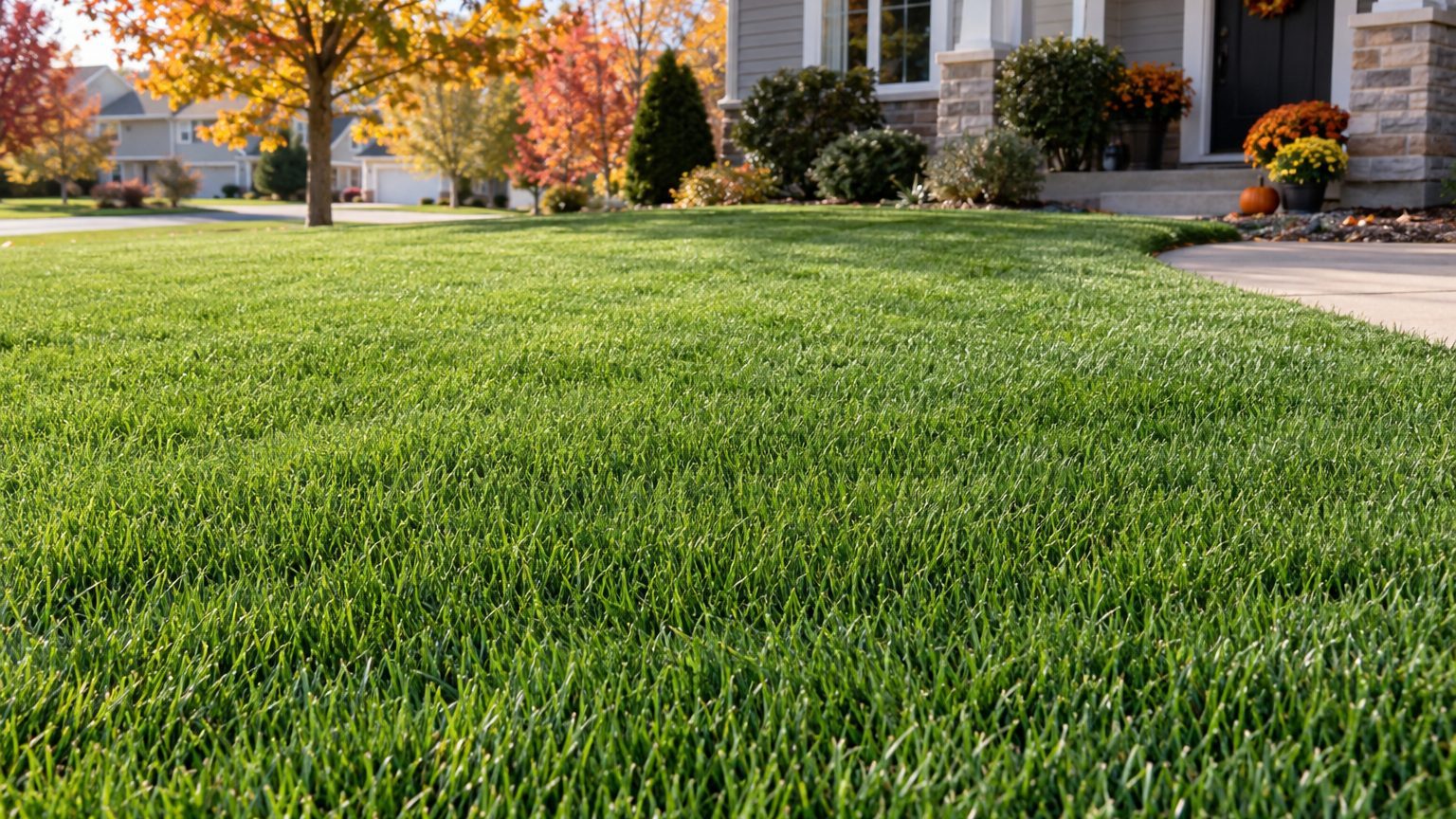
Walk an Iowa lawn in late summer and you can often tell what was seeded years ago by how it looks after the heat: some patches stay green and dense, others thin and go dormant. Iowa sits in the cool-season zone, so the grasses that work here are Kentucky bluegrass, tall fescue, perennial ryegrass and the fine fescues, usually sold alone or blended.

Which Grass Grows Best in Iowa?

Iowa spans USDA hardiness zones 4b to 6a, and cool-season grasses suit its cold winters. Cool-season species grow hardest in spring and early fall, then slow down in July heat. Seeding in August or September, with April and May as a fallback, gives them time to root before winter.

Kentucky Bluegrass

Kentucky bluegrass is a dependable choice across Iowa because it tolerates cold winters. It spreads by underground stems, so thin spots slowly fill in. It wants full sun and regular water through summer, and it is slower to sprout than ryegrass, so be patient after seeding.

Tall Fescue

Tall fescue puts down deep roots, which helps it ride out dry July and August stretches better than bluegrass. It forms clumps rather than spreading, so overseed bare patches instead of waiting for them to fill in. It is a good fit for yards that see dry spells or have trouble with frequent watering.

Fine Fescues

Creeping red, chewings and hard fescue tolerate shade and poor soil better than bluegrass does. They grow fine-textured blades and need less fertilizer and water. Under mature maples and oaks, they are usually the species that keeps a thin lawn going.

Perennial Ryegrass

Perennial ryegrass sprouts quickly, which makes it useful for fast cover and for mixing with slower seed. It usually works better as part of a blend than as the whole lawn. Expect it to thin after severe cold.

How to Choose Grass Seed for an Iowa Yard

Start with what your yard actually does: how much sun it gets, who walks on it, and how willing you are to water and mow. Those answers narrow the list quickly, and a mix of species can cover a yard with areas of sun and shade.

A blend also spreads the risk. If a species struggles in a hard winter or a dry summer, the others hold the ground.

Grass Season Best fit in your yard
Kentucky bluegrass Cool Full sun, regular watering, a dense lawn that repairs itself
Tall fescue Cool Sun to part shade, foot traffic, dry summers
Fine fescues Cool Shade, low fertilizer, less frequent mowing
Perennial ryegrass Cool Quick cover, mixed into blends for play areas

If you want a lawn that needs little mowing and feeding, lean on fine fescues. If kids and dogs use the yard daily, tall fescue with some bluegrass is a sturdy pairing. Wherever you plant, cover the seed with no more than 0.25 inch of soil and press it down so it touches the ground firmly.

Which Grasses Grow Where in Iowa

Iowa is a fairly even cool-season state, but winter cold and soil moisture shift the odds a little from one end to the other.

  • Northern Iowa: Winters run colder here, so Kentucky bluegrass and fine fescues are suitable options, while perennial ryegrass is often mixed with other cool-season species.
  • Central Iowa, around Des Moines: Every cool-season species can work, so choose by sun, shade and watering habits rather than by climate.
  • Southern Iowa: Summers are hotter and drier on average, which gives tall fescue more of an edge for yards that go without much water.

Your own yard’s shade and soil matter more than the county line, so treat these as tendencies and not rules.

Grass Seed Mistakes to Avoid in Iowa

Choosing the Wrong Species

Seed that suits a different climate, or a shade blend sown in open sun, eventually fades. Read the label for the species names, match them to your light, and skip anything built around warm-season grasses.

Seeding at the Wrong Time

Summer heat and weeds work against young seedlings in spring, so August and September are the strongest window for seeding. If you miss September, April and May still work as a fallback. Seed sown in spring needs more watering to survive the summer heat.

Too Much or Too Little Seed

Thin sowing leaves gaps where weeds move in, while heavy sowing crowds seedlings and invites disease. Follow the rate printed on the bag for new lawns and use a lighter rate for overseeding. Spread it evenly, then keep the soil surface moist until the grass is up.

Where to Get Lawn Advice in Iowa

Iowa State University Extension offers turf guidance written for Iowa conditions, and your county office can speak to local soil and weather.

  • Iowa State University Extension has lawn establishment and weed guides, worth reading before you buy seed in late summer.
  • Your county extension office can advise on soil testing before you seed in August or September.

Common Questions

Can You Plant Warm-Season Grass Seed in Iowa?

Warm-season grasses are a poor match for Iowa’s cold winters and rarely hold up. Stay with the cool-season species in this article.

Is a Seed Blend Better than a Single Grass?

A blend usually copes better with a yard that mixes sun, shade and traffic, because each species covers a different weakness. A single species works if the whole yard is uniform.

Do You Need to Aerate Before Seeding?

Core aeration helps seed reach the soil on compacted lawns, and September is the best time for it. It also works in April or May if you are seeding in spring.

Lawn Problems and Solutions in Iowa

Lawn Problems and Solutions in Iowa

Straw-colored patches in July, a spreading mat of coarse crabgrass, or turf that peels back like a carpet are the usual Iowa lawn complaints. Most of them trace back to a few causes: humid summer nights, thin turf, and mowing, watering or feeding at the wrong moment. Naming the problem correctly comes first, and the fix is usually simple.

Lawn Pests and Diseases in Iowa

Crabgrass in Spring

Crabgrass in Spring — Lawn Problems and Solutions in Iowa

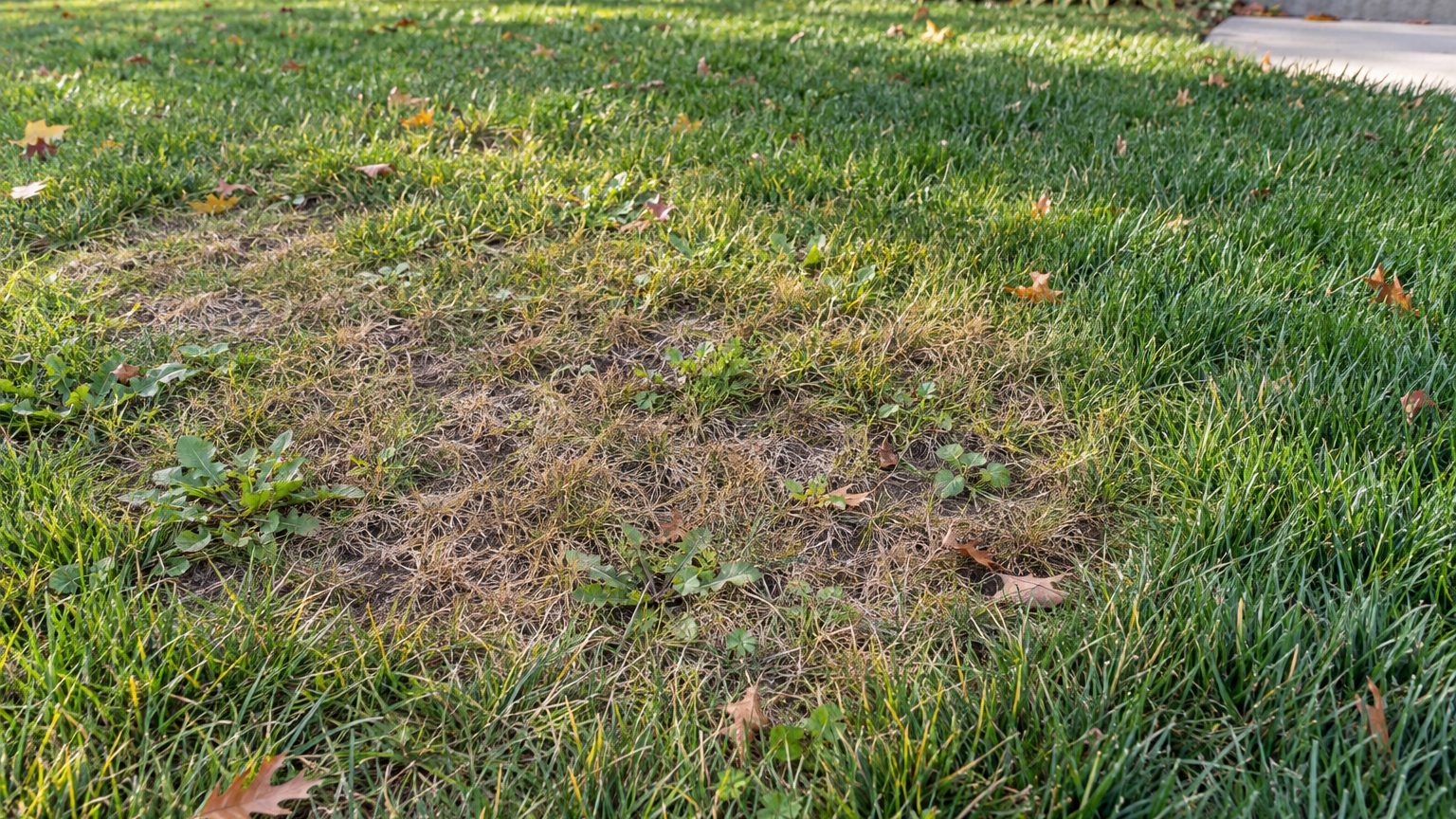
Crabgrass is a coarse, light green annual that sprouts in bare or thin spots as the soil warms. It dies with the first hard frost and leaves a mess of seed behind. A preventer goes down in April, and May still works if April slips by.

Dandelions in Open Turf

Dandelions show up wherever the grass is thin, and a deep taproot lets them regrow from a fragment. Pull them when the soil is moist so the whole root comes out. Thick turf is the lasting fix, because a dense lawn leaves little light for seedlings.

Dollar Spot in Early Summer

Dollar spot makes small, bleached, straw-colored spots that merge into larger blotches. It favors lawns that are underfed and dry at the root while humid at the leaf. A fall feeding keeps turf strong, and watering deeply in the morning helps leaves dry quickly.

Brown Patch in Midsummer

Brown patch is a fungus of hot, sticky weather. Look for roughly circular patches, sometimes with a darker smoky edge early in the morning. Grass blades are damaged but the crowns usually survive. Skip nitrogen in the heat, cut back on evening watering, and let the lawn dry overnight.

White Grubs in Late Summer

Grubs are fat, C-shaped, creamy larvae that chew grass roots. Infested turf wilts despite watering and lifts easily, and raccoons, skunks or birds often tear it up while feeding. Peel back a patch of sod to check. If you find many grubs, treat that part of the lawn rather than the whole yard.

How to Tell Which Lawn Problem You Have

Symptoms rarely settle the diagnosis on their own. Pair what the grass looks like with when it happens and where in the yard, and the list of suspects shrinks fast.

Tug on the damaged turf. Grass that lifts with no roots points to grubs, while grass that stays anchored points to disease or drought.

What you see When and where Likely problem
Turf lifts like loose carpet, animals digging Late summer into fall, often in sunny, well-watered areas White grubs
Roughly circular patches, dark smoky edge Midsummer, after hot humid nights Brown patch
Small straw-colored spots that merge Early summer, on lean or dry-rooted turf Dollar spot
Coarse, light green clumps spreading flat Summer, in bare or thin spots near pavement Crabgrass
Spongy feel underfoot, water runs off Any season, a thatch layer over 1/2 inch Excess thatch

Thin grass under trees is not a pest at all. Shade and root competition starve the turf, so look for a pattern that follows the canopy and an area that stays damp. Hard, compacted soil in high-traffic strips also mimics disease, and core aeration relieves it.

Where Lawn Problems Are Worst in Iowa

Iowa spans USDA hardiness zones 4b to 6a, a range that reflects differences in extreme winter cold.

  • Northwest Iowa and Siouxland: Colder winters and a later spring can slow recovery and increase the risk of winter injury. Wind and dry spells stress grass here.
  • Central Iowa around Des Moines: Humid summers can favor brown patch and dollar spot, while compacted clay soil slows rooting.
  • Mississippi River towns like Dubuque and the Quad Cities: Shady, damp sites can thin turf and favor fungal disease.
  • Southern Iowa: Longer, warmer summers raise disease pressure and let crabgrass run longer.

Wherever you live, a shady, poorly drained corner is especially prone to trouble.

Lawn Care Mistakes That Invite Problems in Iowa

Mowing Too Short

Scalped grass has fewer leaves to feed the roots, so weeds like crabgrass and dandelions move into the gaps. Raise the mower deck and take off only the top of the blade at each cut. Mow from April through November, whenever the grass is growing.

Watering Lightly and Late

Short, frequent sprinkling keeps roots shallow and leaves wet overnight, which feeds brown patch and dollar spot. Water deeply and early in the morning instead, so the soil soaks well below the surface and the blades dry by evening.

Feeding at the Wrong Time

Heavy nitrogen in midsummer pushes soft growth that disease loves. Fertilize in September and November, when cool-season grass builds roots, and May also works for a lighter spring feeding. Fall feeding also leaves the lawn denser by the time crabgrass seeds sprout.

Where to Get Lawn Advice in Iowa

Local soils, shade and weather differ from one county to the next, so a nearby source can confirm what you suspect before you spend money.

  • Iowa State University Extension publishes lawn guides, and its horticulture staff can help identify a disease or weed from a photo or sample.
  • Your county extension office can point you to soil testing before you fertilize or reseed.
  • Bring a sod sample with roots to the county office when you cannot tell grubs from disease.

Common Questions

When Should You Seed a Lawn in Iowa?

August and September are the strongest months, because warm soil and cooler air give seedlings time to root before winter. Spring seeding in April or May also works, though summer heat and crabgrass compete with young grass. In Des Moines, the first fall frost tends to arrive between October 14 and October 25, and sites farther north can see it sooner.

When Should You Core Aerate an Iowa Lawn?

September is the best time, when the grass can fill the holes quickly. If you miss it, April and May also work. Aerate when the soil is moist, not bone dry or soggy.

When Does an Iowa Lawn Need the Most Watering?

June, July and August are the months when the lawn most needs a deep soaking during dry spells. If rain has been steady, hold off, because wet leaves and soil in summer invite disease.

Iowa Lawn Care Schedule, Month by Month

Iowa Lawn Care Schedule, Month by Month

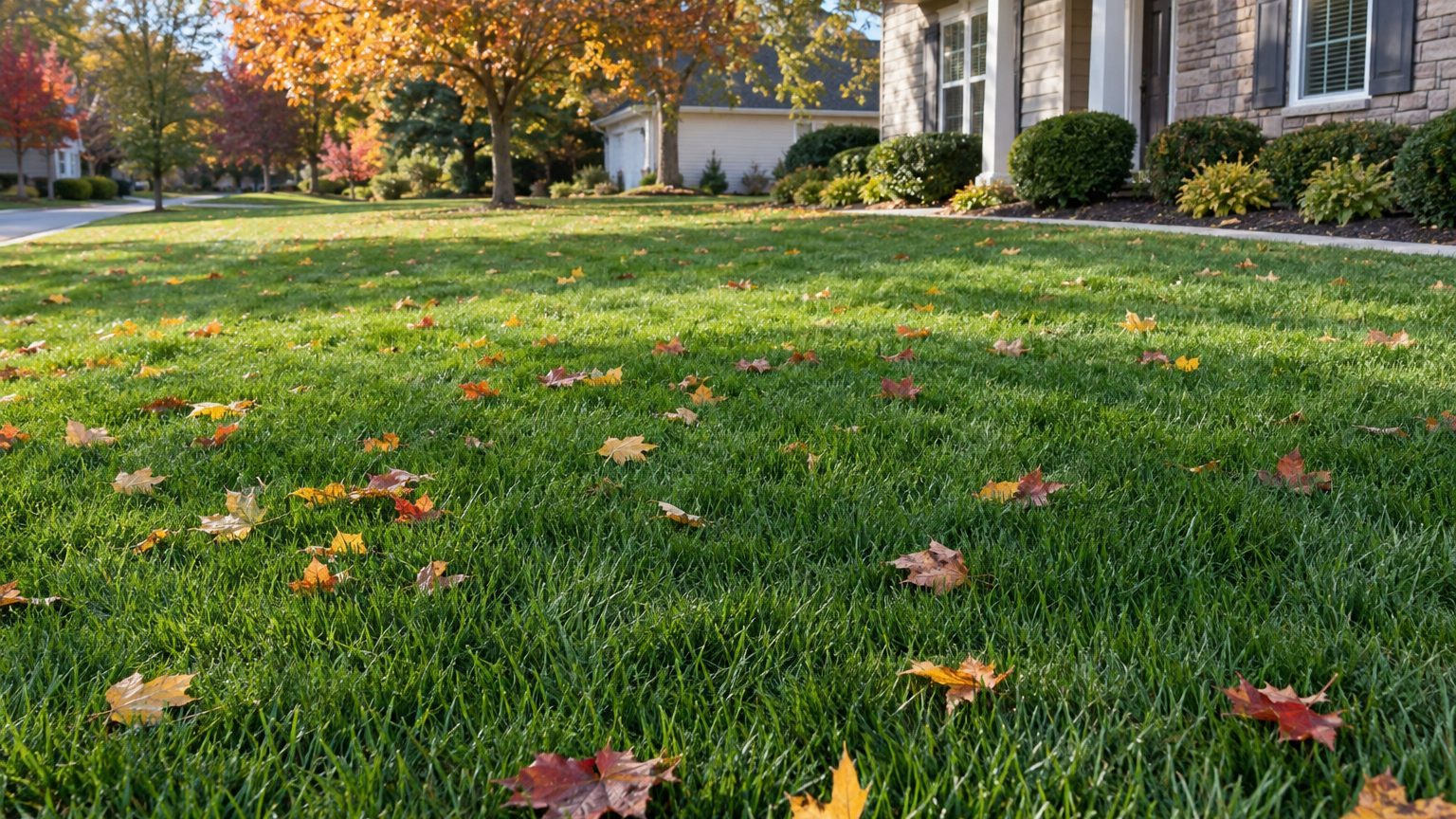
Frost on the grass blades in April, a green flush by May, and a mower that keeps running into November: that is the rhythm of an Iowa lawn. Most Iowa lawns are cool-season grasses such as Kentucky bluegrass, tall fescue and perennial ryegrass, so the big jobs cluster in spring and again from late summer into fall.

What to Do Each Month in an Iowa Lawn

Lawn in Iowa

Cool-season grass grows hardest in spring and fall, and it rests in deep cold and in midsummer heat. The months below follow that pattern, so the heavy work lands when the grass can recover fast.

Month In the lawn
January Rest. The grass is dormant, so keep heavy foot traffic off frozen turf.
February Rest. Dormant grass needs nothing, and you can sharpen the mower blade now.
March Rest, mostly. Thawing soil turns soft and muddy, so stay off it and watch for matted patches.
April Apply crabgrass preventer before the weeds sprout. Mowing begins as growth picks up. Core aeration, dethatching and seeding also work in April if you want an early start.
May Mow regularly as growth peaks. If April slipped by, preventer still works in May. Fertilizing, aeration and seeding also work this month.
June Keep mowing, and start watering as the weather dries out so the roots stay alive.
July Water deeply in the heat and keep mowing. Cool-season grass slows down, so skip heavy treatments.
August Dethatch and begin seeding as the heat eases. Keep watering and mowing.
September The busiest stretch for repair. Core aerate, seed, dethatch and fertilize while the soil is still warm. Keep mowing.
October Mow as long as the grass grows.
November Fertilize to feed roots over winter, and make the last mowing passes.
December Rest. The grass is dormant, so clear leaves and put the mower away.

Seeding and aeration go together well, because seed that drops into freshly opened holes touches soil right away. Fall rewards that pairing more than spring does.

When Does the Lawn Season Start and End in Iowa?

Grass wakes up when the soil warms, not when a date arrives. Seed starts to sprout once the soil sits at 50 to 65 °F, which is why fall seeding works while the ground still holds summer heat, and why spring seeding has to wait for the soil to thaw and warm.

Frost dates only tell you the risk to young grass. In Des Moines, the last spring freeze usually falls between April 12 and April 24, and tender new seedlings can still be nipped until then. Farther from the city, expect freezes to linger a bit later in spring.

The first fall freeze usually arrives between October 14 and October 25 in Des Moines, and it often comes sooner in rural counties. Seed sown in August and September has time to root and thicken before that cold, while mowing carries on until growth stops.

How the Lawn Calendar Shifts Across Iowa

Iowa spans hardiness zones 4b to 6a under the USDA system, so the same job lands a little earlier or later depending on where you live.

  • Northern Iowa near Mason City and Spencer: Spring warms later and fall cold arrives sooner, so favor the early part of each seeding window and finish fall work promptly.
  • Central Iowa around Des Moines and Ames: This is the middle of the pattern, and the months in the calendar fit well here.
  • Southern Iowa near Ottumwa: Soil warms earlier and stays warm longer, giving you a little more room at both ends of the season.

When in doubt, let the soil and the grass guide you, and treat the month as a starting point.

Lawn Care Timing Mistakes to Avoid in Iowa

Preventer Applied Too Late

Crabgrass preventer works only before the weed seeds sprout. Apply it in April, and if that month slips by, May still helps. Wait longer and the seedlings are already up, so the product does little.

Seeding in the Heat

Seed scattered in midsummer dries out before it roots, and the seedlings that do emerge struggle under hot sun. Hold off until August and September, when the soil is warm and the air is cooler, and keep the seedbed damp.

Skipping the Fall Feeding

Many homeowners fertilize only in spring, but Iowa lawns gain the most from September and November feedings. Fall feeding builds roots and stores energy for the next spring, and it does so without pushing the soft, fast growth that spring nitrogen can cause.

Where to Get Lawn Advice in Iowa

Local conditions vary from county to county, and local guidance can help you adjust the schedule to your own yard.

  • Iowa State University Extension offers lawn guidance for the state, so check it before you choose seed or plan a fall renovation.
  • Your county extension office can answer questions about local soil and weeds, and it is a useful place to start when a patch of lawn looks wrong.

Common Questions

Can You Seed a Lawn in Iowa During Spring?

Yes, April and May both work once the soil has thawed and warmed. Keep the seedbed damp, and expect summer heat to test the young grass, which is why fall is usually easier.

Should You Water an Iowa Lawn in Winter?

No. Dormant grass does not need watering while the ground is frozen. Your watering season runs through June, July and August, when heat and dry spells stress the turf.

When Is the Last Mowing of the Year in Iowa?

Mow through November, as long as the grass keeps growing. Once growth stops and the lawn goes dormant, you can put the mower away until April.

Iowa Lawn Care: What to Do and When

Iowa Lawn Care: What to Do and When

Iowa lawns green up in spring after a hard winter, push through a humid summer, and return to active growth as the nights cool in September. Cool-season grasses carry the state, and most of the work falls in spring and early fall.

Frost Dates and Growing Season in Iowa

Iowa sits in USDA hardiness zones 4b to 6a, so winters bite and lawn grass has to be tough. These dates apply to central Iowa around Des Moines; the season shifts slightly in northern and southern Iowa.

  • In early spring in Des Moines, the last frost usually lands between April 12 and April 24, which means a freshly sown patch can still get nipped if it sprouts too soon.
  • Once the soil warms, usually in April and May, grass wakes up and growth takes off, because roots and blades follow soil warmth more than the calendar.
  • Through June, July and August, mowing continues and watering matters most, since summer heat slows cool-season grass.
  • In late summer and September, seeding, aeration and fertilizing hit their stride, with air cooling and soil still warm enough for seed to root.
  • By October and November, the first fall frost in Des Moines arrives between October 14 and October 25, which closes the window for young seedlings that have not yet toughened up.

Those frost dates are optimistic for central Iowa. County figures run roughly four days later in spring. In fall, they run roughly ten days earlier. Plan with a little cushion around those dates.

Cool-Season or Warm-Season Grass in Iowa?

Cool-season grass is the right choice here. Iowa winters are cold enough to injure warm-season turf, and the grasses that thrive in spring and fall are the ones that handle the winters well.

Summer heat and dry spells do slow them down, so they go semi-dormant when it gets dry. The grasses below are the lawn grasses of the region.

Grass How it does in Iowa Why
Kentucky bluegrass Cool-season, forms a dense turf Spreads and fills in, handles cold winters
Tall fescue Cool-season, stays green longer in summer Deeper roots help it ride out dry stretches
Perennial ryegrass Cool-season, sprouts quickly Often mixed in to give fast cover
Fine fescues (creeping red, chewings, hard) Cool-season, fine-bladed Suits lighter, shadier spots in a mix

Warm-season grasses are not the standard choice for an Iowa yard, and St. Augustinegrass is never sold as seed anyway. Most homeowners do well with a bluegrass or tall fescue base, with a fine fescue blend in the shade.

When to Seed, Fertilize and Aerate a Lawn in Iowa

September is the busiest month for lawn work in Iowa, and for good reason. Soil is still warm, weeds slow down and cool nights help new grass settle in before winter.

Spring works for several jobs too, as a fallback or for specific tasks. If you miss September for seeding, April and May still work.

Task Timing in Iowa Why then
Seeding August, September (April, May also work) Warm soil and cooler air help seed root
Core aeration September (April, May also work) Grass is actively growing and recovers fast
Fertilizing September, November (May also works) Feeds roots going into winter
Dethatching August, September (April also works) Turf can rebound while growth is strong
Crabgrass preventer April (May also works) Goes down before crabgrass seed sprouts
Watering June, July, August Summer heat dries the soil fastest

Mowing runs from April through November, as long as the grass is growing. Keep the schedule loose and let growth lead the way.

Lawn Problems to Watch for in Iowa

Winter Kill and Thin Spring Patches

Winter Kill and Thin Spring Patches — Iowa Lawn Care: What to Do and When

Iowa winters can leave brown or thinning areas when snow melts, especially where ice sat or the grass was stressed going in. Rake lightly to lift matted blades, wait for steady growth, then overseed bare spots in spring or the following late summer.

Brown Grass in Summer Heat

When heat and dry weather arrive together, cool-season lawns turn tan and stop growing. If the crown is still alive, the grass usually greens up again once cooler weather and moisture return. Water deeply during June, July and August rather than sprinkling lightly.

Compacted, Hard Soil

Heavy clay soils and foot traffic leave hard ground where water runs off and roots stay shallow. If the lawn looks thin and a screwdriver is hard to push in, core aeration in September is the fix.

How Lawn Care Dates Change Across Iowa

Iowa is a big state, and the season shifts a bit from top to bottom. Colder winters in the north and milder ones in the south move your timing in opposite directions.

  • Northern Iowa, around Mason City and Spirit Lake: spring warms later and fall cools sooner, so seed a little earlier in late summer and expect a shorter growing season.
  • Central Iowa, around Des Moines and Ames: the usual spring and fall windows fit best here.
  • Southern Iowa, around Ottumwa and Council Bluffs: soil warms earlier in spring and frost comes later in fall, so seeding and fertilizing windows stretch a bit later.

Use the dates here as a starting point and watch your own yard for timing cues like soil warmth and daytime highs.

Where to Get Lawn Advice in Iowa

Local help can sharpen the timing for your own lot, especially for soil and for puzzling problems.

  • Iowa State University Extension offers lawn guidance written for Iowa conditions, useful before you choose seed or a fertilizer.
  • Your county extension office can help with a soil test or a diagnosis, so bring a sample or a photo when you stop in.

Common Questions

Can You Seed a Lawn in Iowa in Spring?

Yes, April and May work when fall is missed, though young grass has to face summer heat before it matures. Water new seed regularly as it sprouts.

Why Does an Iowa Lawn Turn Brown in July?

Tan color plus dry, crunchy soil points to heat dormancy. Grass that pulls up easily with rotted roots suggests something else, such as grubs or disease, so check the roots as well as the soil.

How Short Should You Mow an Iowa Lawn?

Cut high enough that you remove only a little of the blade at a time, and keep mowing from April through November as the grass grows. Taller grass shades the soil and holds up better in summer.

Hydrangeas That Grow Well in Iowa

Hydrangeas That Grow Well in Iowa

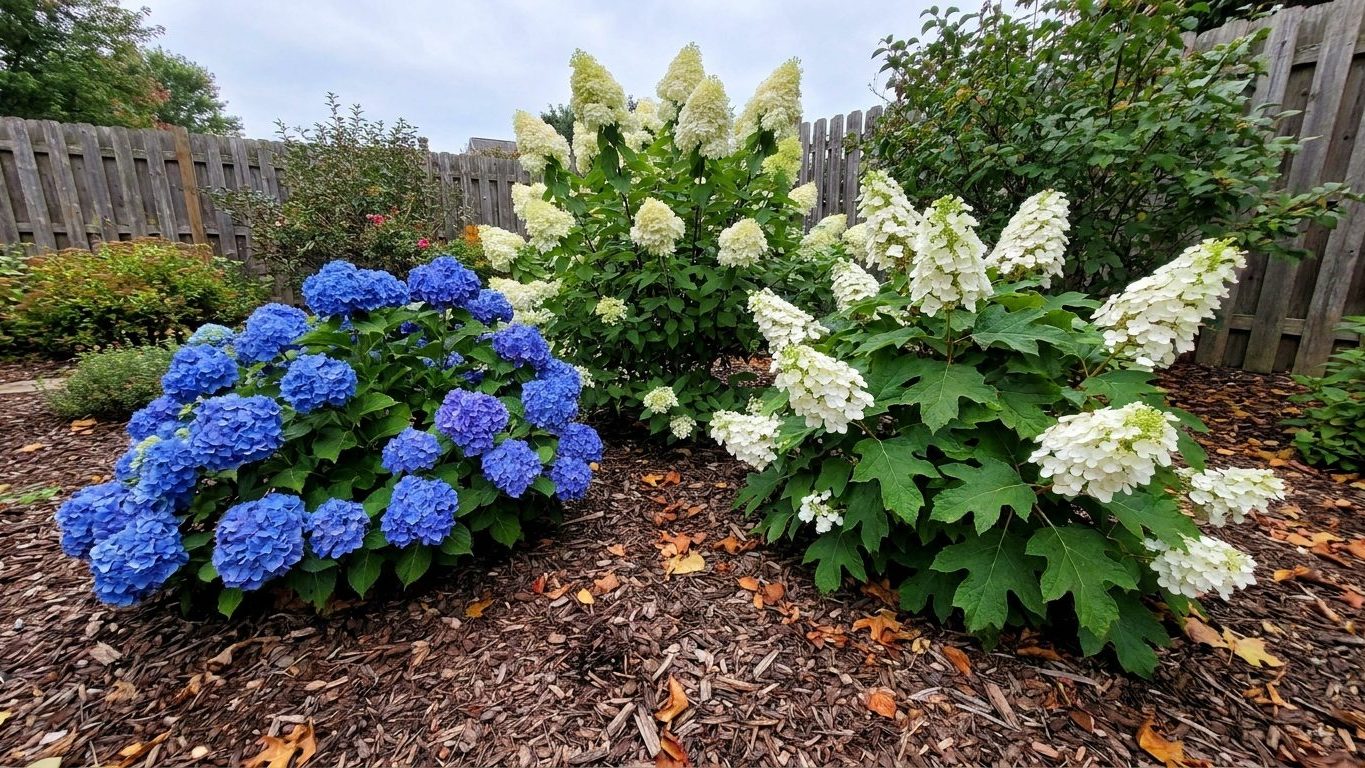
Panicle and smooth hydrangeas are the safest bets for Iowa yards, from Des Moines north to the Minnesota line. Both bloom on new wood, so they shrug off winters that kill flower buds on other types. Bigleaf and mountain hydrangeas can survive here but often skip blooming after a cold winter, and oakleaf needs a sheltered spot away from open, windswept ground.

Hydrangeas that grow well in Iowa: The Short Answer

The USDA Plant Hardiness Zone Map puts Iowa at 4b to 6a, with Des Moines sitting roughly in the middle of that range. That single fact decides which hydrangeas bloom here reliably and which ones survive the winter but stay bare most summers.

Panicle Hydrangea

Panicle Hydrangea — Hydrangeas That Grow Well in Iowa

Panicle hydrangea, Hydrangea paniculata, blooms on new wood, so a hard Iowa winter that kills the top growth still leaves a full show of white or pink cone-shaped flowers by August. It tolerates full sun and the freeze-thaw swings common statewide without protection.

Smooth Hydrangea

Smooth Hydrangea — Hydrangeas That Grow Well in Iowa

Smooth hydrangea, Hydrangea arborescens, is native to the eastern half of the country and treats an Iowa winter like a non-event. Cultivars such as Annabelle die back to the ground most years and still push out round white blooms every summer from new growth.

Climbing Hydrangea

Climbing Hydrangea — Hydrangeas That Grow Well in Iowa

Climbing hydrangea, Hydrangea anomala subsp. petiolaris, survives Iowa cold just fine once its woody vine is a few years old, but it can take three or four seasons before it flowers at all. Give it a sturdy wall or trellis and patience.

Oakleaf Hydrangea

Oakleaf Hydrangea — Hydrangeas That Grow Well in Iowa

Oakleaf hydrangea, Hydrangea quercifolia, handles the milder winters near the Missouri border better than the open country near the Minnesota line. Its flower buds form the summer before, so an exposed site in northern Iowa can lose next year’s blooms to a late cold snap.

Bigleaf Hydrangea

Bigleaf Hydrangea — Hydrangeas That Grow Well in Iowa

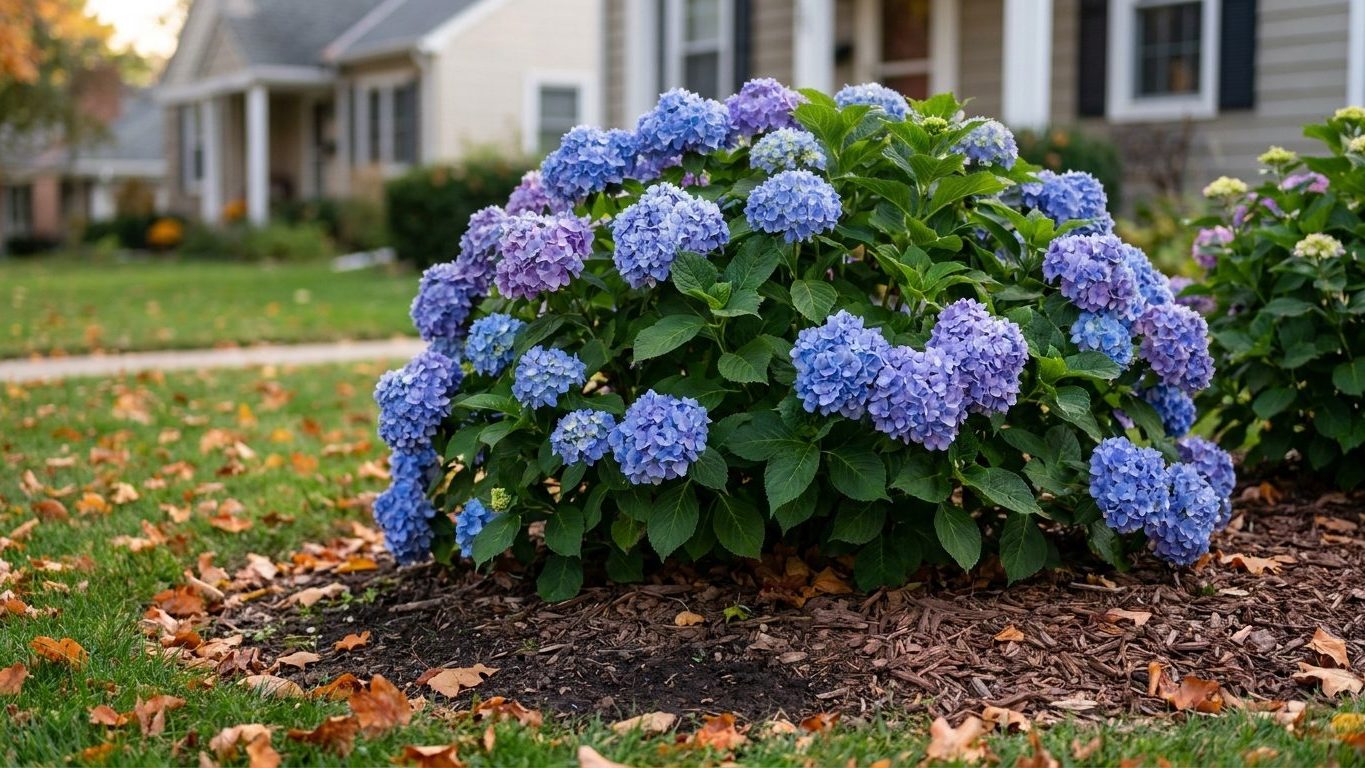
Bigleaf hydrangea, Hydrangea macrophylla, is the variety most homeowners picture, with its blue or pink mophead blooms, but Iowa winters routinely kill the flower buds that formed the prior fall. The shrub itself often survives, it just skips flowering after a cold season.

Mountain Hydrangea

Mountain Hydrangea — Hydrangeas That Grow Well in Iowa

Mountain hydrangea, Hydrangea serrata, is a close cousin of bigleaf with thinner stems and even less cold tolerance. It can defoliate to the ground in a typical Iowa winter and needs a sheltered courtyard or south-facing wall to bloom reliably most years.

How to Work Out the Dates for Your Own Yard

Picking a hydrangea for your own yard means running the same math the nursery runs, just with your microclimate instead of the county average.

  1. Find your zone card: Iowa runs 4b to 6a on the USDA map, so a lot depends on whether your lot sits in a low frost pocket or a sheltered south-facing yard.
  2. Check the bloom wood: new-wood bloomers like panicle and smooth shrug off Iowa’s coldest nights, old-wood bloomers like bigleaf and mountain hydrangea often lose next year’s flowers to that same cold.
  3. Count from the last spring frost: NOAA NCEI 1991-2020 Climate Normals put that date at Des Moines between April 12 and April 24, so anything planted before mid-April risks a late freeze on new growth.
  4. Count from the first fall frost: the same records put it at Des Moines between October 14 and October 25, giving roots about five months to establish before the ground freezes.
  5. Plant inside the state’s windows: April, May, August, or September, so roots get settled before summer heat or before that fall freeze arrives.
  6. Start with the safer name first: a smooth hydrangea such as Annabelle earns trust in year one, a classic bigleaf like Nikko Blue is the one to test only after that.

Annabelle survives an Iowa January because its flower buds form on the growth that follows, not on wood that has to overwinter. Nikko Blue keeps its buds through a mild winter but loses them the year the thermometer drops hard, which is most years here.

Iowa North to South: How the Dates Shift

The USDA Plant Hardiness Zone Map spreads Iowa across 4b to 6a, and that spread doesn’t apply evenly from Lyon County to Lee County, so hydrangea choice should shift with it.

  • Northern Iowa (near the Minnesota line): the state’s 4b end of the range holds here, so lean on panicle, smooth, and climbing hydrangea, and treat oakleaf as an experiment against a sheltered wall.
  • Central Iowa (Des Moines and the corridor around it): sits closer to the middle of that 4b to 6a spread, giving oakleaf and even a well-mulched bigleaf a fighting chance most winters.
  • Southern Iowa (near the Missouri border): the mildest corner of the state, closest to the 6a end, is where bigleaf and mountain hydrangea are most likely to actually flower on old wood some years.

Ask your county extension office which end of that range your yard falls on before betting on a mophead bigleaf.

Mistakes Iowa Punishes

Pruning bigleaf in fall

Cutting back bigleaf or mountain hydrangea in October removes the flower buds that already set for next summer, since both bloom on the previous year’s wood. Wait until new leaf buds swell in spring, and confine any pruning to the June or July window Iowa State Extension recommends for bigleaf.

Planting too early in spring

Setting a young hydrangea in the ground before the frost risk has passed exposes tender roots to a hard freeze they aren’t ready for yet. Hold new plantings for the April, May, August, or September windows, and give roots a full mulch layer through their first winter here.

Skipping winter mulch on bigleaf

Leaving bigleaf or mountain hydrangea bare through an Iowa winter lets deep cold reach crown buds that are already borderline hardy in this range. Pile a thick layer of leaves or straw over the base after the ground freezes solid, then pull it back once spring growth starts.

Iowa Extension Offices and County Contacts

Iowa’s 4b to 6a range is a starting point, not a forecast for your yard. Your county office tracks local frost patterns and can confirm which hydrangeas neighbors are actually growing successfully nearby.

  • Iowa hydrangea calendar: the month-by-month planting and pruning windows for the whole state.
  • What goes wrong here: the pests and cold-damage patterns Iowa hydrangea owners run into most.
  • Iowa State University Extension and Outreach: county-level advice tailored to your specific frost pocket.

Common questions

Can bigleaf hydrangeas survive winter in Iowa?

The shrub itself usually survives Iowa’s 4b to 6a range, but the flower buds set on old wood often die in a hard winter. Many bigleaf hydrangeas in Iowa come back green and leafy with no blooms most summers.

What is the best hydrangea for Iowa winters?

Panicle and smooth hydrangea are the safest picks because both bloom on new wood, so winter dieback doesn’t cost them next year’s flowers, unlike bigleaf or mountain hydrangea.

When should I plant hydrangeas in Iowa?

Stick to the state’s April, May, August, or September windows, giving roots time to settle before summer heat or before the first fall frost arrives between October 14 and October 25 at Des Moines.

Hydrangea Pests and Diseases in Iowa

Hydrangea Pests and Diseases in Iowa

Iowa hydrangeas deal with more cold damage than bugs most years, but a short list of insects and fungal problems still show up on schedule every growing season. Frost-nipped buds open the year, aphids and plant bugs follow in early summer, powdery mildew and gray mold arrive with humid weather, and deer close out the season once leaves drop.

Hydrangea pests and diseases Iowa: The Short Answer

The short answer: in Des Moines, Iowa’s reference city for hardiness data, the USDA Plant Hardiness Zone Map puts the state at 4b to 6a, and that cold is the real driver behind most hydrangea trouble here, not insects. Late frost kills flower buds before pests ever show up, then aphids, plant bugs, powdery mildew, and gray mold follow through the growing season, with deer rounding out the list once the leaves drop.

Frost-nipped flower buds

A warm stretch in early April coaxes buds open, then the last spring frost, arriving anywhere from April 12 to April 24 in Des Moines, burns them black overnight. Leave dead wood alone until new growth confirms which stems survived, and check the Iowa hydrangea calendar before cutting anything back in spring.

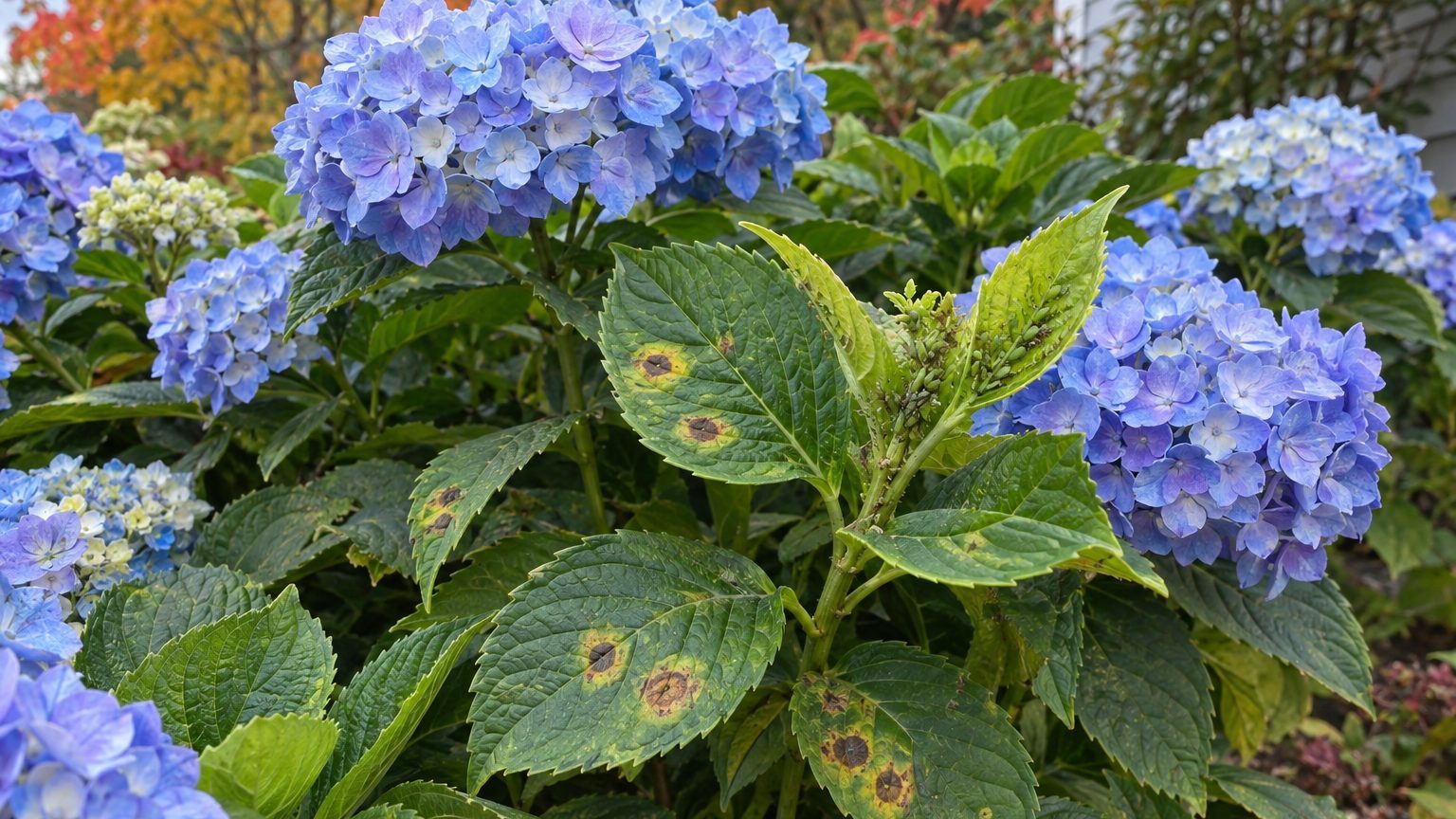
Aphids clustering on new growth

Small green or black insects cluster on tender shoot tips and the undersides of young leaves, curling them and leaving a sticky residue that draws ants. A strong water spray knocks most colonies off within a week, and insecticidal soap handles the rest without hurting bees working the blooms.

Four-lined plant bug damage

This yellow-and-black striped insect punches small round holes that turn brown and papery within days, usually on upper leaves in late spring. Damage looks worse than it is, since the plant grows past it. Trim affected leaves for appearance and skip broad-spectrum sprays that also kill its natural predators.

Powdery mildew on leaves

A white, flour-like coating spreads across leaf surfaces during humid, still summer air, most often where shrubs sit too close together. Space new plants for airflow, water the soil rather than the foliage, and remove badly coated leaves so spores stop spreading to the next flush.

Botrytis blight on flowers and stems

Botrytis blight on flowers and stems — Hydrangea Pests and Diseases in Iowa

Gray, fuzzy mold appears on flower petals and soft stem tissue after extended wet weather, turning blooms to mush. Deadhead spent flowers promptly, clear fallen petals from the base of the shrub, and avoid overhead watering late in the day when leaves stay wet overnight.

Deer browsing on stems and buds

Deer browsing on stems and buds — Hydrangea Pests and Diseases in Iowa

Ragged, torn stem tips and stripped leaf clusters show up overnight once natural browse thins out in fall, and deer will strip a young shrub to bare wood by winter. Fencing or repellent applied before the first fall frost, October 14 to October 25, protects next year’s flower buds.

How to Work Out the Dates for Your Own Yard

Matching a symptom to the right cause starts with the calendar, since NOAA NCEI Climate Normals put Des Moines’ last spring frost between April 12 and April 24, well before most insects or fungus get moving.

  1. Check the date first: symptoms that appear before the last spring frost window point to cold damage, not pests, since insects and fungus both need warmth to get moving.
  2. Look for pattern, not just damage: uniform leaf holes scattered across the whole shrub suggest an insect feeding steadily, while blackened, mushy tissue clustered right after a rain points toward fungus instead.
  3. Note the weather from the past week: powdery white coating and gray mold both need humidity, so a stretch of still, damp air makes fungus the likelier explanation over insects.
  4. Inspect at two times of day: four-lined plant bugs and aphids feed differently depending on temperature, so checking at dawn and again at midday catches insects that vanish once the sun climbs high.
  5. Confirm against the calendar windows: if the damage shows up outside the prune bigleaf window of June and July, hold off cutting back, since removing tissue too early stresses the shrub and hides the real cause.
  6. Watch the fall frost date too: the window of October 14 to October 25 marks when deer browsing turns serious as natural food dries up, so fencing goes up before then, not after.

None of this replaces a close look with a hand lens, but narrowing by date and weather cuts most of the guesswork before you reach for a spray bottle.

Iowa North to South: How the Dates Shift

Frost dates and fungus pressure shift together as you move across the map, and Iowa sits in the middle of that range rather than at either extreme.

  • Upper Midwest and the northern Plains (Minnesota, Wisconsin, North Dakota): a shorter growing season and harder winter cold push hardiness lower and the safe planting window later, making mophead hydrangeas riskier than they are in Iowa.
  • The Corn Belt (Iowa, Illinois, Nebraska): moderate humidity and swinging spring temperatures create the frost-then-fungus pattern described above, with cold doing more damage than pests most years.
  • The Mid-South and lower Midwest (Missouri, Kentucky, southern Indiana): milder winters stretch the pest season longer, and powdery mildew and gray mold show up earlier and stick around longer than they do here.
  • The Deep South and Gulf Coast (Georgia, Louisiana, Texas): heat and humidity dominate over cold, and fungal disease pressure runs nearly year-round instead of concentrating into a few humid summer weeks.

None of that changes what actually happens in a Des Moines backyard, so the Iowa state page stays the working reference for the exact windows.

Mistakes Iowa Punishes

Pruning before new growth appears

Cutting back stems in early spring, before new buds reveal which wood survived winter, loses a season of blooms on old-wood varieties. Wait until the prune bigleaf window of June and July, when live growth is obvious, and check the calendar page before cutting.

Watering the leaves in the evening

Overhead watering in the evening leaves foliage wet through the cool night, exactly the condition powdery mildew and gray mold need to spread across a bed. Switch to soaking the soil in the morning instead, and both fungal problems mostly stop showing up by midseason.

Skipping deer fencing until damage appears

Waiting until stems already look chewed to fence or spray means next year’s flower buds are gone, since deer return to the same plants once they find them. Protect shrubs before the first fall frost, October 14 to October 25, not after damage starts.

Iowa Extension Offices and County Contacts

The zone and frost numbers above make a solid starting point, but a county office adjusts for local soil, snow cover, and microclimate that no statewide map captures.

  • Your state page: the frost dates and the pruning window where you live, gathered in one place for Iowa.
  • Which ones hold up here: a list of hydrangea varieties matched to Iowa’s zone range, from safest to riskiest.
  • Iowa State University Extension and Outreach: county-level contacts for a diagnosis specific to your yard’s soil and exposure.

Common questions

Do I need to spray hydrangeas every year in Iowa?

Most years, no. Cold damage from the last spring frost causes more trouble here than any insect or fungus, and a healthy shrub with good spacing and morning watering often gets through the season without a single application.

Is powdery mildew going to kill my hydrangea?

Rarely on its own. It weakens the plant and looks unsightly, but a shrub usually pushes through it and blooms again the next year once airflow and watering habits improve.

How do I stop frost from ruining next year’s flowers?

Hold off on pruning until the prune bigleaf window of June and July, when it is clear which wood survived winter, and avoid cutting back anything in early spring just because it looks bare.

When to Prune Hydrangeas in Iowa

When to Prune Hydrangeas in Iowa

The safest windows to plant hydrangeas in Iowa fall in spring after the last frost clears and in late summer before the ground cools, giving roots weeks to settle before winter arrives. Prune bigleaf varieties only once new growth confirms which stems survived, never on a set calendar date. Get the exact months right and your shrub blooms for years. Get them wrong and you spend seasons chasing dead wood.

When to prune hydrangeas in Iowa: The Short Answer

In Des Moines, NOAA NCEI 1991-2020 Climate Normals put the last spring frost between April 12 and April 24 and the first fall frost between October 14 and October 25, and every planting or pruning task below lines up against those two windows.

  • January: Hydrangeas sit fully dormant under whatever mulch you left in fall, so there’s nothing to plant or prune this early. Use the quiet weeks to sketch out bed locations for spring instead.
  • February: Frost still grips most of the state, so keep shovels away from the root zone entirely. Order bareroot or container stock now so it arrives ready the moment the spring window opens.
  • March: This is the first fertilizing month on the calendar, applied as soil warms but well before the last frost clears. Skip pruning here, since bigleaf wood is still sorting out which buds made it through winter.
  • April: Planting opens this month, though the last frost can land as late as April 24, so newly set shrubs still need frost cloth on cold nights. Container plants handle that risk far better than bareroot stock.
  • May: With frost behind most of the state, May carries both the second fertilizing pass and the safest planting stretch of spring. Roots set now go into soil that’s finally warm enough for fast establishment.
  • June: The first bigleaf pruning window opens once spent blooms make it obvious which stems flowered. Cut just above a healthy bud rather than removing whole canes down to the base.
  • July: July carries the last fertilizing round and the second bigleaf pruning window, so feed early and prune once new growth has hardened off. Wait past mid-month and you risk cutting off next year’s flower buds.
  • August: A second planting window opens as summer heat eases, giving roots close to two months to settle before the first fall frost. Water deeply through any dry spell that follows.
  • September: This closes out the planting calendar for the year, since shrubs set now still have weeks before frost risk returns. Hold off on any pruning, which only invites tender new growth frost will kill.
  • October: The first fall frost arrives anywhere from October 14 to October 25, so pile mulch around the base before that window passes. Cut back on watering as growth slows for the season.
  • November: Winter mulch matters most now for bigleaf types, since their flower buds sit exposed on old wood through the coldest months. A four-inch layer over the crown buys real protection.
  • December: The shrub is fully dormant, and nothing on the calendar, planting, fertilizing, or pruning, belongs in this month. Check that wind hasn’t stripped mulch away from the base.

Every one of those tasks bends around the same two anchor dates, and missing them by two weeks in either direction means fighting Iowa’s calendar instead of using it.

How to Work Out the Dates for Your Own Yard

Working out your own planting dates starts with the same two numbers as everyone else in the state, then narrows them down to your specific ground.

  1. Start from the airport window: NOAA NCEI 1991-2020 Climate Normals put spring’s last frost between April 12 and April 24 and fall’s first frost between October 14 and October 25 for the reference station near Des Moines.
  2. Shift for county ground: Iowa State Extension county figures, drawn from 1950 to 2021 records, run about four days later in spring and ten days earlier in fall than that station’s numbers, so rural yards get a shorter safe season than the airport figures suggest.
  3. Subtract two weeks for bareroot stock: push your earliest planting date back roughly two weeks past the adjusted last frost if you’re setting out bareroot rather than container plants.
  4. Place your zone: confirm whether your yard sits nearer 4b or nearer 6a on the state’s hardiness range, since that split decides whether bigleaf survives your winter at all or whether panicle and smooth types are the safer bet.
  5. Test the soil before the calendar: push a thermometer four inches into the bed and wait for a steady reading above 50 degrees before planting, fertilizing, or pruning.

None of this replaces watching your own yard for a season. A south-facing bed against brick warms weeks ahead of an open north slope, no matter what the regional average says.

Iowa North to South: How the Dates Shift

Iowa runs long enough north to south that the same frost calendar doesn’t apply evenly across the whole state.

  • Northern Iowa (bordering Minnesota and Wisconsin): sits at the cold end of the state’s hardiness range, so frost lingers later in spring and returns earlier in fall, tightening both the planting window and the last safe pruning date.
  • Central Iowa (around Des Moines): sits in the middle of that range, matching the frost dates already laid out above.
  • Southern Iowa (bordering Missouri): warms fastest in spring and holds heat longest into fall, stretching the safe planting window at both ends and often allowing a harder pruning cut without winter injury.

For the frost dates and hardiness zone that actually apply to your address, the state guide breaks that range down further by county.

Mistakes Iowa Punishes

Pruning bigleaf too late

Bigleaf hydrangeas set next year’s flower buds on the current season’s wood by late summer, so any cut made after the July window removes blooms before they ever open. Stick to the June or July pruning stretch above and skip the fall cleanup urge.

Planting bareroot right on the frost date

Setting bareroot hydrangeas out the moment the last frost supposedly clears ignores that April 24 is only the late end of the window, not a guarantee. Wait the extra two weeks described above, or start with a container plant instead.

Leaving bigleaf buds unmulched into winter

In the coldest pockets of the state’s hardiness range, exposed bigleaf flower buds simply don’t survive an open winter. Pile four inches of mulch over the crown before the first fall frost window closes, and pull it back only once new growth confirms spring has arrived.

Iowa Extension Offices and County Contacts

Des Moines’ frost dates are a starting point, not the last word for your yard. Iowa State University Extension and Outreach and your county office track the local soil and microclimate differences that shift the calendar block by block.

  • Your state page: the frost dates and the pruning window where you live.
  • Iowa State University Extension and Outreach: soil test results and county-specific planting advice.
  • Your county extension office: call ahead of planting day if your yard sits in a frost pocket the state map doesn’t catch.

Common questions

Can I plant hydrangeas in Iowa in October?

October is when the first fall frost arrives, anywhere from October 14 to October 25, so it falls past the safe planting window. September is the last month on the calendar for setting new hydrangeas outdoors.

Do bigleaf hydrangeas survive Iowa winters?

Bigleaf hydrangeas struggle across the colder end of the state’s hardiness range, where exposed flower buds often die back over an unmulched winter. Panicle and smooth types tolerate the cold with far less fuss.

What month should I fertilize my hydrangeas in Iowa?

The calendar lists three fertilizing months, March, May, and July, spaced roughly eight weeks apart so the shrub gets a boost at the start, middle, and tail end of active growth.

The almanac, state by state. Every date on this site comes from a state’s own frost facts and its extension service’s calendar — and says where it comes from.