Skip to content
  1. Jan
  2. Feb
  3. Mar
  4. Apr
  5. May
  6. Jun
  7. Jul
  8. Aug
  9. Sep
  10. Oct
  11. Nov
  12. Dec
State
Alaska
USDA zones
1a-8a
Last spring frost
May 3 to May 12
First fall frost
September 22 to October 1
Annual rain
16 in
Lawn zone
cool-season
Source
NOAA NCEI 1991-2020 Climate Normals, 32F freeze probabilities · Anchorage

The year in Alaska, from the calendar

  1. Jan—
  2. Feb—
  3. MarPrune fruit trees
  4. AprPrune fruit trees
  5. MayFeed hydrangeas · Plant hydrangeas · Feed roses · Prune roses
  6. JunPlant hydrangeas · Prune bigleaf hydrangeas · Seed the lawn · Lilacs bloom · Prune lilacs
  7. JulFeed hydrangeas · Plant hydrangeas · Prune bigleaf hydrangeas · Prune lilacs · Peonies bloom
  8. AugPlant spring bulbs · Plant hydrangeas · Peonies bloom · Mow · Plant trees
  9. SepPlant spring bulbs · Plant peonies · Plant trees · Mow
  10. Oct—
  11. Nov—
  12. Dec—

From the state frost facts and extension calendars: University of Alaska Fairbanks · Clemson HGIC factsheet — Hydrangea · NDSU Extension — Dakota Gardener (lawns) · University of Alaska Fairbanks Cooperative Extension.

Best Spring Bulbs for Alaska

Best Spring Bulbs for Alaska

Green shoots pushing through the last crust of snow in an Alaska bed started as bulbs tucked into cold soil the fall before. Not every bulb sold at a garden counter handles an Alaska winter, though. Scilla, snowdrops, alliums, and a few tough tulips and grape hyacinths are the ones worth planting here.

Best Spring Bulbs to Grow in Alaska

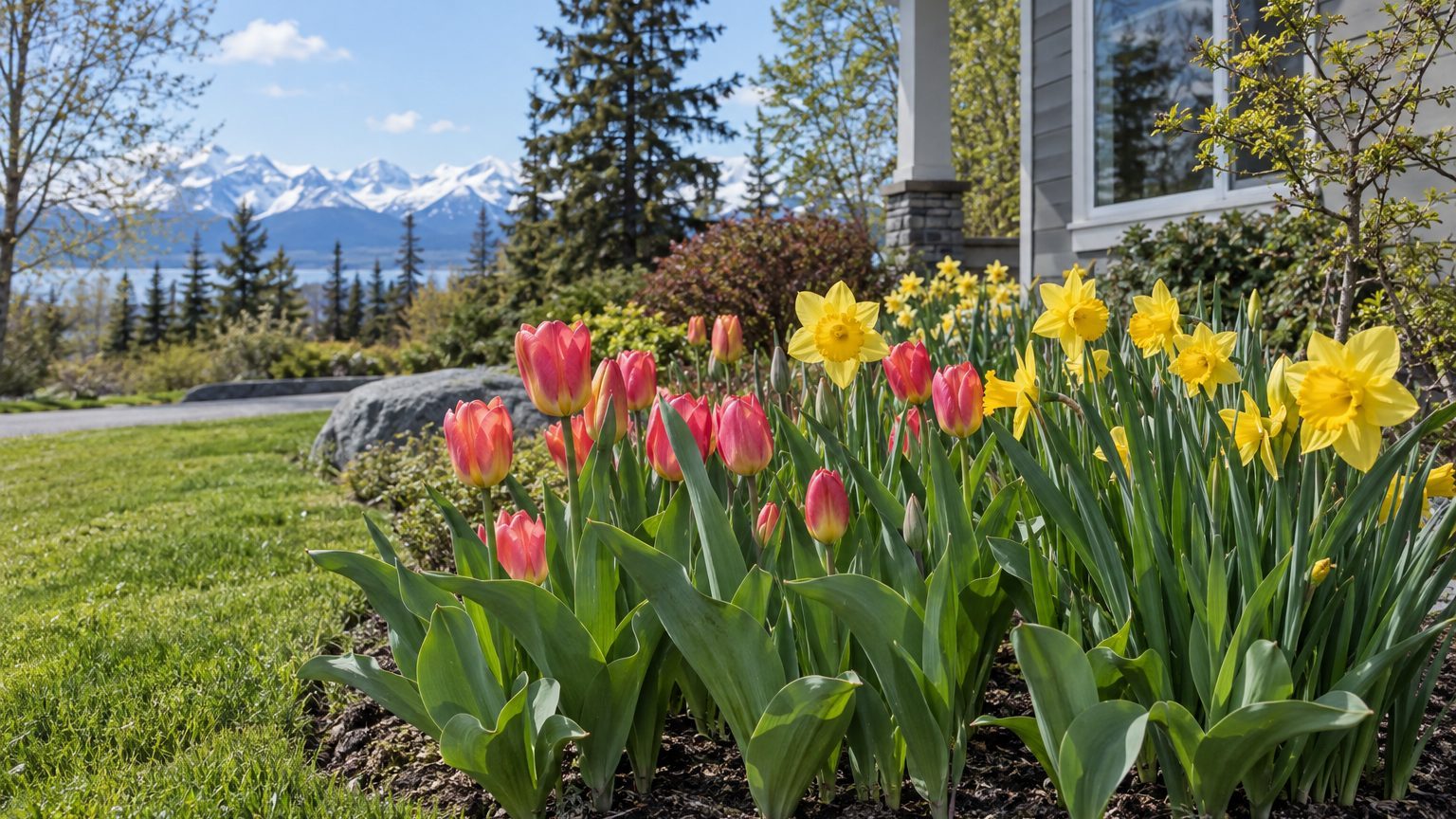
Healthy spring bulbs in bloom

Hardiness zones in Alaska run from 1a to 8a on the USDA system, so a bulb that thrives in a mild coastal bed can fail inland. The small, tough bulbs hold up most reliably, and a few larger ones are worth a try. Alaska extension growers name the following.

Scilla

Scilla tends to winter over well in Fairbanks, which is a hard test for any bulb. Small bulbs like this settle in quickly and ask little of the gardener. Plant them in a spot where they can spread into a carpet of blue.

Snowdrops

Snowdrops are hardy, and they are the bulb to reach for if your winters are severe. They start the season, so they are welcome after a long white stretch. Tuck them under shrubs or along a walk where you will notice them.

Grape Hyacinths

Grape hyacinth sometimes winters over in Fairbanks, which means it is worth trying but not a sure thing. Plant a small drift and see how it comes through before you invest in more. Pair it with scilla or snowdrops so the bed still has color if it fails.

Purple Sensation Allium

The showy allium called ‘Purple Sensation’ is a recommended fall-planted bulb for Alaska. According to Iowa State University Extension, alliums, like other spring bulbs, need the cold of winter to bloom, and they close out the bulb season as ornamental onions, with round purple heads above the foliage of other plants.

Greigii Tulips

A Greigii tulip came up the first spring after a mild winter, so the odds improve if your garden sits in a gentler spot. Tulips are often short-lived, so treat them as a bonus rather than a foundation, and plant them where a gap next year will not hurt.

How to Choose Spring Bulbs for Your Alaska Garden

Match the bulb to your situation. Plant in August to September, from late August to early September or once the soil has cooled to the low to mid 50s °F. That gives roots time to form before the ground freezes, while the bulbs stay asleep above ground.

Most spring bulbs need about 12 to 16 weeks of cold to flower. Alaska winters generally supply it, so the refrigerator chilling used for tulips and hyacinths in mild climates is not part of the routine here.

Your situation What suits it in Alaska Why
Very cold winter Scilla and snowdrops Scilla winters over well in Fairbanks, and snowdrops are hardy
Want a bulb that returns for years Daffodils They last longer than tulips and are the more reliable perennial bulb
A tulip is a must Greigii tulips One came up the first spring after a mild winter, though tulips are often short-lived
Little time or attention Alliums such as Purple Sensation They need the cold of winter to bloom
Want to experiment Grape hyacinths They sometimes winter over in Fairbanks, so start with a small planting

Hot, humid summers rarely trouble Alaska gardeners, so they do not need to steer the choice. Space matters less than hardiness here, and the small bulbs fit almost anywhere.

Which Spring Bulbs Suit Different Parts of Alaska

Alaska is large enough that the same bulb can behave very differently from one town to the next, and the season length shifts with it. Anchorage is one of the mildest inhabited parts of the state, with about 143 frost-free days.

  • Anchorage: Milder winters give tulips their best chance, so Greigii types are worth trying alongside daffodils and alliums.
  • Fairbanks and the Interior: Winters and summers are harsher and the season is far shorter, so lean on scilla, snowdrops and, with caution, grape hyacinths.
  • The far north: The season is shorter still, so stay with snowdrops and scilla, and expect to experiment rather than follow a set recipe.

Long summer daylight partly offsets a short season, which is why even the hardy small bulbs manage to bloom before the cold returns.

Spring Bulb Buying Mistakes to Avoid in Alaska

Choosing Bulbs by Looks

A bulb that looks pretty on a grocery store shelf may not be hardy here. A Greigii tulip planted this way came up only after a mild winter, and a hard one could have ended it. Check the type first, then buy scilla, snowdrops or alliums if you want a safer start.

Expecting Tulips to Last

Tulips are often short-lived, and an Alaska winter shortens the odds further. Plan on replacing them from time to time. Daffodils are the more reliable choice for a bed that should return each spring, so build the planting around them and add tulips as accents.

Storing Bulbs Over the Winter

A bulb that never got planted is better in the ground late than held over the winter in its bag. Plant for as long as the soil can still be dug. A late bulb may settle in more slowly, but a stored one tends to dry out and lose its chance.

Where to Get Spring Bulb Advice in Alaska

Local growers know which bulbs have come through winter in your own town. The University of Alaska Fairbanks Cooperative Extension is the state’s extension service, and its office near you can answer questions about hardiness and timing.

  • The extension website carries growing guides on bulbs, and it is worth reading before you order or buy in late summer.
  • Your local extension office can tell you which bulbs have lasted in your neighborhood, so call it before planting season in August.
  • Ask what has overwintered in nearby gardens, then plant a small test patch of the hardiest bulbs this fall.

Common Questions

When Should You Remove the Leaves from Spring Bulbs?

Leave them on the plant after bloom until they turn brown. Remove only the faded flowers, because the leaves feed the bulb for next year.

Which Spring Bulbs Do Voles and Deer Leave Alone?

Daffodils are left alone. Voles, squirrels, rabbits and deer eat tulips and crocus, so plant those where you can protect them, or choose daffodils instead.

Do All Spring Bulbs Bloom at the Same Time?

No. Spring bulbs bloom in a long succession, from snowdrops and winter aconites at the start of the season to ornamental onions (alliums) at the end. A mix of types keeps the bed in color for much longer than one variety would.
When Do Tulips and Daffodils Bloom in Alaska?

When Do Tulips and Daffodils Bloom in Alaska?

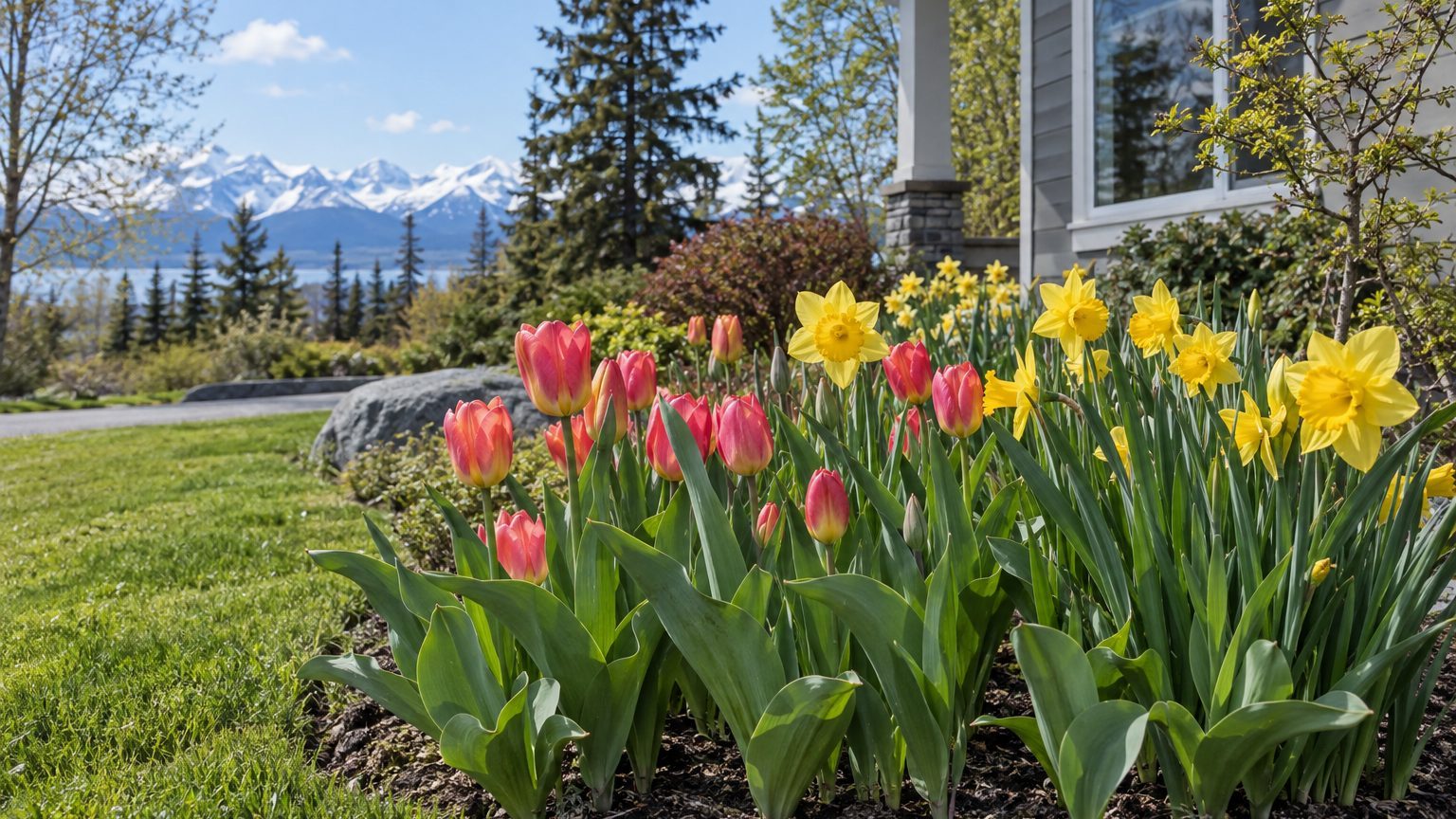
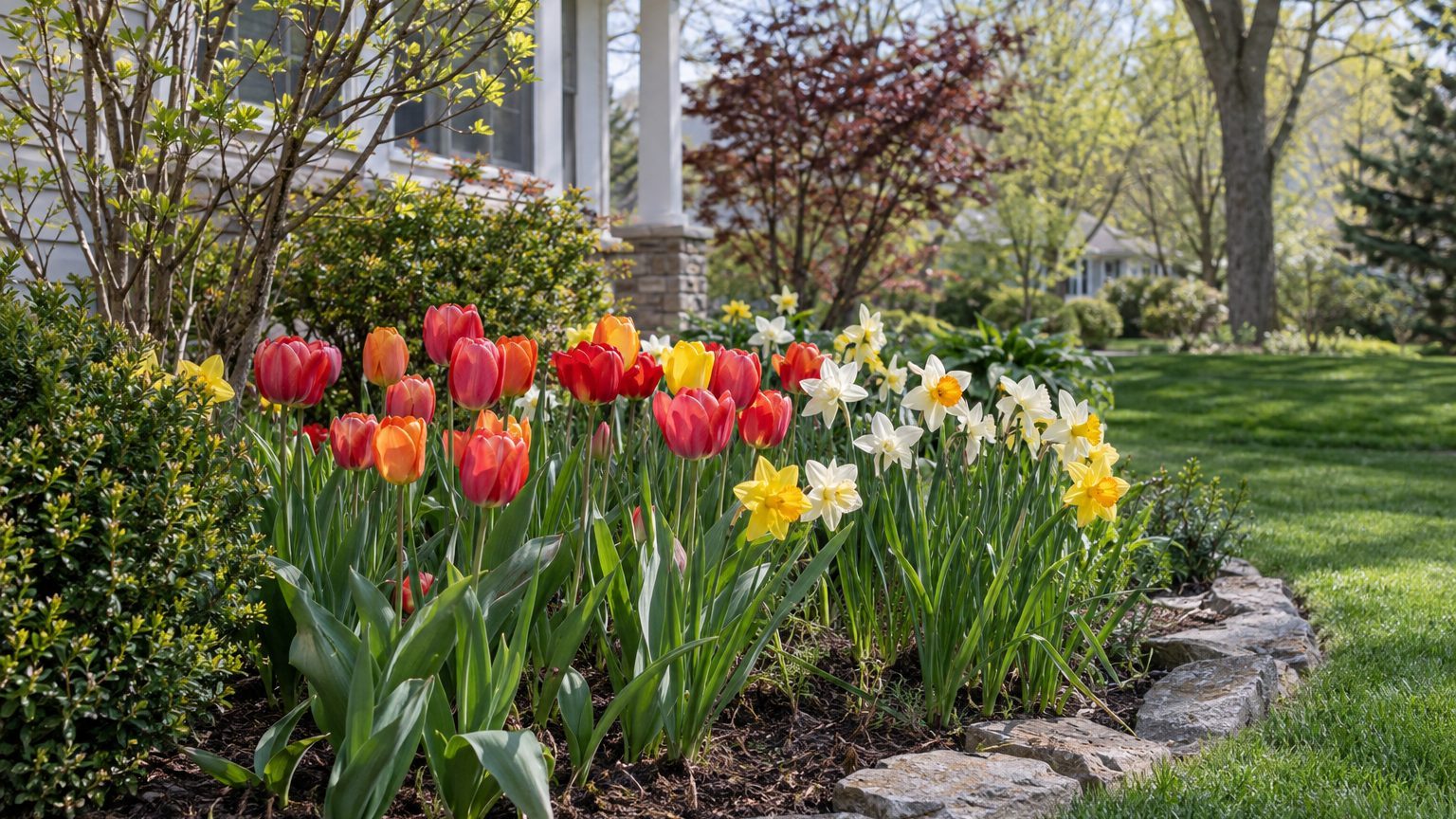
Green daffodil tips pushing through the last gray patches of snow are one of the first signs of spring in an Alaska yard, and tulips follow once the soil warms. When they actually open depends on where you garden, how the winter went and how fast spring arrives, so the timing here comes down to the season rather than a date.

When Do Tulips and Daffodils Bloom in Alaska?

When Do Tulips and Daffodils Bloom in Alaska?

Tulips and daffodils bloom when spring warms the ground, and no fixed month goes with them. A cold, late spring pushes the flowers back, and a mild one brings them forward. Anchorage has the gentlest conditions, while the Interior and the north start later.

Bulb When it blooms in Alaska What sets the timing
Snowdrops Start of the bulb season, as spring warms Hardy, so they handle Alaska winters
Daffodils Follows spring warming Winter cold of about 12 to 16 weeks, then warming soil
Tulips Follows spring warming The same winter cold, and a mild winter helps them return
Alliums End of the bulb season, as spring warms Requires winter cold to bloom

Spring bulbs flower in a long succession, with snowdrops and winter aconites opening the season and ornamental onions closing it. Crocus and hyacinths sit in between, and grape hyacinth sometimes winters over in Fairbanks. All of it starts with planting in August or September, in late August to early September or when the soil is in the low to mid 50s °F. Roots then form before the ground freezes, and the bulbs do not sprout in the fall.

How to Tell Your Bulbs Are About to Bloom

Bulbs give plenty of notice, and you can read their progress from the bed.

  • Green tips breaking the surface mean the bulb has come through the winter and roots are active, so leave any mulch loose and do not dig around them.
  • Leaves that open and stand upright show the flower stalk is forming in the center, which is the cue to keep the bed watered if the spring is dry.
  • Buds that swell and show color tell you the flowers are only a short while from opening.
  • A cold snap while the tips are showing is a real risk, since frost in Anchorage can still arrive between May 3 and May 12.
  • Chewed or missing tulip and crocus shoots point to voles, squirrels, rabbits or deer, while daffodils are left alone.

Blooms that stay closed in cold weather are simply waiting for warmth, and they open when it comes.

What to Do After Tulips and Daffodils Bloom in Alaska

Snip off the faded flowers and leave everything else in place. The leaves keep feeding the bulb after the petals drop, so they stay on the plant until they turn yellow and then brown. Do not cut them while they are green, and do not tie or braid them, because that cuts the bulb off from its food.

Plan on daffodils as the lasting performer. Tulips are often short-lived in the garden, so treat them as a bonus that may fade after a few seasons. A Greigii tulip has been reported coming up the first spring after a mild winter in Alaska, which suggests the shorter, sturdier types are worth trying.

Voles, squirrels, rabbits and deer go after tulips and crocus, and daffodils are left alone. If animals are active in your yard, daffodils are the dependable choice and tulips need a little more attention.

How Bloom Time Shifts Across Alaska

Alaska covers climates that differ a great deal, and bulbs follow them, with later bloom wherever spring is slower to arrive.

  • Anchorage: This is one of the mildest inhabited parts of the state, with a longer frost-free season. Long summer daylight helps bulbs rebuild after bloom.
  • Fairbanks and the Interior: Winters are harsher and the growing season is far shorter, so bloom comes later than in Anchorage. Scilla winters over well in Fairbanks, snowdrops are hardy, and grape hyacinth sometimes survives.
  • The far north: The season is shorter still, so bloom comes later again and only the hardiest bulbs are worth a try.

Choose bulbs for the winter you actually get, and let your own spring set the date.

Where to Get Bulb Advice in Alaska

Alaska’s growing conditions vary so much from town to town that local advice goes further than general rules. University of Alaska Fairbanks Cooperative Extension publishes guidance written for Alaska gardens, including pages on bulbs.

  • The extension website has bulb articles written for Alaska gardens, which are worth reading before you order in summer.
  • The extension office nearest you can answer questions about which varieties suit your area, and a visit before the late August planting window pays off.

Common Questions

Can You Plant Bulbs After the Fall Window Has Passed in Alaska?

Yes. A bulb that is still in the bag is better planted late than stored over the winter, so plant as long as the ground can be dug.

Which Bulbs Winter Over Well in Fairbanks?

Scilla tends to winter over well in Fairbanks, grape hyacinth sometimes does as well, and snowdrops are hardy. These are the safest starting point for the Interior.

Which Allium Is Worth Trying in Alaska?

In Alaska, a showy allium called Purple Sensation is recommended for fall planting. It needs no chill period to bloom, which makes it an easy bulb to add.

When to Plant Tulips and Daffodils in Alaska

When to Plant Tulips and Daffodils in Alaska

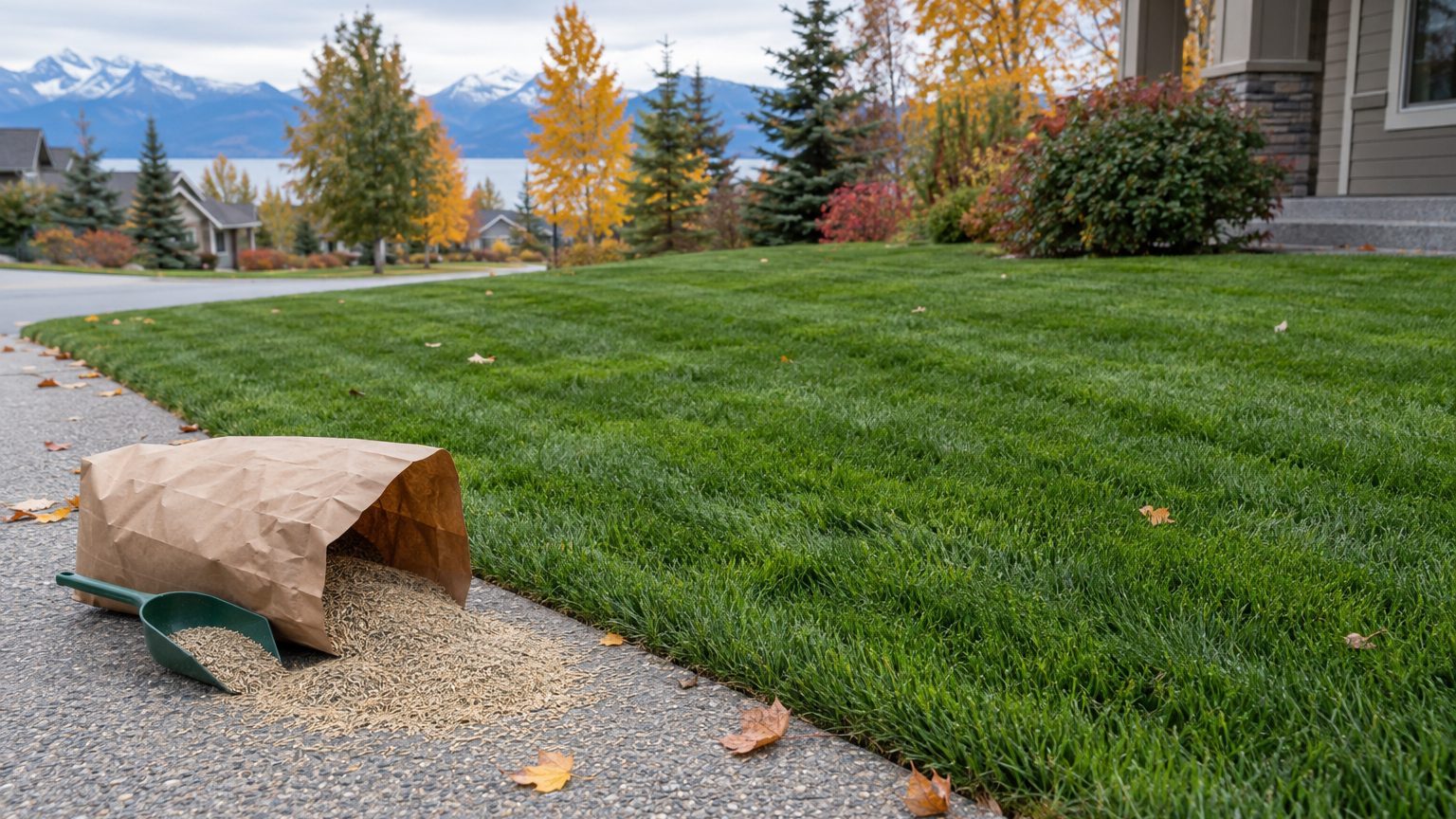
A paper sack of bulbs on the porch in late summer, just as birch leaves start turning yellow, is how an Alaska spring begins. Tulips and daffodils go in the ground while the soil is still workable, then spend the long winter under snow doing their rooting and chilling.

When to Plant Tulips and Daffodils in Alaska

When to Plant Tulips and Daffodils in Alaska

Plant in August and September, with late August to early September the target, or whenever the soil has cooled into the low to mid 50s °F. A bulb’s year here runs like this.

  • In August, buy your bulbs while the selection is full, choosing firm ones with no soft spots or mold.
  • From late August to early September, set them in the ground. Planting once the soil has cooled below about 60°F gives roots time to form before the ground freezes, yet keeps the bulbs from sprouting in the fall.
  • Once the ground begins to freeze in late fall, spread mulch over the bed to even out the freezing and thawing that can heave bulbs upward.
  • Through winter, the cold does the chilling for you. Most spring bulbs want about 12 to 16 weeks of it, and Alaska winters supply it, so the refrigerator step used in mild climates is unnecessary.
  • In spring, as the snow pulls back and the soil thaws, the first green shoots push through the mulch.

For a sense of timing, the first fall frost in Anchorage tends to arrive between September 22 and October 1, which is why planting at the start of the window matters. Alaska spans USDA hardiness zones 1a to 8a, so dates built around Anchorage shift in other parts of the state.

Which Spring Bulbs Do Best in Alaska?

Daffodils are the dependable choice, since they last for years and nothing in the yard wants to eat them. Alliums, snowdrops and scilla also cope well with Alaska winters. Tulips are possible but short-lived, and they tempt hungry animals.

The cold itself is not the obstacle here, because winters easily deliver the chill that bulbs need. Voles, squirrels, rabbits and deer are the bigger concern for the bulbs they like.

Bulb type How it does in Alaska Why
Daffodils Reliable, returns for years Longer-lived than tulips, and animals leave them alone
Tulips Worth trying, often short-lived Voles, squirrels, rabbits and deer eat them
Alliums Good choice, such as ‘Purple Sensation’ Needs winter cold to bloom
Scilla Winters over well in Fairbanks Tough enough for Interior cold
Snowdrops Hardy Handles cold winters without trouble

Greigii tulips, the short, broad-leaved type, have come up after a mild winter in Alaska, and grape hyacinth sometimes winters over in Fairbanks too. Crocus belong in the same camp as tulips, since rodents dig them up. If critters visit your yard, lean on daffodils and alliums.

When to Plant, Chill and Care for Spring Bulbs in Alaska

The bulb year here has three main jobs: planting before the ground locks up, letting winter do the chilling, and leaving the foliage alone after bloom. A sign in the soil or the leaves works better than a date.

Task Best timing in Alaska Why then
Plant bulbs August to September, ideally late August to early September, or when soil is in the low to mid 50s °F Roots settle before the ground freezes
Plant bulbs still in the bag As long as the ground can be dug Late planting beats storing bulbs over winter
Leave the foliage After bloom, until the leaves turn brown The leaves feed the bulb for next year
Remove faded flowers After bloom Only the spent blooms come off, never the leaves

Alaska winters already provide the cold the bulbs need, so there is no need for a separate chilling step. Resist tidying the bed while the leaves are still green, even if the yellowing foliage looks messy next to the new growth of summer perennials. Tuck it behind taller plants if you need to hide it.

How Bulb Planting Time Changes Across Alaska

Alaska is huge, and the planting window shifts with the length of the fall. The soil-temperature sign works everywhere, so use it when a date feels off.

  • Anchorage: One of the milder inhabited parts of the state, with a longer growing season. The full August to September window is realistic, though late August to early September is still the target.
  • Fairbanks and the Interior: The season is far shorter, and winter arrives sooner. Aim for the start of the window, and check the soil rather than the calendar. Scilla and snowdrops are proven performers here.
  • Farther north: The season is shorter still, so plant as early in the window as the bulbs are available, and keep to hardy types.

Long summer daylight helps bulbs recover and store energy, but it does nothing to slow the cooling of the soil in fall.

Where to Get Bulb Advice in Alaska

For a local planting date, a soil test or a diagnosis of a bed that has not performed, two offices can help.

  • The University of Alaska Fairbanks Cooperative Extension Service publishes bulb guidance written for Alaska conditions, and it is a good first stop in late summer before you buy.
  • Your county or district extension office can test your soil and look at problem plants, so bring a sample or a bulb in spring when growth shows.
  • Once the bulbs are bought, the next job is to check the soil temperature and plant them.

Common Questions

Which End of a Bulb Goes Up?

The pointed tip faces up and the flatter, roughly rooted base faces down. If you cannot tell, set the bulb on its side, and the shoot will find its way up.

Should You Water Bulbs After Planting?

Give them one thorough watering so the soil settles around them and roots can start growing. After that, fall moisture and winter snow handle the rest, so there is no need to keep watering.

What Kind of Soil Do Spring Bulbs Need?

They need soil that drains well, since a bulb sitting in soggy ground tends to rot. If your bed stays wet after the spring thaw, choose a higher spot or work compost into the soil before planting.

Best Grass Seed for Alaska

Best Grass Seed for Alaska

Choosing seed for a warmer climate can leave an Alaska lawn thin and patchy. Cool-season grasses are the answer here: Kentucky bluegrass and fine fescues anchor most lawns, with perennial ryegrass as a quick helper. The short season and hard winters decide which ones last.

Which Grass Grows Best in Alaska?

Cool-season grasses are the only sensible choice in Alaska, because warm-season types such as Bermudagrass or zoysia need heat and a long season this state does not offer. Around Anchorage, the frost-free stretch is fairly short, and the Interior and the north have far shorter ones. Long summer daylight helps the grass catch up, but only the hardy species keep going through winter.

Kentucky Bluegrass

Kentucky bluegrass is the dependable foundation for Alaska lawns. It handles the cold well and spreads by underground stems, so it fills thin spots over time. It is slow to sprout, so expect patience after seeding.

Creeping Red Fescue

Creeping red fescue is a fine fescue that suits cool, lean conditions and tolerates shade better than bluegrass. It spreads gently by its own stems and needs little fuss. Blend it with bluegrass where trees cast part-day shade.

Chewings Fescue

Chewings fescue grows in tidy clumps and stays fine-textured with modest mowing. It does well in lower-fertility soil and dappled light. It fills in less than creeping types, so use it as a partner in a mix.

Hard Fescue

Hard fescue is a tough, slow-growing fine fescue for yards where you would rather mow less. It tolerates dry, poor soil and some shade. The leaves are narrow and a bit stiff, giving a natural look rather than a manicured one.

Perennial Ryegrass

Perennial ryegrass sprouts fast, which makes it handy for quick cover in a short season. The risk is winter, because it is short-lived in the coldest winters. Keep it as a small share of a mix, never the whole lawn.

How to Choose Grass Seed for a Alaska Yard

Start with how the yard is used and how much light it gets. Most Alaska lawns do best with a blend rather than a single species, since each grass covers a weakness in another.

Shade, foot traffic, watering and mowing habits all point toward a different mix. Read the species on the bag, not the marketing name.

Your yard Grass to look for Why it fits
Full sun, regular play Kentucky bluegrass with a little perennial ryegrass Bluegrass repairs itself, ryegrass gives fast cover
Shade under spruce or birch Creeping red fescue and chewings fescue Fine fescues cope with low light
Dry, poor soil, little watering Hard fescue Needs less water and feeding
Low mowing, natural look Hard fescue and chewings fescue Slow growth means fewer passes
Neat, dense lawn Kentucky bluegrass dominant mix Spreads into a thick, even turf

In milder parts of Alaska, perennial ryegrass can add quick cover to a sunny mix, though it may thin out after a hard winter. St. Augustinegrass is never sold as seed and does not belong in Alaska anyway.

Which Grasses Grow Where in Alaska

Alaska is huge, and the lawn you can grow shifts with the climate of your corner. The Anchorage area is one of the mildest inhabited parts of the state, so use its conditions as the baseline.

  • Anchorage and the Mat-Su Valley: Bluegrass-and-fescue blends do well, with a season long enough for spring seeding to root. Around Anchorage, the last spring frost usually falls between May 3 and May 12.
  • Fairbanks and the Interior: Winters are harsher and summers shorter, so lean on bluegrass and hardy fescues and skip ryegrass.
  • Southeast and the Kenai Peninsula: Cooler, wetter coastal air keeps grass green but invites moss, so favor fescues in shady, damp spots.

Whatever your region, a cold-hardy blend beats a bargain bag that was never meant for the north.

Grass Seed Mistakes to Avoid in Alaska

Buying Warm Season Seed

Seed meant for southern lawns will not survive an Alaska winter. Check the label for Kentucky bluegrass, fine fescues or a small share of perennial ryegrass, and skip anything built around heat lovers.

Seeding at the Wrong Time

The season is too short for fall seeding, so sow in spring once the ground has thawed. June is the best month for it, and July still works if you miss it. Seed sown late has little time to root before winter.

Burying or Skimping on Seed

Cover seed with no more than 0.25 inch of soil and press it down so it touches the ground firmly. Buried seed struggles to come up, and sparse sowing lets weeds and moss move in. Follow the rate on the bag and rake lightly.

Where to Get Lawn Advice in Alaska

Local conditions vary a great deal across the state, so a nearby expert can fine-tune any seed choice. Start with the state extension service and the office closest to your yard.

Common Questions

Can You Grow a Lawn in Alaska at All?

Yes. Hardy cool-season grasses such as Kentucky bluegrass and fine fescues form good lawns across the milder parts of the state, including the Anchorage area. Colder Interior sites need the toughest species.

When Should You Fertilize a New Alaska Lawn?

Wait until the grass is actively growing. June is the usual first feeding, since late spring comes late this far north, and August also works.

When Does Mowing Start in Alaska?

Mowing runs from June through September. Start once the grass has grown enough to need a trim, and keep going through the growing months.

Lawn Problems and Solutions in Alaska

Lawn Problems and Solutions in Alaska

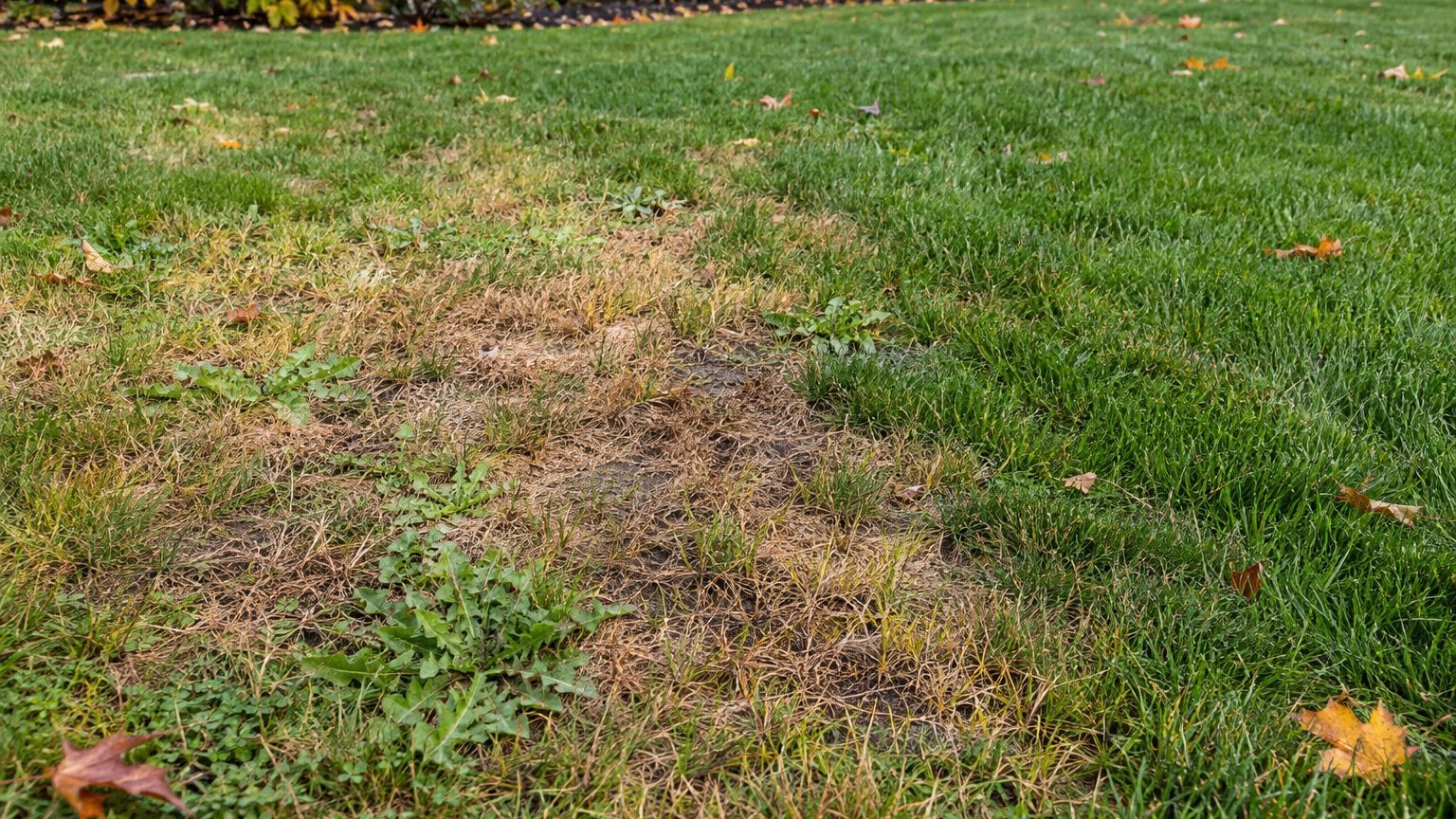
Snow melts in spring and leaves some Alaska lawns with matted gray patches, bare strips and a few tunnels in the grass. Most of what goes wrong here starts in winter or in the short, bright growing season that follows.

Lawn Pests and Diseases in Alaska

Snow Mold

Snow Mold — Lawn Problems and Solutions in Alaska

Snow mold shows up right after the snow melts, as circular gray or pinkish patches where the blades lie flat and crusty. It forms under long snow cover on grass that went into winter long or wet.

Rake the patches gently to lift the blades and let the soil dry. Most grass recovers on its own once it starts growing.

Vole Trails

Voles travel under the snow and chew the grass at the surface. When the snow goes, you see winding, shallow runways, often with clipped blades and small bare strips along them.

Rake the runways clear and look for roots that are still attached. Where roots remain healthy, the grass may fill back in. Where they are gone, patch with seed in June.

Dandelions and Other Broadleaf Weeds

Dandelions and other broadleaf weeds move into thin spots in early summer. A short season leaves little time for a weak lawn to close its gaps, so weeds fill them first.

Pull them with the taproot when the soil is damp. A thicker lawn, kept mown regularly through summer, helps crowd out weed seedlings.

Moss in Shade

Moss looks like a soft green carpet where the grass has thinned, usually under spruce or birch, on the north side of a house, or in low ground that stays soggy. It tells you the spot is wet, shaded and often compacted.

Scrape it out, loosen the soil and open the canopy where you can. Reseeding the same shady spot without fixing the drainage or the light brings the moss right back.

Thick Thatch

Thatch is the brown, spongy mat between the green blades and the soil. A layer up to 1/2 inch is healthy, but cool soils break down clippings slowly, so it can build.

Above that depth, water and fertilizer run off instead of soaking in. Dethatch or core aerate the lawn, when the grass is actively growing in summer.

How to Tell Which Lawn Problem You Have

Symptoms make more sense together. Pair what you see with where it sits and when it appeared, then pull a handful of grass. If it lifts like a loose mat with no roots, something has eaten or killed the roots. If it holds, inspect the blades and soil before deciding what is wrong.

What you see Where and when Likely problem
Gray or pink crusty circles, blades matted flat Right after snowmelt, where drifts lay longest Snow mold
Winding runways, clipped blades Spring, often near shrubs, fences or garden beds Vole trails
Rosettes with a deep taproot Thin or bare spots in early summer Broadleaf weeds
Soft green carpet over thin grass Shade or soggy low ground, all summer Moss
Spongy turf, water that beads and runs off Whole lawn, older and well-fed turf Thatch buildup

Pale, weak grass across an entire lawn may reflect soil or nutrient trouble, but the pattern alone does not rule out other causes. A soil test can show whether soil conditions or nutrient levels are part of the problem.

Where Lawn Problems Are Worst in Alaska

Alaska is too big for one answer, and the problem you meet depends mostly on how long the snow lies and how much rain falls.

  • Around Anchorage, lawns may face snow mold, voles and weeds, while thaw and soil warmth shape recovery.
  • Fairbanks and the Interior: Winters are colder and summers shorter, so winter injury and slow recovery matter more than any pest, and patched areas need extra time to fill.
  • Juneau and Southeast: Frequent rain and shade from tall evergreens make moss and soggy soil the main trouble, and drainage matters more than feeding.

Farther north, lawns are rare, and anything you plant relies on the long summer daylight to catch up.

Lawn Care Mistakes That Invite Problems in Alaska

Mowing Too Short

Scalped grass has less leaf to feed itself, and bare soil between blades is an open door for weeds and moss. Mowing is a June to September job here.

Set the deck high and cut only the top of the blade. Longer grass shades the soil and thickens up faster.

Watering on a Schedule

Alaska lawns can stay damp in cool weather, and frequent sprinkling encourages moss and shallow roots. Soggy turf also holds disease longer after winter.

Water when the grass looks dull or footprints stay pressed down, and soak the soil deeply instead of misting it.

Feeding at the Wrong Time

June is the first feeding, once the grass is clearly growing, and August also works. Around Anchorage, a late feeding pushes soft new growth just before frost, which can arrive between September 22 and October 1.

Skip anything later than August and let the grass harden off for winter.

Where to Get Lawn Advice in Alaska

Local grass varieties and soil conditions differ a lot from one borough to the next, so ask people who see lawns in your area. The University of Alaska Fairbanks Cooperative Extension Service offers lawn guidance for the state.

  • Its publications cover lawn care and common turf problems, and they are worth reading before mowing begins in June.
  • Your local extension office can help identify a patch if you bring a sample or clear photos, ideally while the problem is still visible.

Common Questions

When Should You Seed a Lawn in Alaska?

June is the time, once the ground has thawed, and July still works if you miss it. The season is too short for fall seeding, because young grass needs time to root before frost.

What Hardiness Zone Is Alaska In?

The USDA hardiness zone system runs from 1a to 8a across the state, and that rating rests only on the average coldest winter temperature. Your own zone depends on where you live, so check your exact location.

How Long Is the Growing Season for an Alaska Lawn?

Anchorage has about 143 frost-free days, and the Interior and the north have far fewer. Long summer daylight partly makes up for the short season, but grass still grows only as fast as the soil warms.

Alaska Lawn Care Schedule, Month by Month

Alaska Lawn Care Schedule, Month by Month

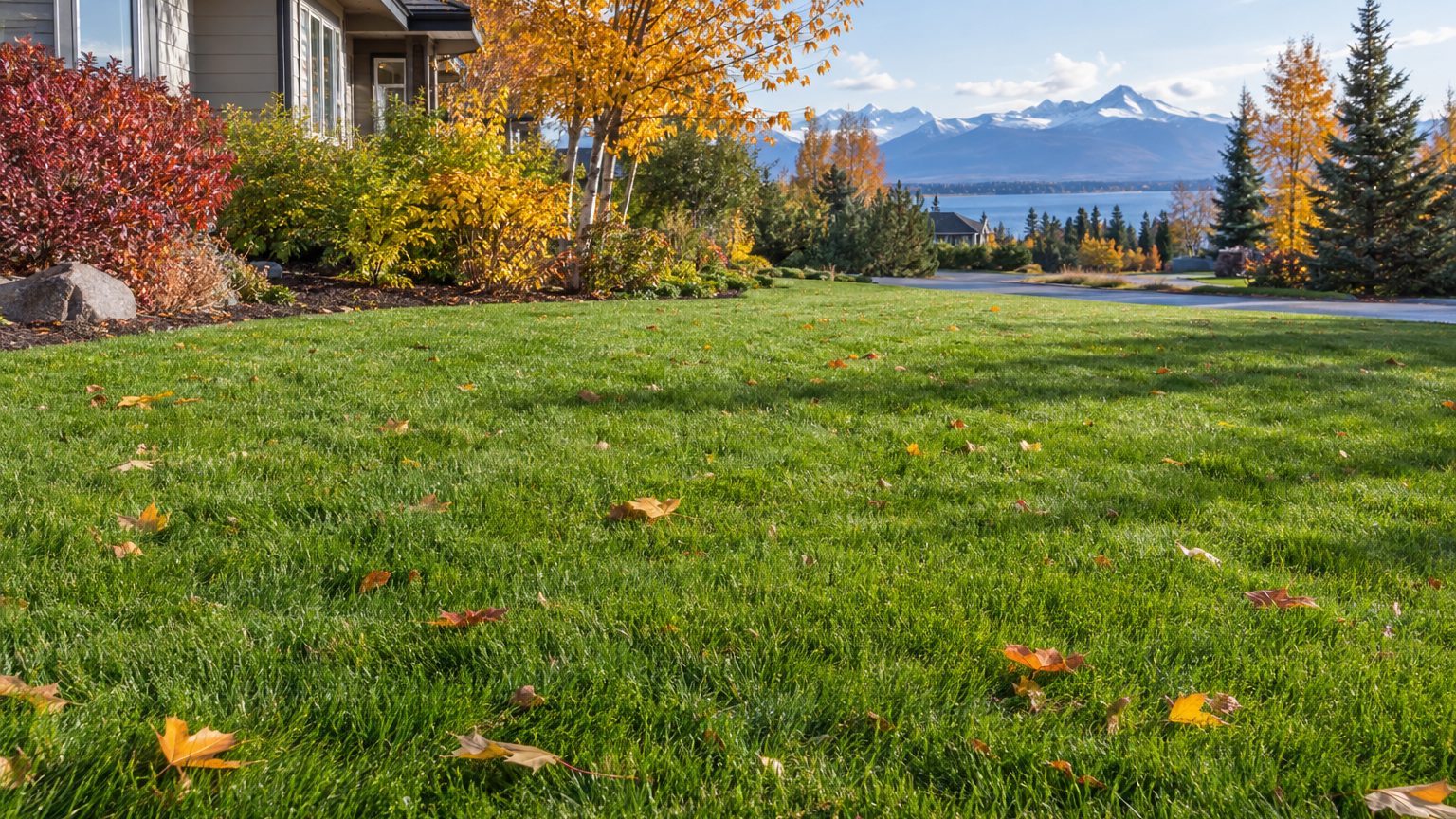
Spring in an Alaska yard begins with meltwater and matted, tan grass, and the lawn year is short enough that every task has to land in a narrow stretch of summer. Most of the work falls between June and September. The rest of the year the grass sleeps under snow or waits for the soil to warm.

What to Do Each Month in a Alaska Lawn

Lawn in Alaska

Alaska’s lawn work is packed into summer, so the months that matter are few and the others are for watching. The schedule below uses Anchorage as a reference, and seasons elsewhere may start later or end sooner.

Month In the lawn
January Rest. The grass is dormant under snow, and there is nothing to do.
February Rest. The grass is dormant, so keep heavy traffic and plowed snow piles off the turf where you can.
March Rest. The lawn is still asleep, and you only watch how the snow melts and where water pools.
April Rest. Thawing ground is soft, so stay off it and let the roots stay undisturbed.
May Watch. The grass starts to wake, but the soil is cold and frost can still return, so wait before feeding or seeding.
June Seed bare spots now that the ground has thawed. This is also when the first feeding goes on, once the grass is growing, while mowing and regular watering begin.
July Mow and water through the warmest weeks. If you missed June, seeding still works in July.
August Keep mowing and watering. Feeding also works in August, while the grass has time to use it.
September Keep mowing while the grass still grows. Watering has done its job, and the lawn begins to slow down.
October Rest. The grass is going dormant, and the season is too short for fall seeding.
November Rest. Snow cover arrives and the lawn is dormant.
December Rest. The grass is dormant, and the yard needs nothing from you.

Seeding belongs to spring in Alaska. The season is too short for fall seeding, so a seed sown in autumn has no time to root before the ground freezes.

When Does the Lawn Season Start and End in Alaska?

Grass starts growing when the soil warms, not on a date. Cool-season lawn grasses wake and germinate with soil at 50 to 65 °F, and that warmth arrives late in Alaska. The snow can be gone for weeks before the ground is ready.

Frost tells you something different: how risky it is for young seedlings. In Anchorage, the last spring freeze usually lands between May 3 and May 12, so seed sown after that has fewer cold nights to survive.

In Anchorage, the first fall freeze usually arrives between September 22 and October 1. That ends the growing season for most lawns, and it is why mowing wraps up in September.

The frost-free stretch in Anchorage is short. Long summer daylight makes up some of what the season lacks in length, which is why a June seeding can still fill in well.

How the Lawn Calendar Shifts Across Alaska

Anchorage is among the mildest inhabited parts of the state, so the dates above shift once you leave Cook Inlet.

  • Fairbanks and the Interior: The growing season is far shorter, and spring comes later. Seeding and feeding sit even more tightly in early summer, and the first hard frost comes sooner.
  • Juneau and Southeast: The coast is milder and wetter, so the ground thaws earlier and the lawn stays active longer. Rain often covers part of the watering.
  • Kenai Peninsula and the Matanuska Valley: These sit close to Anchorage, though cold pockets and higher ground wake later than the valley floors.
  • Utqiagvik and the North Slope: Summers are very short and cool, and a lawn here is a challenge to establish at all.

When in doubt, let the soil in your own yard set the start, and treat the Anchorage months as a relatively mild reference rather than a statewide schedule.

Lawn Care Timing Mistakes to Avoid in Alaska

Seeding in Fall

A seed sown in September or October has little warmth left to germinate and almost no time to root. Winter then heaves or kills the seedlings. Seed in June instead, and use July if you miss it.

Feeding on Cold Soil

Fertilizer put down in May sits on soil too cold for the grass to use it, and rain or meltwater can wash it away. Wait until the lawn is visibly growing in June, then feed. Feeding also works in August.

Watering Late in the Season

Regular watering belongs to June through August, when heat and growth draw water. In September the cooling soil keeps moisture longer, and extra water leaves the grass soft heading into freeze-up. Let the rain handle it.

Where to Get Lawn Advice in Alaska

Local conditions vary a great deal, so it pays to ask someone who knows your corner of the state. Local help is worth a call or a visit.

  • The University of Alaska Fairbanks Cooperative Extension Service has lawn and soil guidance written for northern conditions, and it is worth checking before the June work begins.
  • Your local extension office can tell you how your district differs from Anchorage, so call it in spring before you buy seed or fertilizer.

Common Questions

Does Alaska’s Long Summer Daylight Help a Lawn Grow?

It does. The long days partly make up for the short season, so grass can grow quickly once the soil is warm. The cold at each end of summer still sets the limits.

Is a Brown Lawn in Autumn Dead?

Not usually. If the whole lawn fades evenly after cold nights, it is going dormant. If brown patches stay put in June after the soil warms, and the blades pull away from the soil easily, the grass is likely damaged.

What If You Miss the Seeding Window?

Wait for the following spring. Seed sown after July has too little time to establish, and the short season will not give it a second chance.

Alaska Lawn Care: What to Do and When

Alaska Lawn Care: What to Do and When

Anchorage lawns spend most of the year under snow, then green up fast once the ground thaws and the long daylight arrives. Lawns in Alaska run on a short, bright season, and the work that matters (seeding, a first feeding, steady mowing) is packed into the summer months.

Frost Dates and Growing Season in Alaska

Around Anchorage, the last spring frost usually lands between May 3 and May 12, and the first fall frost arrives between September 22 and October 1. That leaves about 143 frost-free days, which is generous for Alaska but short for a lawn, and the Interior and the north have far less.

  • In early spring, snow melts and the ground stays cold and soggy, so grass sits dormant and the best move is to keep off it while it is saturated.
  • Through May, a frost can still nip tender new growth, which is why seed waits until the ground has thawed and risk has eased.
  • From June through August, the lawn grows hardest, helped by long summer daylight that partly makes up for the short season.
  • In September, mowing continues while growth slows, and frost puts young grass at greater risk.
  • As colder weather pushes the grass toward dormancy, poorly rooted seedlings are less likely to survive the winter.

Frost dates mark risk, not the day grass starts or stops growing. Growth follows soil warmth, and in Anchorage the soil warms late, so the lawn wakes up well after the snow is gone.

Cool-Season or Warm-Season Grass in Alaska?

Cool-season grass is the only kind that makes sense here. Winters are severe, summers are mild, and warm-season grasses cannot survive the cold, so lawns rely on grasses that tolerate hard winters and stay green in cool weather.

Summer watering can still matter in Anchorage, even when dry weather is not the main constraint. Winter kill, a short season and cold soil are, so toughness matters more than heat tolerance. Hardiness zones in the state span 1a to 8a under the USDA system, so the colder the area, the more the choice narrows.

Grass How it does in Alaska Why
Kentucky bluegrass Dependable lawn base Cool-season grass that handles cold winters
Creeping red fescue Does well Fine fescue suited to cool, lean conditions
Chewings fescue Does well Fine fescue that blends with bluegrass
Hard fescue Does well Fine fescue with good cold tolerance
Perennial ryegrass Short-lived in the coldest winters Cool-season grass that struggles with deep cold

Warm-season grasses such as St. Augustinegrass do not belong in Alaska, and St. Augustinegrass is never sold as seed in any case.

When to Seed, Fertilize and Aerate a Lawn in Alaska

Alaska flips the usual advice. The season is too short for fall seeding, so seed goes down in spring once the ground has thawed, giving seedlings the whole summer to root before the cold.

The first feeding comes once the grass is actively growing, which is late spring this far north. Dates here speak for Anchorage and shift in other parts of the state.

Task Best months in Alaska Why then
Seeding June (July also works) Ground has thawed and seedlings have a full summer to root
Fertilizing June (August also works) June is when the grass is growing and ready for its first feeding
Mowing June through September Growth is steady while the soil is warm
Watering June through August Summer is when the lawn needs steady moisture

Aeration is not tied to a window here, so treat it as optional and do it only while the grass is growing and the soil is not frozen or waterlogged.

Lawn Problems to Watch for in Alaska

Winter-Killed Patches

Winter-Killed Patches — Alaska Lawn Care: What to Do and When

Straw-colored or bare patches that appear as the snow melts, often in low spots where meltwater pooled, point to winter damage. Perennial ryegrass is especially vulnerable in the coldest winters. Rake the dead grass lightly and reseed in June.

Thin Grass in Cold, Wet Soil

A lawn that looks thin and yellowish in spring, in a spot that stays soggy long after the neighbors have dried out, is reacting to cold, saturated ground. Staying off it while it is wet protects the crowns, and feeding once growth is underway helps it fill in.

Compacted Paths and Edges

Worn, hard strips where people walk or park often hold water and grow little. Keeping traffic off the lawn when the ground is soft helps, and loosening the soil while the grass is actively growing lets roots recover.

How Lawn Care Dates Change Across Alaska

The state is huge, and the season shifts with latitude, elevation and distance from the water.

  • Anchorage: this is the reference for the dates above, among the milder inhabited parts of the state, with a spring that starts in May.
  • Fairbanks and the Interior: winters are colder and the frost-free stretch is far shorter, so seeding happens later and fall frost arrives sooner.
  • Southeast, around Juneau: the coastal climate is milder and wetter, so the ground thaws earlier and lawns face more moisture than cold.
  • The far north: the season is so brief that a lawn is a real gamble, and local advice matters most.

Where you live decides how closely these dates apply, so treat them as a starting point and adjust to when your own ground thaws.

Where to Get Lawn Advice in Alaska

Alaska’s conditions vary so much that local help pays off, especially for soil and diagnosis questions.

  • The University of Alaska Fairbanks Cooperative Extension Service offers lawn and soil guidance written for Alaska conditions, and it is worth a visit before spring seeding.
  • Your local extension office can help with a soil test or a diagnosis of a patchy lawn, ideally once the ground has thawed and the grass is growing.

Common Questions

Can You Grow a Lawn in Alaska?

Yes, in the milder areas. Cool-season grasses such as Kentucky bluegrass and fine fescues establish well when seeded in spring and given the summer to root.

What Grass Seed Works in Alaska?

Kentucky bluegrass and fine fescues such as creeping red, chewings and hard fescue are the usual choices. Perennial ryegrass is short-lived in the coldest winters.

Why Does a Lawn in Alaska Turn Brown After Winter?

Brown, matted grass in low spots right after snowmelt usually means winter damage or standing meltwater. If the grass greens up as the soil warms, it was only dormant. If it stays brown, reseed in June.

When to Prune Hydrangeas in Alaska

When to Prune Hydrangeas in Alaska

In Anchorage, the safest hydrangea planting window runs May through August, after the last spring frost (May 3 to May 12) has passed and before the first fall frost arrives between September 22 and October 1. Bigleaf varieties get pruned only in June and July, once new growth shows which stems survived winter.

When to prune hydrangeas in Alaska: The Short Answer

NOAA NCEI 1991-2020 Climate Normals put Anchorage’s last spring frost at May 3 to May 12 and its first fall frost at September 22 to October 1, a spread that anchors the plant window at May through August and narrows bigleaf pruning to June and July.

  • January: the ground is locked and no hydrangea goes into it. Use the quiet weeks to order bare-root stock for spring.
  • February: still solid dormancy across Southcentral Alaska. Check any stored pots in an unheated garage for dried-out roots.
  • March: soil stays frozen well past the calendar’s start of spring. Begin hardening off any greenhouse-grown starts near a bright window.
  • April: thaw is uneven and the last frost is still weeks away. Dig and amend planting holes as soon as a spot drains freely.
  • May: the plant window opens, and the last frost, May 3 to May 12, should be behind you before roots go in. This is also the first of two fertilizing months.
  • June: planting continues, and bigleaf pruning opens for the first time this year. Cut only stems that show no green under the bark.
  • July: the second fertilizing month and the last month for bigleaf pruning. Feed once and finish any shaping before growth hardens off.
  • August: the plant window closes at month’s end. Anything set in the ground now needs the rest of summer to root before cold returns.
  • September: the first fall frost lands somewhere between September 22 and October 1. Stop pruning and start mulching exposed crowns.
  • October: frost has typically already arrived by now. Pile mulch deeper over the root zone and stop watering once the ground stiffens.
  • November: full dormancy returns to Southcentral Alaska. Wrap marginal shrubs in burlap if wind exposure is a problem.
  • December: snow cover, where it falls consistently, becomes the best insulation a hydrangea root ball can get. Leave it in place.

Every one of these months moves later the farther north or inland you garden, since Anchorage sits at the mild end of a state that runs from USDA zone 1a to 8a. The four months on the plant list are not a suggestion, they are what the short season allows.

How to Work Out the Dates for Your Own Yard

Working out your own dates starts with the same station data behind the state numbers, then adjusts for what’s actually happening in your yard.

  1. Start from the frost range: NOAA NCEI 1991-2020 Climate Normals set Anchorage’s last spring frost at May 3 to May 12, so treat mid-May as the earliest safe date rather than a fixed line.
  2. Match it to the plant window: the four-month stretch from May through August is when soil and air both stay warm enough for roots to establish, so any of those months works once frost has cleared.
  3. Reserve the pruning weeks: bigleaf hydrangeas only get cut back in June and July, since cutting outside that stretch removes the buds already set for next year’s bloom.
  4. Count backward from fall frost: with the first fall frost due September 22 to October 1, late August becomes the practical cutoff for new plantings, giving roots a few weeks to settle before cold returns.
  5. Adjust for elevation and distance from the coast: gardens outside the Anchorage bowl, especially inland or at higher elevation, should shift every one of these windows earlier in fall and later in spring.

None of this replaces watching your own ground. A warm microclimate against a south-facing wall can beat these dates by a week or two, while a low frost pocket in the same yard can lag well behind them.

Alaska North to South: How the Dates Shift

Alaska’s frost dates and hardiness range shift hard across the state, and Anchorage’s numbers describe only the mild middle of that spread.

  • Southcentral coastal (Anchorage, Kenai Peninsula, Mat-Su Valley): closest to the reference dates, with marine air keeping both frost dates milder than inland spots at the same latitude.
  • The Interior (Fairbanks, Denali area): frost arrives weeks earlier in fall and lingers later in spring, cutting the already short plant window down further.
  • Southeast (Juneau, Sitka, Ketchikan): a wetter, more marine climate keeps winters milder than the Interior, sitting toward the warmer end of the state’s hardiness range.
  • The North (North Slope, Utqiagvik): growing seasons run so short that the plant and prune windows described here don’t reliably apply at all.

The state guide lays out how far these regional swings move the calendar for where you actually garden.

Mistakes Alaska Punishes

Planted before the ground actually thaws

Southcentral soil often looks bare weeks before it’s workable, and roots set into cold, wet ground rot instead of establishing. Wait until the last frost, May 3 to May 12, has passed and stick to the May through August plant window.

Bigleaf pruned outside June and July

Bigleaf pruned outside June and July — When to Plant and Prune Hydrangeas in Alaska

Cutting bigleaf stems in spring or fall removes the buds already formed for next year, since this species blooms on old wood. Save the pruners for the June and July window and skip any other month entirely.

Containers left outside all winter

A pot’s root ball freezes solid far faster than the same roots would in open ground, and Alaska’s winter minimums are severe enough to kill it outright. Move containers into an unheated garage or sink the pot into a garden bed before the first fall frost.

Alaska Extension Offices and County Contacts

Anchorage’s dates are a starting point, not a guarantee for every yard in the state. UAF Cooperative Extension Service agents adjust for your borough’s soil, wind exposure, and microclimate.

  • Your state page: the frost dates and the pruning window for where you live in Alaska.
  • Which ones hold up here: the hydrangea varieties worth planting in this climate, and which ones to skip.
  • What’s going wrong: the pests and problems this state’s growers actually report, and what fixes them.

Common questions

Can hydrangeas survive winter outdoors in Alaska?

In sheltered Southcentral yards, some do, particularly where snow builds up and stays over the root zone all winter. Farther inland or north, winters cut too far into the state’s hardiness range for most varieties to make it through unprotected.

What month should I fertilize hydrangeas in Alaska?

May and July are the two feeding months that fit Alaska’s short growing season, giving roots a boost right after planting and again mid-summer before growth slows for fall.

Why didn’t my bigleaf hydrangea bloom this year?

Pruning outside the June and July window is the most common cause, since bigleaf sets its buds on the previous year’s stems and cutting at the wrong time removes them before they ever open.

Hydrangeas That Grow Well in Alaska

Hydrangeas That Grow Well in Alaska

Smooth hydrangea and panicle hydrangea are the two types that actually bloom reliably in Anchorage yards, because both set their flower buds on new wood each spring rather than on stems that have to survive an Alaska winter. Bigleaf and oakleaf types, the ones filling mail-order catalogs, mostly fail here. The difference comes down to where the flower bud forms, not how pretty the tag photo looks.

Hydrangeas that grow well in Alaska: The Short Answer

Anchorage sits at the mild edge of Alaska’s growing conditions, but the USDA Plant Hardiness Zone Map 2023 still places the whole state, including its most populated city, within a 1a to 8a range that rules out most nursery hydrangeas.

Two genera handle that cold reliably in local yards: smooth hydrangea and panicle hydrangea, both of which set their flower buds on stems grown fresh each spring rather than on wood that must survive an Alaska winter intact.

Hydrangea arborescens ‘Annabelle’ (smooth hydrangea)

Hydrangea arborescens 'Annabelle' (smooth hydrangea) — Hydrangeas That Grow Well in Alaska

This is the safest bet in Anchorage yards. It blooms on new wood, so even a hard winter that kills the top growth back to the ground still leaves a shrub full of white mophead flowers by August. Full sun and steady moisture through the short summer matter more here than any winter wrapping.

Hydrangea arborescens ‘Invincibelle Spirit’ (pink smooth hydrangea)

Hydrangea arborescens 'Invincibelle Spirit' (pink smooth hydrangea) — Hydrangeas That Grow Well in Alaska

A pink-flowered sibling of Annabelle with the same new-wood habit and the same forgiving nature after a hard freeze. It tolerates the dieback-and-regrow cycle without losing a season of bloom. Site it where afternoon shade softens the long daylight of an Anchorage July and August.

Hydrangea paniculata ‘Limelight’ (panicle hydrangea)

Hydrangea paniculata 'Limelight' (panicle hydrangea) — Hydrangeas That Grow Well in Alaska

Panicle hydrangea is the other dependable choice for this climate. It flowers on new wood too, handles a cool, short summer better than bigleaf types ever will, and its cone-shaped blooms fade from green to soft pink as nights cool in late September. It wants full sun to bloom heavily.

Hydrangea paniculata ‘Little Lime’ (dwarf panicle hydrangea)

Hydrangea paniculata 'Little Lime' (dwarf panicle hydrangea) — Hydrangeas That Grow Well in Alaska

A compact version of Limelight that fits smaller Anchorage lots or large patio containers. Its size makes it easy to wheel a pot into an unheated garage for the coldest months, something some gardeners still do even though the straight species usually survives outdoors without help.

Hydrangea anomala subsp. petiolaris (climbing hydrangea)

Hydrangea anomala subsp. petiolaris (climbing hydrangea) — Hydrangeas That Grow Well in Alaska

This one is riskier here than the others. It can survive against a sheltered, south-facing wall where reflected heat stretches its short growing season, but an open bed rarely gives it enough warmth to set flower buds reliably year after year. Treat it as an experiment, not a foundation planting.

Hydrangea macrophylla (bigleaf or mophead hydrangea)

Hydrangea macrophylla (bigleaf or mophead hydrangea) — Hydrangeas That Grow Well in Alaska

This is the one to skip. Alaska’s 1a to 8a range runs cold enough that Anchorage, even as one of the state’s milder pockets, falls short of the warmth this old-wood bloomer needs to keep its flower buds alive over winter. Expect a green shrub with no blooms most years.

How to Work Out the Dates for Your Own Yard

Your own planting and pruning dates start from Anchorage’s frost window, not from a date printed on a seed packet.

  1. Mark your last spring frost window: NOAA NCEI 1991-2020 Climate Normals puts it at May 3 to May 12 for the Anchorage station, so treat the earlier date as your safety line if your yard sits in a low spot that holds cold air.
  2. Count forward to the site’s plant months: the calendar for this state lists May, June, July, and August as safe planting months, which lines up with soil that has finally warmed past that frost window.
  3. Give new smooth hydrangea growth until June: Annabelle-type plants that froze back to the ground over winter need until early summer to leaf out fully, so don’t judge a shrub dead before late June.
  4. Fertilize on the site’s two windows: May and July give roots and new stems a boost right when the plant is actively building the wood that will carry this year’s flowers.
  5. Prune bigleaf types only in June or July: the site’s calendar limits that cut to those two months, after the risk of a late freeze has passed and before next year’s buds start forming.
  6. Work back from the first fall frost: that window falls between September 22 and October 1, leaving roughly 143 frost-free days total, so stop heavy fertilizing by mid-August to let new growth harden off.

Annabelle survives this cycle every year, dying back hard some winters and still flowering by August. Bigleaf hydrangea doesn’t: its flower buds form on old wood the previous fall, and an Anchorage winter kills them long before summer, which is why the shrub might live but rarely blooms.

Alaska North to South: How the Dates Shift

Alaska’s frost dates and growing conditions shift dramatically depending on where you garden, even though this guide uses Anchorage as its reference point.

  • Southeast panhandle (Juneau, Sitka, Ketchikan): coastal moisture and milder winters push the frost dates later into fall and earlier into spring than most of the state, giving smooth and panicle hydrangeas a longer season.
  • Southcentral coast (Anchorage, Kenai, Homer): the reference conditions, with some of the mildest inhabited winters outside the panhandle and a frost-free season long enough for reliable panicle hydrangea bloom.
  • Interior (Fairbanks, the Denali area): colder winter extremes and a shorter frost-free season push both hydrangea types toward containers or a sheltered south wall rather than an open bed.
  • North Slope and far north (Utqiagvik and Arctic villages): the frost-free season shrinks to almost nothing, and outdoor hydrangeas of any kind aren’t a realistic yard plant there.

Check the state calendar page for the frost window that actually matches your part of Alaska before you commit to a planting date.

Mistakes Alaska Punishes

Buying a mophead for the flower color

Bigleaf hydrangeas fill garden center displays because they ship well in bloom, but their flower buds form on wood grown the previous year, and an Anchorage winter kills that wood before spring arrives. Choose Annabelle or a panicle type instead, since both flower on new wood and shrug off our winters.

Pruning outside the June to July window

Cutting back stems in fall or early spring removes wood that was about to push new growth, delaying bloom by weeks in a season that’s already short. The site’s calendar limits bigleaf pruning to June and July for exactly this reason, after frost risk drops and before next year’s buds begin forming.

Skipping fall mulch over the crown

Top growth is expected to die back most winters here, but an unmulched crown can freeze deep enough to kill the roots too, and a dead crown means no shrub at all next spring. Pile several inches of shredded bark or leaf mulch over the base before the ground freezes solid.

Alaska Extension Offices and County Contacts

USDA NIFA’s Land-Grant University Extension directory names the University of Alaska Fairbanks Cooperative Extension Service as the state’s contact point, and its county and district offices know local frost pockets a statewide range can’t capture.

  • Your state calendar page: the exact frost dates and month-by-month pruning and fertilizing windows for Alaska.
  • UAF Cooperative Extension Service: county offices that can confirm your local microclimate before you plant.
  • What goes wrong here: the pests and problems specific to hydrangeas in Alaska yards.

Call the district office nearest you before you dig, since one conversation can tell you whether your yard runs colder or milder than the citywide average.

Common questions

Can I grow bigleaf hydrangea in Anchorage at all?

Only with heavy protection, and even then bloom is unreliable. Its flower buds form on old wood, and Anchorage winters routinely kill that wood before spring, which is why smooth and panicle types are the safer starting point for most yards.

When is the best month to plant a new hydrangea in Alaska?

The site’s calendar lists May through August as safe planting months here, once soil has warmed past the last spring frost window. Planting earlier in that range gives roots more time to establish before the first fall frost arrives.

Do hydrangeas need winter protection in Alaska?

Smooth and panicle types don’t need wrapping, since they’re expected to die back and regrow from the base each year. A layer of mulch over the crown before the ground freezes matters more than protecting the top growth.

Hydrangea Pests and Diseases in Alaska

Hydrangea Pests and Diseases in Alaska

Hydrangea trouble in Alaska almost always traces back to the cold rather than a bug or fungus. Winter dieback dominates the list of problems gardeners run into from Anchorage to the Interior, with a short list of summer pests and fungal issues trailing well behind it. Knowing which one you’re looking at changes whether you reach for pruners, a hose, or nothing at all.

The Short Answer

In Anchorage, the coldest season of the year causes far more hydrangea damage than any insect or fungus does. The USDA Plant Hardiness Zone Map 2023 places the state across a 1a to 8a range, and Anchorage sits near the milder end of it, with about 143 frost-free days to grow, bloom, and heal from any wound.

That short window is the reason “pests and diseases” here mostly means winter damage first, and only then a short list of common summer problems. Here’s what actually shows up, roughly in the order a season brings it.

Winter dieback and bud kill

Winter dieback and bud kill — Hydrangea Pests and Diseases in Alaska

This is the one every Anchorage hydrangea grower meets sooner or later. Stems that snapped brittle instead of bending, buds that never swelled, whole branches bare while the base leafs out fine, all point to cold that got into unhardened wood. There’s no cure once it happens, only pruning back to live, green wood in spring and giving the rest of the plant time to recover.

Aphids

Small, soft-bodied, clustered on new growth and the underside of young leaves, aphids show up once the plant is actively pushing new shoots. They leave curled leaf tips and a sticky residue behind. A strong water spray every few days, or an insecticidal soap for a heavier cluster, knocks them back without hurting the plant.

Powdery mildew

A gray white dusting across the top of the leaves, worse in a stretch of warm days and cool, damp nights, this fungus rarely kills a hydrangea but it slows it down. Spacing plants for airflow and watering the soil instead of the foliage does more than any spray applied after symptoms show.

Botrytis blight

Gray, fuzzy mold on flowers and soft new growth after a stretch of cool, wet weather late in the season is botrytis. It spreads fast on crowded, wet foliage. Removing spent blooms and damaged growth promptly, and giving the plant room to dry between rains, is what actually works here.

How to Work Out the Dates for Your Own Yard

One quick method separates cold damage from an actual pest or disease before you treat anything.

  1. Check the calendar first: if symptoms appear before Anchorage’s last spring frost, which NOAA NCEI 1991-2020 Climate Normals puts at May 3 to May 12, cold is the likely cause, not a pathogen.
  2. Look at what’s damaged: bare stems with live buds lower down point to winter injury, while spotted or curled leaves on an otherwise normal plant point to a pest or fungus.
  3. Check the underside of new leaves: clusters of small soft insects mean aphids, and a strong rinse from the hose is the first move, not a spray.
  4. Watch for a dusty gray white film: on top of leaves in the warmest weeks of summer, that’s powdery mildew, and it calls for spacing and dry foliage, not fungicide alone.
  5. Watch for fuzzy gray mold: on flowers and soft growth once fall rains start, ahead of the first fall frost window of September 22 to October 1, that’s botrytis, and cleanup beats any spray.
  6. When in doubt, wait two weeks: past frost problems often resolve on their own once the plant pushes new growth, while pest and fungus symptoms tend to spread.

Most of what looks alarming in an Anchorage yard in April or May turns out to be cold, not disease. Patience and a clean pair of pruners solve more of it than any product does.

Alaska North to South: How the Dates Shift

Location within the state moves these dates more than anywhere else in the country, since Alaska spans arctic tundra to a temperate coastal rainforest.

  • Southcentral coast (Anchorage, Kenai Peninsula, Kodiak): the mildest, longest growing conditions in the state, with the shortest, gentlest winters a hydrangea here will face.
  • Interior (Fairbanks, Delta Junction): a much shorter season and far colder winter extremes, where dieback is heavier and more of the plant is lost each year.
  • Southeast panhandle (Juneau, Sitka, Ketchikan): wetter and milder than the coast further north, which raises the risk of botrytis and powdery mildew even as winter injury eases.
  • Far north and west (Utqiagvik, Nome, the arctic coast): conditions too short and cold for hydrangeas as garden shrubs in most yards.

None of this changes the order these problems show up in, only how hard winter hits and how much room fungal problems get. Check the state page for the frost window that matches where you actually garden.

Mistakes Alaska Punishes

Pruning in fall

Cutting stems back before the first fall frost window that NOAA NCEI 1991-2020 Climate Normals sets at September 22 to October 1 opens fresh wounds right as cold arrives, inviting dieback deeper than it would otherwise go. Prune in spring instead, once new growth shows what’s alive.

Planting too late in spring

Setting a hydrangea out after the last spring frost window of May 3 to May 12 sounds safe, but it leaves the plant too little of the roughly 143 frost-free days to root in before fall. Get it in the ground early in that window instead.

Watering the leaves, not the soil

Overhead watering late in the day keeps foliage wet through the cool nights that favor powdery mildew and botrytis, both of which spread fastest on damp leaves. Water at the base, in the morning, and let the foliage dry before evening.

Alaska Extension Offices and County Contacts

The state figures above are a starting point, not the full picture for your yard. Local wind, snow cover, and soil vary enough within Alaska that a call to a real office beats guessing.

  • Your state page: the frost dates and the pruning window for where you live.
  • Which ones hold up here: the hydrangea varieties bred to handle a short, cold Alaska season.
  • University of Alaska Fairbanks Cooperative Extension Service: local offices that can confirm what’s actually damaging your plant before you treat it.

Common questions

Do hydrangeas actually get diseases in Alaska, or is it just the cold?

Both, but cold dominates. Winter dieback outranks every fungus or insect on this list in frequency and severity, especially outside the mild Southcentral coast.

Should I spray preventively each spring?

Not as a first move. Cleanup, spacing, and watering the soil instead of the leaves prevent more powdery mildew and botrytis here than any routine spray applied on a calendar.

Can I tell winter injury from disease by looking at the leaves?

Mostly yes. Bare stems with buds alive lower down point to cold. Spotted, curled, or fuzzy-coated leaves on an otherwise normal plant point to a pest or fungus instead.

The almanac, state by state. Every date on this site comes from a state’s own frost facts and its extension service’s calendar — and says where it comes from.