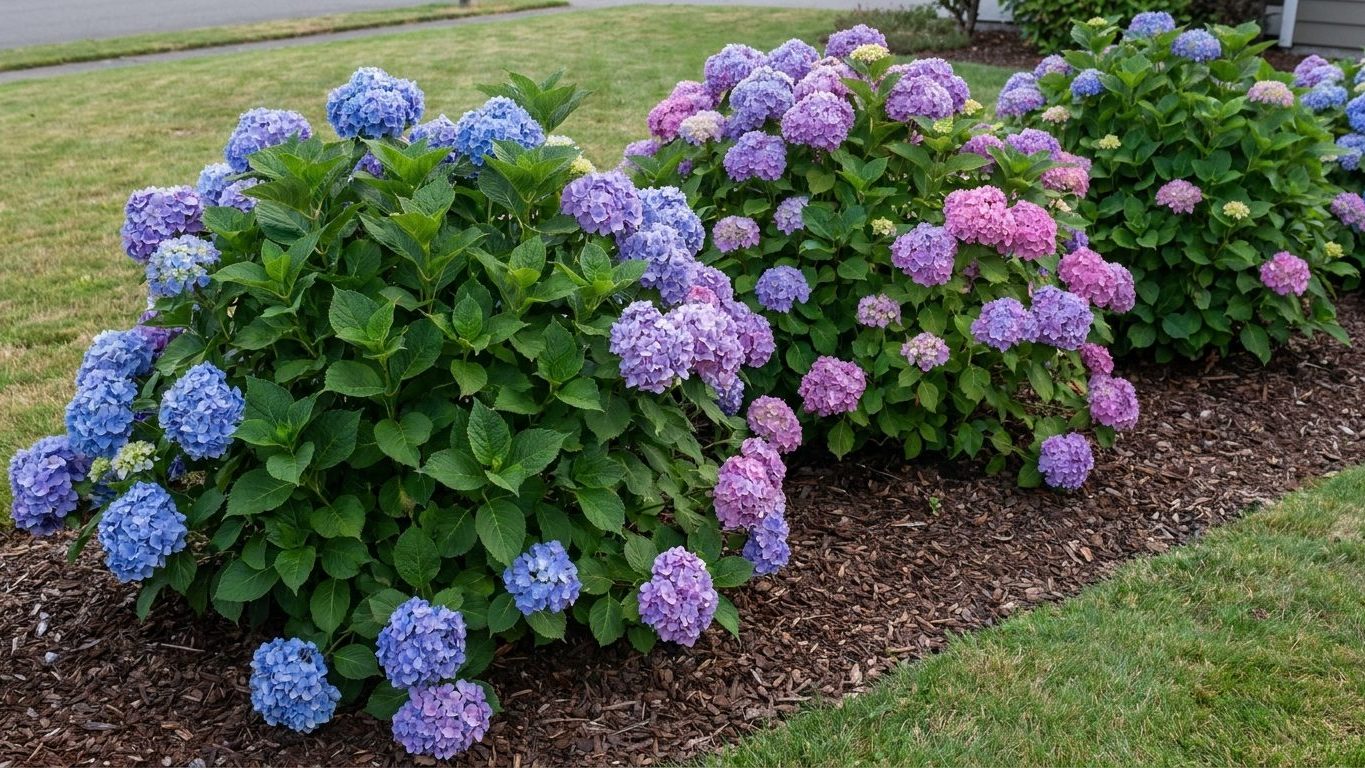
Hydrangeas thrive across most of Washington, but the timing depends on which side of the Cascades you garden and which type you plant. Bigleaf varieties want the mild, wet west side, while panicle and smooth types shrug off colder interior winters. Plant after the ground warms in spring, and match the variety to your zone before you pick a spot.
Hydrangeas Care Calendar for Washington

Western Washington runs mild and wet, and that shapes the whole hydrangea season. NOAA NCEI 1991-2020 Climate Normals put the last spring freeze at Seattle between February 27 and March 18, and the first fall freeze between November 13 and November 30. The state’s USDA hardiness zones span 4a to 9a, from the cold interior to the mild coast.
- Dormancy: the one safe window to move a plant, roots undisturbed, runs through late winter while the shrub is still bare.
- Planting: hold off until three to four weeks after the last spring freeze window closes, since cold, wet soil stalls new roots even after the air warms.
- Leaf-out: growth resumes soon after, and a late frost within that February 27 to March 18 window can still nip tender new leaves.
- Bud set: bigleaf types form next year’s flower buds on this season’s wood by midsummer, so late pruning costs you next year’s bloom.
- Bloom: color runs from early summer well into fall on most kinds grown here.
- Hardening off: as the first fall freeze window (November 13 to 30) approaches, stop feeding and let stems toughen.
- Winter cover: mound mulch over the crown before that fall freeze window arrives, especially on the colder side of the state’s 4a to 9a range.
Every step above tracks back to those two freeze windows, not a fixed date, since the mild, maritime edge of this state can run two or three weeks ahead of the colder interior.
Washington — the year and the numbers
- State
- Washington
- USDA zones
- 4a-9a
- Last spring frost
- February 27 to March 18
- First fall frost
- November 13 to November 30
- Annual rain
- 39 in
- Lawn zone
- transition-season
- Source
- NOAA NCEI 1991-2020 Climate Normals, 32F freeze probabilities · Seattle
Best Hydrangeas for Washington
Not every hydrangea reads Washington’s climate the same way. The mild, wet Puget Sound side favors old-wood bloomers, while the state’s colder interior pockets, down toward zone 4a, favor types that flower on new growth instead.
Bigleaf types dominate garden centers here, but the ones that flower on new wood forgive a late freeze far better, since a damaged bud simply regrows and blooms the same year.
| Kind | Verdict here | Why |
|---|---|---|
| Bigleaf | Good near Puget Sound | Needs the milder end of the state’s zone range and shelter from a late spring freeze |
| Panicle | Fits nearly everywhere | Tolerates the coldest pockets within the 4a to 9a range and blooms on new wood |
| Smooth (arborescens) | Reliable statewide | Also flowers on new wood, so a late freeze costs little |
| Oakleaf | Borderline east of the Cascades | Wants more summer heat than the maritime side reliably offers |
| Climbing | Best on the coast | Slow to establish, favors the milder, wetter west side |
Mountain hydrangea and the other lesser-grown kinds are on their own pages, since the facts that decide them here don’t fit a single table row.
When to Plant, Prune and Feed Hydrangeas in Washington
Three dates matter more than the rest of the calendar, and all three trace back to the same two freeze windows. Get these right and the monthly details fall into place on their own.
Planting waits on warm soil, pruning depends on whether a variety blooms on old or new wood, and feeding has to stop before stems need to harden for winter.
| Task | Window here | Counted from |
|---|---|---|
| Plant | Mid to late spring through early fall | Three to four weeks after the last spring freeze window closes on March 18 |
| Prune (new-wood types) | Late winter, before growth starts | Four to six weeks before the last spring freeze window opens on February 27 |
| Feed | Early spring through midsummer | Starts two to three weeks after the freeze window closes, stops about ten weeks before the first fall freeze window opens on November 13 |
Old-wood bloomers like most bigleaf types follow a different pruning rule entirely, right after they finish flowering, and that timing is covered on the state calendar page.
Hydrangeas Problems in Washington and What Causes Them
Buds killed by a late freeze
The spring freeze window here stretches into mid-March, and swelling buds on old-wood bigleaf types can die back before they open. Hold off pruning until new leaves confirm which wood survived.
Roots sitting in cold, wet soil
Maritime rain and low spring light keep soil cold and saturated well past the last freeze date. Raise the bed or work in coarse material before planting so roots aren’t standing in water.
No bloom despite healthy growth

A shrub that leafs out fine but skips flowering usually lost its buds to a late freeze or a mistimed cut. Check the pruning calendar for your variety before assuming disease or soil is to blame.
Washington North to South: How the Dates Shift
The reference dates above hold for the mild, wet Puget Sound side, but the state’s 4a to 9a zone range covers very different ground once you leave it.
- Puget Sound lowlands (mildest zones, western Washington): frost lifts earliest here, close to the February 27 edge of the spring window, so planting can start sooner.
- Cascade foothills and higher elevations (colder pockets near zone 4a): frost lingers longest, pushing both the safe planting date and the last pruning date later into the season.
- Eastern Washington beyond the Cascades (warmer summer zones near 9a, high desert): summers run hotter and drier, so afternoon shade matters as much as the frost date.
None of that changes the reference dates above, which hold for the milder, wetter west side. The calendar page for Washington adjusts each step for where you actually garden.
Washington Extension Offices and County Contacts
Washington State University Extension keeps the county-level detail no statewide figure can carry, from soil pH to the exact week your yard clears its last freeze.
- Your county extension office: local soil test results and site-specific frost advice.
- Washington State University Extension: extension.wsu.edu for statewide publications and master gardener contacts.
- This month’s task: check bud swell before pruning, and hold off feeding until new growth shows.
Common questions
When should I plant hydrangeas in Washington?
Plant three to four weeks after the last spring freeze window closes, which runs from February 27 to March 18 near Seattle. Cold, wet soil delays root growth even after the air feels warm enough.
Do hydrangeas need pruning every year in Washington?
Old-wood bloomers like most bigleaf types need pruning right after they flower, not in late winter. New-wood types tolerate a late winter cut and recover from a late freeze far more easily.
Why didn’t my hydrangea bloom this year in Washington?
The most common cause here is a late freeze inside the February 27 to March 18 window killing buds already set on old wood. A mistimed prune the previous season causes the same result.