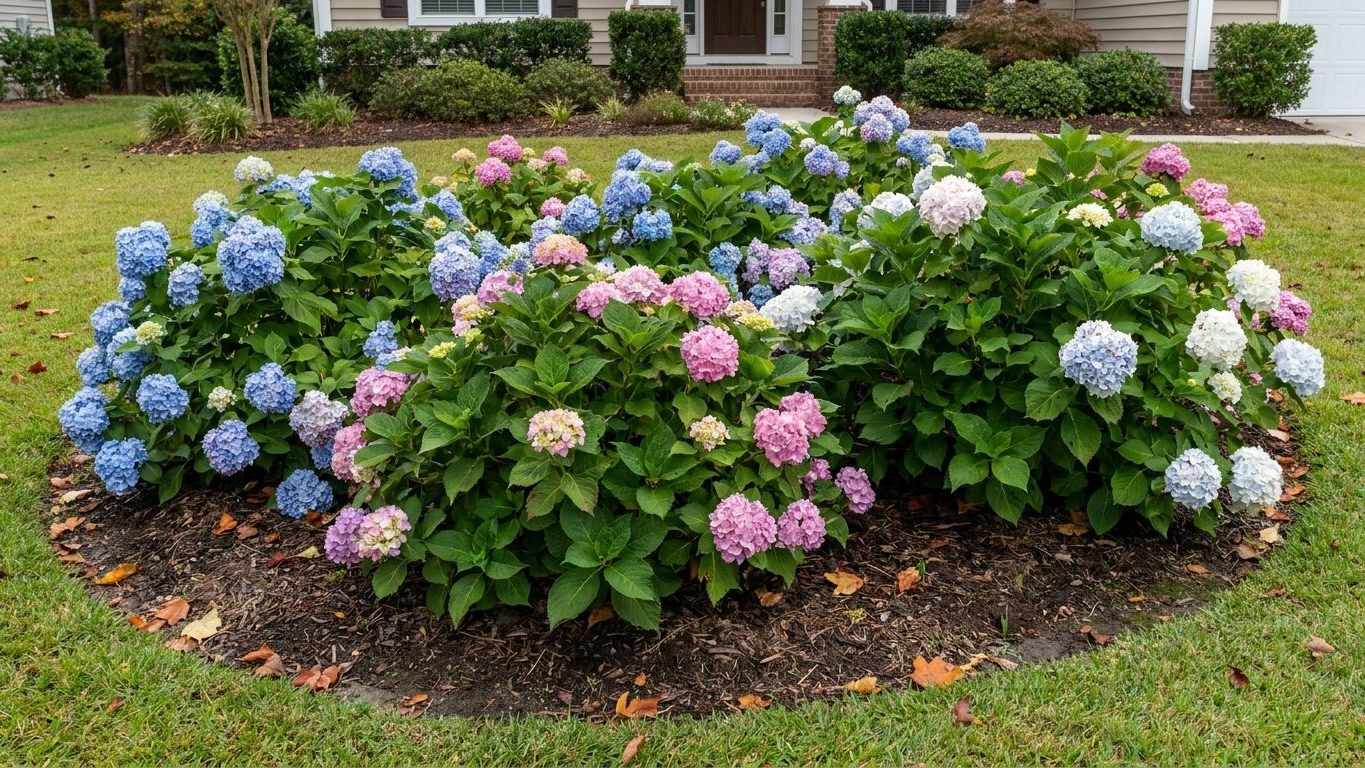
South Carolina runs USDA zones 7a to 9a, mild enough to grow bigleaf, oakleaf, panicle, and smooth hydrangeas across nearly the whole state. Plant in fall or late winter while the ground stays workable, feed as new growth starts, and prune according to what kind you own since some bloom on old wood and some on new.
Hydrangeas Care Calendar for South Carolina

NOAA NCEI 1991-2020 Climate Normals puts Charleston’s last spring freeze between February 28 and March 17, and its first fall freeze between November 20 and December 5, a season further defined by the state’s 7a to 9a hardiness range.
- Dormancy: December through February is the safe stretch to dig up or move a plant with roots undisturbed.
- Planting: set new hydrangeas out two to three weeks before the last freeze, or wait until fall once the first freeze has passed.
- Mulching: lay two to three inches of mulch as the first fall freeze nears, sometime between November 20 and December 5.
- Feeding: apply the first round of fertilizer two to three weeks after the last freeze, once new leaves push out.
- Pruning: cut panicle and smooth wood back in late winter before growth starts, but leave bigleaf and oakleaf until right after they finish blooming.
- Watering: soak the root zone weekly through the long stretch between the last spring freeze and the first fall freeze.
Miss either end of that freeze window and a bigleaf hydrangea can lose a season of blooms in a single cold night.
South Carolina — the year and the numbers
- State
- South Carolina
- USDA zones
- 7a-9a
- Last spring frost
- February 28 to March 17
- First fall frost
- November 20 to December 5
- Annual rain
- 53 in
- Lawn zone
- warm-season
- Source
- NOAA NCEI 1991-2020 Climate Normals, 32F freeze probabilities · Charleston
Best Hydrangeas for South Carolina
The USDA Plant Hardiness Zone Map puts South Carolina at 7a to 9a, wide enough that nearly every common hydrangea survives winter somewhere in the state, but summer heat and humidity separate the reliable kinds from the fussy ones.
Bloom timing matters as much as cold here, since a late freeze can nip buds that already set on old wood, while kinds that flower on new wood shrug off a rough spring.
| Kind | Flowers on | Verdict here | Why |
|---|---|---|---|
| Bigleaf | Old wood | Reliable on the coast, riskier upstate | Buds already set can freeze if a late frost lands close to March 17 |
| Oakleaf | Old wood | Reliable statewide | Native to the Southeast and suited to the state’s 7a to 9a range |
| Panicle | New wood | Reliable statewide | Blooms after the last freeze has passed, so cold snaps rarely cost flowers |
| Smooth | New wood | Reliable statewide | Same new-wood habit as panicle, forgiving of a rough spring |
Climbing hydrangea grows in South Carolina too, but it stays a minor player here, and the other kinds are on their own pages.
When to Plant, Prune and Feed Hydrangeas in South Carolina
Three dates carry most of the hydrangea calendar in South Carolina, and all three count off the freeze windows already set for Charleston.
Get the arithmetic right and a hydrangea spends its energy on roots and buds instead of recovering from a badly timed cut or a late cold snap.
| Task | Window here | Counted from |
|---|---|---|
| Planting | Two to three weeks before the last freeze, or anytime after the first fall freeze | Last freeze, February 28 to March 17 |
| Feeding | Two to three weeks after the last freeze, once new leaves appear | Last freeze, February 28 to March 17 |
| Pruning | Right after bloom fades for bigleaf and oakleaf, late winter before growth for panicle and smooth | Bloom fade or last freeze, February 28 to March 17 |
Hydrangeas Problems in South Carolina and What Causes Them
No flowers on a healthy shrub

A late freeze landing close to March 17 can nip buds that bigleaf and oakleaf already set on old wood, and pruning at the wrong time removes next year’s flowers before they show. Prune those two kinds right after bloom, not in late winter.
Leaves scorched on the sunny side
South Carolina summers push heat past what bigleaf tolerates in full sun, especially toward the state’s 9a pockets. Move the shrub to part shade or plant new ones there from the start, and water deeply during the hottest stretch.
Roots sitting in wet soil
Heavy coastal rain plus clay pockets inland leave hydrangea roots waterlogged, and a wilting shrub in damp soil usually points to rot rather than drought. Raise the bed or work in coarse material before replanting.
South Carolina North to South: How the Dates Shift
The freeze dates above are built on Charleston’s station data, and the rest of the state shifts away from them in a fairly predictable direction.
- The Upstate and the foothills (Greenville, Spartanburg, Oconee County): frost lingers weeks longer at both ends, so planting slides later and mulching starts sooner.
- The Midlands (Columbia, Sumter, Aiken): timing tracks closest to the state averages.
- The Lowcountry and the coast (Charleston peninsula, Beaufort, Myrtle Beach): the peninsula runs milder than the airport data suggests, stretching the safe planting season at both ends.
Check the calendar section above against your own county before you commit to a planting date.
South Carolina Extension Offices and County Contacts
The freeze windows above are a statewide starting point, and your yard’s soil, drainage, and microclimate still need a local read.
- Clemson Cooperative Extension: county offices that test soil and confirm local frost timing.
- The calendar above: the freeze dates and pruning windows that apply statewide.
- Which ones hold up here: the fuller rundown of bigleaf, oakleaf, panicle, and smooth for South Carolina yards.
Call your county office before you plant or prune this month and ask about the current frost outlook.
Common questions
What USDA zone is South Carolina for hydrangeas?
The USDA Plant Hardiness Zone Map places South Carolina at 7a to 9a, mild enough for bigleaf, oakleaf, panicle, and smooth hydrangeas, with the coast running warmer than the Upstate.
When should I plant hydrangeas in South Carolina?
Plant two to three weeks before the last freeze, which falls between February 28 and March 17 at Charleston’s station, or wait for fall once the first freeze passes between November 20 and December 5.
Why didn’t my hydrangea bloom this year?
The most common causes are pruning bigleaf or oakleaf at the wrong time, cutting off next year’s buds, or a late freeze near the last frost date nipping buds that had already set.