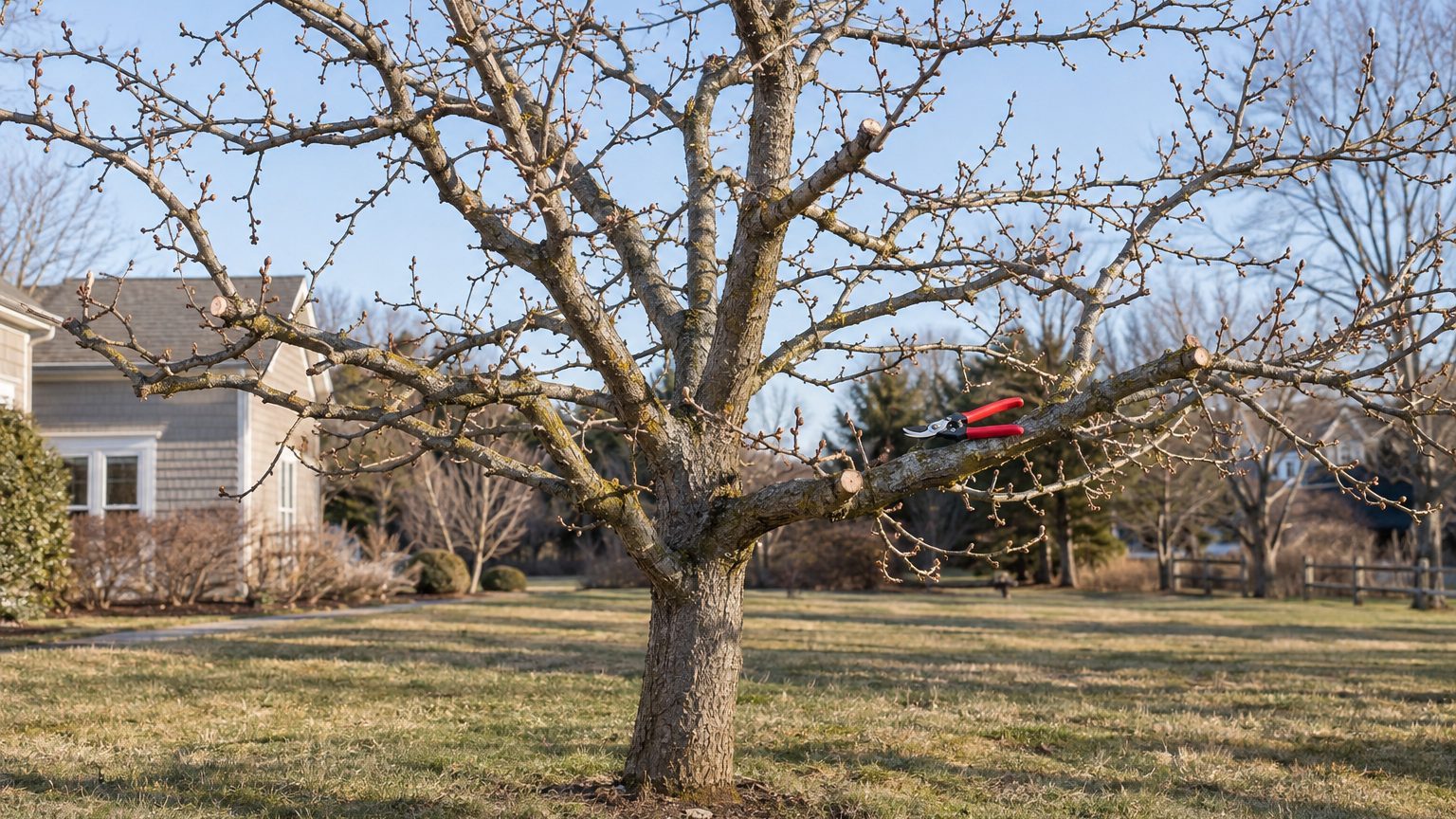
Bare branches against a gray February sky are the cue. Fruit trees in Kansas are pruned while they rest, in late winter before the buds open, and the job is done with the tree asleep and the wounds ready to heal quickly once growth starts.
When to Prune Fruit Trees in Kansas

Dormant pruning of fruit trees in Kansas falls in February and March, while the tree is still at rest and before the buds open. Apples and pears go first, and cherries follow in mid-March ahead of bud swell.
| Fruit tree | When to prune in Kansas | Why |
|---|---|---|
| Apples and pears | Late February into early March | They tolerate the earliest cuts and need annual pruning for good fruit production |
| Peaches and nectarines | Last, in March, closest to bloom | Flower buds are easily hurt by cold, so cutting waits until the worst is past |
| Cherries and plums | Mid-March, before the buds swell | They follow apples and pears, and cuts made before swelling heal cleanly |
| Young trees | February and March, while dormant | Bare-root trees go in during March and April, and early shaping starts from a tree at rest |
Kansas gardeners should skip fall and early winter pruning, because new growth triggered by a cut may not harden before the cold arrives. A cold snap after a cut is hardest on tender regrowth.
Kansas — the year and the numbers
- State
- Kansas
- USDA zones
- 5b-7a
- Last spring frost
- April 4 to April 18
- First fall frost
- October 23 to November 2
- Annual rain
- 34 in
- Lawn zone
- transition-season
- Source
- NOAA NCEI 1991-2020 Climate Normals, 32F freeze probabilities · Wichita
How to Tell Your Fruit Trees Are Ready to Prune
The tree gives clear signals, and they matter more than any date on the wall, since a mild or harsh winter shifts the right week.
- The branches are bare, which means the tree is fully dormant and a cut will not pull sap from a growing canopy.
- The hardest part of winter has passed, so you can see which twigs and buds actually survived the cold.
- The buds are still tight and closed, which tells you cutting now will heal quickly and without stress.
- Cherry buds have not yet begun to swell, a sign that mid-March is the last comfortable stretch for them.
- Peach buds are fat but unopened, a signal to hold off until the risk of a hard freeze fades.
Once buds break open, the window has closed for that tree, and any remaining work can wait for the next dormant season.
When to Prune Peach and Apple Trees in Kansas
Apples sit in the middle of the dormant season. Pruning them in late February and early March gives the tree time to seal its cuts before growth begins. Apple and sour cherry are the commercial tree fruits best adapted to Kansas, so these are the trees most yards end up caring for.
Peaches are different. Their flower buds are easily hurt by cold, so they are pruned last in the sequence, closest to bloom. Waiting also lets you see how much winter damage the buds took before you decide what to remove. In Kansas, late winter to early spring has been called ideal for this kind of assessment, with wounds healing fast and little pressure from insects or disease.
Peach trees also do best when you choose bud-hardy cultivars and protect the bloom from late spring frosts. At the Kansas City-area reference station, the last spring frost usually lands between April 4 and April 18, and gardens farther from town often see it later. Check your own county before trusting any single date.
Where to Get Fruit Tree Advice in Kansas
Local conditions vary across the state, and a nearby expert can fit the timing to your orchard. Kansas State University Research and Extension and your county office are the best places to start.
- The state extension service publishes fruit growing guidance, so look there in winter before you pick up the pruners.
- Your county extension office can answer questions about your own trees, so call it in early February while the branches are still bare.
Common Questions
Can You Prune Fruit Trees in Summer?
Dormant pruning is the main job for fruit trees in Kansas, and the rest of the year is for light touches at most. Heavy cuts belong to the resting season, when the tree can recover without pushing tender growth.
Should You Prune Oak Trees with Your Fruit Trees?
No. Oaks are not pruned from March through October, to limit the spread of oak wilt, so keep them out of your late winter pruning round once March arrives.
What Hardiness Zones Cover Kansas?
Kansas spans USDA zones 5b to 7a, so winter cold varies across the state. Check your own zone before choosing fruit trees, especially peaches, whose buds are easily hurt by cold.