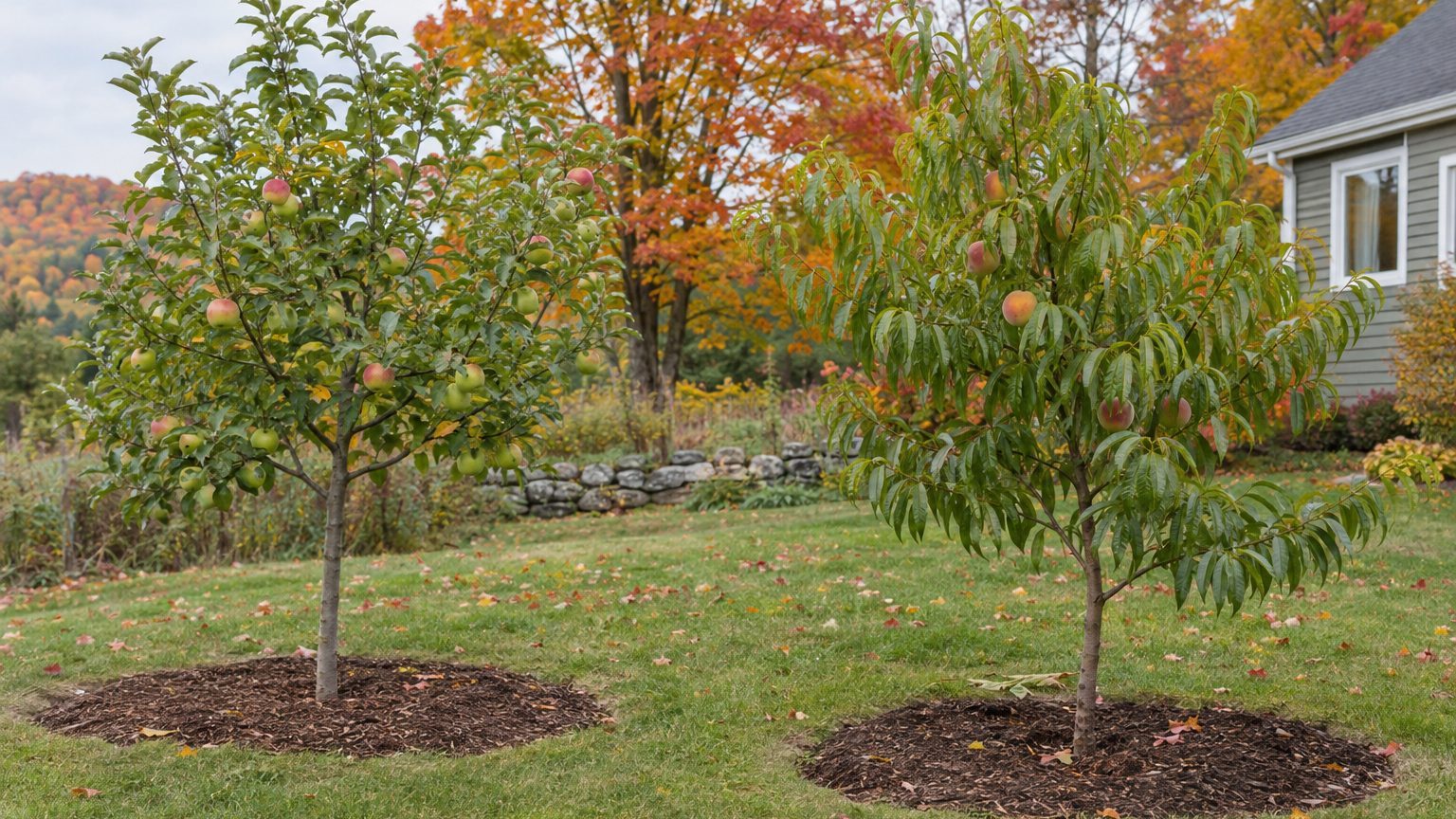
Every spring, fruit buds swell on a tree, and a hard freeze can undo a season’s work overnight. In Vermont that risk shapes every choice, from which fruit you plant to when you prune it. Hardy tree fruits that handle cold winters and steady springs suit the state, and a few tender types need more care.
Best Fruit Trees to Grow in Vermont

Vermont sits in USDA hardiness zones 3b to 5b, a system built on the average coldest night of the year. Cold hardiness matters, but timing matters just as much: a tree that survives January can still lose its flower buds when late winter swings between thaw and freeze. Burlington, on Lake Champlain, has a milder climate than much of the state, with the last spring frost falling between April 30 and May 10. The Green Mountains and the Northeast Kingdom run shorter, so a Burlington date is an optimistic guide there.
Apples and Pears
Apples and pears are the fruit trees most often pruned in Vermont’s late winter, and they are a reasonable starting point for a cold yard. Prune them while dormant, before the buds swell, and do apples first. Avoid pruning in fall or early winter, since new growth may not harden before the cold.
Plums and Cherries
Plums and cherries are planted in early spring and pruned in the same dormant window as apples. They are among the trees that settle better when planted in spring than in fall. Give them a spot where cold air does not pool, because frost at bloom is what costs you the crop.
Peaches
Peaches are the touchy ones here, because their flower buds are easily hurt by cold. Prune them last, closest to bloom, so you can see which buds came through winter. A peach in a protected spot has a better chance than one standing in an open, windy corner.
Apricot
Apricot trees are generally hardy through the winter, but they quickly become tender as temperatures rise in late winter. A warm spell wakes the tree, and the next freeze catches it. Plant apricots where the site stays cold and steady into spring, such as a north or east exposure, so buds stay asleep longer.
Spring Satin Plum-Apricot Hybrid
Spring Satin is a plum-apricot hybrid whose fruit closely resembles a plum. It does not tolerate the freeze-thaw cycles of late winter, which Vermont delivers reliably. Treat it as a gamble, and put it somewhere sheltered if you want to try it.
Vermont — the year and the numbers
- State
- Vermont
- USDA zones
- 3b-5b
- Last spring frost
- April 30 to May 10
- First fall frost
- October 3 to October 13
- Annual rain
- 38 in
- Lawn zone
- cool-season
- Source
- NOAA NCEI 1991-2020 Climate Normals, 32F freeze probabilities · Burlington
How to Choose a Fruit Tree for Your Vermont Yard
Start with your site, not the catalog photo. A yard in the Champlain Valley behaves differently from one up in the hills, so check your own site and ask your local extension office about the late-winter swings that hurt tender fruit.
Then think about how you will buy the tree. A bare-root tree costs less and does well when planted in April or early May, while a container tree gives you more flexibility.
| Your situation | What suits it in Vermont | Why |
|---|---|---|
| Very cold winters | Apples, pears, plums, cherries | These are the fruit trees routinely pruned and grown through a cold dormant season |
| Warm spells in late winter | Skip Spring Satin, site apricots carefully | Apricots become tender as late winter warms, and Spring Satin does not tolerate freeze-thaw cycles |
| Cold-sensitive bloom | Peaches in a protected spot | Their flower buds are easily hurt by cold, so pruning them last lets you see what survived |
| Tight budget | Bare-root trees planted in April or early May | Bare-root stock usually costs less and establishes well in early spring |
| Want flexible planting | Container-grown trees | They can go in most of the year if watered, though they settle best when planted in the dormant season |
Container-grown trees fit gardeners who cannot get out the minute the frost leaves the ground. Even so, spring planting in April or May remains the best match for fruit trees in this state.
Fruit Tree Buying Mistakes to Avoid in Vermont
Planting a Fruit Tree in Fall
New England winters are too cold for a newly planted fruit tree. The roots have not settled, and the tree goes into freezing weather unprepared. Wait for early spring, as soon as the frost has left the ground. Bare-root trees go in during April or early May, while still dormant and before the buds open.
Choosing a Tender Variety
A tree that looks perfect in a nursery can fail the first time late winter turns mild and then freezes hard. Spring Satin and apricots are the clearest examples, since both lose their footing when thaw and freeze trade places. If you still want one, plant it in a sheltered site and accept that some years will be lean. Otherwise put your effort into apples, pears, plums and cherries.
Buying a Potted Tree Without Its Mature Size
A small tree in a pot tells you almost nothing about the shade it will cast in ten years. Ask for the mature height and spread before you pay, and measure the spot against that figure rather than against the pot. A tree crammed beside a wall or driveway ends up pruned hard every year, and that cuts into both its health and its crop.
Where to Get Fruit Tree Advice in Vermont
Local growers know which sites in your valley hold frost and which warm up early. The University of Vermont Extension and your county office can sort out which fruit trees fit your ground.
- University of Vermont Extension offers growing guidance for fruit trees, useful before you place a nursery order in late winter.
- Your county extension office can talk through your site and soil, and it is worth a call before April planting.
Common Questions
Can You Plant a Tree in Summer in Vermont?
You can, but summer is the hardest time to plant a tree. Heat and dry soil stress the new roots, so a summer planting needs steady watering. Spring planting avoids that stress.
Can You Plant a Shade Tree in Fall in Vermont?
Yes, shade and ornamental trees can go in during September and October, with planting finished before the end of October. Water a fall-planted tree until the ground freezes. Magnolia, dogwood, tuliptree, sweet gum, red maple, birch, hawthorn, poplars and many oaks do better planted in spring.
Is a Container-Grown Tree Easier to Plant than Bare-Root?
A container tree is more forgiving about timing, because it can be planted most of the year if you keep it watered. A bare-root tree has a narrower window, and it needs to go in while dormant, before the buds open.